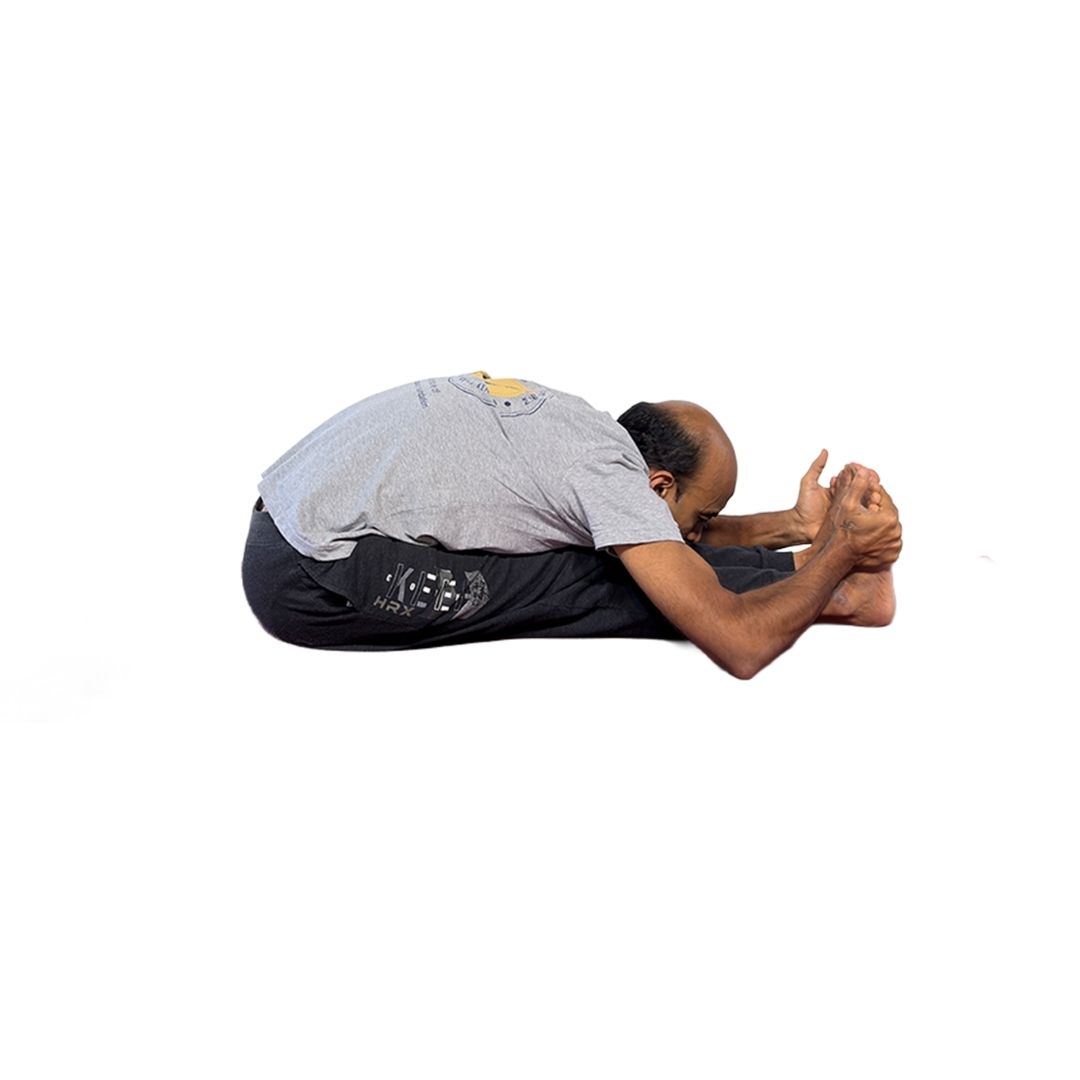
Paschimottanasana पश्चिम-उत्तनासन
Paschimottanasana पश्चिम-उत्तनासन (Seated Forward Bend) is a foundational pose in yoga, particularly in the Ashtanga tradition, where it is practiced in three variations: A, B, and C. The primary difference between these variations lies in the hand and arm position.
How to do Paschimottanasana
Benefits of Paschimottanasana
- Stretches and Lengthens:
Paschimottanasana provides an intense stretch for the entire back of the body, including the hamstrings, calves, and the muscles along the spine (erector spinae). It also stretches the hips and shoulders. - Calms the Nervous System: As a forward fold, it has a calming and soothing effect on the mind and nervous system, helping to reduce stress, anxiety, and mild depression.
- Stimulates Internal Organs: The forward bend massages the abdominal organs, which can improve digestion and stimulate the liver, kidneys, and pancreas.
- Improves Posture: By lengthening the spine and stretching the hamstrings, it can help counteract the effects of prolonged sitting and improve overall posture.
Contraindications of Paschimottanasana
Avoid or modify this pose if you have:
- Lower Back Injuries:
Individuals with a slipped disc, sciatica, or other spinal disorders should avoid or greatly modify this pose. It is crucial to hinge from the hips and not round the spine. - Tight Hamstrings:
If your hamstrings are very tight, you may need to bend your knees slightly or sit on a folded blanket to elevate your hips. This allows you to fold forward with a straight back and avoid straining your lower spine.
- High Blood Pressure:
The inversion can increase blood flow to the head. Practice with awareness and avoid straining. - Pregnancy:
The pressure on the abdomen is not recommended for pregnant women. - Diarrhea, Asthma, or a Hernia.
Anatomy (Muscles involved)
Paschimottanasana engages and stretches a wide range of muscles and joints:
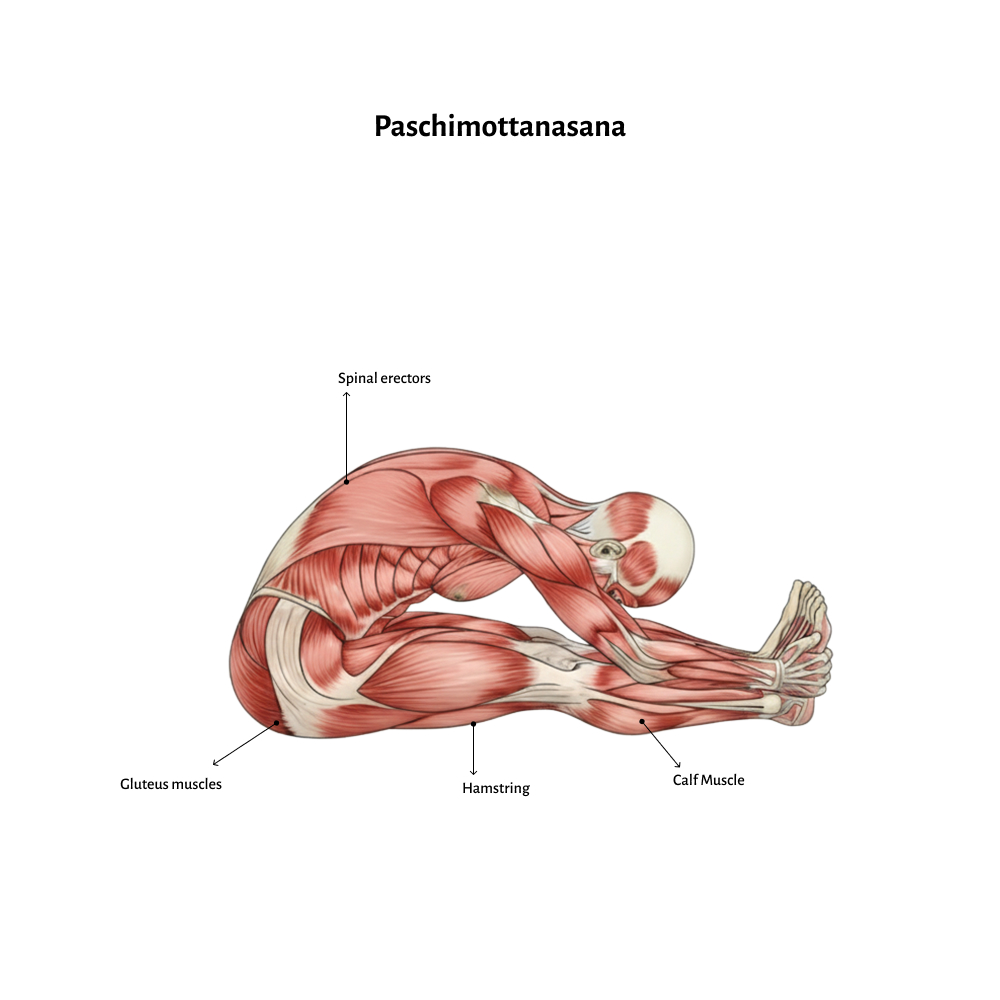
Muscles Stretched:
The primary muscles being stretched are the hamstrings (biceps femoris, semitendinosus, and semimembranosus), the gastrocnemius and soleus (calf muscles), and the gluteus maximus. The pose also lengthens the erector spinae muscles along the spine.
Muscles Engaged:
To protect the spine and deepen the stretch safely, the quadriceps (muscles on the front of the thigh) are engaged to straighten the legs and lift the kneecaps. The psoas major and other hip flexors are also engaged. The abdominal muscles are engaged to support the spine.