Om: The Whole in a Syllable
The Māṇḍūkya Upaniṣad whispers a secret: the whole universe is held in the single syllable Om. It is not just a sound; it is a map of our own experience.
It begins with A-our waking life. This is feet-on-the-ground reality, where practice means doing our work with simple honesty. It flows into U, the mind’s inner theatre. Here, we let memories and hopes drift through without getting snagged on the curtains of our thoughts. Finally, it settles into M-the deep, unarmed rest of sleep.
But the text guides us past the sound to the “Fourth”-the measureless silence that follows. This isn’t emptiness; it is the steady light that holds everything else.
In our tradition, Sri M reminds us that mantra is alignment, not display. We must hold Om like a small bird—firm enough so it stays, but gentle enough so it can breathe. Sound is merely the boat; silence is the shore.
Let this month be a vow to find that shore. With fewer words and a softer grip on outcomes, clarity deepens into tenderness, and service becomes effortless.
Om Tat Sat.
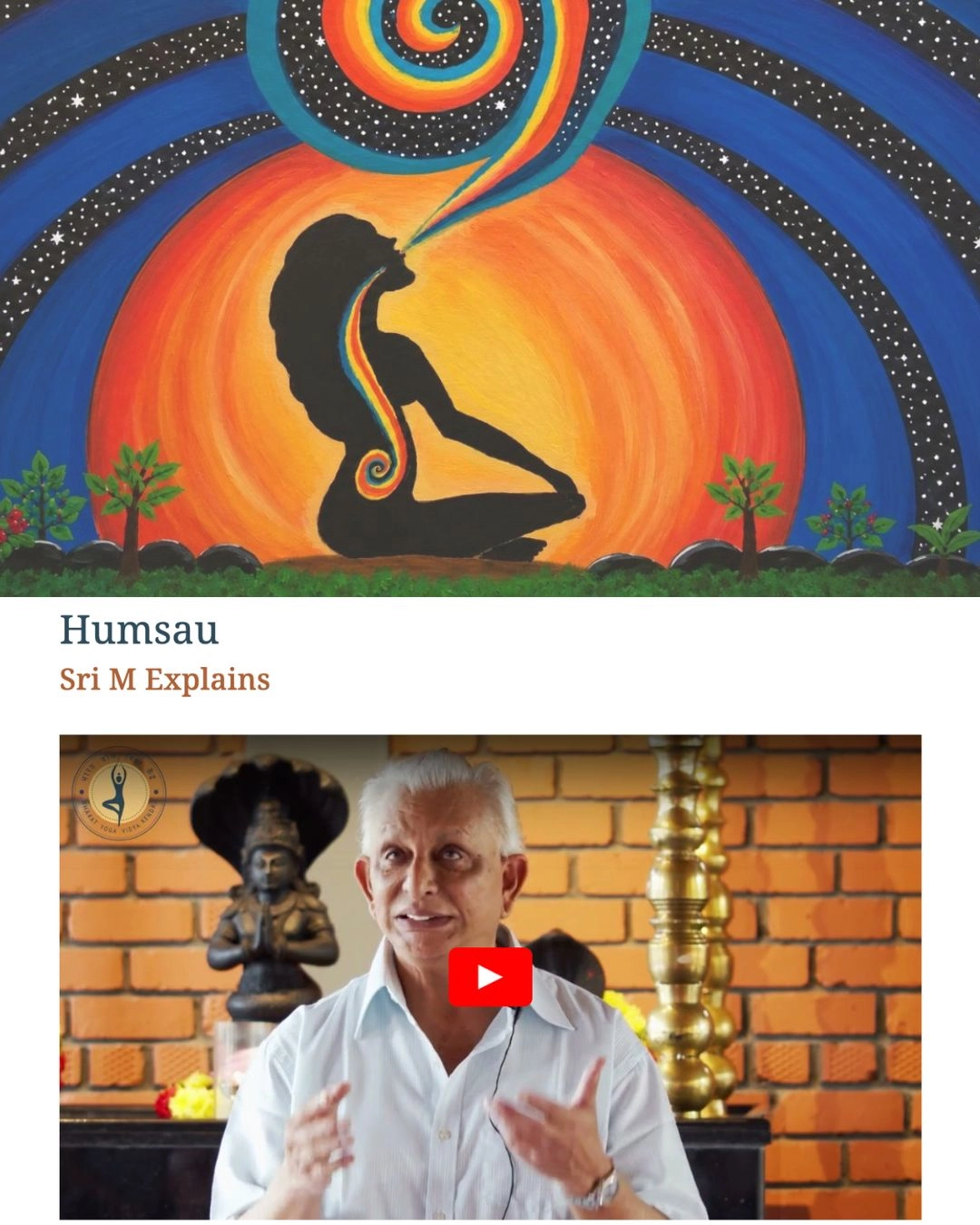
Creation, Dissolution & the Four States of Consciousness
Sri M Explains
In this illuminating talk, Sri M explains the profound meaning of OM — the universal sound that symbolizes creation, preservation, and dissolution.
He breaks down the three components of OM — A, U, and M, and reveals how they correspond to:
• the cycle of manifestation and non-manifestation
• the evolution of the universe
• the states of human consciousness: waking, dream, and deep sleep
• the subtle vibration beyond sound, representing Turiya, the super-conscious state
Sri M beautifully describes how OM is both the sound structure of existence and a map of the spiritual journey — from the physical to the subtle, from the conscious mind to the awareness that remains even beyond deep sleep.
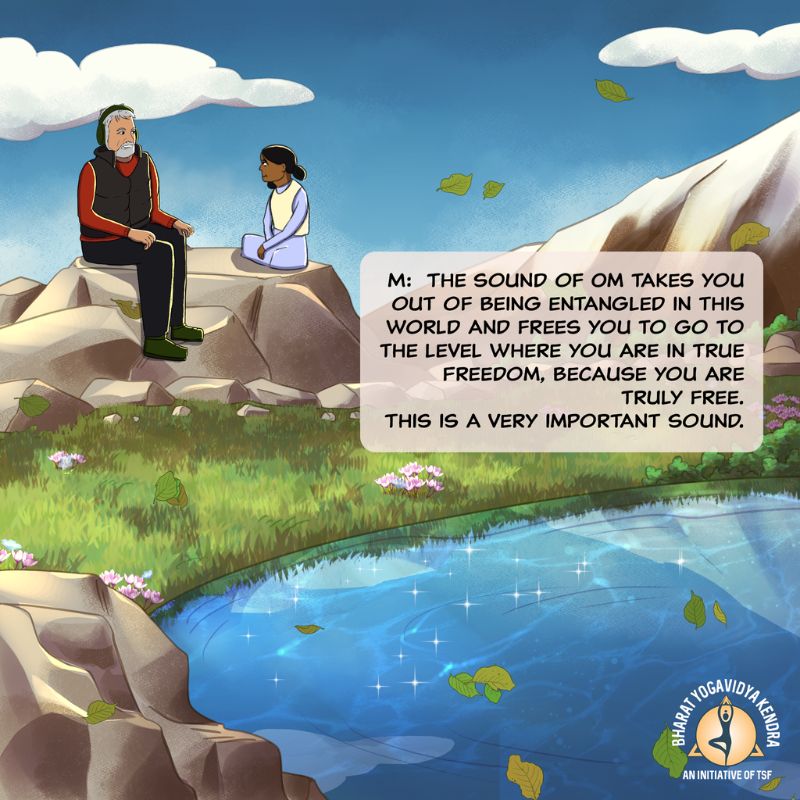
Talk with M

BLOG POST
OM : Cosmic Vibration
Balance – Therapy – Peace
The terms “medicines” and “drugs” are often used interchangeably. When you think of “drugs” the instant corelation is addiction. Science and medicines are a boon to society. Unfortunately many of them are also a must have all your life once you get started. What if we had an mechanism to clear the blocks and revive the weak / non performing organs – with no side effects , a Good Addiction.
In this Blog we will highlight the power of Chanting Om as a therapy and a medicine. In recent times, with the world-wide popularity of Yoga, Om chanting is considered as a ‘nonpharmacological strategy’ to bring positive mental and physical health among the many alternative health practices which deal with anxiety, pain-relief, stress, depression, and insomnia.
The Vibrations from Om Chanting can help in improving the flow of Prana. Its power has been recorded since time immemorial in our Scriptures. Let me share a few simple practises that I have found effective.
Overcoming Stress & Anxiety
At times when you feel overwhelmed and helpless 10 – 15 minutes of Om Chanting can help you get control of yourself. Your thinking becomes clearer and you are able to take some baby steps towards a solution. It prompts you towards action in the right direction.
Pain Management
Focus on the area of discomfort and pain. While Chanting Om visualise the breath moving in and out of that area in a rhythmic manner – like a soft air massage. As the concentration increases you can start going deeper to the source of pain. Continue for some more time with a focus on the ending of Om – the Mmmm. The concentration helps increase the flow of Prana to the area of discomfort providing some relief. At times you can also chant Om rapidly with the focus on the area of discomfort.
Improved Sleep Quality
The vibrations of Om chanting help slow down neural activity and this helps in having more restful sleep and proper relaxation. It is best to chant Om before going to bed as it assists the mind in transitioning smoothly from wakefulness to sleep and stops overactive thoughts.
As you lie down after a warm bath in a dark room – chant Om visualising the flow from head to toe and backwards. Feel the waves of Om flow through the body, relaxing you slowly. Do this for some time and you will find that it can help you get a peaceful sleep.
While chanting Om, It is about nonjudgmental attention to the present moment experiences. Om is continuously repeated so that it is no longer consciously uttered. The mind reaches a state where there is no thought or any botheration’s such as anxiety or attachments. Om can be chanted silently in the mind, or softly as a whisper, or even loudly with a steady breathing pattern.
Once you start you can start experiencing the benefits – and this is a good addiction with no side effects.
Positive Effects on the Brain
Scientific Studies have proved what our Rishis knew in the past . Chanting of Om stimulates alpha and theta brain waves. Here, alpha waves are associated with relaxation while theta waves enhance creativity. Just 10 minutes of Om chanting can bring about a state of calmness and total relaxation because it activates the parasympathetic nervous system.
Improved Cardiovascular and Respiratory Health
The slow controlled exhalations in Om chanting benefits all essential systems of the human body. Studies show that such breathing helps to lower blood pressure, improves lung capacity and increases oxygen intake. Researchers of yoga therapy have found out that Om chanting also reduces blood pressure in patients who are taking medicines and those who are untreated hypertensive meditators. Om meditation is extremely beneficial for people with asthma and other respiratory conditions.
Better Concentration and Focus
Om chanting is useful for students and professionals who are required to have sharp focus to succeed in their work. It is very beneficial for senior citizens going through cognitive decline. Studies have revealed that the advantages of Om chanting include better concentration, good memory retention, sharper focus and enhanced problem-solving skills.
Balanced Emotional States
Besides the physical and mental health benefits, the advantages of Om chanting have also been seen to extend to a person’s emotional wellbeing. It releases any stored up negative emotions and strengthens one’s awareness of a Higher Reality and the true purpose of life. It has been observed that those who practice Om chanting regularly are more emotionally balanced in their lives.
Few Tips
- Find a silent well-ventilated place where you will not be disturbed or distracted.
- Sit comfortably with your back straight.
- Close your eyes and breathe normally, becoming more and more aware of the pattern of your breathing.
- Relax your body completely.
- Take a deep breath in, and while exhaling, slowly chant ‘Om’.
- Allow the sound vibration to resonate freely throughout your body.
- Become aware of the vibrations in your abdomen, chest and throat as you continue to breathe deeply and chant ‘Om’ while exhaling.
- Practice for 5 to 10 minutes.
When to Practice
- It is best to practice early in the morning when the mind is clear and undisturbed by the stresses of the day.
- It is advisable to practice Om chanting after your regular yoga asana and pranayama session to improve your concentration.
- Practicing before bedtime also promotes sound sleep and relaxation.
A Few Things to Avoid
- Don’t rush through the chanting of Om mantra if you are in a hurry. Instead, practice only when you have time and try to maintain a relaxed slow rhythm.
- Don’t chant Om mantra immediately after your meals.
BOOK REVIEW
Looking from Within
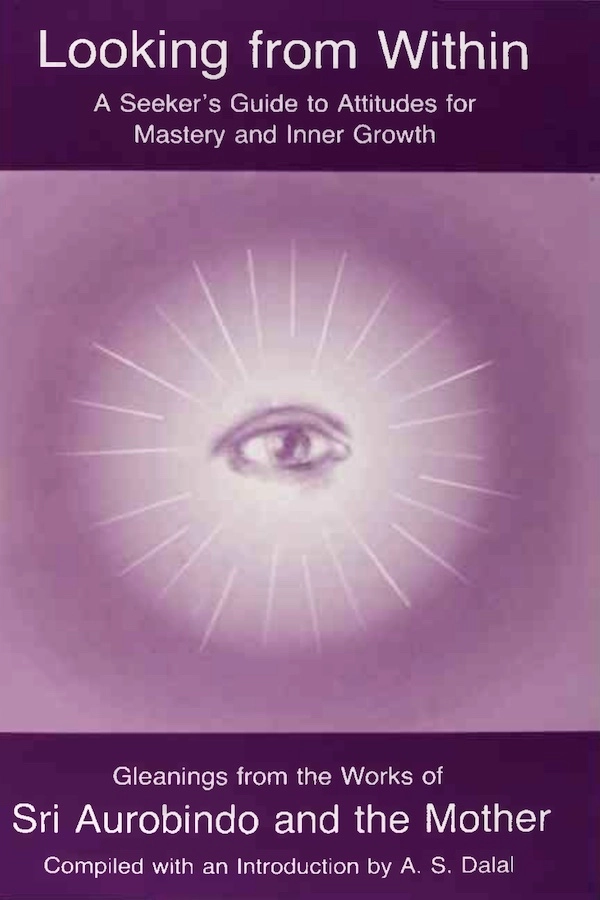
Looking From Within is a gentle yet profound invitation into the inner world, guided by the luminous clarity of Sr Aurobindo and The Mother’s teachings. Every chapter turns the reader inward, encouraging an honest, tender exploration of oneself – not through harsh discipline, but through awareness, sincerity, and a willingness to grow.
What makes this book truly special is its simplicity. The insights are not wrapped in philosophy alone; they speak directly to one’s lived experience. We begin to understand that true transformation doesn’t happen on the surface – it begins in the hidden corners of our thoughts, emotions, and intentions. In that sense, Looking From Within becomes more than a book; it becomes a mirror. As you read, you catch glimpses of your own patterns, fears, and unrealized strengths.
One of the most beautiful threads woven throughout the book is the emphasis on sincerity — the courage to see oneself without distortion. The teachings inspire a natural aspiration for self-mastery – not by suppressing emotions, but by understanding and transforming them.
The book also highlights the role of inner quietude, showing how calmness is not an escape from life but a powerful way of engaging with it. We also begin to understand that spiritual practice is not separate from daily life; it is intimately connected with how we speak, act, and meet the world. This book becomes a companion for anyone seeking clarity, equilibrium, and a deeper relationship with their own inner being.
Whether you are beginning your journey or have been walking the path for years, the teachings of Sri Aurobindo and the Mother offer something precious: a gentle push to look inside with honesty and love – and to discover that everything you seek already resides within you.
YOGA GUIDE
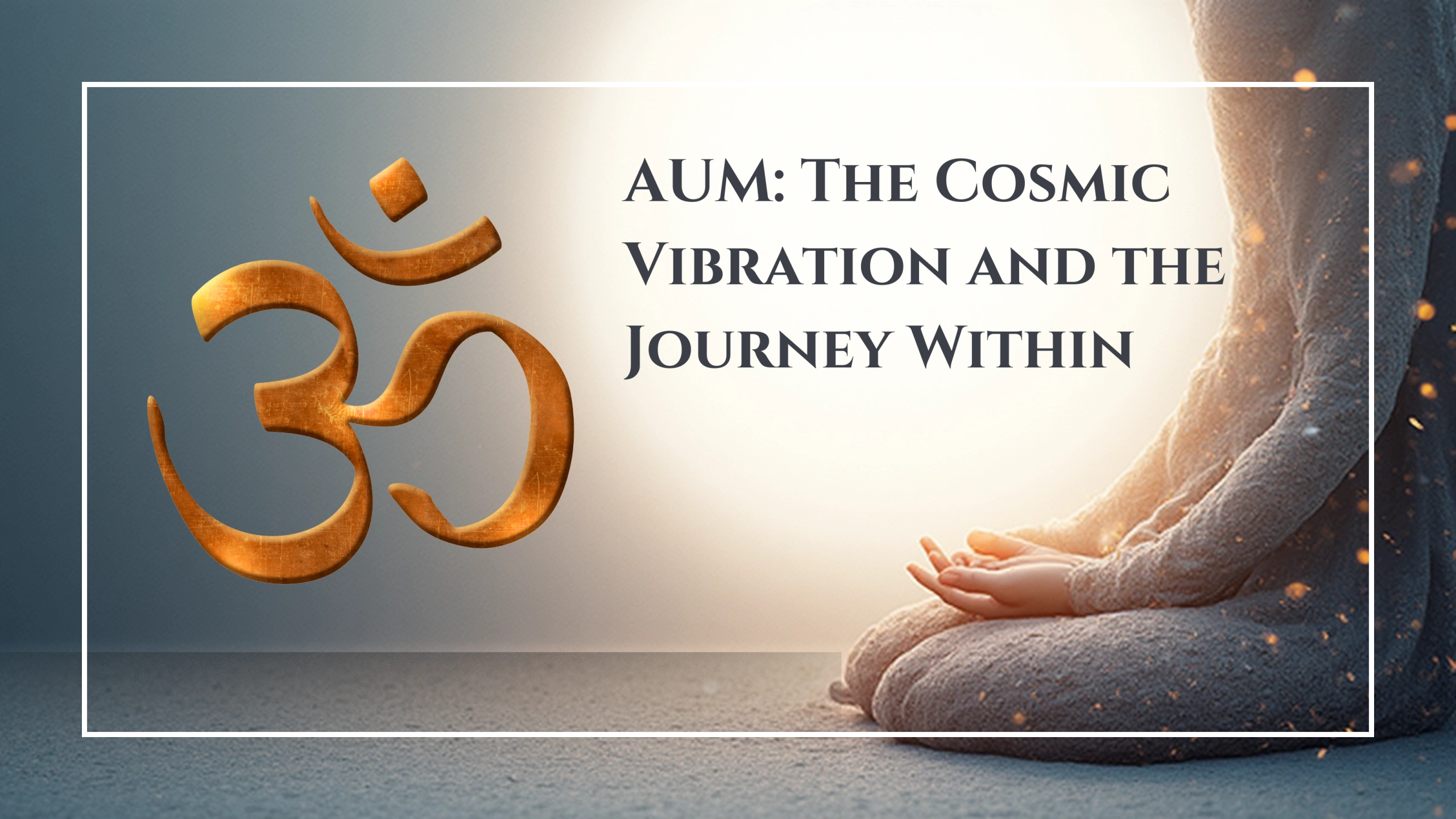
AUM – The Cosmic Vibration and the Journey Within
The concept of “AUM” represents the primordial cosmic vibration, symbolizing the essence of the universe and the journey within oneself. This guide focuses on connecting with this cosmic vibration through a simple yet profound yoga practice involving one asana and one pranayama, designed to harmonize body, mind, and spirit.
Tadasana (Mountain Pose)
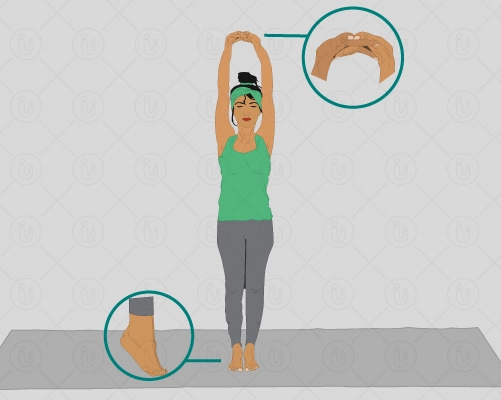
Tadasana is a foundational standing posture that cultivates stability, grounding, and awareness—qualities essential for tuning into the cosmic vibration represented by AUM.
Steps to Practice Tadasana:
- Stand with your feet together, big toes touching, and heels slightly apart.
- Distribute your weight evenly across both feet.
- Engage your thigh muscles, lift your kneecaps gently, and lengthen your spine.
- Roll your shoulders back and down, allowing your chest to open naturally.
- Let your arms hang relaxed by your sides with palms facing forward.
- Close your eyes softly and bring your attention inward.
- Feel the connection of your body with the earth beneath and the subtle energy rising within.
- Maintain steady, natural breathing.
- Hold for 1 to 3 minutes, focusing on the inner vibration and presence.
Pranayama: Chanting AUM with Ujjayi Breath
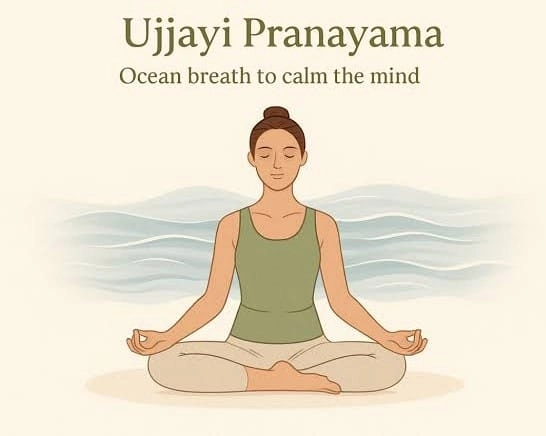
Combining the sacred chant “AUM” with Ujjayi pranayama deepens the connection to cosmic vibration and enhances internal awareness.
Steps to Practice AUM Chanting with Ujjayi Breath:
- Sit comfortably in a cross-legged position or on a chair with a straight spine.
- Close your eyes and take a few deep breaths to settle the mind.
- Begin Ujjayi breathing by slightly constricting the back of your throat, creating a soft ocean-like sound during inhalation and exhalation.
- On the next exhalation, chant the sound “AUM” slowly and steadily, feeling the vibration resonate from your throat through your chest and head.
- Break down the chant into three parts: “A” (beginning, lower abdomen), “U” (middle, chest), and “M” (end, head), sensing the vibration moving upward.
- Inhale deeply again with Ujjayi breath, maintaining the gentle throat constriction.
- Repeat the cycle for 5 to 10 rounds, allowing the vibration of AUM to guide you inward.
- This combined practice of Tadasana and AUM chanting with Ujjayi breath anchors your awareness in the present moment, aligning your inner vibration with the cosmic sound, facilitating a profound journey within.
In summary, Tadasana creates a stable and receptive physical foundation, while the AUM chant with Ujjayi pranayama awakens the subtle inner sound current, together fostering deep meditation on the cosmic vibration and self-realization.
YOGA RESOURCE
Sacred Bloom: Purity, Non-attachment, Enlightenment
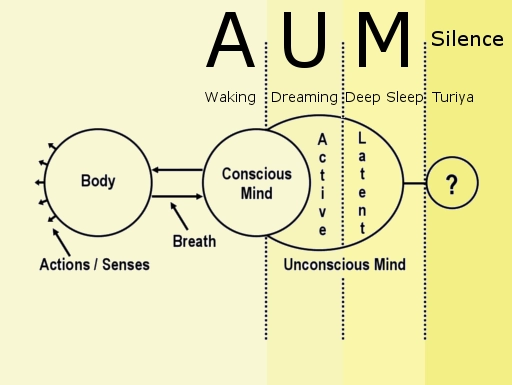
The sacred syllable AUM (or Om) is not merely a word but is revered by spiritual masters and Gurus as the primal, creative vibration of the universe—the very sound of existence. Across various spiritual traditions, especially in Hinduism and Yoga, AUM is understood to embody the ultimate reality, consciousness, and the entire cycle of cosmic manifestation.
The All-Encompassing Nature of AUM
Gurus emphasize that AUM is the manifestation of the Absolute or Brahman in the form of sound (Shabda Brahman).
- Paramhansa Yogananda explained that all matter, energy, and thoughts exist within AUM, calling it the “Cosmic Vibration” and equating it to the Holy Ghost of the Christian Trinity. He stresses that AUM is the outward manifestation of the Lord in creation, the sound of the “Vibratory Motor.”
- Sri Ramana Maharshi referred to AUM as the Pranava, representing the transcendental (nirguna) and the eternal truth that remains after the disappearance of all objects.
- The ancient texts, such as the Mandukya Upanishad, a key reference for Gurus, dedicate themselves to AUM, proclaiming that “Om, this eternal word is all; what was, what is and what shall be.”
The Power of AUM Meditation
Gurus prescribe the conscious chanting and inner listening of AUM as a potent spiritual practice:
- A Scientific Method: Paramhansa Yogananda taught that one must perceive the actual Cosmic Sound of AUM in deep meditation (the anahata-nada, or “unstruck sound”) to scientifically contact God, calling it the “Comforter” that brings profound inner peace and joy.
- A Tool for Transformation: Swami Kriyananda affirmed, “Everything in manifestation vibrates and where there is vibration, there is the sound of AUM.” By consciously attuning to this omnipresent vibration, the spiritual seeker flows with the “stream of God’s love” and becomes uplifted above the delusions of human existence.
- A Universal Anchor: Chanting AUM is said to harmonize the body’s energy, moving it from the abdomen up to the brain, and calm the mind, clearing thoughts and enhancing concentration (Ekagrata). It is a way to align the individual self (Atman) with the ultimate reality (Brahman).
Gurus like Patanjali, in his Yoga Sutras (I:27-28), identifies AUM (Pranava) as the designator of God (Ishvara) and recommends its repetition with contemplation upon its meaning as a means of liberation. The silence after the chant is considered as significant as the sound itself, representing the transcendent state of blissful, pure consciousness.
COMMUNITY COLUMN
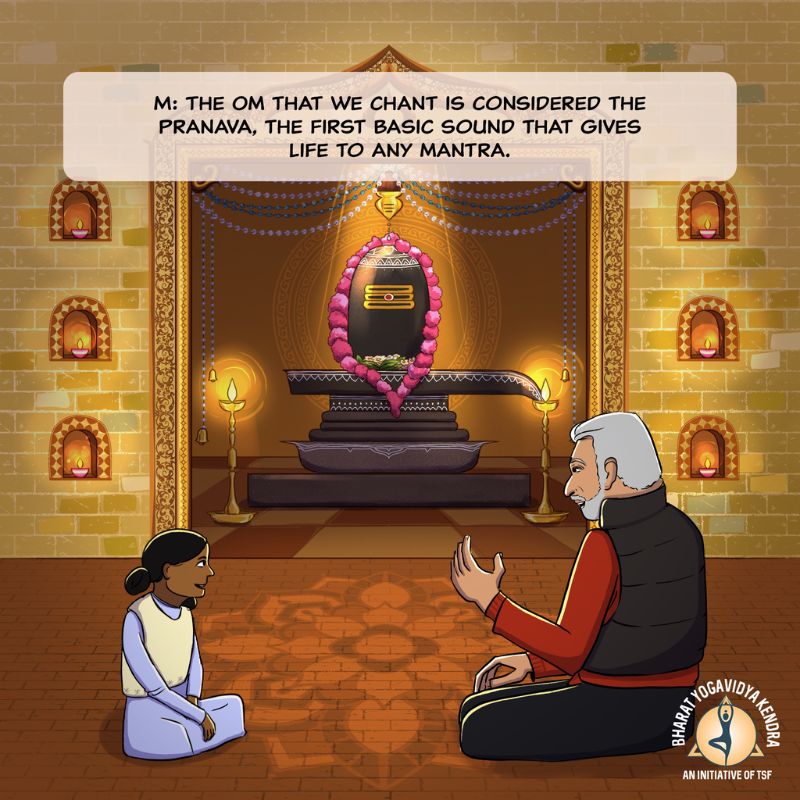
‘Om’ is an Omnipotent and Omnipresent sound of the Cosmos. For this reason it is also referred as ‘Pranava’; the energy that runs in our Prāna. In the Vedas, “Om” (or Aum) is the sacred syllable representing the primordial sound of the universe, a fundamental mantra for meditation, and a symbol of the divine. The syllable is often considered to be the sound from which all other sounds and the entire universe originated. The Vedas describe Om as the vibration that existed before creation, from which all other vibrations manifest.
The vibration produced by chanting OM in the physical universe corresponds to the original vibration that first arose from the mouth of Hiranyagarbha, the Creator. Hence OM is very important.
‘Om’ is the source of all religions and also religious scriptures. It is the sound of Brahma. It is the predominating force and power.. Most mantras start with ‘Om’ and much written on this topic in the scriptures. Eight of the Upanishads have sections dealing with ‘Om’.
These are:
- Brihadāranyaka Upanishad
- Chāndogya Upanishad
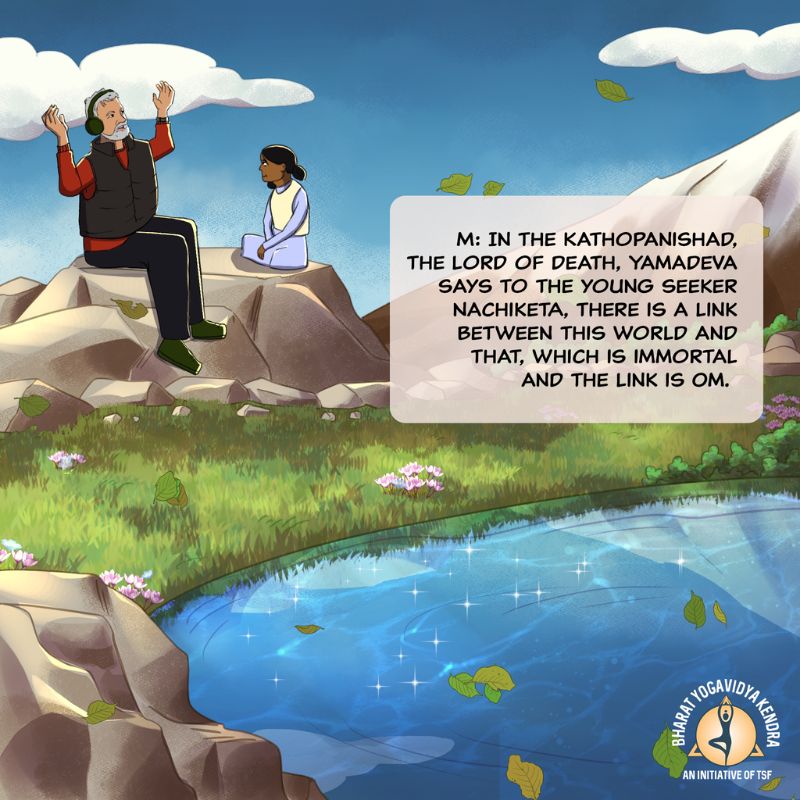
- Katha Upanishad
- Māndukya Upanishad
- Mundaka Upanishad
- Praśhna Upanishad
- Śvetāśvatara Upanishad
- Taittīriya Upanishad ‘Om’ is also discussed in the Srimadbhagvad Gitā & Yoga Sutras of Patanjali
The Mandukya Upanishad is considered the most important Upanishad specifically on the mystic syllable OM. The text begins by stating, “Aum!, this syllable is this whole world” and declares that all things, past, present, and future, are an explanation of “Om”
It breaks down “Om” into its three components—A, U, M to represent the three states of consciousness: waking, dreaming, and deep sleep. The three phonetic components of Om A- U- M are also said to represent the three Vedas Rig, Yajur, and Sama and the Hindu trinity of Brahma, Vishnu, and Shiva according to the Rig Veda and other texts. Beyond these, it presents the fourth state, TURIYA, as the transcendent reality that “Om” ultimately symbolizes.
IDENTIFICATION WITH KRISHNA : In the Bhagavad Gita, ‘Om’ is a sacred syllable representing the ultimate reality and is identified with Lord Krishna himself. It is the primordial sound and the essence of all existence, used as a mantra for meditation and a way to detach from the fruits of action. Krishna states in Chapter 9, Verse 17 that, “Amongst vibrations, I am the syllable om“.
Key aspects of Om in the Katha Upanishad:
- The ultimate support: Om is described as the “highest support,” and those who know and understand it are adored in the world of Brahman.
- The essence of Brahman: It is not just a symbol but the very essence of Brahman, the supreme self, in audible form.
- Fulfills desires: Chanting Om with the intention to attain Brahman is a way to achieve it.
- Foundation for self-realization: Meditation on Om is believed to lay a strong foundation for self-realization.
- A universal truth: Yama explains to Nachiketa that Om is the goal that all Vedas, austerities, and disciplines aim for.
- The key to immortality: The Upanishad states that when a person, through the practice of Om, realizes their true nature, they become immortal and attain Brahman.
Samaveda:
Om is said to be an encapsulated form of the chants in the Samaveda, which is known for its musical and poetic verses
In some Vedic texts, such as the Kena Upanishad Om is referred to as the “syllable of assent,” indicating blessing and increase. The Upanishads emphasize Om as a tool for meditation, calling it the basis of all other mantras and the sound of the origination and dissolution of the universe
In Indian religions, Om serves as a representation of the divine, a standard of Vedic authority. It is a sacred spiritual incantation made before and during the recitation of spiritual texts, during puja and private prayers, It is part of the iconography found in ancient and medieval era manuscripts, temples, monasteries, and spiritual retreats
in Hinduism, Buddhism, Jainism, and Sikhism.
When You hear the sound ” tree ” , you at once understand that it has a root , stem , branches , leaves , flowers , fruits , etc .Similarly when you hear the sound OM it denotes Satchidananda Brahman , Existence Absolute , Knowledge Absolute , Bliss Absolute . All
collections of speech or words terminate in one sound Hence OM is very important. It should be worshipped. It should be chanted loudly. It should be repeated mentally with meaning and feeling. It should be meditated upon.
How to practice meditation on OM
There are few things to consider before you start chanting OM. Your ambience, for example, is very important. To chant OM peacefully, find a quiet space, indoors or outdoors and sit comfortably retire into the meditation chamber.
Find a comfortable posture: Sit in a stable and comfortable position with a straight spine.
Start with loud chanting: Begin a meditation session by chanting OM loudly 3, 6, or 12 times to clear the mind.
Transition to mental chanting: Once the mind is a bit calmer, begin mentally repeating OM.
Meditate on the meaning: As you repeat OM mentally, focus on its meaning and feel yourself as the all-pervading, infinite, blissful Self (Sat-Chit-Ananda).
Maintain the practice: If the mind wanders, gently bring it back to the repetition and the feeling of OM. Continue to practice regularly.
REPEAT MENTALLY
Constantly feel-OM OM OM
All-pervading, ocean of light I am-OM OM OM
Infinity I am-OM OM OM
All-pervading, Infinite light I am-OM OM OM
Omnipotent I am-OM OM OM
Omniscient I am-OM OM OM
All Bliss I am-OM OM OM
Sat-Chit-Ananda I am-OM OM OM
All Purity I am-OM OM OM
All Glory I am-OM OM OM
During meditation, you should feel that you are all purity, all light, all-pervading existence, etc. Meditate on the Self-daily You will rest doubtless in Sat-Chit-Ananda state. You will get highest Knowledge, highest Bliss, highest Realisation, and highest End of life. “Brahmavid Brahman,” “Brahmavid Brahmaiva Bhavati.” You will become Suddha Sat-Chit-Ananda-Vyapaka-Paripurna Brahman. By the friction of continued practice (Abhyasa) of meditation one should see God (Atman) hidden within.
During the Om meditation, Om is continuously repeated so that it is no longer consciously uttered. Instead, the mind reaches a state where there is no thought or any botheration’s such as anxiety or attachments. Om can be chanted silently in the mind, or softly as a whisper, or even loudly with a steady breathing pattern.
- For spiritual transformation: The vibration produced by chanting can harmonize the body and mind, setting up new vibrations and awakening inner power.
- For realizing the Self: During silent repetition (mental chanting), focus on the meaning of OM and feel that you are Sat-Chit-Ananda Brahman (all-pervading, pure consciousness)./li>
To achieve Samadhi: Consistent practice, especially with the right feeling (bhava), can lead you to the highest states of consciousness and spiritual realization.
Positive Effects on the Brain
Modern research has proved that the chanting of Om mantra stimulates alpha and theta brain waves. Here, alpha waves are associated with relaxation while theta waves enhance creativity. Just 10 minutes of Om chanting can bring about a state of calmness and total relaxation because it activates the parasympathetic nervous system.
Improved Cardiovascular and Respiratory Health
The slow controlled exhalations in Om mantra chanting benefits all essential systems of the human body. Studies show that such breathing helps to lower blood pressure, improves lung capacity and increases oxygen intake.
Better Concentration and Focus
Om chanting is useful for students and professionals who are required to have sharp focus to succeed in their work. It is very beneficial for senior citizens going through cognitive decline. Studies have revealed that the advantages of Om chanting include better concentration, good memory retention, sharper focus and enhanced problem-solving skills. Chanting OM also silences the constant stream of thought we encounter in our daily lives.
Due to traditional interpretations of scriptures that associate the chant with male-centric spiritual paths, suggesting it might be incompatible with the female while others argue that such
restrictions are patriarchal, unfounded, or based on a misunderstanding of Om’s universal nature. The debate often stems from the belief that certain Vedic mantras, including Om, were originally restricted to men who had received the sacred thread or were ascetics, though these restrictions are widely contested today. Even then It is widely considered highly significant in many spiritual traditions, particularly within Hinduism and yogic paths, to receive a mantra from a qualified guru or to seek his guidance. This practice is rooted in the belief that the mantra is not just a sound but a vehicle of spiritual energy, consciousness, or divine grace
If one’s guru is evolved, the result will be better. The power of the mantra will be more. Your faith will be more. There comes Your power, mantra power, and the guru power…
(Excerpts From Great Minds, Personification of Wisdom)
Ayurvedic Wisdom
AUM: A Path to Deep Self-Discovery and Universal Connection
In Ayurveda the sacred sound of ‘OM’ (AUM) is a powerful vibrational medicine. It is the primordial sound of the universe that balances the body’s doshas (vata, pitta, kapha) and promotes deep relaxation. It helps in reducing stress fosters inner balance.
Ayurveda recognizes that the body’s cells and organs have unique vibrations: Imbalances in the vibration creates disease and resonant sounds like OM helps restore harmony.
Chanting OM harmonizes the 3 doshas, promoting balance and well-being.
It is a too to connect physical, mental & spiritual aspects, calming the mind & aligning individual consciousness with universal vibrations.
- Health Benefits of OM chanting:
Stress reduction: ‘OM’ Chanting activates the parasympathetic nervous system promoting relaxation and enhancing release of serotonin. - Improved concentration: The rhythmic repetition of ‘OM’ can improve FOCUS & MENTAL CLARITY.
- Enhanced Respiratory Health: Regular chanting of ‘OM’ has been shown to strengthen respiratory function & improve overall efficiency of lungs through controlled breathing.
- Emotional Slatility: Reduces the amygdala activity (fear centre) and fosters calm, peace and positive emotions.
TESTIMONIALS
Digital Detox & Inner Recharge
“With our minds put together, may we understand.” These words of The Satsang Foundation beautifully reflect my experience in Yoga Sangha, the spiritual book reading group.
When life strikes with sorrow and difficult circumstances, one naturally searches for a way to rise above the pain. I joined this group with that longing—to go beyond the sorrows of life and discover a brighter, clearer path.
Before joining, I often felt mentally exhausted and unable to face challenges with clarity or strength. But the wisdom and guidance I have received here have brought peace to my mind and clarity to my thoughts. Reading with like-minded people has made the journey lighter and deeply meaningful.
I have learnt that spirituality is not an escape from life, but a way of living with clarity, compassion, and strength. This group has helped me accept challenges with greater grace and encouraged me to take responsibility for my growth. Each sincere step inward has led me closer to light, harmony, and joy.
Over time, I have grown more patient, compassionate, and grounded. I now look forward to each month’s book as another step on my journey of inner growth. I sincerely thank Chitra Ganesh our facilitator and Sri M for this beautiful initiative, which has transformed my life in a profound way.
Gurpreet Kaur
Upcoming Courses & Retreats
![Logo of Bharat Yogavidya Kendra [BYK]](https://bharatyogavidyakendra.in/wp-content/uploads/2025/07/BYK-Logo-300px.png "BYK-Logo-300px")
Thank you for reading