Utthita Hasta Padangusthasana
(उत्थित हस्त पादाङ्गुष्ठासन)
Utthita Hasta Padangusthasana (उत्थित हस्त पादाङ्गुष्ठासन), which translates to “Extended Hand-to-Big-Toe Pose,” is a challenging standing balance pose that requires strength, flexibility, and deep concentration. It is a powerful asana that stretches and strengthens the legs, hips, and ankles while improving focus and balance.
How to do Parivritta Parsvakonasana
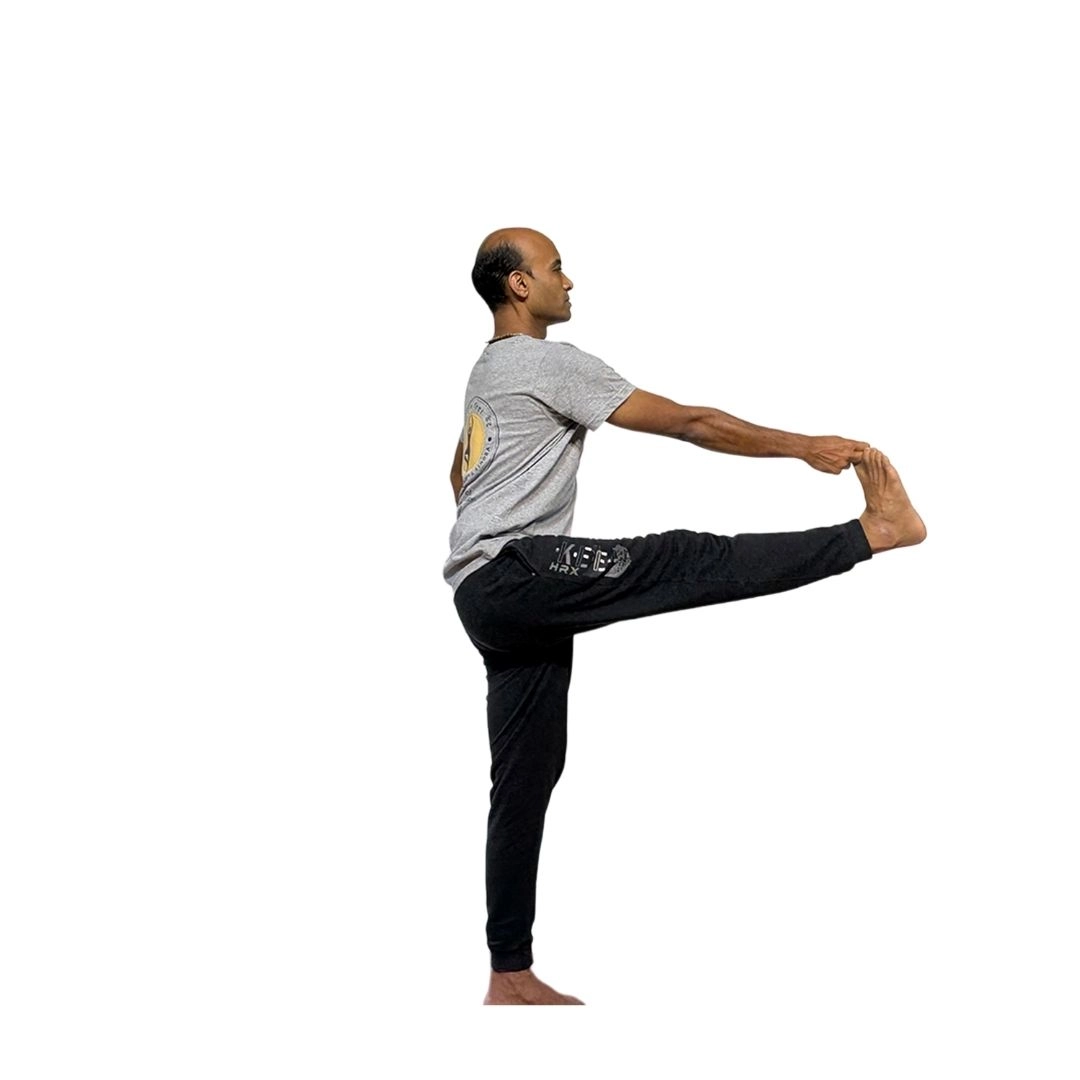
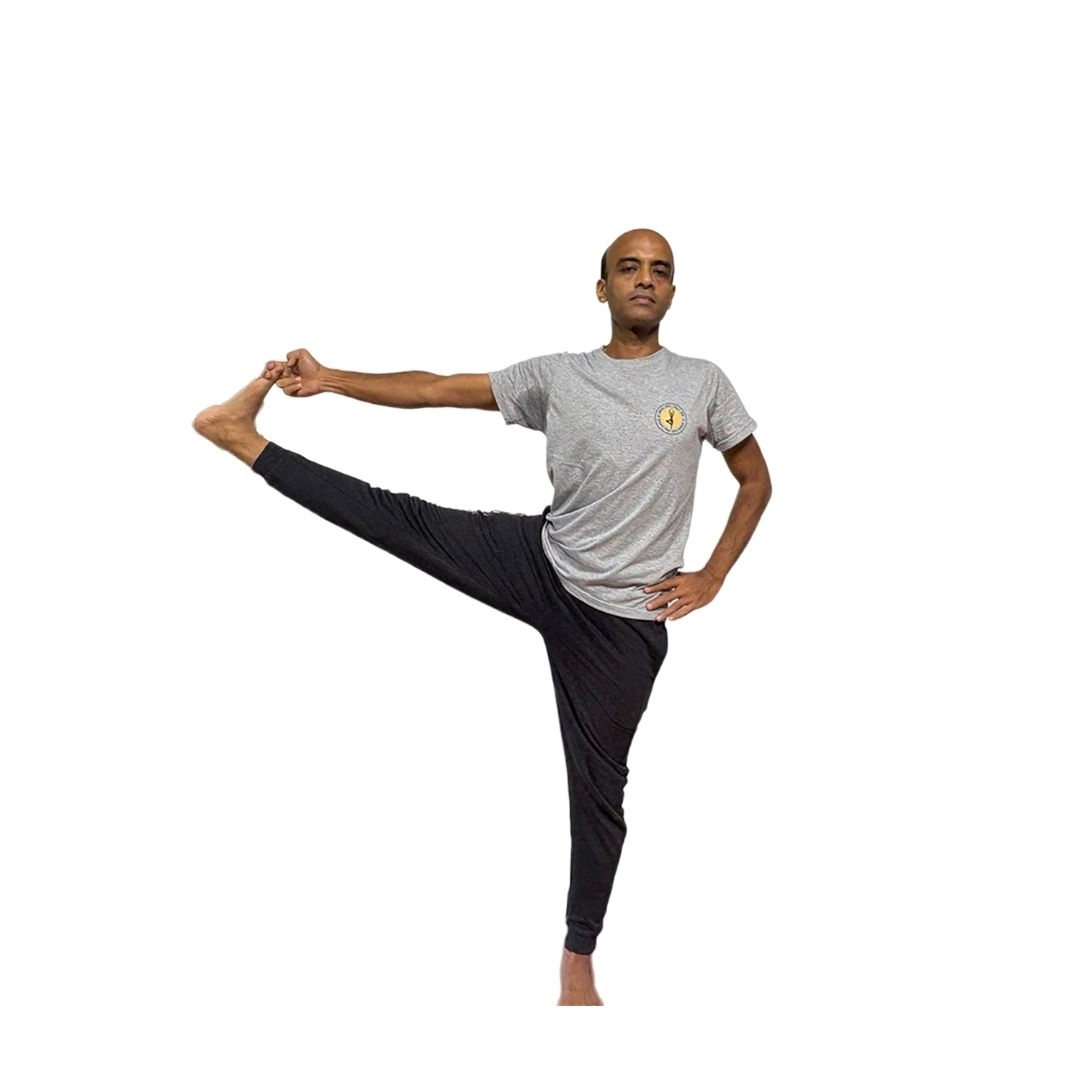
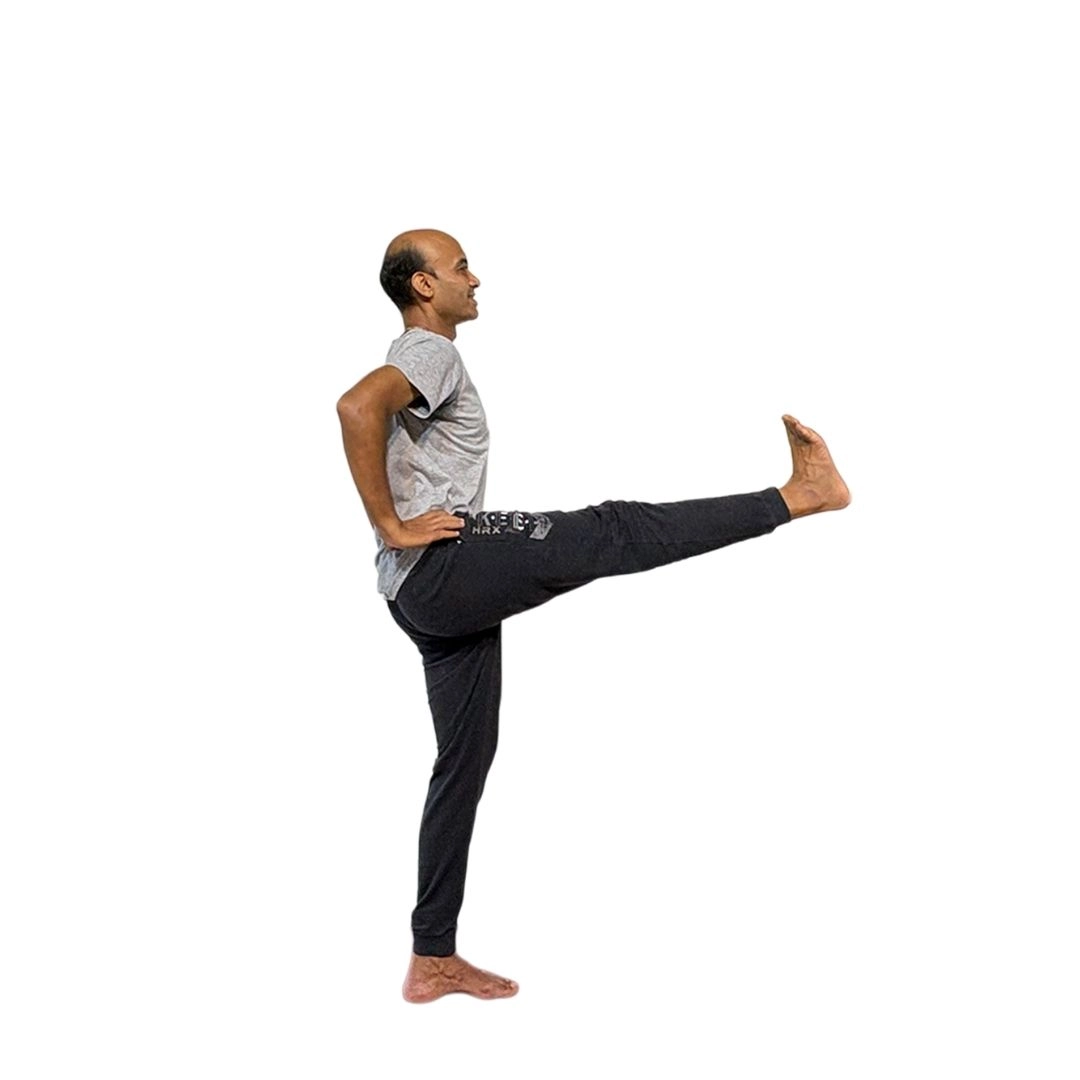
Benefits of Parivritta Parsvakonasana
- Improves Balance and Stability
This pose is a powerful way to enhance your physical and mental equilibrium. It strengthens the small muscles in your ankles and feet that are crucial for stability. - Strengthens Muscles
It builds strength in the quadriceps, hamstrings, gluteus medius, and calves of the standing leg, as well as the core muscles and hip flexors. - Increases Flexibility
It provides a deep and effective stretch for the hamstrings, hips, and groin.
- Enhances Concentration and Focus
The need to maintain balance and stillness helps to quiet the mind, improving concentration and self-awareness. - Boosts Core Strength
The core muscles (abdominals, deep stabilizers) work intensely to stabilize the spine and pelvis against the weight of the extended leg. - Strengthens Active Flexibility
It specifically strengthens the hip flexors (psoas) and quadriceps, which are necessary for actively lifting and holding the leg in any extended position.
Contraindications of Parivritta Parsvakonasana
Avoid or modify this pose if you have:
- Injuries
People with recent or chronic injuries to the ankles, knees, hips, or lower back should not perform this pose without professional guidance. - Sciatica
The hamstring stretch in this pose can aggravate sciatica, so it should be avoided if you have this condition. - Low Blood Pressure
The balancing nature of the pose and the effort required can lead to dizziness or lightheadedness, especially for those with low blood pressure.
- Pregnancy
Pregnant individuals, especially in the later trimesters, should avoid this pose due to the risk of losing balance. - Lack of Balance
If you are new to balancing poses, start with modifications such as using a wall for support or holding a chair. A yoga strap can also be used to help with the hamstring stretch.
Anatomy (Muscles involved)
Parivritta Parsvakonasanaengages and stretches a wide range of muscles and joints:
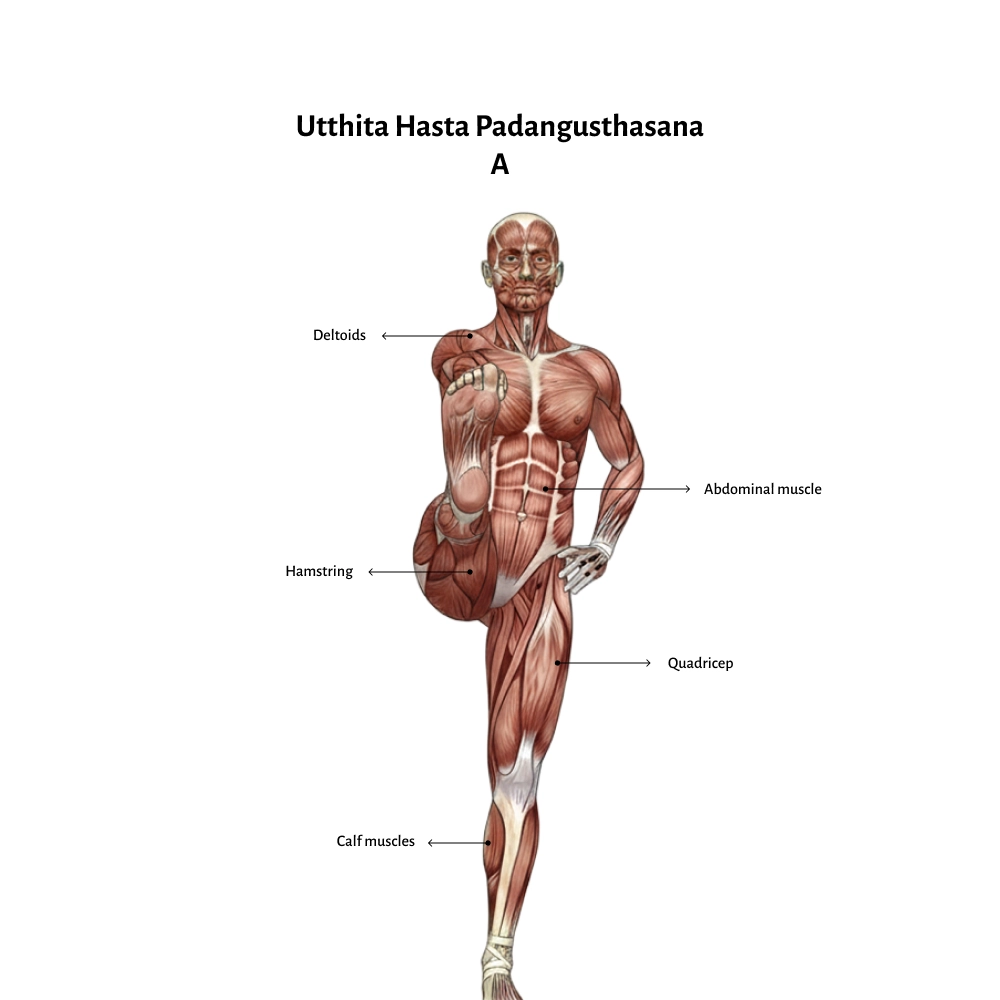
Standing Leg
- Strengthened: Quadriceps, hamstrings, glutes, and calf muscles. The muscles in your foot and ankle are also highly engaged to maintain balance.
Lifted Leg
- Strengthened: Hip flexors (especially the iliopsoas) and the quadriceps to lift and extend the leg.
- Stretched: Hamstrings, calves, and groin.
Torso and Core
- Strengthened: The abdominal muscles and erector spinae (muscles along the spine) are engaged to keep the torso upright and stable.