Pashasana (पाशासन)
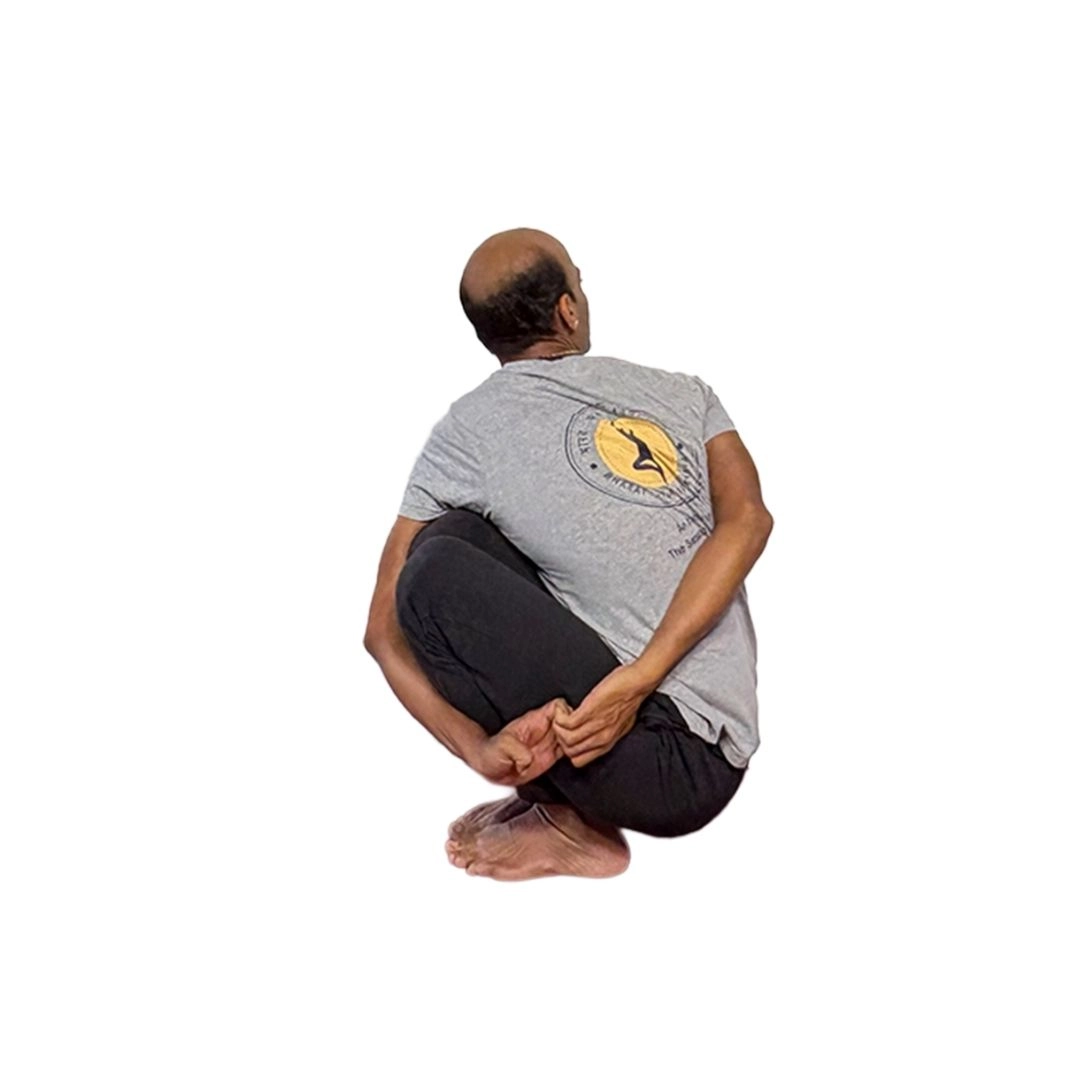
Pashasana (पाशासन), or Noose Pose, is an advanced twisting and balancing yoga pose that combines a deep squat with a spinal twist and a bind. It is a challenging posture that requires flexibility in the ankles, hips, and spine, as well as strength in the legs and core.
How to do Pashasana
Benefits of Pashasana
- Spinal Mobility:
The deep twist improves the flexibility and range of motion of the entire spine, from the thoracic to the lumbar region.
Strengthens and Stretches: It strengthens the thighs, knees, and ankles while providing an intense stretch for the shoulders, back, and hips. - Stimulates Internal Organs:
The twisting action massages the abdominal organs, which can aid in digestion and detoxification.
- Improves Balance:
Pashasana challenges your balance, which helps to improve stability and concentration. - Calming Effect:
Like other twists and forward bends, this pose can help calm the nervous system and relieve stress.
Contraindications of Pashasana
Avoid or modify this pose if you have:
- Knee Injuries or Pain:
This is a primary contraindication. The deep squat required in Pashasana puts significant pressure and flexion on the knee joints. Individuals with any kind of knee injury, arthritis, or chronic knee pain should avoid this pose entirely. - Lower Back Injuries or Pain:
The intense twisting action combined with the forward fold can be very hard on the lumbar spine. People with back pain, a herniated disc, or sciatica should not attempt Pashasana. - Ankle Injuries or Stiffness:
The pose requires a lot of flexibility in the ankles, particularly to keep the heels flat on the floor in the deep squat. If you have any ankle injuries or very limited ankle mobility, you should avoid this pose. - Recent Abdominal Surgery or Hernia:
The deep twist and compression of the abdominal organs can be dangerous for someone recovering from recent surgery or with a hernia.
- High Blood Pressure:
The pose involves a deep squat and a twist, which can temporarily elevate blood pressure. People with high blood pressure should avoid or modify this pose with caution. - Pregnancy:
The deep twist and pressure on the abdomen make this pose unsafe for pregnant women. - Dizziness or Vertigo:
The combination of a low squat, deep twist, and head position can trigger dizziness or vertigo in some people. - Digestive Issues:
While the twist can aid digestion, it can also be uncomfortable or problematic for people with certain inflammatory bowel diseases (IBD) or other severe digestive issues.
Anatomy (Muscles involved)
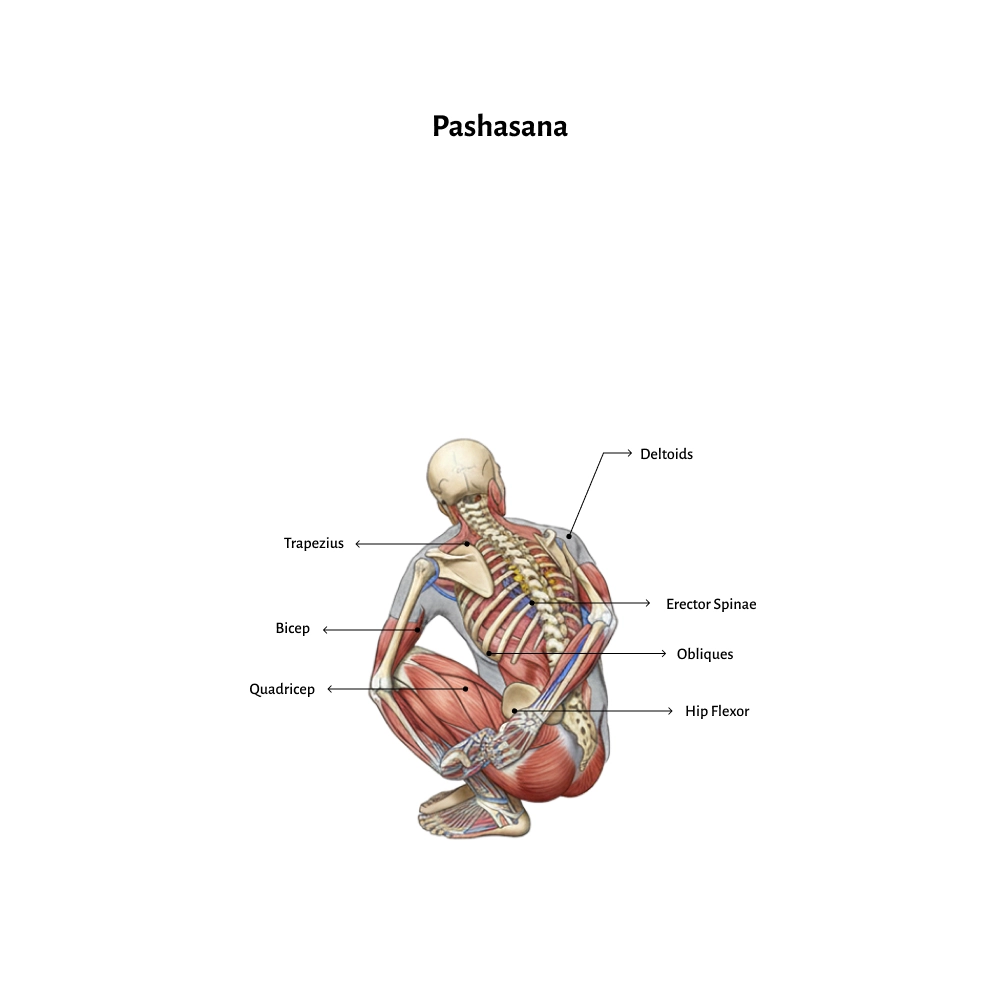
Pashasana engages and stretches a wide range of muscles and joints:
Lower Body: The Foundation
The lower body provides the foundation and stability for the entire pose.
Muscles Strengthened:
- Quadriceps:
The muscles on the front of the thighs (rectus femoris, vastus lateralis, vastus medialis) are strongly engaged to stabilize the knee joints and support the body’s weight in the deep squat. - Gluteus Maximus & Minimus:
The glute muscles work to stabilize the hips and assist in the internal rotation of the legs. - Calves & Ankles: The entire body weight is placed on the feet, which tones and strengthens the muscles of the ankles and calves (gastrocnemius and soleus).
Muscles Stretched:
- Achilles Tendons and Calves:
These are deeply stretched as you work to keep your heels flat on the floor in the full squat. - Hip Flexors:
The deep squat requires flexibility in the hips, stretching the hip flexor muscles.
Core and Torso: The Twist
The core and torso are the primary movers in the twisting action of the pose.
Muscles Strengthened:
- Abdominals (Obliques, Transverse Abdominis):
The obliques are the main muscles responsible for the deep spinal twist. The transverse abdominis and other core muscles are engaged to stabilize the trunk and protect the spine. - Erector Spinae: The muscles along the spine (erector spinae) work to maintain an upright, lengthened posture and prevent slouching.
Upper Body: The Bind and Opening
The bind of the arms behind the back requires significant shoulder and chest flexibility.
Muscles Strengthened:
- Biceps & Triceps:
These muscles are engaged to assist in creating the bind and pulling the torso into the twist. - Rhomboids and Trapezius:
These upper back muscles are active to draw the shoulder blades down and back, preventing the shoulders from hiking up.