Surya Yantrasana सूर्य यंत्रासन
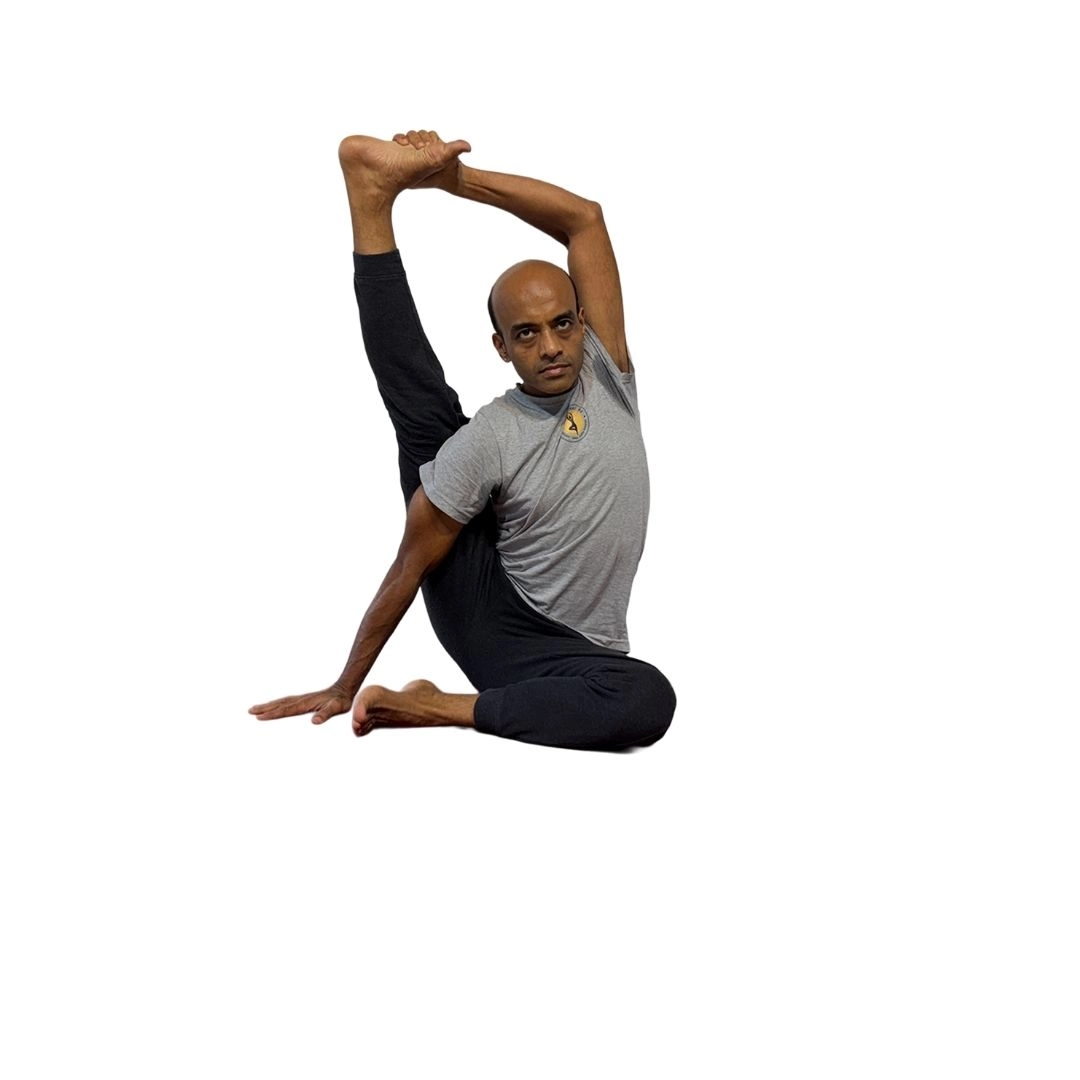
Surya Yantrasana सूर्य यंत्रासन, or Compass Pose, is an advanced seated yoga pose that requires significant flexibility in the hips, hamstrings, and shoulders. Its name comes from Sanskrit, with “Surya” meaning sun and “Yantra” meaning instrument, as the pose resembles a compass pointing to the sun.
How to do Surya Yantrasana
Benefits of Surya Yantrasana
- Deep Stretching:
Provides an intense stretch for the hamstrings, inner thighs (adductors), and the muscles along the side of the body (latissimus dorsi and obliques). - Hip and Shoulder Opening:
This pose is a powerful hip and shoulder opener, which helps to increase flexibility and range of motion in these areas. - Spinal Mobility:
The twisting action of the spine improves its flexibility and promotes better circulation to the back muscles.
- Core Strength and Balance:
Engaging the core is essential for stability in this pose, which helps to strengthen the abdominal muscles. The pose also significantly improves balance and coordination. - Mental Focus:
As a challenging pose, it requires concentration and patience, helping to calm the mind and improve mental clarity.
Contraindications of Surya Yantrasana
Avoid or modify this pose if you have:
- Injuries:
Avoid this pose if you have injuries to the back, neck, knees, hips, or shoulders. - Sciatica:
This pose can put pressure on the sciatic nerve and should be avoided if you have sciatica.
- Pregnancy:
The deep twist and abdominal compression are not recommended during pregnancy. - Slipped Disc:
Individuals with a slipped disc or other severe spinal conditions should not attempt this pose.
Anatomy (Muscles involved)
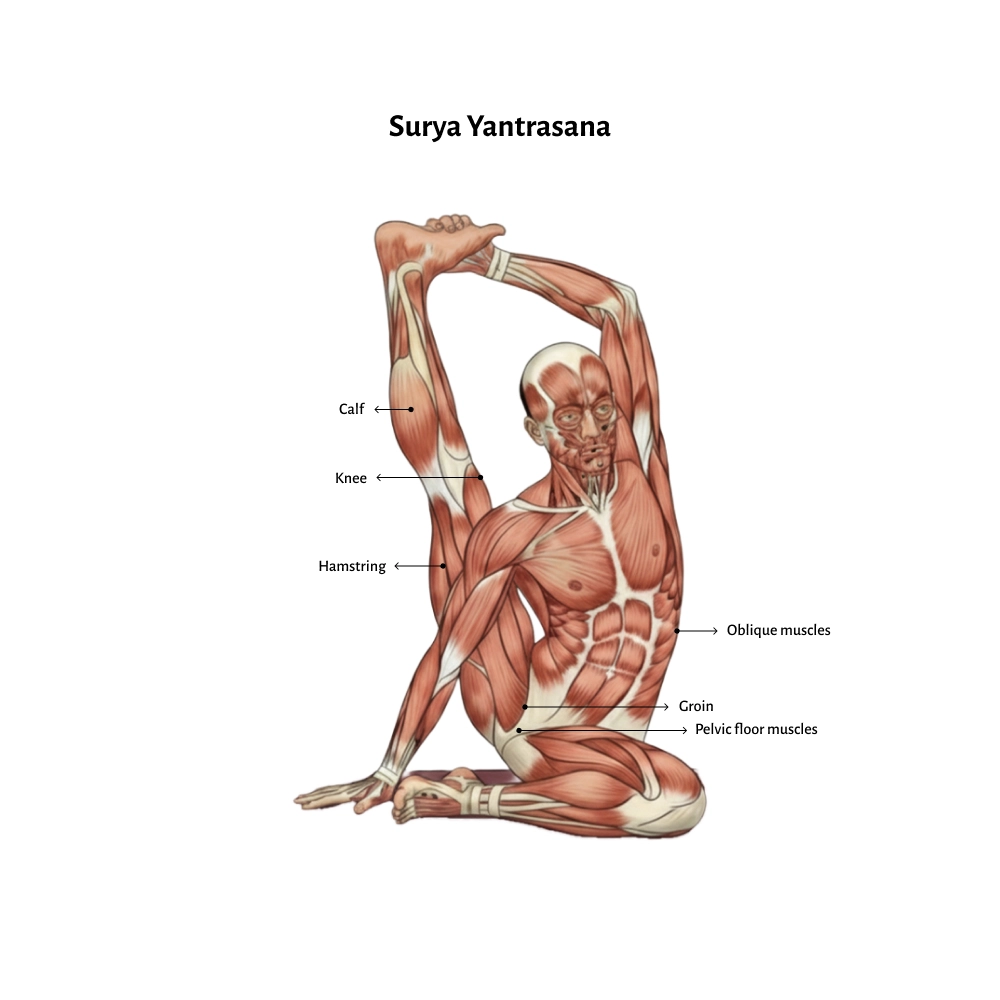
This pose engages a complex network of muscles and joints:
Hip Flexion:
The femur (thigh bone) of the lifted leg is in deep flexion at the hip joint.
Hip Abduction:
The leg is moved away from the body’s midline.
Knee Extension:
The knee of the lifted leg is extended as you straighten the leg.
Hip External Rotation:
The front hip of the grounded leg is externally rotated in the seated position.
Spinal Elongation:
It’s vital to lengthen the spine out of the hips to create space for the twist and side bend.
Lateral Spinal Flexion:
The spine bends to the side away from the lifted leg.
Shoulder Flexion and Abduction:
The shoulder on the lifted leg side is flexed (lifted forward) and abducted (moved away from the body).
Elbow Flexion:
The elbow is bent to hold the leg.