Baddha Konasana (बद्धकोणासन)
Baddha Konasana (बद्धकोणासन), or Bound Angle Pose, is a fundamental seated yoga posture that provides a deep stretch to the hips, groin, and inner thighs. The name is derived from the Sanskrit words baddha (bound), kona (angle), and asana (posture). It’s also commonly referred to as Cobbler’s Pose or Butterfly Pose.
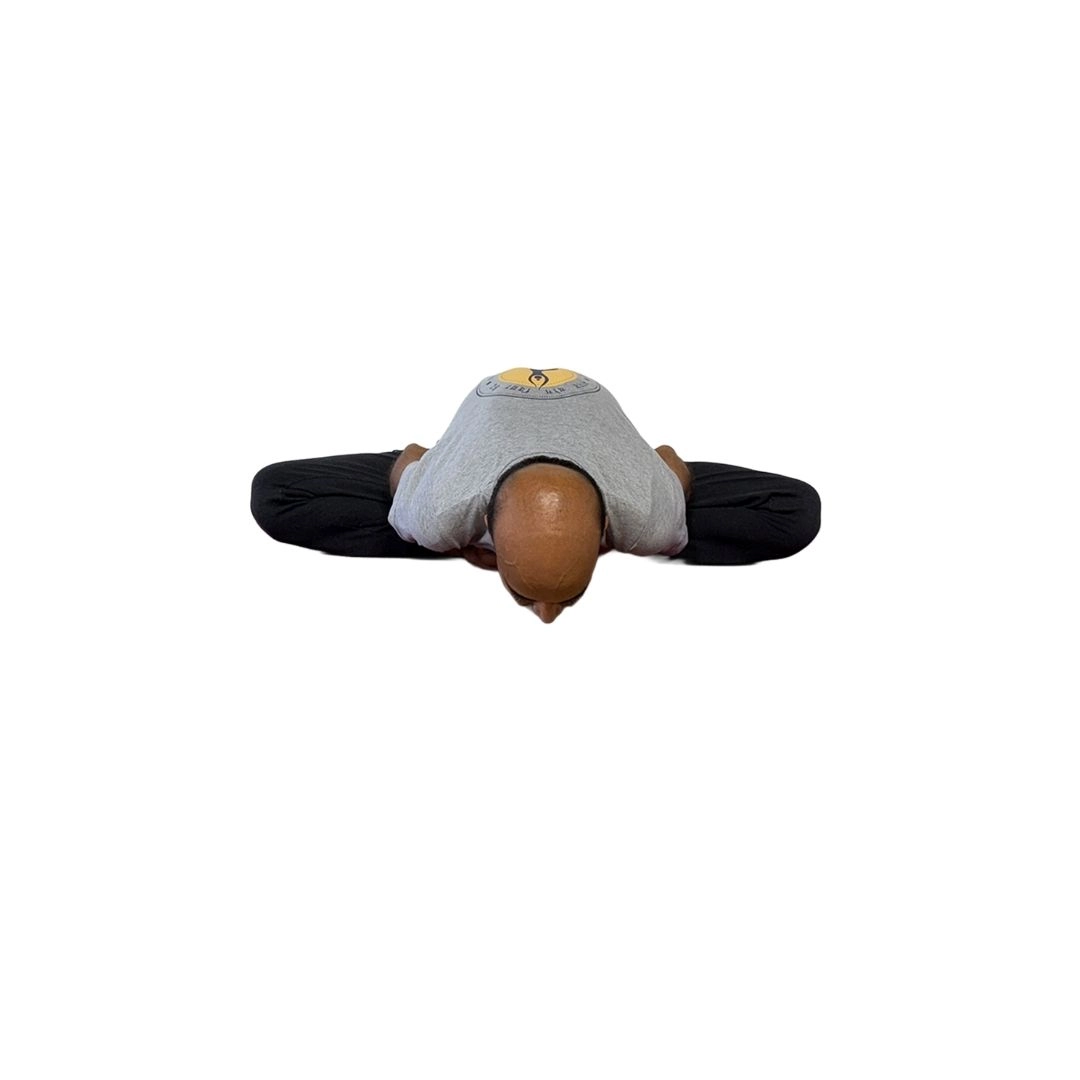
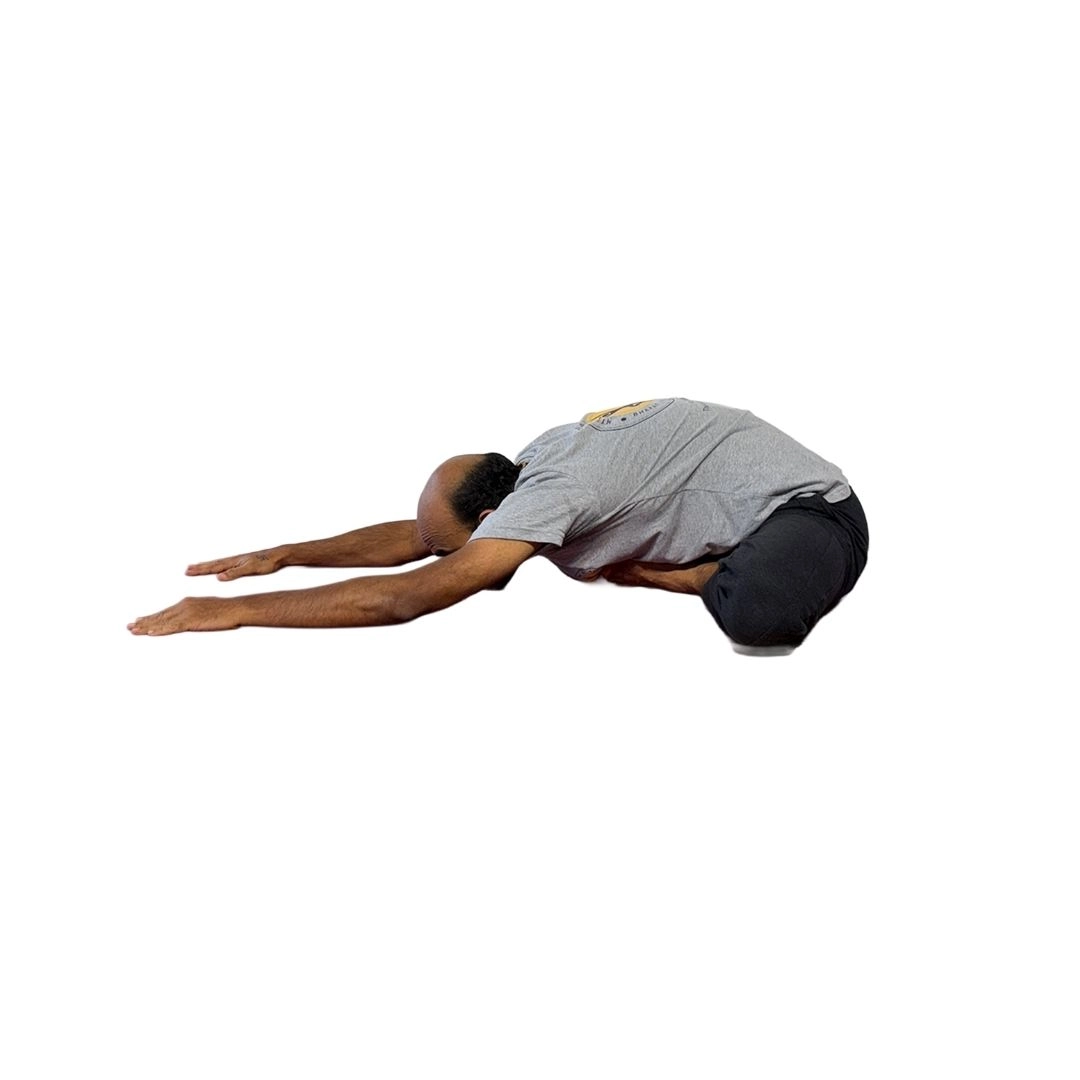
How to do Baddha Konasana
Benefits of Baddha Konasana
Benefits of Baddha Konasana (Both A and B)
- Improves flexibility:
Deeply stretches the inner thighs, groin, and hips, improving overall hip mobility. - Aids digestion:
The gentle pressure on the abdominal area stimulates the digestive organs. - Relieves stress and anxiety:
The hip-opening nature of the pose can help release tension and emotional stress often stored in the hips and pelvic area. It also has a calming effect on the nervous system.
- Beneficial for women’s health:
Increases blood circulation to the pelvic region, which can help alleviate symptoms of menstruation, menopause, and chronic pelvic pain. It is also often recommended as a prenatal exercise to help open the hips in preparation for childbirth. - Improves posture:
Regularly practicing the pose can help with lower back pain and improve overall posture by stretching and strengthening the back muscles.
Contraindications of Baddha Konasana
While Baddha Konasana is generally safe, it’s essential to listen to your body and avoid the pose if you have certain conditions or injuries.
- Knee, hip, or groin injury:
The pose puts significant pressure on these joints. Avoid it if you have a recent or chronic injury in these areas. Never force your knees toward the floor. - Sciatica:
If you experience pain from sciatica, be cautious and avoid any movement that exacerbates the pain. - Low back pain:
If you have severe low back issues, especially in Baddha Konasana A, ensure you are not rounding your back. If you must, a rounded back is the purpose of Baddha Konasana B, but still proceed with caution.
- Pregnancy:
While often recommended for pregnant women, it’s crucial to consult a doctor and practice under the guidance of a qualified yoga teacher. Avoid forcing any stretch, and use props like a bolster or blankets for support. - Tight hips:
If your hips are very tight, avoid sitting on the floor. Instead, sit on a blanket or block to elevate your hips, which will allow your pelvis to tilt forward and reduce strain on your knees.
Anatomy (Muscles involved)
This pose engages a complex network of muscles and joints:
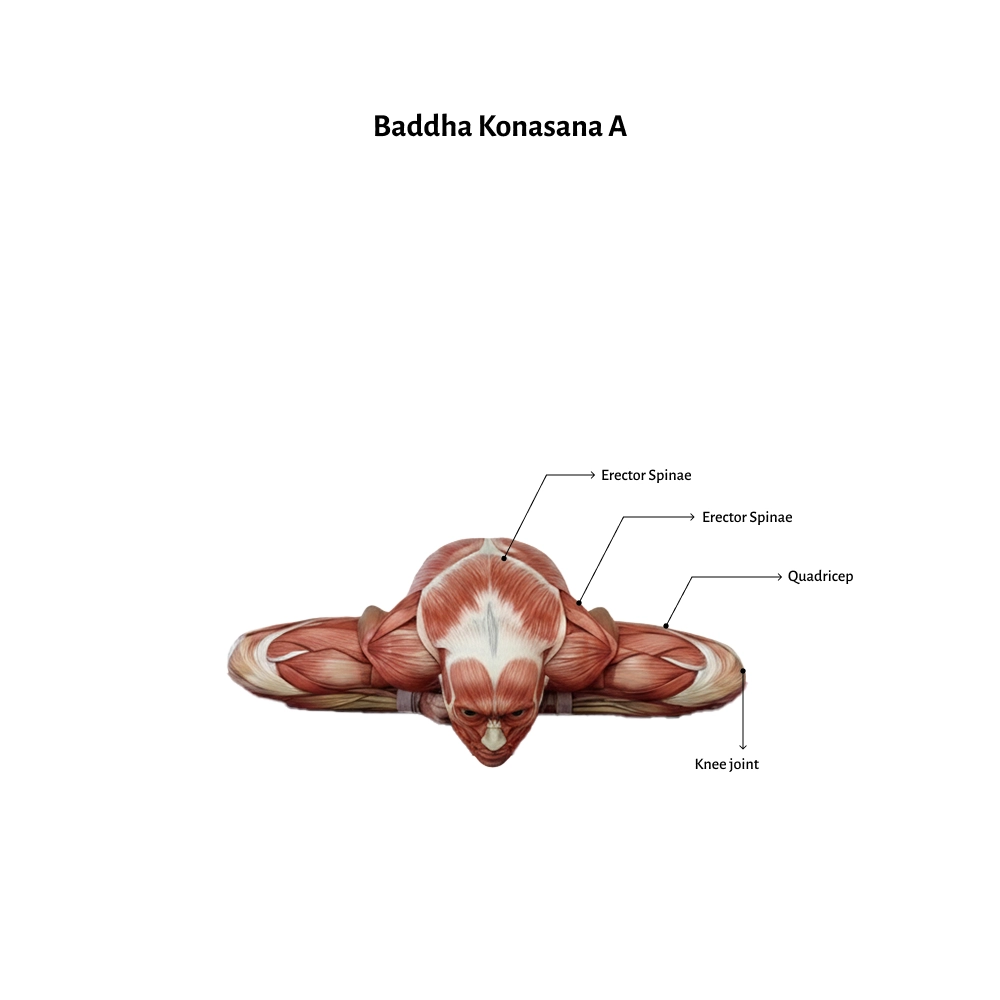
Anatomy of Baddha Konasana A
Primary muscles stretched:
Adductors (inner thighs), hip flexors, groin, and pelvic floor muscles.
Muscles strengthened:
The core and lower back muscles are engaged to maintain a long, straight spine. The glutes and hip muscles are also active to facilitate the external rotation of the hips.
Joints involved:
This pose deeply stretches the hip, knee, and ankle joints, improving their range of motion.
Anatomy of Baddha Konasana B
Primary muscles stretched:
This pose provides a deeper stretch to the hips, inner thighs, and the entire back, including the lower, middle, and upper back muscles.
Muscles strengthened:
The core muscles are still engaged to support the forward bend.
Joints involved:
Like Baddha Konasana A, this pose works on the hips, knees, and ankles, but the rounded spine adds a stretch to the vertebrae and spinal ligaments.