Bhujangasana (भुजंगासन)
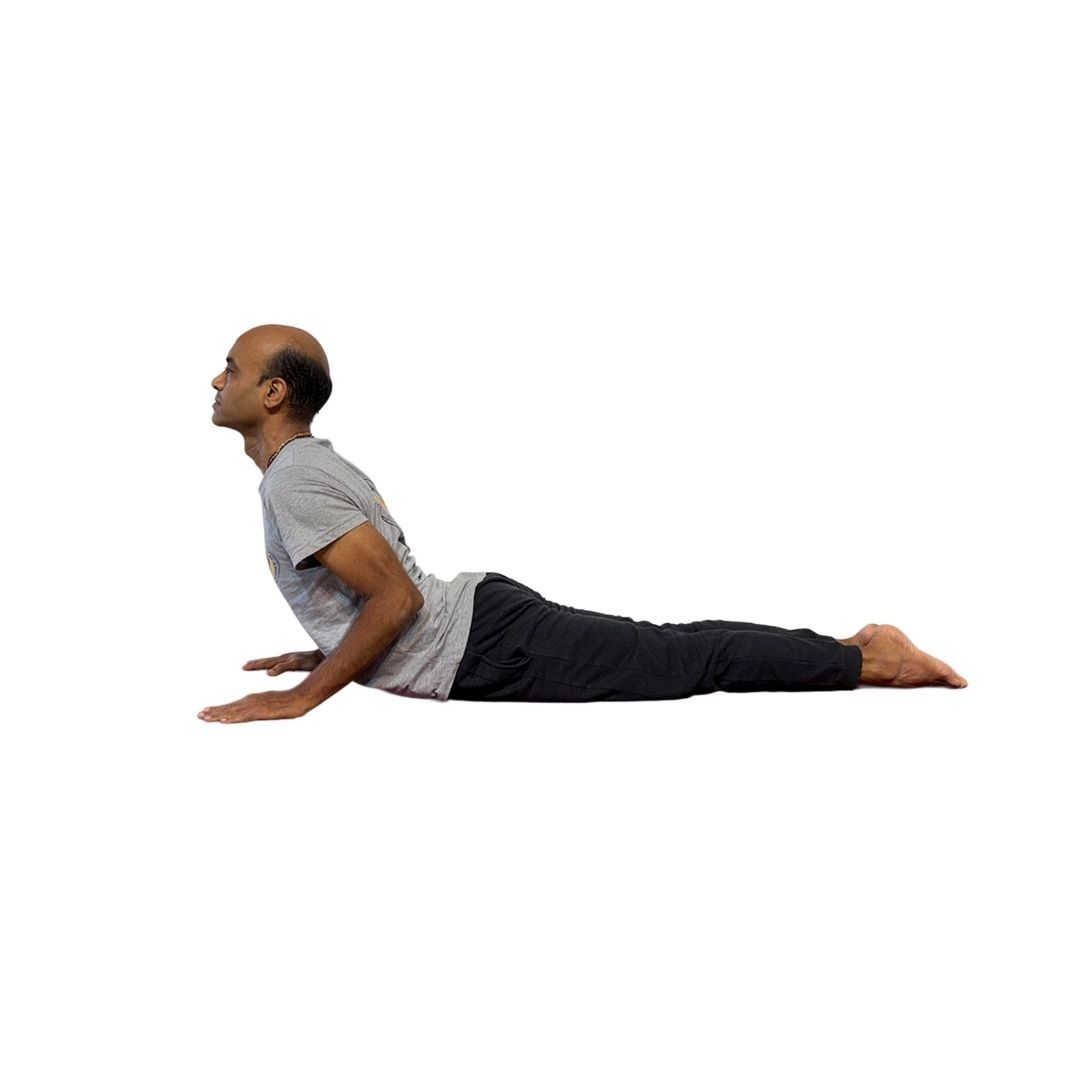
Bhujangasana (भुजंगासन), or Cobra Pose, is a foundational prone backbend in yoga that is part of the traditional Sun Salutation sequence. The name comes from the Sanskrit word “bhujaṅga” (serpent or cobra) and “asana” (posture). The pose gets its name from the way the body, when lifted from the floor, resembles a cobra with its hood raised.
How to do Bhujangasana
Benefits of Bhujangasana
- Strengthens the Spine and Back:
It helps to strengthen the muscles of the entire back, improving posture and reducing stiffness. It is particularly beneficial for those who experience back pain due to long hours of sitting. - Stretches the Body:
The pose provides a deep stretch to the chest, abdomen, and shoulders, which can help counteract slouching and a sedentary lifestyle. - Stimulates Abdominal Organs:
The gentle pressure on the abdomen can stimulate the digestive, reproductive, and urinary systems, which can aid in digestion and metabolism.
- Improves Flexibility:
Regular practice increases the flexibility of the spine and the range of motion in the back. - Relieves Stress and Fatigue:
This heart-opening pose can help reduce stress and anxiety by promoting a sense of calm and relaxation. - Opens the Chest and Lungs:
It expands the chest cavity, which can improve lung capacity and be beneficial for people with respiratory issues like asthma (though it should be avoided during an asthma attack).
Contraindications of Bhujangasana
Avoid or modify this pose if you have:
- Back Injuries:
Avoid this pose if you have a herniated disc or severe back pain. - Recent Abdominal Surgery:
Individuals who have recently undergone abdominal surgery (including a C-section) should avoid this pose until fully healed. - Pregnancy:
The pose puts pressure on the abdomen and is not recommended for pregnant women.
- Wrist or Arm Injuries:
The pose requires some weight-bearing on the hands, so those with carpal tunnel syndrome or wrist injuries should be cautious. - Neck Injuries:
Be mindful of your neck and avoid tilting your head back excessively. Keep the neck long and the gaze neutral. - Hernia or Peptic Ulcer:
Avoid this pose as it puts pressure on the abdomen. - High Blood Pressure:
The pose can increase heart rate and may not be suitable for people with high blood pressure.
Anatomy (Muscles involved)
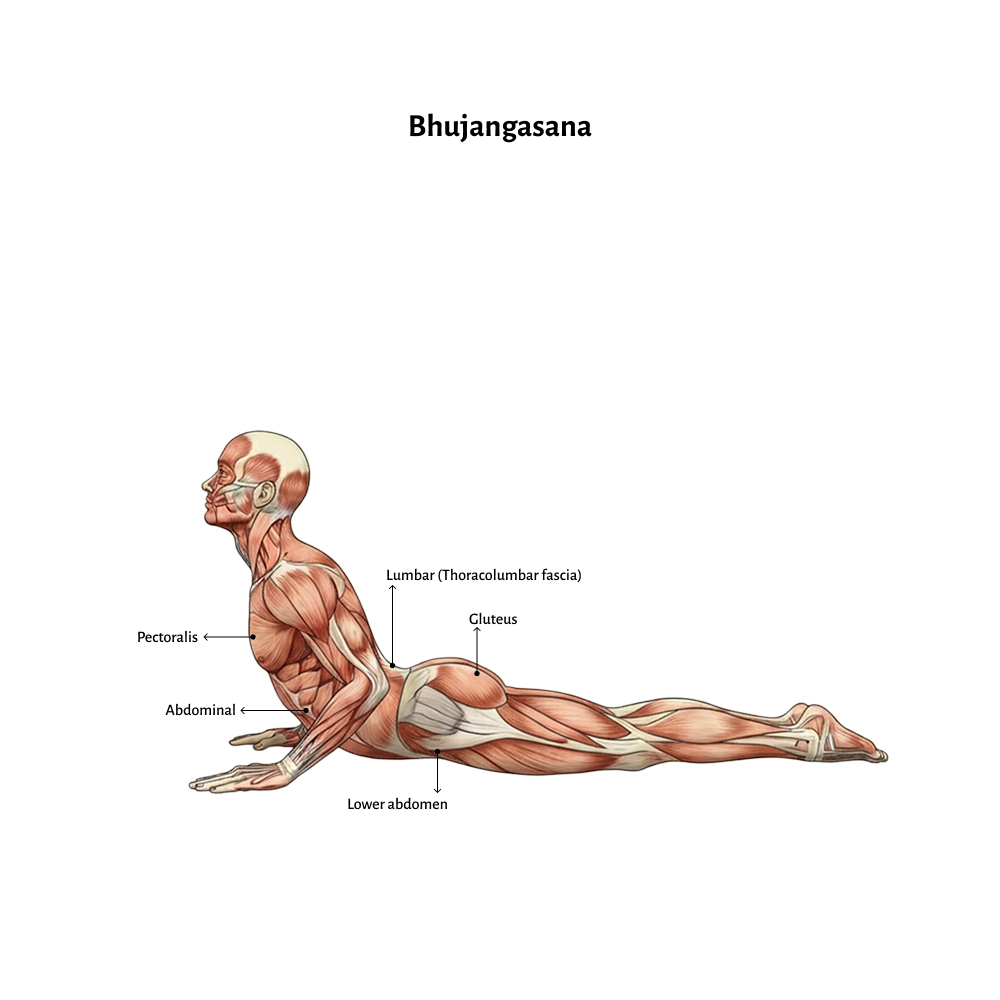
This pose engages a complex network of muscles and joints:
Muscles Engaged:
- Spinal Muscles:
Erector spinae, multifidus, and other muscles along the spine contract to create the backbend. - Upper Back and Shoulders:
The trapezius and rhomboids draw the shoulder blades together, while the deltoids and triceps are engaged to support the body. - Core Muscles:
The abdominal muscles are engaged to protect the lower back and support the spine. - Glutes and Hamstrings:
The gluteus maximus and hamstrings are active to stabilize the lower body.
Muscles Stretched:
- Abdomen:
The rectus abdominis and oblique muscles are stretched. - Chest:
The pectoralis major and minor are stretched, opening the chest. - Hip Flexors:
The psoas muscle is stretched.