Dhanurasana (धनुरासन)
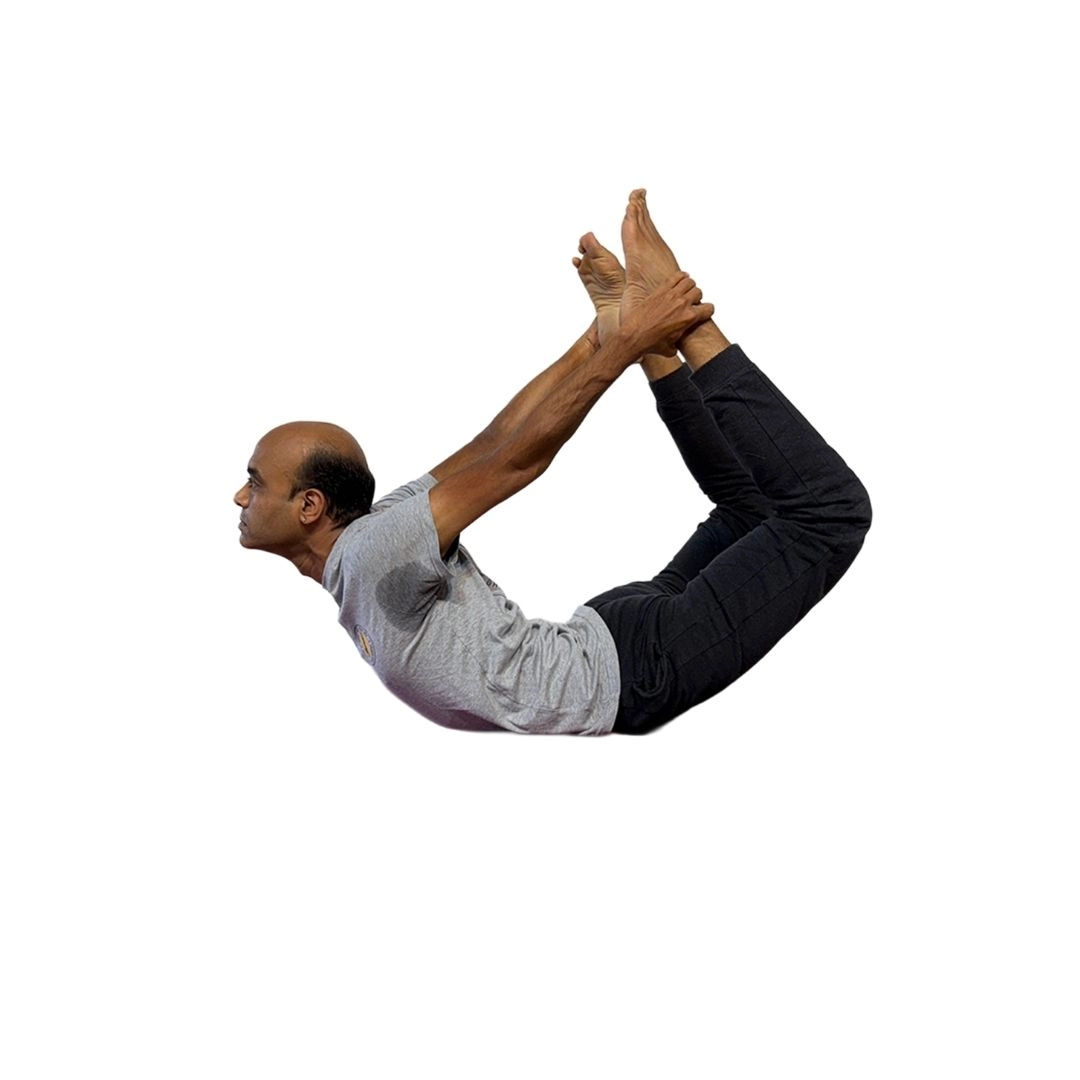
Dhanurasana (धनुरासन), or Bow Pose, is a foundational prone backbend in yoga that resembles an archer’s bow. The pose gets its name from the Sanskrit word dhanu (bow) and asana (posture). It is a powerful stretch for the front of the body and a significant strengthener for the back.
How to do Dhanurasana
Benefits of Dhanurasana
- Spinal Health:
Strengthens the back muscles, improves spinal flexibility, and helps to correct poor posture caused by prolonged sitting. - Muscular Strength:
Tones and strengthens various muscle groups, including the back, core, hamstrings, glutes, quadriceps, and arms. - Digestive System:
The compression and stretch of the abdominal area stimulate internal organs, which can aid digestion, alleviate constipation, and improve the function of organs like the liver, kidneys, and pancreas.
- Flexibility:
Deeply stretches the front of the body, including the chest, shoulders, abdomen, hip flexors, and quadriceps. - Circulation and Energy:
Promotes blood circulation throughout the body and can boost energy levels, helping to reduce fatigue. - Stress Relief: The pose opens the chest and helps to release tension from the shoulders and back, which can have a calming effect on the mind and reduce stress and anxiety.
Contraindications of Dhanurasana
Avoid or modify this pose if you have:
- Spinal Injuries:
Severe back pain, herniated discs, or any recent back surgery. - Abdominal Issues:
Stomach ulcers, a hernia, or recent abdominal surgery. - Neck or Shoulder Injuries:
This pose puts significant pressure on the neck and shoulders.
- Heart Conditions or Blood Pressure Issues:
High or low blood pressure. - Pregnancy:
The pose compresses the abdomen and is not safe during pregnancy. - Other Conditions:
Migraines, insomnia, or dizziness.
Anatomy (Muscles involved)
This pose engages a complex network of muscles and joints:
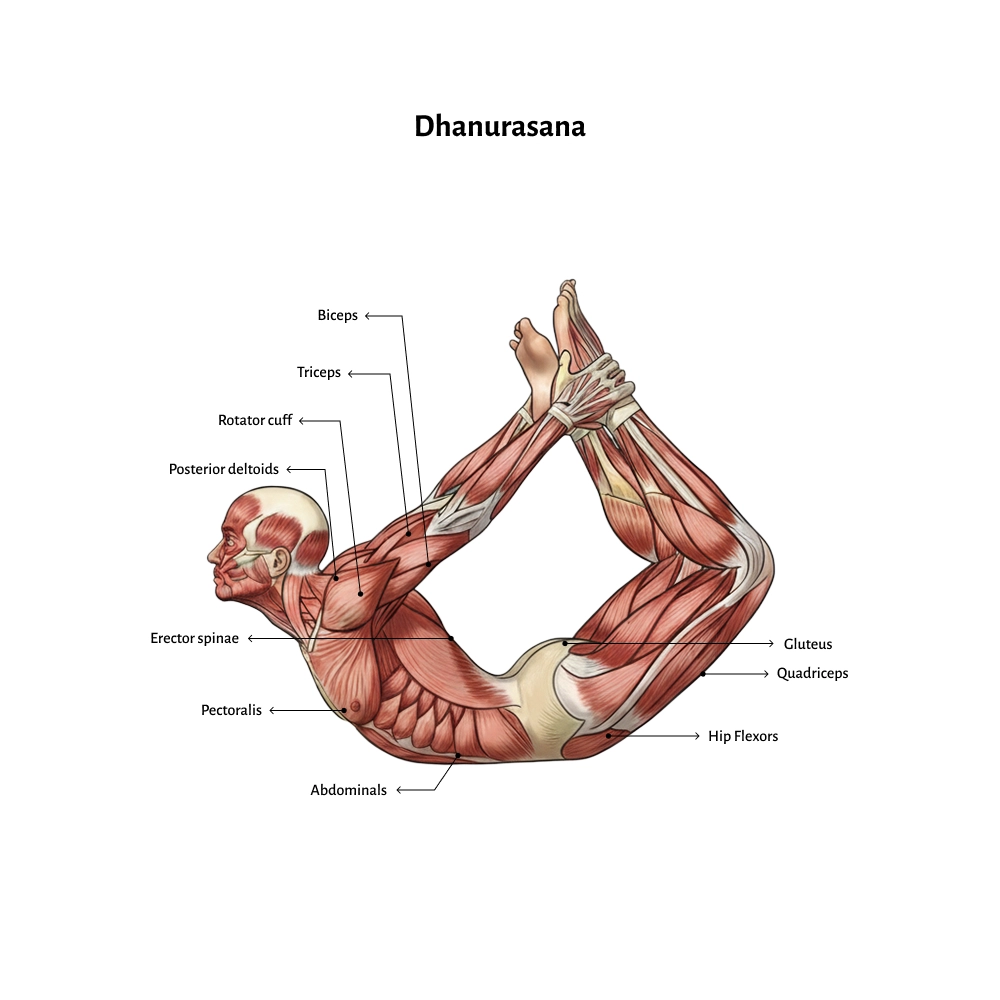
Muscles Engaged (Strengthened):
- Back:
Erector Spinae (muscles running along the spine) and Latissimus Dorsi (large back muscles) are crucial for lifting the chest and arching the back. - Glutes:
The Gluteus Maximus works to extend the hips and lift the legs. - Hamstrings:
Muscles at the back of the thighs contract to bend the knees. - Shoulders and Arms: The Deltoids and Triceps are engaged to pull the arms and chest away from the floor.
Muscles Stretched:
- Abdomen:
The Rectus Abdominis (abs) and deep hip flexors are stretched as the abdomen lifts. - Quadriceps:
The muscles on the front of the thighs are stretched as the knees bend and the legs are pulled back. - Chest and Shoulders:
The Pectoral muscles and the front of the shoulders are opened and stretched.