Chaturanga Dandasana (चतुरंग दण्डासन)
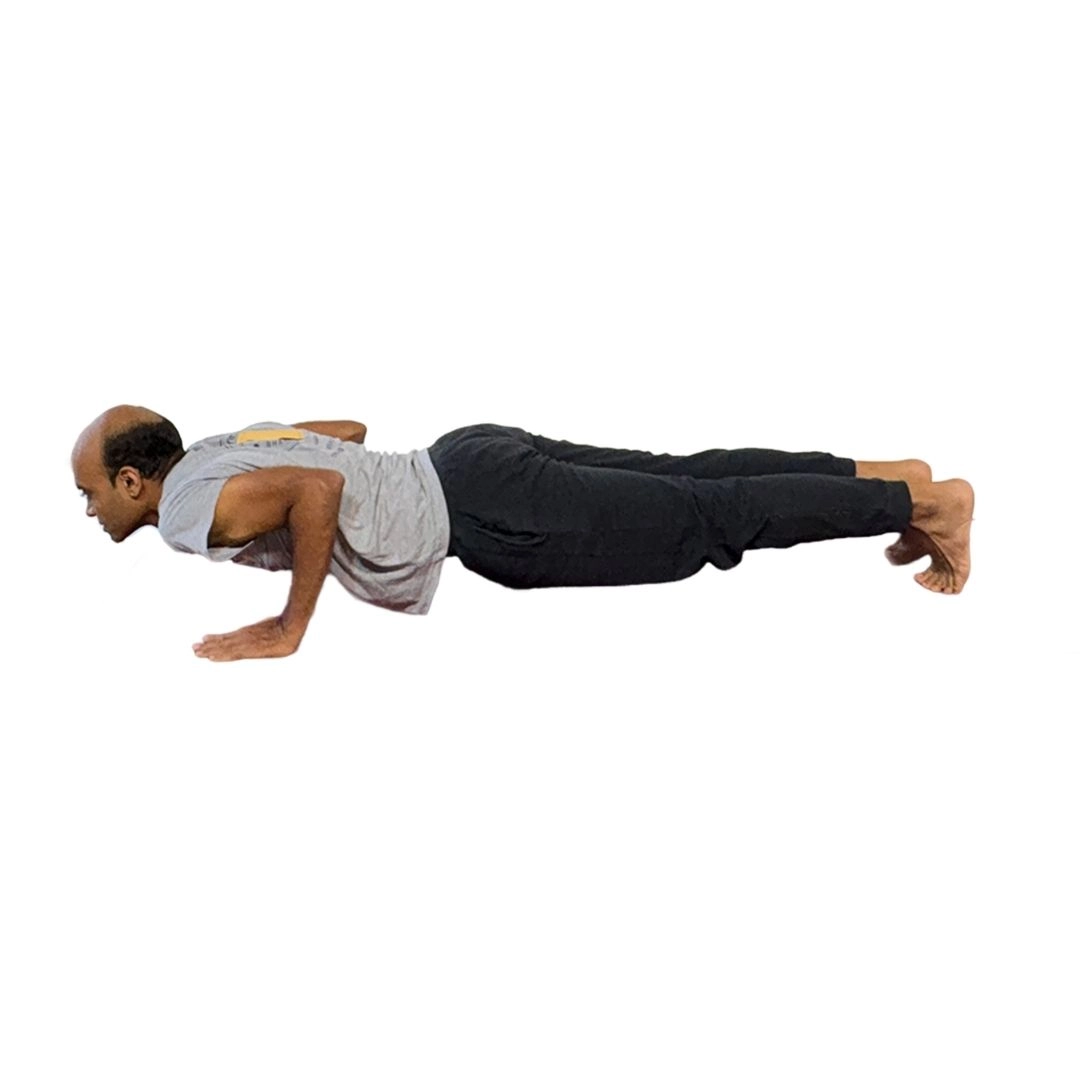
Chaturanga Dandasana (चतुरंग दण्डासन), or Four-Limbed Staff Pose, is a foundational yoga posture that strengthens the entire body. The name comes from the Sanskrit words “chatur” (four), “anga” (limb), “danda” (staff), and “asana” (posture). In this pose, the body is held straight and rigid like a staff, supported by four limbs
How to do Chaturanga Dandasana
Benefits of Chaturanga Dandasana
- Builds Upper Body Strength:
It is an excellent pose for strengthening the muscles of the arms, wrists, and shoulders, particularly the triceps and pectoralis muscles. - Strengthens Core:
The pose requires significant core engagement to maintain a straight spine and prevent the hips from sinking, which helps to tone the abdominal muscles. - Enhances Stability:
It improves stability in the shoulder girdle and wrists, which is crucial for more advanced arm balances and inversions.
- Improves Posture:
By strengthening the back and core muscles, Chaturanga helps to correct posture and can alleviate back pain. - Prepares for Other Poses:
It is a preparatory pose for many other challenging yoga asanas, including arm balances like Bakasana (Crow Pose) and inversions like Sirsasana (Headstand). - Improves Mental Focus:
Holding the pose requires concentration and discipline, which enhances mental focus and mindfulness.
Contraindications of Chaturanga Dandasana
Avoid or modify this pose if you have:
- Shoulder, Wrist, or Elbow Injuries:
Individuals with existing injuries in these joints, such as rotator cuff injuries, carpal tunnel syndrome, or arthritis, should avoid the full pose. - Back Pain:
If you have chronic or acute back pain, this pose can put undue stress on the lower back.
- Pregnancy:
It is generally recommended to avoid Chaturanga Dandasana during pregnancy. - Lack of Strength:
If you lack the necessary upper body and core strength, repeatedly performing the pose with improper alignment can lead to injury. It’s better to use modifications until you build strength.
Anatomy (Muscles involved)
This pose engages a complex network of muscles and joints:
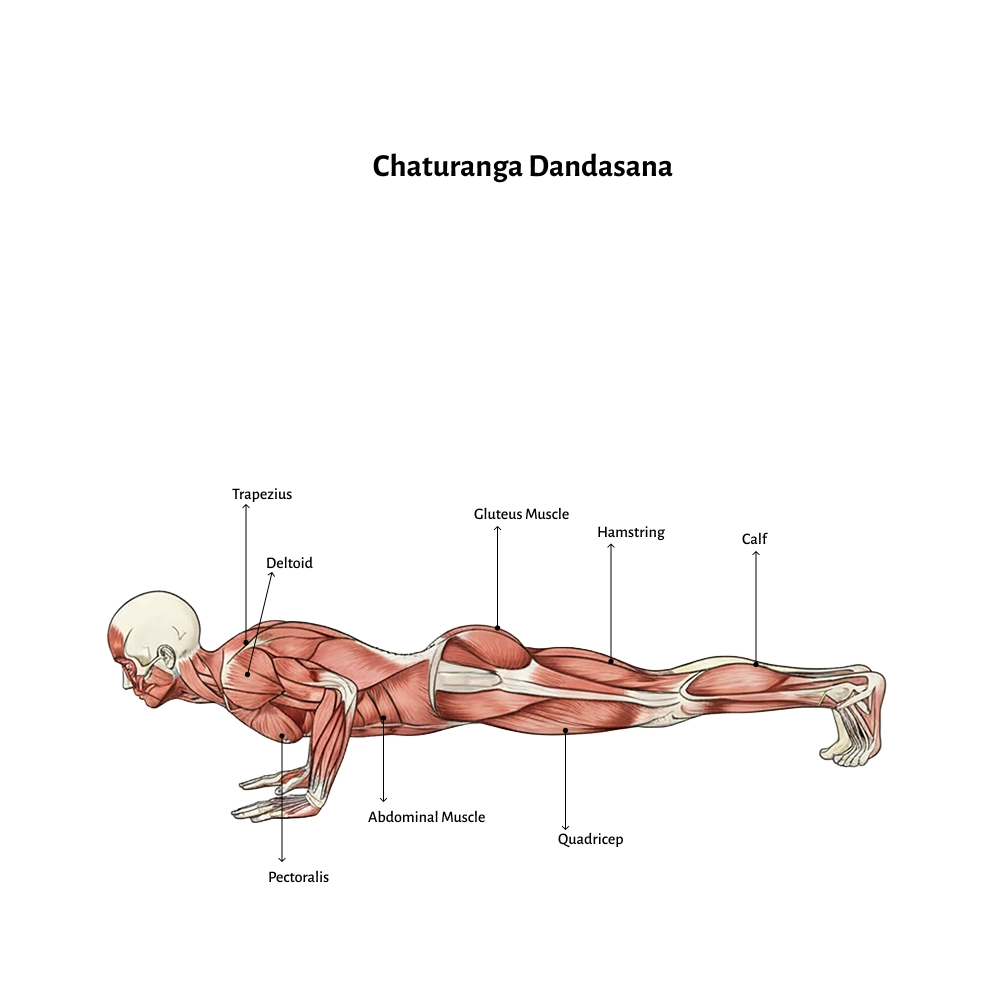
Pectoralis Major and Minor:
The chest muscles, which work to support the upper body.
Triceps Brachii:
Located on the back of the upper arm, these muscles work to extend the elbows and control the lowering motion.
Serratus Anterior:
These muscles, located on the side of the rib cage, stabilize the shoulder blades and prevent them from “”winging”” out.
Deltoids:
The shoulder muscles, which help to stabilize the shoulder joint.
Rectus Abdominis and Transverse Abdominis:
The core muscles that work to keep the spine straight and prevent the hips from sagging.
Quadriceps and Hamstrings:
The muscles in the legs, which are engaged to maintain a straight line from heels to head.