Padma Sarvangasana (पद्म सर्वांगासन)
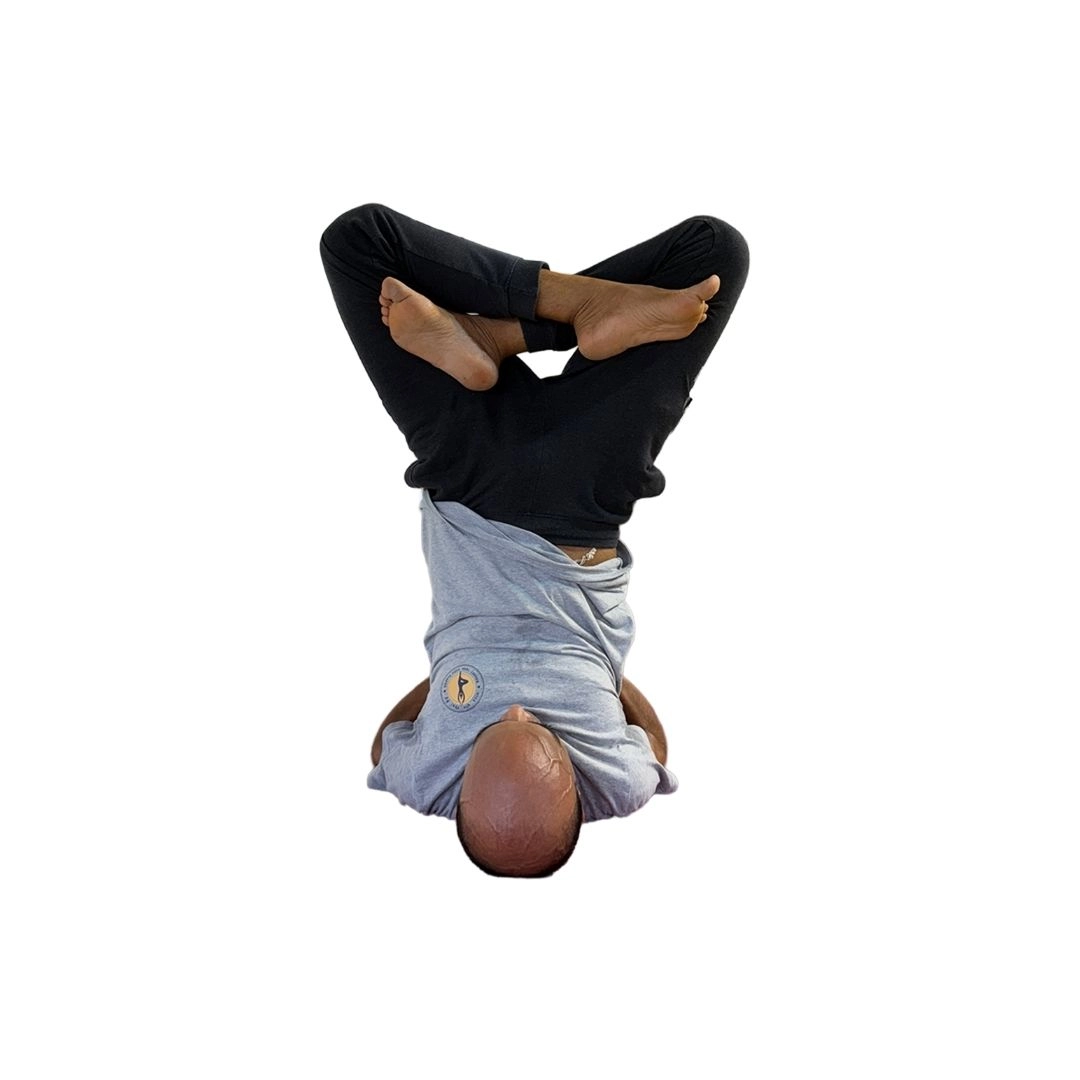
Padma Sarvangasana (पद्म सर्वांगासन), or Lotus Shoulder Stand, is an advanced variation of Sarvangasana (Shoulder Stand). The pose combines the inverted nature of Shoulder Stand with the deep hip-opening and intricate leg position of Padmasana (Lotus Pose). The name comes from the Sanskrit words “padma” (lotus), “sarva” (all), “anga” (limbs or body parts), and “asana” (posture).
How to do Padma Sarvangasana
Benefits of Padma Sarvangasana
- Circulatory and Endocrine System:
As an inversion, it reverses the flow of blood, promoting circulation to the upper body and head. This is believed to stimulate the thyroid and parathyroid glands, which are crucial for metabolism and bone health. - Flexibility and Strength:
It deeply stretches the neck, shoulders, and the back of the legs while strengthening the core, spinal muscles, and neck. The lotus position in an inverted state also significantly increases the flexibility of the hip joints, ankles, and knees.
- Internal Organs:
The pose massages the abdominal organs, which can aid in digestion and detoxification. It also puts pressure on the pelvic region, promoting blood flow and health in that area. - Mental and Emotional Well-being:
Inversions are known to calm the mind and relieve stress. The combination with the meditative lotus position can lead to a sense of tranquility and a deep sense of peace.
Contraindications of Padma Sarvangasana
Avoid or modify this pose if you have:
- Neck or Shoulder Injury:
Any pre-existing neck or shoulder pain, injury, or conditions like spondylitis. - High Blood Pressure or Heart Conditions:
The inversion can increase blood pressure and is not recommended for people with cardiovascular issues. - Glaucoma:
The increased blood flow to the head can raise intraocular pressure. - Menstruation or Pregnancy:
It is generally advised to avoid inversions during these times.
- Headaches or Migraines:
The pose may exacerbate headaches. - Throat or Ear Infections:
Increased blood flow to the head may cause discomfort. - Recent Surgery:
Especially abdominal surgery. - Weak Internal Organs:
Conditions affecting the spleen, liver, or kidneys.
Anatomy (Muscles involved)
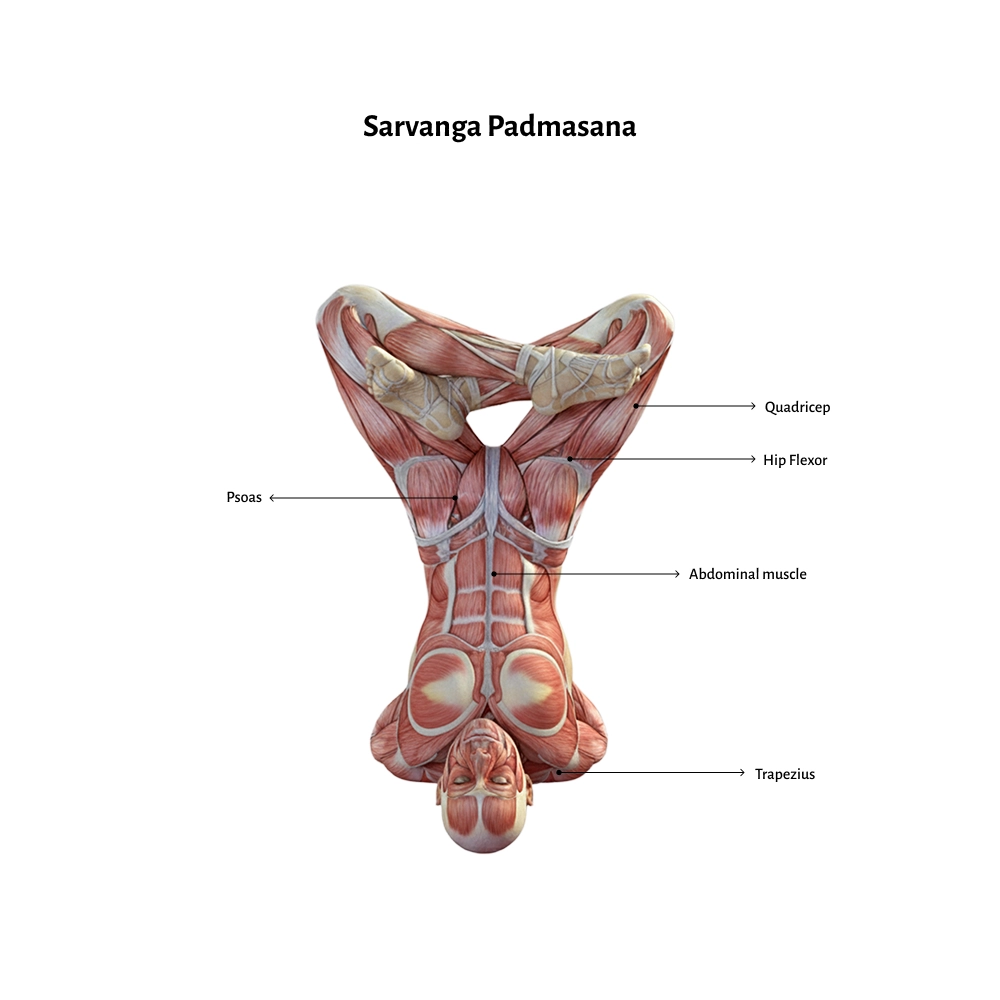
This pose engages a complex network of muscles and joints:
Stretching:
The pose stretches the muscles of the neck (cervical spine and trapezius), shoulders, and the entire back. The lotus pose adds a deep stretch to the hip flexors, glutes, and inner thighs.
Strengthening:
It strengthens the core muscles, spinal muscles, and muscles of the neck and shoulders, as they work to stabilize and hold the body in the inverted position. The glutes and hip flexors are also engaged to maintain the lotus position.
Joints:
The pose involves significant external rotation of the hip joints and deep flexion of the knees and ankles to form the lotus position. The cervical spine is also in a state of deep flexion.