Setu Bandhasana (सेतु बन्धासन)
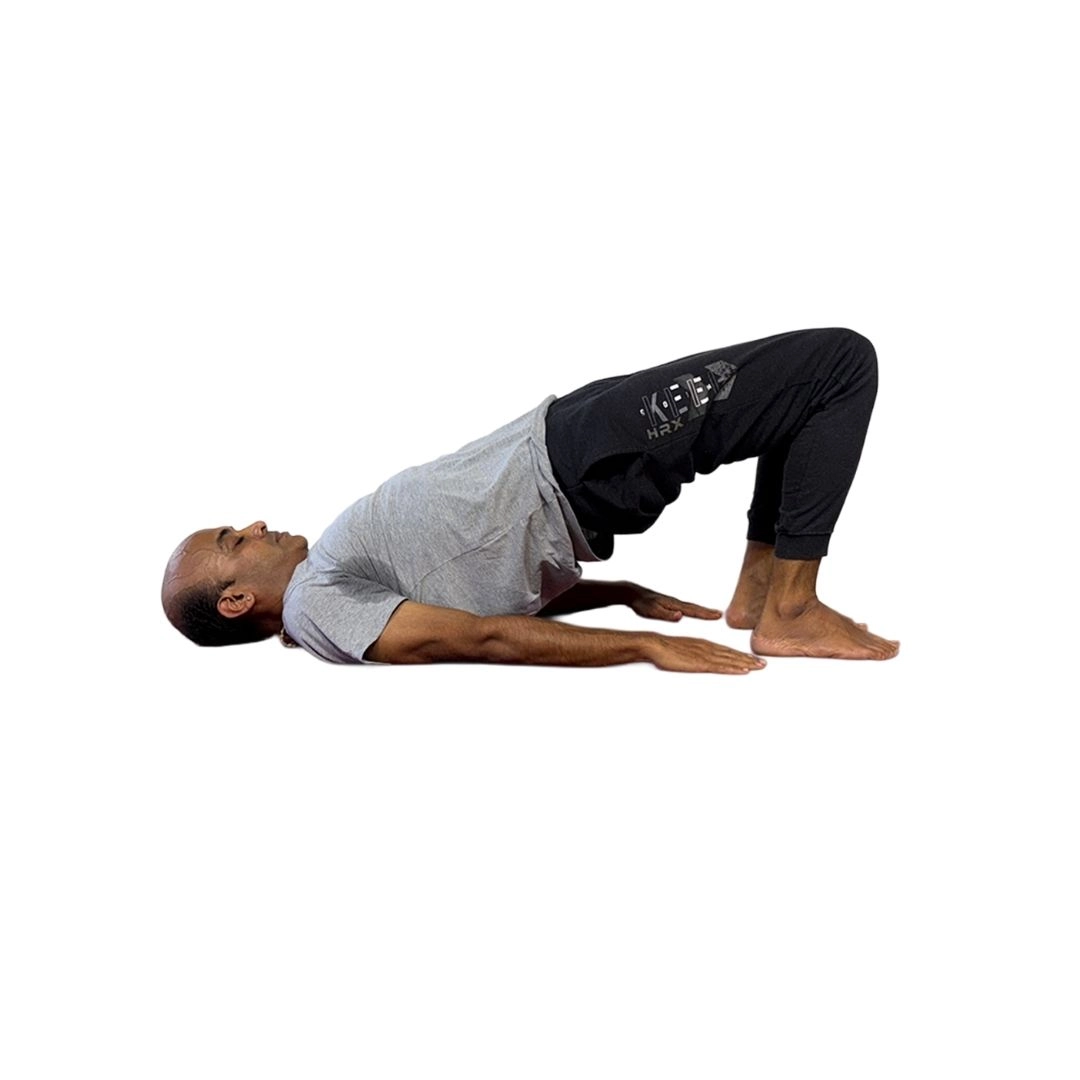
Setu Bandhasana (सेतु बन्धासन), or Bridge Pose, is a foundational supine backbend in yoga. The name comes from the Sanskrit words “setu” (bridge), “bandha” (lock or bond), and “asana” (posture). In this pose, the body forms a bridge-like shape, which is why it’s commonly known as Bridge Pose. It is a versatile posture that can be both a gentle restorative pose and a powerful strengthener.
How to do Setu Bandhasana
Benefits of Setu Bandhasana
- Strengthens and Stretches:
It builds strength in the back, glutes, hamstrings, and core, while simultaneously stretching the chest, neck, and spine. This combination helps improve posture and alleviate back pain. - Improves Circulation:
As a mild inversion (where the heart is elevated above the head), it encourages better blood flow to the brain and other organs, which can help relieve fatigue, headaches, and anxiety. - Calms the Nervous System:
The pose is known to calm the brain, reduce stress, and soothe mild depression. It activates the parasympathetic “”rest and digest”” nervous system, promoting relaxation and mental clarity.
- Stimulates Organs:
The gentle compression of the abdomen massages the internal organs, which can aid in digestion and metabolism. The chin lock (Jalandhara Bandha) in the pose stimulates the thyroid gland. - Relieves Respiratory Issues:
By opening the chest, the pose helps increase lung capacity, making it beneficial for individuals with asthma or other respiratory conditions.
Contraindications of Setu Bandhasana
Avoid or modify this pose if you have:
- Neck or Spinal Injuries:
The pose puts pressure on the neck and spine, so it should be avoided if you have a recent or chronic injury in these areas. - Knee or Ankle Injuries:
The feet and knees bear weight in this pose, so it may not be suitable if you have a sprain or a weak joint. - Hernia or Abdominal Hernias:
The core engagement and abdominal lift required can be problematic for people with a hernia.
- High Blood Pressure or Heart Conditions:
The mild inversion and increased blood flow to the heart may be a risk. - Pregnancy:
Women in advanced stages of pregnancy should avoid this pose unless under the guidance of a qualified yoga instructor.
Anatomy (Muscles involved)
This pose engages a complex network of muscles and joints:
Muscles Strengthened:
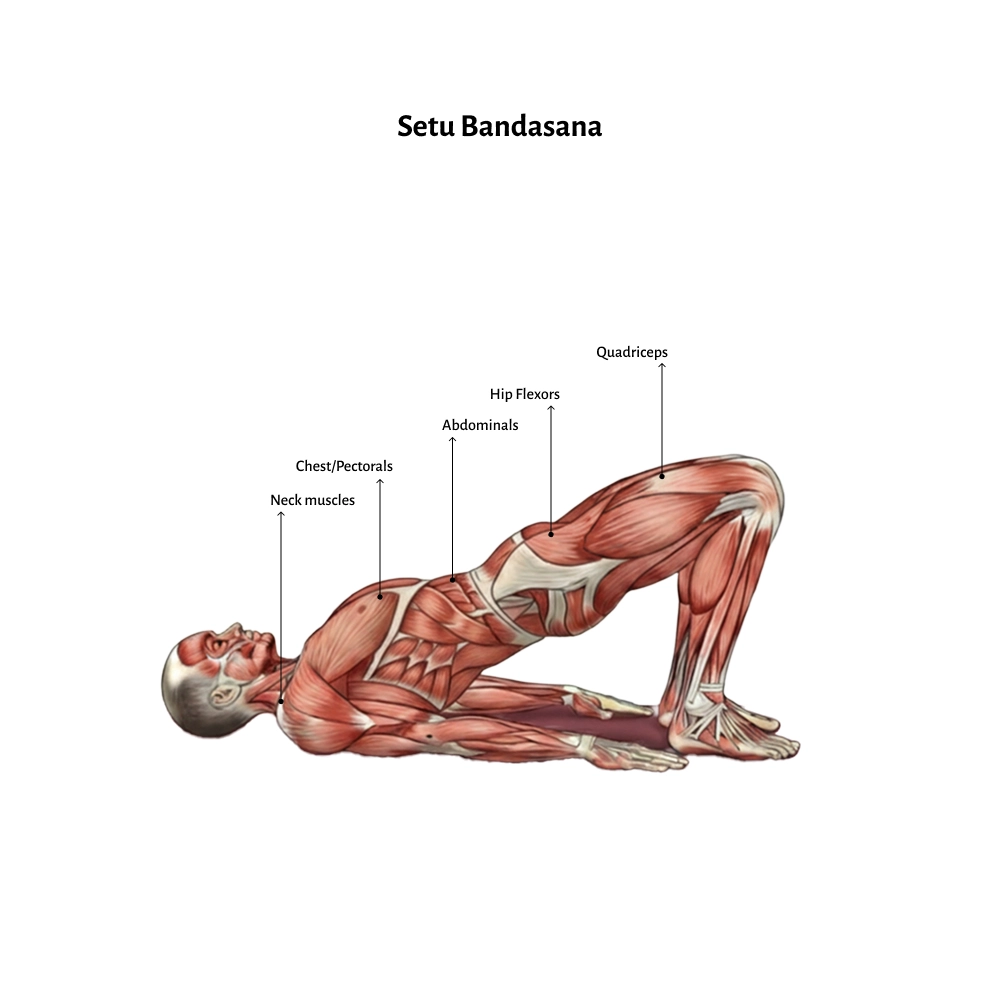
The pose primarily strengthens the gluteus maximus, hamstrings, and erector spinae (the muscles running along the spine). It also engages the quadriceps and core muscles (including the rectus abdominis, transverse abdominis, and obliques) to support the spine and maintain stability.
Muscles Stretched:
The pose provides a deep stretch to the front of the body, including the chest, shoulders, and neck. It also opens the hip flexors, which often become tight from prolonged sitting.
Spinal Action:
The spine moves into extension, engaging the vertebrae and surrounding muscles. This gentle arch helps to decompress the spine and improve its flexibility.