Yoga Upanishads: The Mind and the Breath
Most of us would say the mind is the problem. It will not stay still when we want it to. It chases things, gets stuck on old hurts, wakes us up at three in the morning. When we sit to meditate, the mind is mostly what we are wrestling with.
This month we read two short texts that take this seriously. They are called the Yoga Upanishads. Unlike the longer Upanishads, these are very small. Sometimes only a page. They do not try to explain everything. They tell you one thing, plainly.
The Amrita Bindu Upanishad has a line that says: the mind is the cause of both your trouble and your freedom. The same mind that ties you up is the one that unties you. Nothing else is doing the work. The question, then, is where the mind is going. After things outside, or back to its own quiet place inside.
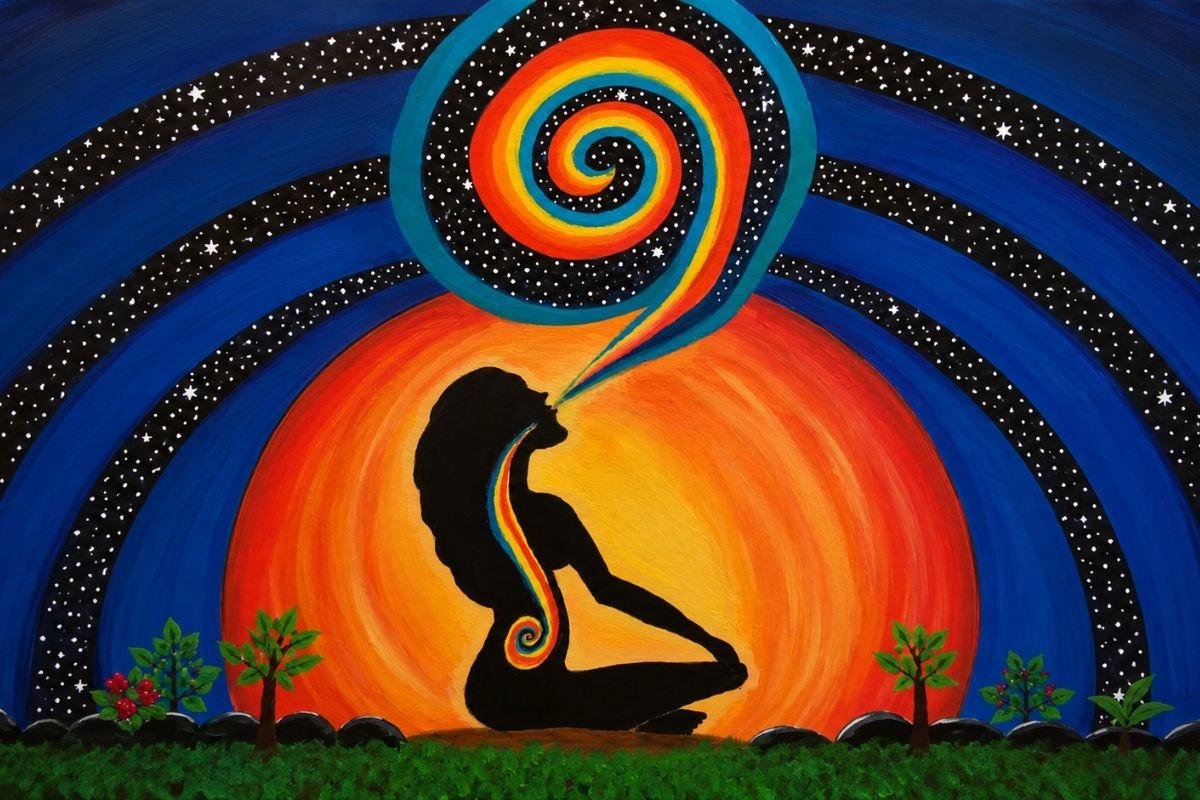
The Hamsa Upanishad notices something we have never thought about. Every breath has a sound, if you listen for it. The breath in says “Ham.” The breath out says “Sa.” All day, without our knowing it, we are already saying “Hamsa” thousands of times. And if we listen a little differently, the same sound becomes “So-ham” — “I am That.” It is already there. We only have to notice.
Last month was about karma-yoga, and the way the mind quietly keeps score of what it has given and what it expects back. This month is about the mind itself, and the breath, which has been doing its own quiet work without our noticing.
Read slowly. Sit with what comes up.
Om Tat Sat.
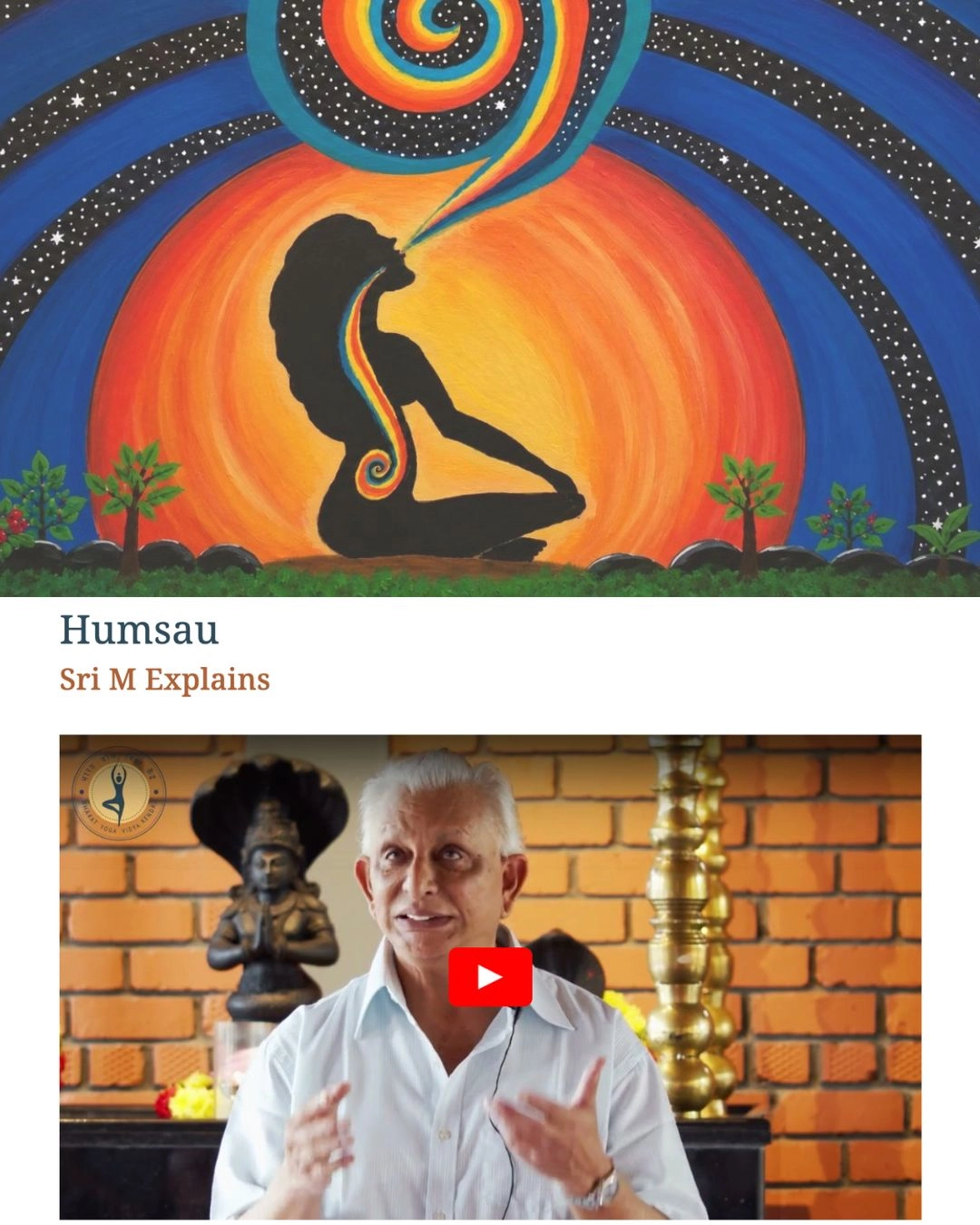
Humsau
Sri M Explains
Talk with M

BLOG POST
Breath, Mind, and Practice – Yoga Upanishad Techniques
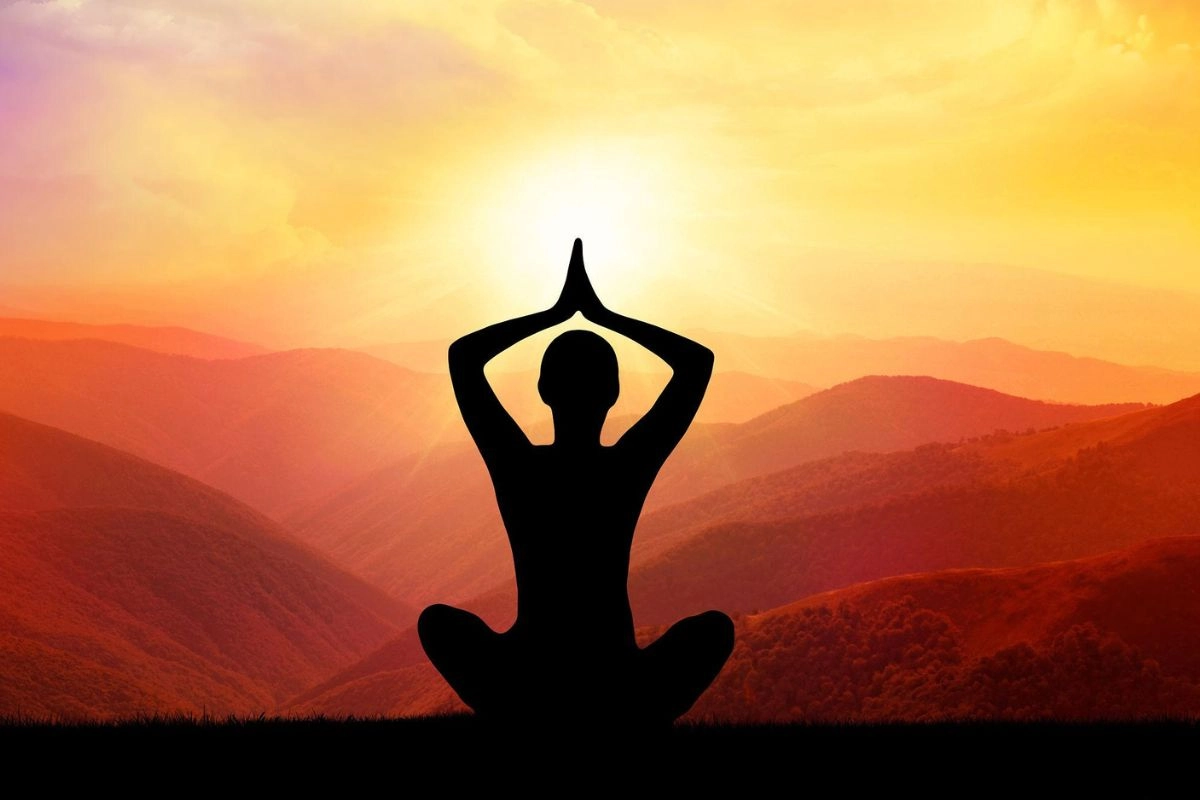
In our tradition there are about a hundred and eight Upanishads, which is a lot. The ones we hear most about — Isha, Kena, Katha, Mundaka — are the longer ones, full of philosophy and long dialogues. But there is a smaller group called the Yoga Upanishads that we do not talk about as often. They are short. Some are only a page. They do not unfold ideas slowly. They make a point and stop.
That is part of their value. They were written for someone who is already trying to do something — sitting in the morning, watching the mind, wondering what to do with it — and who does not need a long explanation. They need one clear line to keep going.
This month we read two of them.
—————————————————————————————————————–
The Amrita Bindu Upanishad is very short. You can read the whole thing in five minutes. And almost the first thing it tells you is this:
Mana eva manushyanam karanam bandha mokshayoh.
The mind, for a human being, is the cause of both bondage and freedom.
Take a moment with that. The mind is the cause of your bondage, and the mind is also the cause of your freedom. The same mind. Not your circumstances, not the people around you, not even your past. The mind.
Most of us assume the trouble is somewhere outside us. The person who said the hurtful thing. The job that is not working out. The family matter that has been going on for years. The Upanishad is not denying these are real. It is just saying they do not have the power we assume. They become trouble when the mind picks them up and holds on. They stop being trouble when the mind sets them down.
The text then makes a simple distinction. There are two kinds of mind, it says. One is the mind that is attached to things outside it — sights, sounds, people, money, comfort, opinions. This mind is in bondage even when life is going well, because the moment those outside things change, the mind suffers along with them. It has tied itself to things it cannot control.
The other is the mind that is free of this attachment. Not because it has stopped seeing or hearing. The senses keep working, the world keeps coming in. But the mind does not grab. It does not turn every passing thing into “mine”: my comfort, my opinion, my recognition. It lets things go through. This mind, the Upanishad says, is moving toward freedom.
This is the same territory we visited in March, when we looked at ahamkara — the part of the mind that stamps “I” and “mine” on whatever passes through. The Amrita Bindu is going at the same problem from a slightly different angle.
What does it say to do about it?
Manaso hi mano ruddhva hridi yat tannishthitam.
When you hold the mind back with the mind itself, and rest it in the heart — that is the state we are looking for.
This is worth noticing. The mind has to be held back by the mind. Not by some special technique. Not by force. The same mind that runs around is the one that, when turned, eventually sits down. Sir has said this often — the mind is not your enemy. It is just untrained. If you have spent forty years letting it go wherever it wants, it goes wherever it wants. If you start, gently, to bring it back, again and again, in time it comes back on its own.
The phrase “in the heart” should be understood properly. The tradition uses the word hridaya — heart — but it does not mean the muscle in your chest, and it does not mean your feelings either. It points to the inner space where the mind naturally comes to rest. When you sit, and the breath slows, and the noise inside thins out, the mind is in that space. You do not have to find it. You just have to stop running away from it.
—————————————————————————————————————–
Where the Amrita Bindu talks about the mind, the Hamsa Upanishad talks about the breath. And it begins with something so ordinary that it is easy to miss.
You have been breathing all your life. You will breathe all day today. It happens on its own. You do not have to remember.
The Hamsa Upanishad says: there is a sound in that breath, if you listen for it. The breath coming in has the quality of “Ham.” The breath going out has the quality of “Sa.” So all day, without our knowing, the body is doing something on its own — “Ham-sa, Ham-sa, Ham-sa.” The text gives a number: about 21,600 such breaths in twenty-four hours. That is a lot of “Hamsa” we have been saying without realising.
The tradition has a name for this. Ajapa-Japa. Japa is the repetition of a mantra. Ajapa means “not repeated by anyone.” Together it means: the mantra that goes on by itself. The breath is doing it. We have just not been paying attention.
That on its own is helpful. It means meditation is not something we have to build from scratch. The mantra is already running. We only have to tune in to it.
But the Hamsa Upanishad goes a step further. It says — listen again. “Hamsa,” reversed, becomes “Soham.” Sah means “that,” meaning the Self, the awareness that is always there. Aham means “I.” Put them together — So-ham — and what is being said is: I am That.
The same breath, listened to one way, says “Hamsa,” the swan. The tradition has long used the swan as a symbol for the soul, the way a swan moves through water without getting wet. Listened to the other way, the same breath says “Soham” — I am That. The Upanishad is making a quiet but serious point. The truth about who you really are is not somewhere far away. It is in your next breath, and the one after that.
—————————————————————————————————————–
Read the two texts side by side and you can see they are pointing at the same thing.
The Amrita Bindu asks: where is your mind right now? Outside, chasing things, or inside, settled?
The Hamsa Upanishad asks: what do you actually hear when you listen to your breath?
The two questions are the same question asked in two different ways. The work of yoga is not to add something new. It is to notice what is already there. The mind can settle when it is given a chance, and the breath is already speaking to anyone who is willing to listen.
This is what Sir keeps coming back to. Meditation is not about becoming someone different. It is about noticing what has been true all along. The Amrita Bindu gives us something to do with the mind. The Hamsa Upanishad gives us something to listen for.
—————————————————————————————————————–
Here is what to try this month.
Sit for ten or fifteen minutes in the morning, before the day really begins. Close your eyes. Do not force the breath into any pattern. Let it be what it is. Listen for the “Ham” as the breath comes in. Listen for the “Sa” as it goes out. Quietly. The sound is not loud. It is more a sense of the breath than something you hear with the ears.
The mind will wander. That is normal. When you notice it has gone somewhere, gently bring it back to the breath. That gentle bringing-back is what the Amrita Bindu means by holding the mind with the mind. Not harshly. Just bring it back, again and again. Each return is the practice.
At some point what was being heard as “Hamsa” may turn, in your awareness, into “Soham.” Or it may not. Either is fine. What matters is not the switch but the staying.
During the day, when something has upset you or you feel scattered, take three slow breaths and listen to them. The mantra has not stopped. We just stopped hearing it.
—————————————————————————————————————–
The Yoga Upanishads do not promise that your problems will go away, or that life will become easy. What they offer is something more modest, and more useful. The mind can be worked with. And the answer we have been looking for is in something as ordinary as the next breath.
That is enough to start with.
Om Tat Sat.
ALUMNI CONTRIBUTION
Yoga Begins Outside Your Mat
Three Yoga Myths Debunked
Yoga is a way of life. I enjoyed (well, most of the times) practicing my Yoga Asanas and have been regular for three days a week for the past 5 years. The novice in me thought Yoga and Yoga Asanas was synonymous. I never paused to differentiate between Yoga in its entirety and Asanas being just a part of the whole. Today, I am kind of embarrassed to think that I never bothered to find out how Raja Yoga was different from Hatha Yoga, or what does Bhakti Yoga and Karma Yoga even mean. My understanding was very limited and often times I would blindly use these terminologies with no accurate knowledge whatsoever. Why did I not read up more or how could I not be curious enough to know more, are some of the disappointing questions that nag my mind today.
That Swami Vivekananda’s Raja Yoga is synonymous with Maharishi Patanjali’s Ashtanga Yoga. That Yoga Asanas and Pranayamas are just a means to the end, being two parts of Ashtanga Yoga. That the Yoga Sutras of Patanjali are considered to be the basic text for Yoga. And, so much more. All such information is open source content and freely available, yet I never thought of doing any detailed reading. Today I feel ashamed to say this, especially after being a yoga proponent to friends and acquaintances for all these years.
I can only thank my lucky stars and express my deepest gratitude to the universe for all that I have learned at the Yoga Teacher Training Program I completed at Bharat Yogavidya Kenda (BYK). My eyes have opened up, though I just got to taste a drop from the mighty ocean of our ancient knowledge.
The program also busted many myths about Yoga that I was harboring all through these years. And, it wasn’t just me, everyone in the class had their own sets of misconceptions.
Here are my personal top three Yoga Asana myths debunked:
Myth #1: I am not flexible enough even after practicing Yoga Asanas for 5 years now. Why do I struggle to get into that Asana, which seems like a breeze for others?
The Truth: Flexibility has nothing to do with Yoga Asanas and it is certainly not a pre-requisite to start practicing. While flexibility will build over time, there will still be Asanas that one may not be able to do. Every individual has a different body structure, even the right and left sides of our bodies are not exactly the same. Some may get into an Asana very easily while others may struggle. Focus on yourself instead of looking at others. Make sure your alignment for every Asana is correct. Make sure you know the purpose of the Asana. Do not blindly copy others or get carried away with those perfect social media posts. Never be violent with your body.
Myth #2: I pack in as many Asanas as I can in my regular hour-long practice sessions. I incorporate the warm-ups in between the asanas and that gives me a good break too.(I never paid much attention to the warm-ups, they would just remind me of the “useless” P.T. classes at school.)
The Truth: Holding an Asana is more important than doing more. It’s quality over quantity. Warm ups are critical that needs to be done in a systematic manner and in a particular series. The “Yogic Sukhsma Vyayama” has a different concept altogether and the benefits are immense. It has a very different effect on the body as compared to “Sthula Vyayama” (the PT classes in school).
Myth #3: I make it a point to practice Yoga three times a week. Often times I force myself to get onto that mat. Afterall, it’s for my body and overall wellness.
The Truth: Yoga Asanas make you feel energetic. You get onto your mat not because you should but because you want to. If that doesn’t happen and you’re having to force yourself, something is going wrong somewhere. Also, it’s common practice to say something like “I do Yoga” instead of “I do Yoga Asanas”. You don’t do Yoga, it’s a way of life. You do Yoga Asanas or Pranayamas.
Engrossed in our in-depth training sessions.
Yoga Asanas is just one aspect of Yoga. Making a conscious attempt to live by the principles of Yoga is what really matters. Hence, it’s rightly said that Yoga begins when you step out of your mat. The practice of Yoga influences your mind and perspectives enabling real changes in how you carry yourself through life.
I’ll end this post by stating a generic misconception – Yoga is a practice of the Hindu religion. The fact is Yoga does not belong to any religion. It did emerge from the Hindu philosophy but it’s incorrect to associate Yoga with the Hindu religion. There is no God associated with Yoga, it’s all about being aware of ourselves and connecting with ourselves. Yoga means union – the union of that which we identify as body, mind, and senses with that real self which is free from all worldly limitations. By calming down the mind, Yoga aims to awaken the real self.
YOGA GUIDE
Reframing the Mundane: Every Task as a Yogic Practice
- Reflecting Pure vs. Impure MindIn the Amritabindu context, “Impure” is a mind scattered by desire, while “Pure” is a mind turned inward.
- Asana: Pratyahara-focused Postures
- Paschimottanasana (Seated Forward Bend):
This pose symbolizes the withdrawal from the world. By folding inward, you physically “shut out” the external (impure/scattered) and focus on the breath and the spine (pure/internal).
- Paschimottanasana (Seated Forward Bend):
- Asana: Pratyahara-focused Postures

-
-
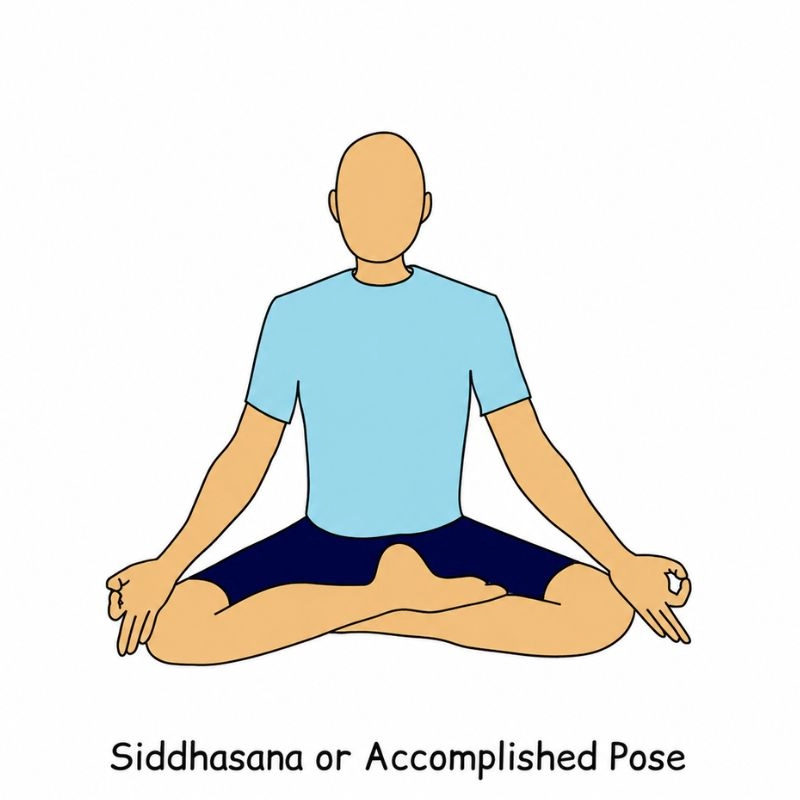
- Siddhasana (Accomplished Pose):
Often cited as the best for purification, it stabilizes the lower energy centers, “locking” the body so the mind can rise above instinctual desires.
- Siddhasana (Accomplished Pose):
-
-
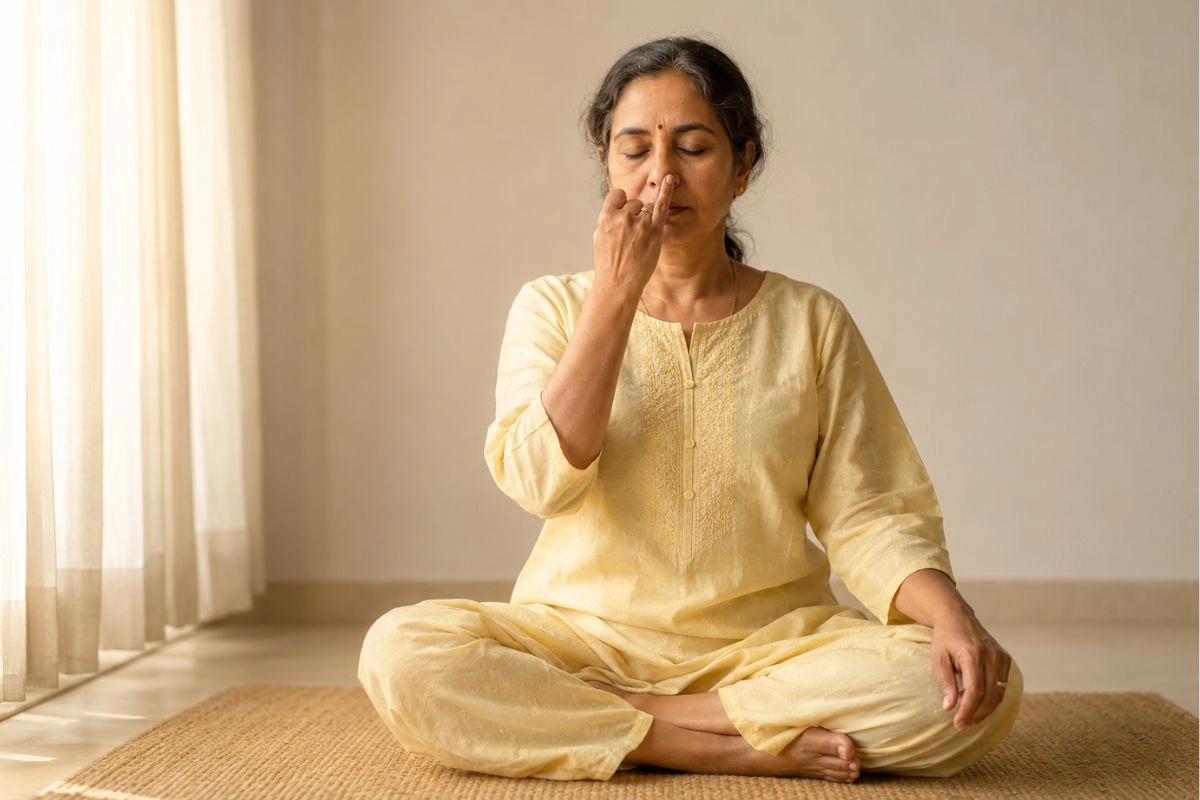
- Pranayama: Nadi Shodhana (Alternate Nostril Breathing)
- This is the primary practice for purification. The “impure” state is represented by an imbalance between the Ida (mental) and Pingala (physical) currents. Balancing them “cleanses” the nadis, leading to a “pure” state where the breath flows through the central channel (Sushumna).
- Pranayama: Nadi Shodhana (Alternate Nostril Breathing)
- Reflecting Japa vs. AjapaIn the Hamsa context, “Japa” is the conscious repetition, while “Ajapa” is the natural rhythm of life.
- Asana: Tadasana to Vinyasa Flow
- Japa Reflection:
Holding Tadasana (Mountain Pose) with a deliberate, counted internal mantra. It is steady, disciplined, and requires “will.” - Ajapa Reflection:
Moving through a Sun Salutation (Surya Namaskar) where the movement becomes so fluid that you no longer “do” the pose; the breath (Ham-Sa) moves the body automatically. The practice shifts from a series of steps to a single, spontaneous “dance.”
- Japa Reflection:
- Pranayama: Ujjayi and Bhramari
- Japa (Ujjayi):
You deliberately constrict the throat to create a sound. It is a “mechanical” effort to control the breath. - Ajapa (Soham Breath):
Simply sitting and listening to the natural sound of the breath without altering it. You identify the “Ham” in the exhale and “Sa” in the inhale. This transition from making a sound to hearing the breath’s inherent mantra is the essence of Ajapa.
- Japa (Ujjayi):
- Asana: Tadasana to Vinyasa Flow
YOGA RESOURCE
Yoga Upanishad

The Yoga Upanishads comprise 20 specific texts within the Muktika canon that elaborate on yogic anatomy and practical meditation. Their commentaries bridge the gap between ancient metaphysical philosophy and detailed physical or energetic practice.
Commentaries by Different Gurus
Interpretations vary based on the guru’s philosophical school, particularly within Advaita (Non-dualism) and modern practical yoga.
- Upanishad Brahmayogin (18th Century): He remains the only scholar to have written comprehensive commentaries on all 108 Upanishads. His work is essential for the Yoga Upanishads, as he systematically relates physical yoga techniques to the eventual realization of the non-dual Brahman.
- Adi Shankara (Traditional Influence): While he primarily commented on the 11 Principal Upanishads, his broader philosophy influenced how later commentators view yoga as a tool for mental purification (Chitta Shuddhi) necessary for self-knowledge.
- Swami Niranjanananda Saraswati (Bihar School of Yoga): His modern commentaries, such as those found through the Bihar School of Yoga, treat these texts as practical handbooks for energy management and psychological transformation.
- Swami Chinmayananda (Chinmaya Mission): Modern Vedantic teachers like those from the Central Chinmaya Mission Trust provide commentaries that simplify these complex texts for contemporary seekers, focusing on the mind’s role in liberation.
Spotlight: Amritabindu and Hamsa Upanishads
1. Amritabindu Upanishad (“The Drop of Immortality”)
This text is one of the most famous Yoga Upanishads and focuses on the mastery of the mind as the primary means of liberation.
- Key Concept: It famously declares that the mind is the sole cause of both bondage and liberation. An “impure” mind is one attached to sensory objects, while a “pure” mind is free of desire.
- Six-fold Yoga: Unlike Patanjali’s eight limbs, it proposes six limbs: Pratyahara (withdrawal), Dhyanam (meditation), Pranayama (breath control), Dharana (concentration), Tarka (reasoning/logic), and Samadhi (absorption).
- Metaphor: It compares the Vedas to “husk” that should be discarded once the “grain” of knowledge is obtained.
Summary of the Distinction
| Feature | Impure Mind (Ashuddha) | Pure Mind (Shuddha) |
|---|---|---|
| Core Attribute | Possessed of desire (Kama-sankalpa) | Devoid of desire (Kama-vivarjita) |
| Orientation | Attached to sense objects | Detached from sense objects |
| Outcome | Bondage and restlessness | Liberation and inner stillness |
| Function | Lives instinctively/reactively | Awareness/responsive |
2. Hamsa Upanishad (“The Swan”)
This Upanishad, part of the Shukla Yajurveda, describes the Hamsa Vidya, a mystical path focused on the internal sound and the “Swan” of the breath.
- Anatomical Focus: It details the 12-petalled lotus in the heart and the specific effects of meditating on each petal, such as achieving virtues like passion, sleep, or spiritual knowledge.
- Internal Sound (Nada): It lists 10 progressive sounds heard during meditation, starting from a soft “Chini” sound and culminating in the 10th sound like “thunder” (the sound of Brahman).
- The “Swan” Mantra: It teaches that every breath contains the mantra Ham-Sa (I am He), which through practice becomes So-Ham.
Key Differences at a Glance
| Feature | Japa (Effortful) | Ajapa (Spontaneous) |
|---|---|---|
| Origin | Comes from the mouth or deliberate mind | Comes from the breath and the heart |
| Effort | Requires active will and dedication | Effortless, automatic, and continuous |
| Mechanism | Conscious repetition of syllables | Natural rhythm of Ham (exhale) and Sa (inhale) |
| Goal | Preliminary discipline and purification | Union with Paramahamsa/Infinite Brahman |
Through the Ajapa Gayatri, the Hamsa Upanishad teaches that every living being is already a yogi; the practice simply lies in becoming aware of the mantra that the life force (Prana) is already chanting.
COMMUNITY COLUMN
Mind in the Amritabindu Upanishad and Hamsa Upanishad

Concept of Mind
The Amritabindu Upanishad and the Hamsa Upanishad provide deep insights into the nature of the mind and its role in spiritual liberation. Both texts emphasize that the mind is the central factor determining whether a person remains in bondage or attains freedom.
मन एव मनुष्याणां कारणं बन्धमोक्षयोः
Mana eva manuṣyāṇāṁ kāraṇaṁ bandhamokṣayoḥ
Meaning: The mind alone is the cause of bondage and liberation.
According to the Amritabindu Upanishad, the mind alone is the cause of both bondage and liberation. When the mind is attached to desires, sense objects, and external experiences, it becomes restless and leads to suffering. However, when the same mind is detached, controlled, and steady, it becomes the means to liberation.
यदा मनो निरुद्धं स्यात् तदा मुक्तिर्न संशयः
Yadā mano niruddhaṁ syāt tadā muktir na saṁśayaḥ
Meaning: When the mind is completely controlled, liberation is certain.
A disciplined mind leads to clarity and realization of the Self (Ātman), whereas an uncontrolled mind creates illusion and confusion. The Upanishad teaches that through meditation, detachment (vairāgya), and control of mental modifications (vṛttis), the mind can attain complete stillness. In this still state, it merges into pure consciousness, leading to self-realization.
The Amritabindu Upanishad gives a precise and powerful teaching on the nature of the mind by distinguishing between the pure mind (śuddha manas) and the impure mind (aśuddha manas). It teaches that liberation or bondage depends entirely on the condition of the mind.
Pure Mind (शुद्ध मनस्)
शुद्धं कामविवर्जितम्
Śuddhaṁ kāmavivarjitam :
Meaning: The pure mind is free from desires.
A pure mind is: Free from craving , Calm and steady , Detached from external objects This mind reflects the Ātman (true Self) clearly.
Impure Mind (अशुद्ध मनस्)
अशुद्धं कामसंकल्पं
Aśuddhaṁ kāmasaṅkalpam
Meaning: The impure mind is filled with desires and thoughts.
An impure mind is driven by: Desires (kāma) , Imaginations and projections (saṅkalpa) .Attachments to sense objects Such a mind is: Restless , Distracted , Bound to pleasure and pain This leads to ignorance and suffering.
यदा मनो ननरुद्धांस्यात्तदा मुक्तिननसांशयोः
Yadā mano niruddhaṁ syāt tadā muktir na saṁśayaḥ
Meaning: When the mind is controlled, liberation is certain. When mental fluctuations (vṛttis) stop: No distraction remains , No duality is experienced ,The Self is realized This is mokṣa (liberation).
The Hamsa Upanishad complements this teaching by linking the mind with breath (prāṇa). It explains that the natural sound of breathing—So’ham (“I am That”)—serves as a powerful tool for controlling the mind. By becoming aware of this subtle mantra and synchronizing it with breathing, the mind gradually becomes calm and focused.
The Upanishad symbolically describes the individual self as a “hamsa” (swan), which moves between the physical and spiritual realms. When the mind is restless, it remains attached to the external world. When it is controlled through breath awareness and meditation, it realizes its unity with the Supreme Self (Paramātman).
The Hamsa Upanishad presents the concept of Ajapa Japa, a natural and effortless form of mantra repetition that occurs with the breath. Unlike traditional japa, which requires conscious repetition, Ajapa Japa happens automatically with every inhalation and exhalation.
According to the Upanishad, every living being unconsciously repeats the mantra “So’ham” (I am That) with each breath. During inhalation, the sound “So” is produced, and during exhalation, the sound “Ham” is produced. This continuous process is known as Ajapa Japa.
Ajapa Japa is closely connected with control of the mind and breath (prana). When attention is focused on the breath and the subtle sound of “So’ham,” the mind becomes calm, steady, and inwardly directed The Hamsa Upanishad teaches that Ajapa Japa is the most natural form of meditation. By simply becoming aware of the breath and its subtle mantra, the mind becomes purified and steady.
When the mind becomes still: Duality disappears ,The Self is realized ,Liberation (मोक्ष) is attained .Ajapa Japa is therefore not merely a technique but a realization — that one’s true nature is already divine.
Step-by-Step Practice
-
- Sit in a comfortable posture with spine erect.
- Close the eyes gently and relax the body.
- Bring awareness to natural breathing.
- Observe exhalation → mentally hear “हम्”
- Observe inhalation → mentally hear “सो”
- Do not control the breath — just observe.
- If the mind wanders, gently return to the breath.
- Continue this awareness effortlessly.
- Over time, the mantra becomes automatic and continuous.
Thus, both Upanishads teach that purification, discipline, and inner awareness are essential. Whether through control of thoughts or awareness of breath, the ultimate goal is to transcend mental fluctuations and realize one’s true nature.
COMMUNITY COLUMN
Journey of Satsangi
Part 4: The Satsang Vidyalaya Campus
Hello again! In Part 3 of Journey of a Satsangis I visited the Tirumula temple in Tirupati with Raghul and then set out to visit the Satsang Vidyalaya campus in Madanapalle. For those who haven’t read it yet, links to Part 1-3 of the journey can be found at the end of this article.
I had reached out to the Satsang Vidyalaya using the contact details I found online and arranged to stay at the ashram for a week before continuing on to Peepal Grove School. The hotel I was staying at in Tirupati kindly helped me organize a driver to take me to Madanapalle.
The drive from Tirupati to Madanapalle took around 2.5 hrs but the time flew by since I was still enchanted by the beauty of the countryside and rolling hills of South India.
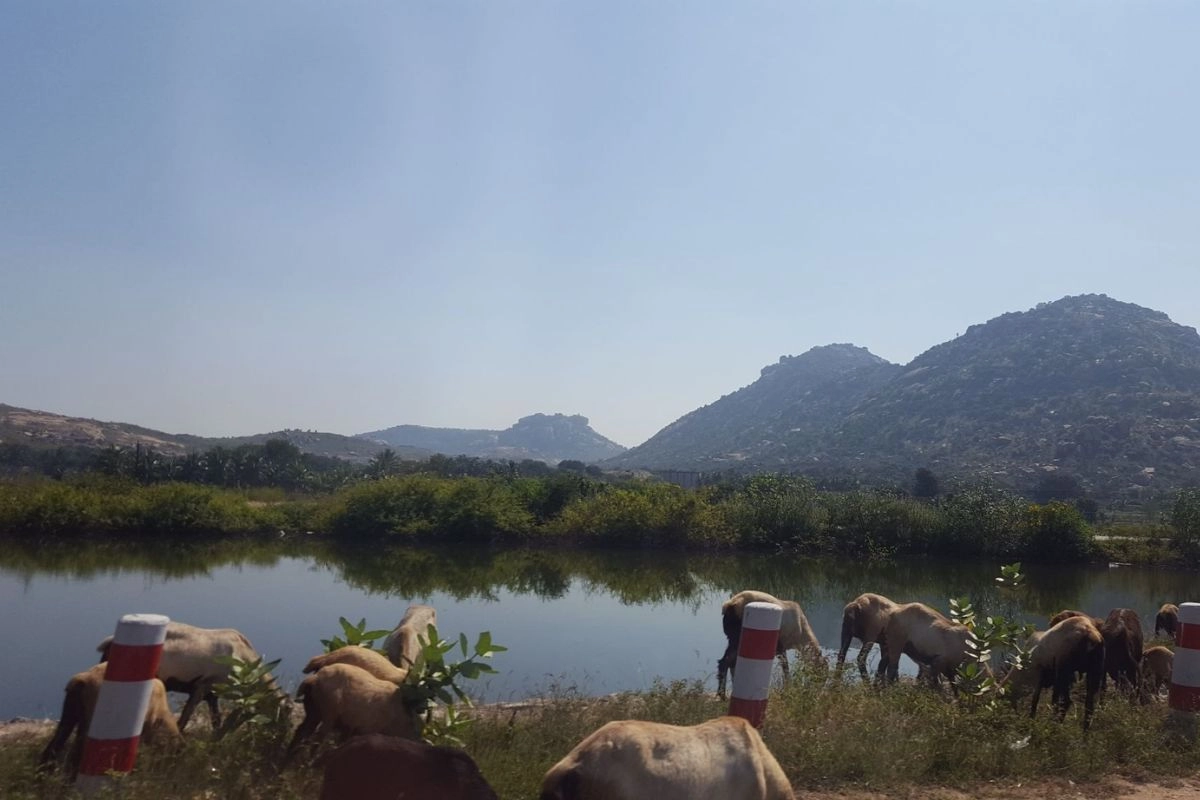
My driver spoke English quite well, and along the journey he shared stories about the history of many of the landmarks we passed. Perched atop some of the hills were temples, and he explained that many of them were dedicated to deities such as Hanuman, Shiva, and Vishnu. I found myself wondering how these temples had ever been built in such remote and rugged places but I imagined that the view from the top must have been breathtaking.
I arrived at Satsang Vidyalaya campus late in the morning on December 11th, 2017. My first impression of the ashram was that it was very charming and intimate. Back in 2017, many of the buildings such as the Yogashala and Babaji’s temple hadn’t been built yet. The key buildings at the time were the Satsang Vidyalaya school, Sri M’s house, Babaji’s room and the homes of some of Sri M’s followers.
I was immediately attracted to the Satsang Vidyalaya school which in my opinion is one of Sri M’s most meaningful initiatives. Founded in 1999, the school was created to provide free, high-quality education to children from underserved communities in the Madanapalle region.
One thing that really touched me was learning that the school had more girls than boys enrolled, —a rarity in many rural parts of India. I had learned that for many of the lower-income families, education was often prioritized for sons. From the very beginning, however, Sri M took a clear and unwavering stand on this. He made it known to parents that if they were not willing to send both their sons and daughters to school, he would rather close the school than compromise on his belief that girls deserved the same opportunity to learn, grow, and build a future as boys.
Hearing this deepened my respect for Sri M and the work that he was doing.
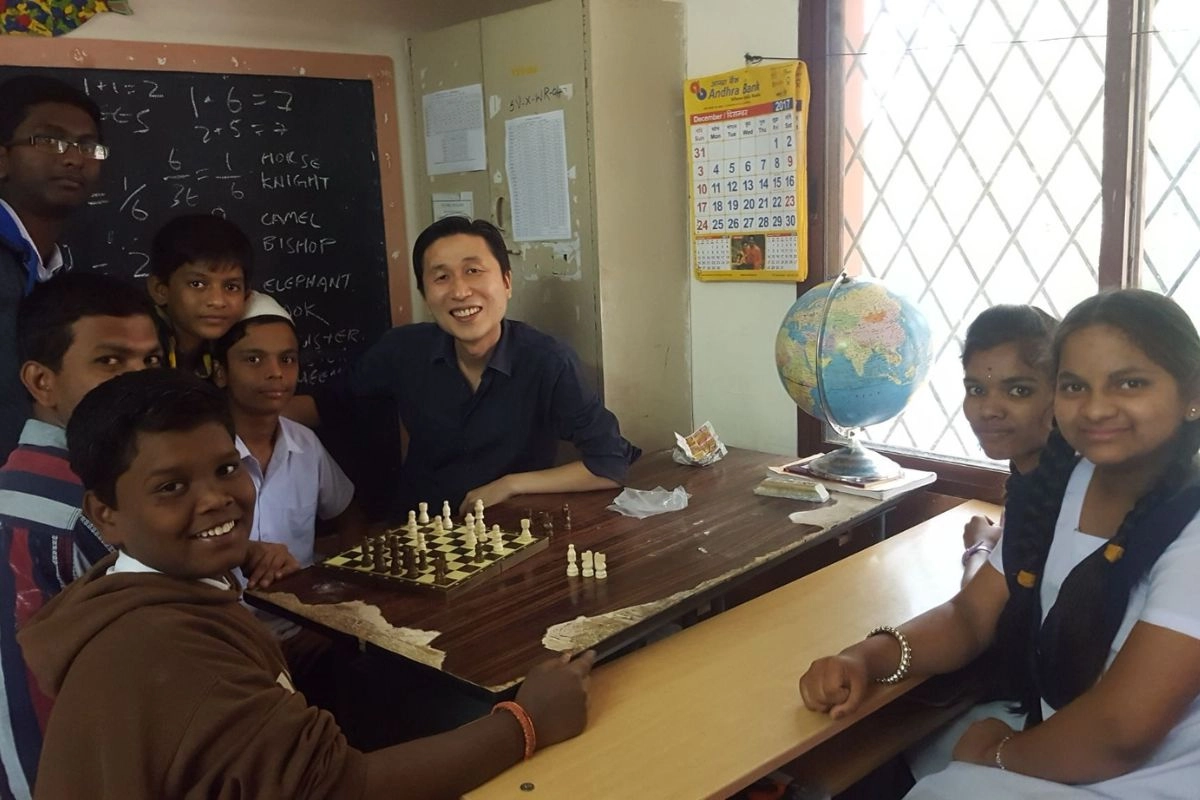
I spent some time at the school getting to know both the teachers and the students, and it quickly became one of the highlights of my visit. The students were incredibly open, curious, and full of energy. Many of them were excited simply for the chance to practice their English with me, and one by one they would come over to say hello and ask where I was from.
I had brought a chess board with me, and before long a few of the students had gathered around, eagerly and confidently challenging me to a match. It became a wonderful way to connect with them, and I was genuinely impressed by how naturally some of them understood the game’s key strategies and concepts.
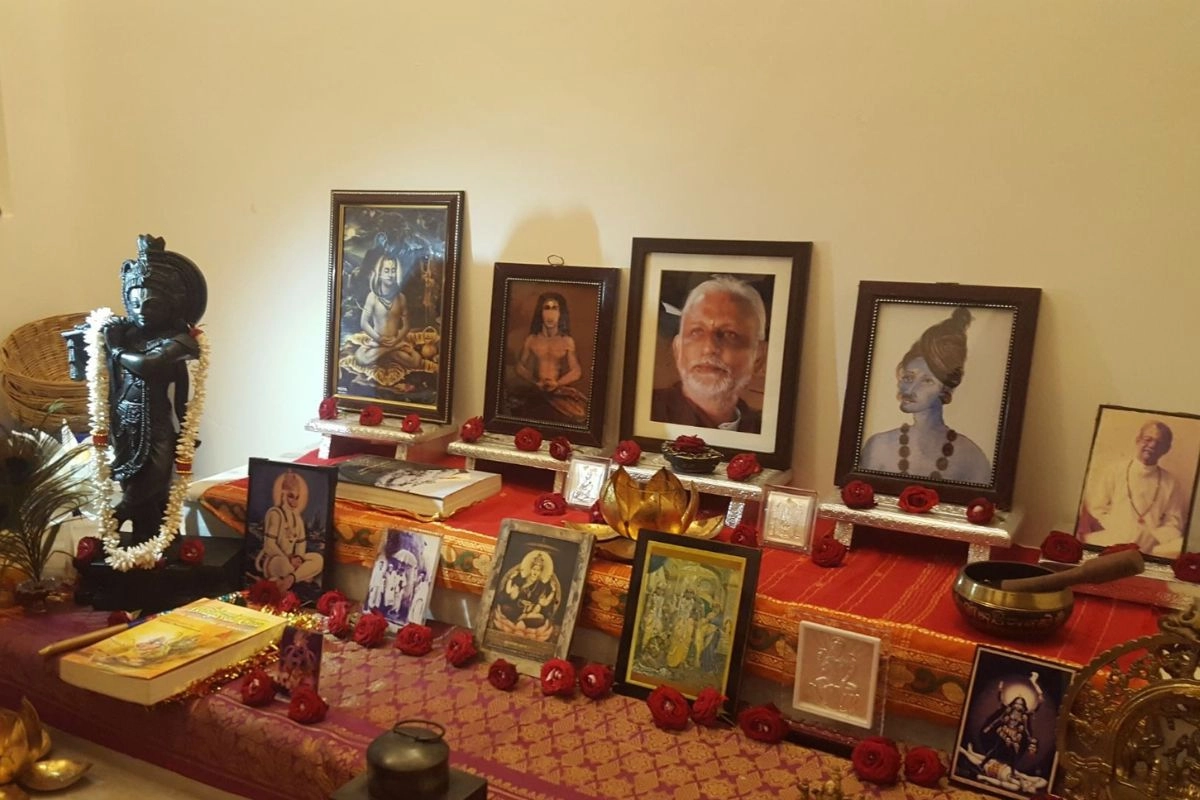
I also spent time getting to know some of the residents at the ashram, including Lakshmi, whom I had spoken with while arranging my stay, as well as Aggi and her husband Deepu, and Surya. Many of them had been walking the path with Sri M for more than twenty years, which I found both inspiring and humbling. What struck me most was how open, welcoming, and genuine everyone was. They were generous in sharing their own journeys with Sri M, and equally curious to hear what had brought me all the way to India and ultimately, to him.
I learned that 2017 was a time of transition for the ashram. Sri M had recently completed his Walk of Hope—an extraordinary 7,500-kilometre journey on foot from one end of India to the other to promote peace, harmony, and the “Oneness of Humanity”. As I spoke with people at the ashram, I learned that before the Walk of Hope, relatively few visitors found their way there. But after the walk, as more people across India came to know Sri M and his message, the ashram began seeing a growing number of visitors from all walks of life.
During one of my conversations with Surya, I learned that Sri M would be holding a Satsang from January 8–11, 2018 at the Pathway School in Delhi. Hearing this reminded me of Prabs, the gentleman I had met on my flight to Coimbatore, and was the person who had first told me about Sri M. We had exchanged contact details at the time, and he had warmly invited me to reach out if I ever found myself in Delhi.
I decided to reach out and see if Prabs knew about the Pathway School and whether he might recommend a place to stay nearby. Prabs was genuinely happy to hear that I had followed through on his suggestion to learn more about Sri M. He told me he knew the Pathway School well and that it was not far from where he lived in Gurgaon. To my surprise, rather than suggest a hotel, he warmly offered to host me at his home and even drive me to the school so I could attend the satsang.
I was taken aback by his generosity, especially since we had only met briefly on the flight, and I was very hesitant at first to impose and accept his offer. I think Prabs sensed my hesitation and quickly reassured me that I wouldn’t be imposing and that he would genuinely enjoy hosting a fellow seeker on the spiritual path. Prabs was able to convince me and I agreed to fly to Delhi to stay with him after my trip to PGS.
During this time, Diane, my wife, had been getting regular updates from me about my journey in India. When she heard about the Satsang with Sri M, it was too much.
Diane: Wait a minute…this is MY DREAM not YOURS!!! You can’t go off and meet a spiritual master without me! I’m coming to join you.
Sam: uhhh what about the job you just started?
Diane: Even if I have to quit my job, I’m not missing this opportunity
Sam: Ok, let me check to see if we are able to register for the Satsang and see if Prabs is ok with hosting both of us
Prabs confirmed that he would be happy to host the both of us at his home and we were able to secure our spot for the Satsang at the Pathway School. Diane ended up quitting her job and we decided to meet in Delhi on December 29th and celebrate the new year with Prabs and his family before heading to the Satsang.
My week at the Satsang Vidyalaya campus flew by and when it was time to go, Lakshmi connected me with a driver to take me to the PGS campus for my visit there.
To be continued…
Satsang is a Sanskrit term derived from sat (meaning truth) and sangha (meaning company/community) and refers to gathering with like-minded individuals, often with a guru, to listen to spiritual teachings aimed at elevating consciousness and fostering spiritual growth.
Ayurvedic Wisdom
Amrita Bindu Upanishad
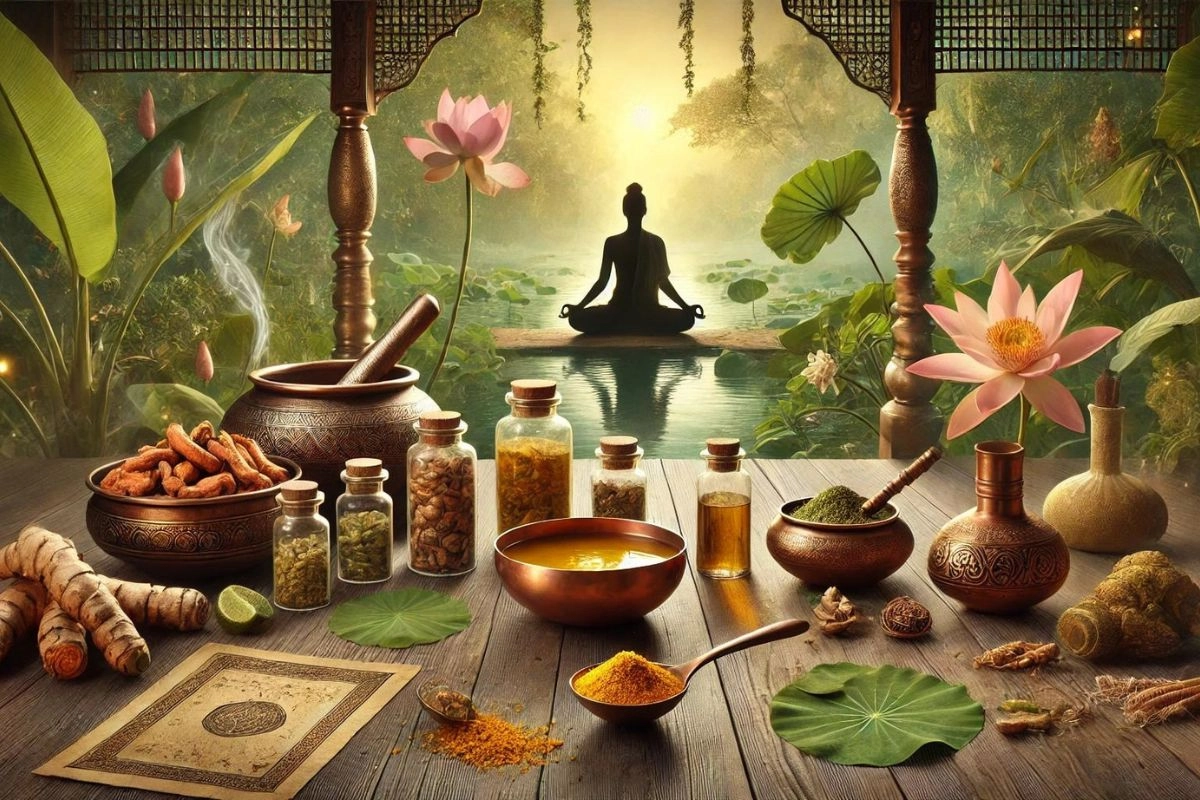
The Amritabindu Upanishad (part of the Krishna Yajurveda) explains that the mind alone is the cause of both bondage and liberation. It defines two states: the impure mind, attached to sensory desires, and the pure mind, free from desire. Its name means “drop of immortality,” hinting at a concentrated essence of spiritual truth. The text focuses primarily on the role of the mind in bondage and liberation, meditation on Om, and the realization of the Self (Atman) as the ultimate reality. It offers concise but profound guidance on attaining spiritual freedom through inner discipline rather than external ritual. Liberation occurs when the mind, controlled within the heart, is detached from sensory objects and realizes its essence
What is the central teaching of the Upanishad?
A: The Upanishad teaches that the mind is the primary factor in both bondage and liberation. A mind that is attached to sense objects and selfish desires becomes bound in suffering, while a mind detached from sense objects and disciplined through meditation and detachment leads to spiritual freedom and self-realization. The real liberation comes not from external religious acts but from mastering and purifying the mind.
How does the Upanishad define bondage and liberation?
A: Bondage arises when the mind is attracted to sense objects and worldly desires, leading to identification with the body and emotions. Liberation begins when the mind is freed from attachments and consistently turned inward toward the Self. When the mind rests in its natural, desire-free state, one is liberated from suffering, ignorance, and the false sense of separateness from the eternal Self.
Why is the mind so central to spiritual life?
A: The text states that the mind alone is the cause of both bondage and liberation for human beings. When the mind is full of desire and distraction, it binds the seeker to repeated cycles of pleasure and pain. When the mind is detached from sense objects and directed inward toward the Self, it becomes the instrument of liberation. Mastery of the mind is therefore the core task of spiritual practice.
What role does meditation play according to this text?
A: Meditation is the key spiritual practice in this Upanishad. It teaches that true meditation is not mere intellectual reflection, but steady, disciplined meditation that turns the mind inward. When the mind is free from attachment to sensory objects, it dissolves in the heart and realizes the Self. Meditation on Om (AUM) is specifically recommended as a tool to calm the mind and transcend thought, leading to the direct experience of the unchanging Self.
What is the significance of Om in this Upanishad?
A: Om (AUM) is presented as the sound symbol of the supreme reality. Meditation on Om leads the seeker to transcend mental activity and realize the unmanifest, imperishable Self that lies beyond words and thoughts. Om embodies the essential nature of Brahman and serves as a focal point for deep meditation that dissolves the illusion of separation.
How does the Upanishad view desires and attachment?
A: It categorizes the mind into pure and impure states — the impure mind being attached to desires and sense objects, while the pure mind is free of such cravings. Desires lead to restlessness, ego, and suffering. Freedom (moksha) comes when the mind becomes detached and no longer clings to sensory objects, enabling inner stillness and realization of the Self.
What is the role of ignorance in this teaching?
A: Ignorance (avidya) is described as the veil that prevents one from seeing the underlying reality of the Self. It is this ignorance that leads to identification with the body and mind, causing suffering. When ignorance is dispelled through meditation and self-knowledge, one sees the Self as eternal and unchanging.
How does the Upanishad guide handling the restless mind?
A: It teaches that the restless mind should be controlled with steadfast meditation and detachment from sense pleasures. When the mind is stilled, it naturally turns inward and dissolves into the awareness of the Self, the source of true peace.
What does the Upanishad say about knowledge vs. meditation?
A: It suggests that true knowledge is not merely conceptual but arises from deep meditation on the Self, which leads to self-realization. This experiential knowledge is superior to mere intellectual or ritualistic approaches.
What is the ultimate goal according to this Upanishad?
A: The ultimate goal is self-realization — knowing one’s Self as Brahman, pure consciousness that is eternal, infinite, and undivided. Upon realizing this, all limitations of duality dissolve and the seeker attains lasting peace and liberation.
What practical guidance does this text provide for everyday seekers?
A: It encourages seekers to detach from worldly desires, discipline the mind through meditation, focus on the Self, and cultivate inner calm. Instead of pursuing external accomplishments alone, one learns to look within for true peace and freedom. This practical approach to life helps reduce fear, craving, and mental agitation, leading to clarity and deeper joy.

TESTIMONIALS
When I enrolled in the Yoga M course, I simply wanted to learn yoga and asanas. As it had been long overdue in my life due to back pain, procrastination, and lack of motivation. However on the very first day when our respected Vivek Sir started the program, I realized that it was not just about yoga. That realization made me very curious.
As the course progressed, the program became more and more dynamic at a very subtle level, shedding light on all concepts of the Yogasutra. It truly opened my eyes to the deeper aspects of sadhana. This program helped me build a strong foundation for both my spiritual practice and daily living.
I am truly grateful to Bharat Yogavidya Kendra for giving me the opportunity to participate in this program also their effort to create such and exceptional online program . I am also deeply impressed by the selfless dedication of Vivek Sir in helping us evolve at every step of the program, continuously guiding, monitoring, and supporting us.
Since I was living abroad, the timing was sometimes a bit difficult, but the recorded sessions helped me catch up and practice any missed classes.
Personally I feel this program is one of the greatest gifts someone can give themselves if they truly want to bring positive change into their life. Thank you for this wonderful program.
– Akhil
Yoga M
Upcoming Courses & Retreats
![Logo of Bharat Yogavidya Kendra [BYK]](https://bharatyogavidyakendra.in/wp-content/uploads/2025/07/BYK-Logo-300px.png "BYK-Logo-300px")
Thank you for reading