Skandasana (स्कंदासन)
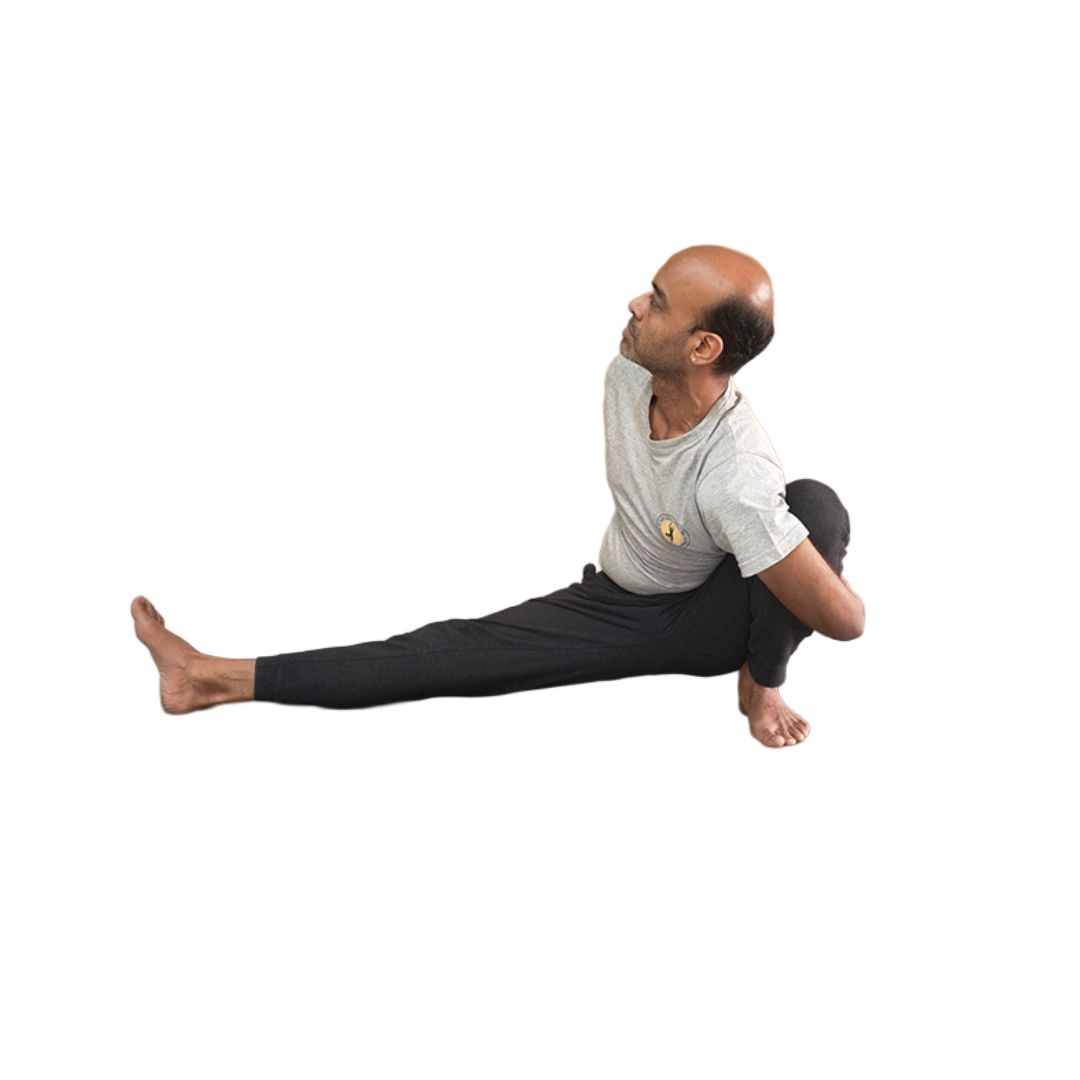
Skandasana (स्कंदासन), also known as Side Lunge or Half Squat Pose, is a dynamic and deep hip-opening yoga posture. The pose is named after Skanda, the Hindu god of war and the son of Shiva, and is said to represent a warrior’s readiness for attack. Skandasana challenges balance and stability while deeply stretching the hips, hamstrings, and inner thighs.
How to do Skandasana
Benefits of Skandasana
Regular practice of Skandasana offers numerous physical and mental benefits:
• Increases Flexibility: It deeply stretches the hips, groin, and inner thighs, improving overall mobility.
• Strengthens the Lower Body: Builds strength in the quadriceps, glutes, and hamstrings.
- Improves Balance and Stability: The pose challenges your core and stabilizing muscles, enhancing your sense of balance.
- Releases Tension: Can help relieve tightness in the hips and lower back, which is often a result of prolonged sitting.
- Prepares for Advanced Poses: The deep hip opening makes it an excellent preparatory pose for postures like Hanumanasana (Splits).
Contraindications of Skandasana
Avoid or modify this pose if you have:
• Knee, Ankle, or Hip Injuries: Avoid Skandasana if you have any recent or chronic injuries in these joints, as the pose places significant stress on them.
• Lower Back Issues: Individuals with lower back pain or herniated discs should approach this pose with caution, as it can place undue stress on the spine.
• Pregnancy: Pregnant women should avoid deep lunges and consult with a healthcare professional before attempting this pose.
• Balance Issues: If you have severe issues with balance or stability, it’s best to use props like blocks or a wall for support.
Anatomy (Muscles involved)
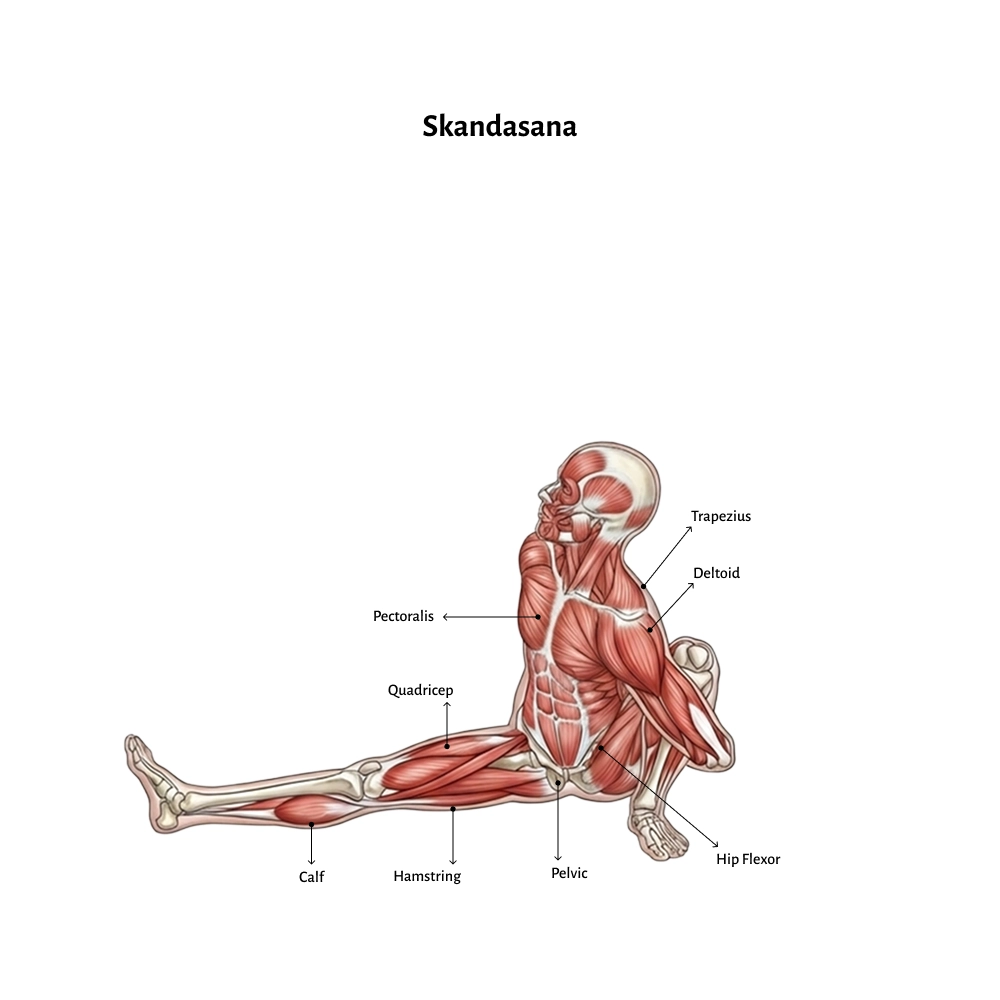
Skandasana works on multiple muscle groups, both stretching and strengthening.
- Muscles Stretched:
- Adductors (Inner Thighs): The primary muscles stretched in this pose.
- Hamstrings: The muscles on the back of the lifted, straight leg are deeply stretched.
- Calves and Ankles: The ankle and calf of the lifted leg get a good stretch as the toes flex upwards.
- Hips: The hip flexors and hip joints are opened.
- Muscles Strengthened:
- Quadriceps and Glutes: The muscles in the standing, bent leg are actively engaged to support your body weight.
- Core Muscles: Your abdominal and oblique muscles work to maintain balance and keep your torso upright.”