Padangusthasana (पादाङ्गुष्ठासन)
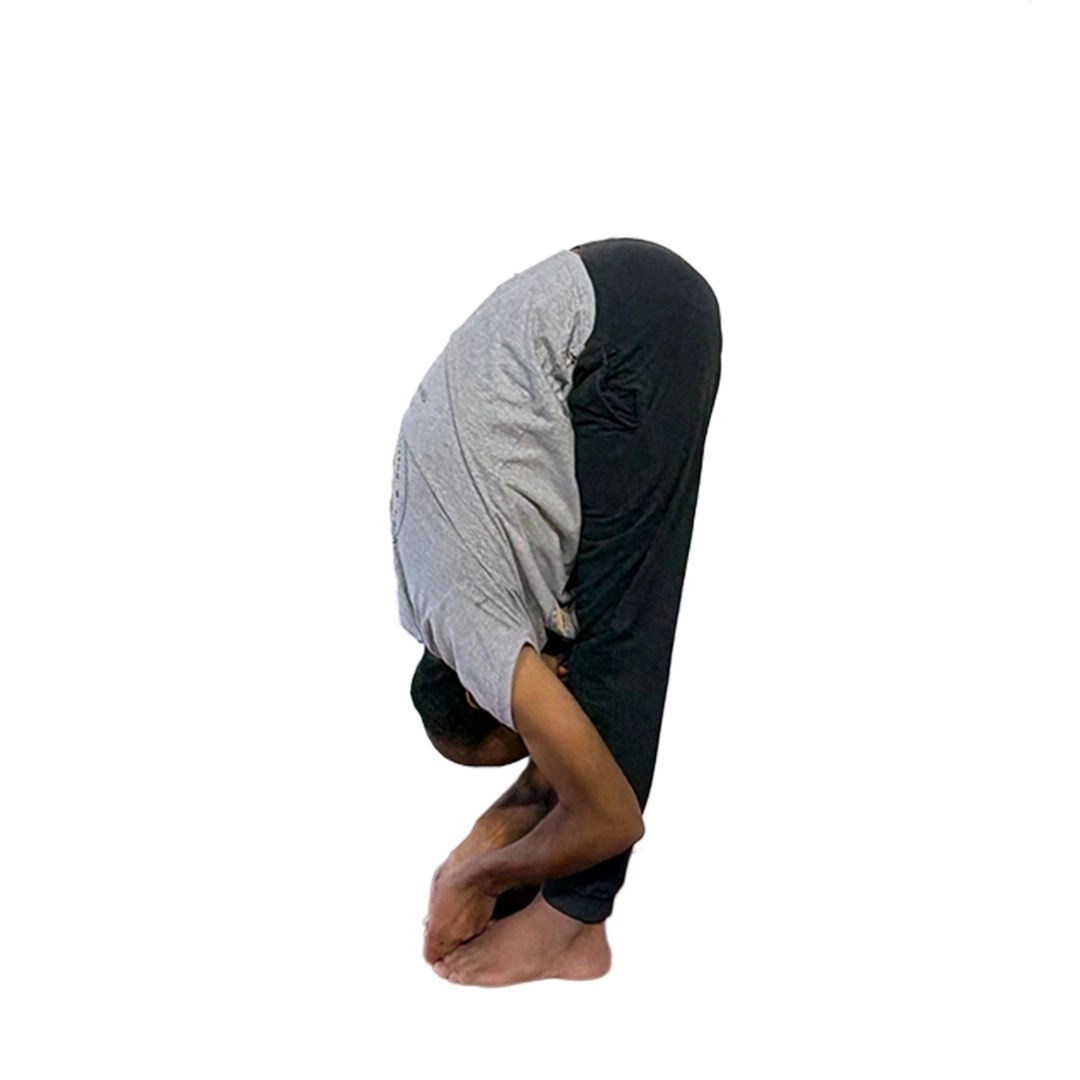
Padangusthasana (पादाङ्गुष्ठासन), which means “Big Toe Pose,” is a standing forward bend in yoga. The name comes from the Sanskrit words “pada” (foot), “angustha” (big toe), and “asana” (posture). It is a classic pose that stretches the back of the legs and the spine.
How to do Padangusthasana
Benefits of Padangusthasana
- Stretches: Hamstrings, calves, and back.
- Strengthens: Thighs, legs, and ankles.
- Calms: Soothes the brain and helps relieve stress, anxiety, and mild depression.
- Stimulates: The liver, kidneys, and digestive organs.
- Improves: Posture, balance, and concentration.
Contraindications of Padangusthasana
Avoid or modify this pose if you have:
- Injuries:
Avoid this pose if you have injuries to your hamstrings, lower back, hips, knees, or shoulders. - Blood Pressure:
Individuals with high or low blood pressure should approach this pose with caution and move in and out of it slowly to avoid dizziness or lightheadedness.
- Recent Surgery:
Do not practice if you have had recent abdominal surgery.
Anatomy (Muscles involved)
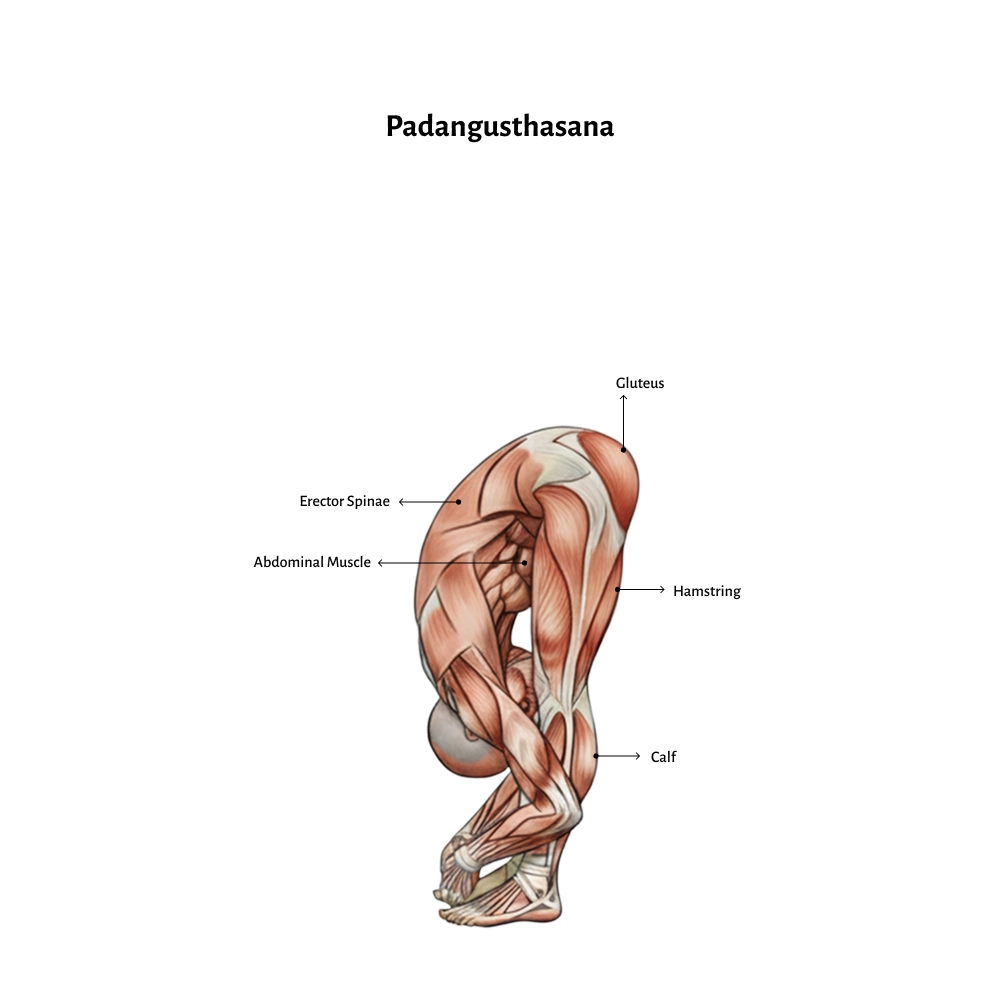
Padangusthasana engages and stretches a wide range of muscles and joints:
Stretching:
The forward bend deeply stretches the hamstrings, calves, and the muscles of the lower back.
Strengthening:
The quadriceps engage to keep the knees straight, and the muscles of the feet and ankles work to maintain stability. The core muscles are also engaged to support the spine.