Parivritta Trikonasana (परिवृत्त त्रिकोणासन)
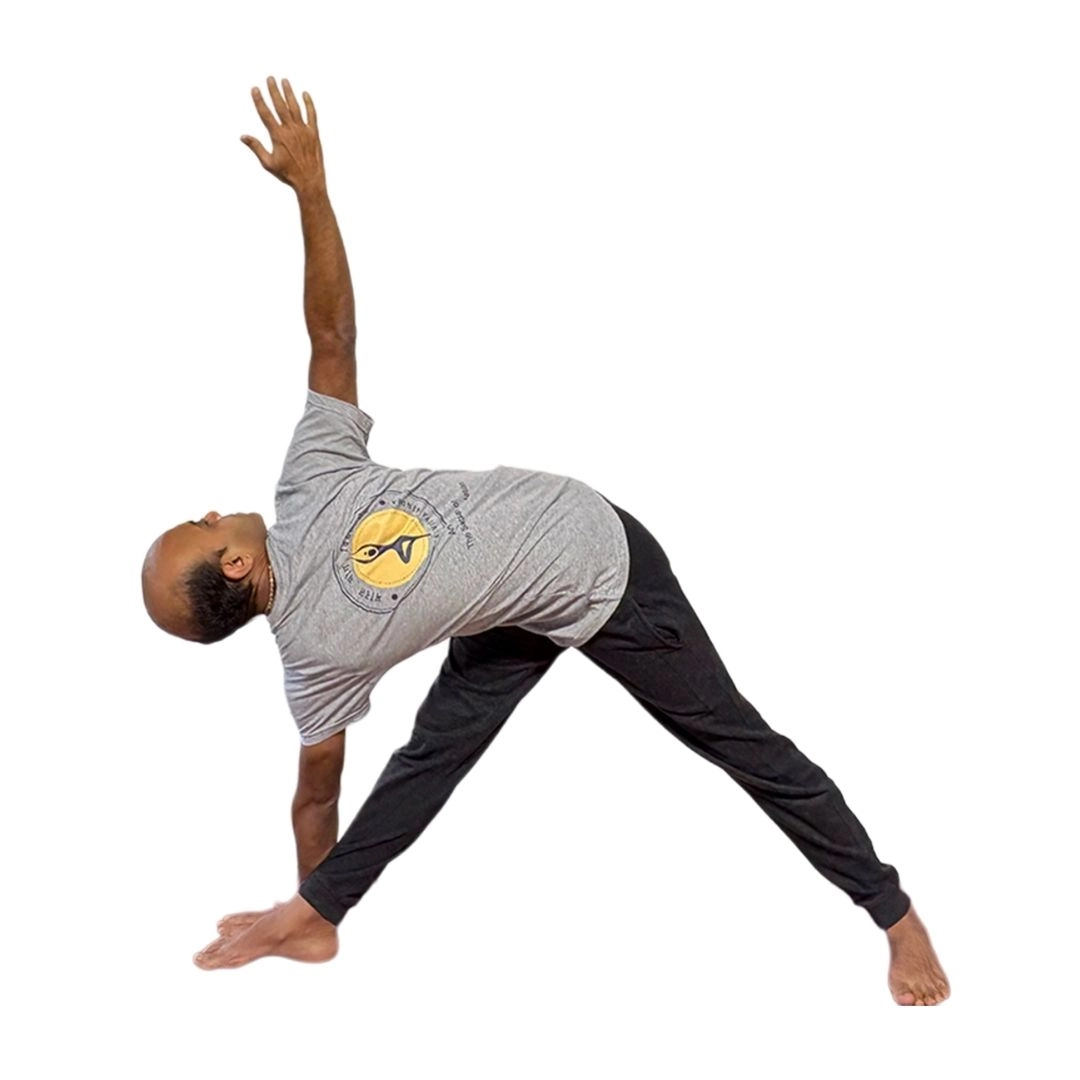
Parivritta Trikonasana (परिवृत्त त्रिकोणासन), or Revolved Triangle Pose, is a challenging standing posture that combines a forward bend with a deep spinal twist. The name is a combination of the Sanskrit words “parivrtta” (revolved), “trikona” (three corners or triangle), and “asana” (posture).
How to do Parivritta Trikonasana
Benefits of Parivritta Trikonasana
Stretches and Strengthens:
It deeply stretches the hamstrings, hips, shoulders, chest, and upper back. At the same time, it strengthens the legs, ankles, feet, and abdominal muscles.
Improves Flexibility and Range of Motion:
The deep spinal twist enhances the flexibility of the spine, shoulders, hips, and knees. Regular practice can help reduce stiffness in the back, neck, and shoulders.
Stimulates Internal Organs:
The twisting and compressing action of the abdomen massages the internal visceral organs, including the stomach, liver, and kidneys. This can aid in digestion, relieve constipation, and help with detoxification.
Enhances Balance and Stability:
As a balancing pose, it challenges your sense of equilibrium and improves proprioception, which is the body’s awareness of its position in space.
Tones Muscles: The pose is a full-body workout that helps to tone muscles, particularly in the legs, core, and waist.
Contraindications of Parivritta Trikonasana
Avoid or modify this pose if you have:
- Back or spine injuries, such as a herniated or bulging disc.
- Problems with your sacroiliac joint.
- High or low blood pressure.
- Migraines or insomnia.
- Recent surgery on the hips, knees, ankles, or shoulders.
- Pregnancy (especially later stages).
Anatomy (Muscles involved)
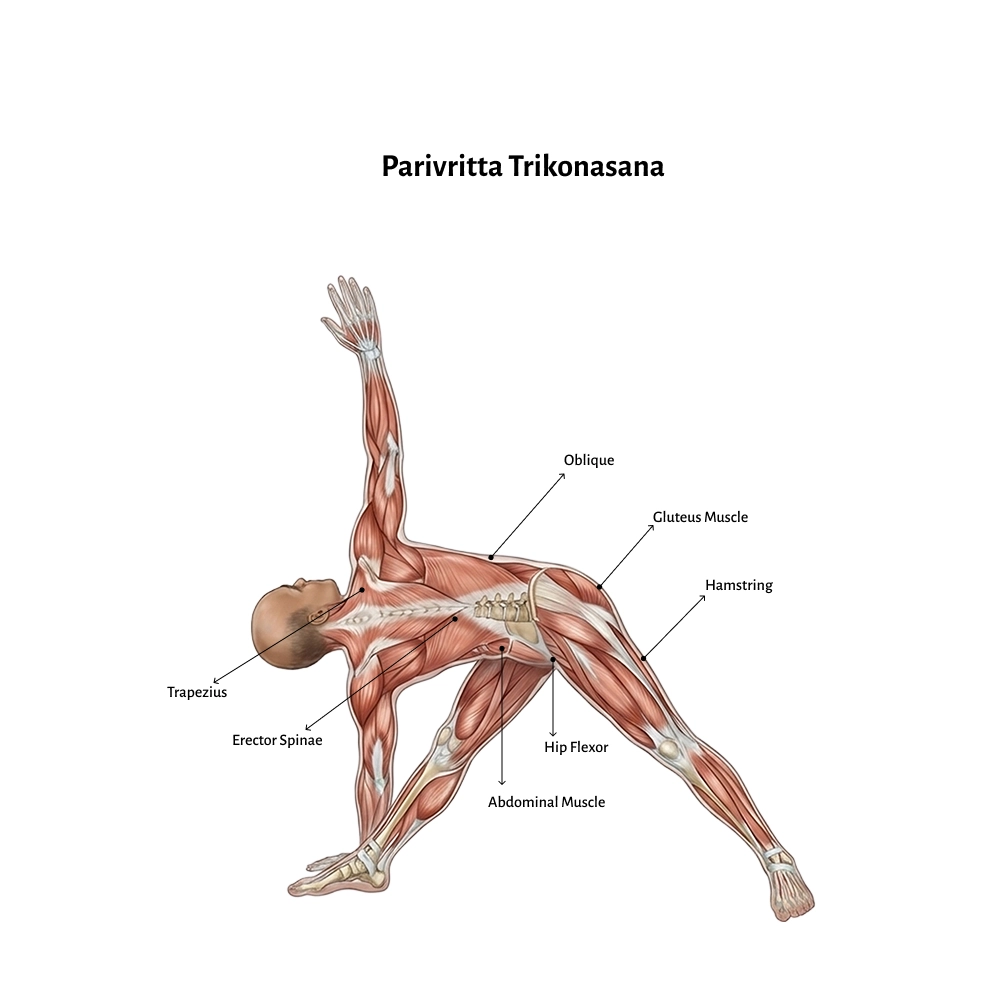
This pose engages and stretches numerous muscles and joints throughout the body. The primary anatomical actions include:
Spine:
The spine undergoes a deep twist, specifically in the thoracic region (the middle and upper back), which is often inflexible. The pose requires the spine to lengthen and rotate simultaneously.
Legs:
The legs are a strong foundation for the pose. The hamstrings, quadriceps, gluteus maximus, and calves are all stretched and strengthened. The front leg is in a forward bend position, while the back leg’s thigh is actively engaged in an inward rotation.
Hips:
The hips are also key to the pose. One hip is flexed and internally rotated, while the other is in a lateral extension.
Shoulders and Chest: The twist in the torso opens the chest and shoulders, creating space for the ribcage and intercostal muscles to expand.
Core and Abdominal Muscles:
The abdominal muscles are engaged to stabilize the core and facilitate the spinal twist. This action also massages the internal organs.