Virabhadrasana (वीराभद्रासन)

Virabhadrasana (वीराभद्रासन) A, B, C, D, and E. While A, B, and C are the three widely recognized and foundational “Warrior Poses,” variations D and E are not standard in most yoga traditions. Instead, they are often referred to by their other names, such as “Humble Warrior” (Baddha Virabhadrasana) and “Reverse Warrior” (Viparita Virabhadrasana).

How to do Virabhadrasana*

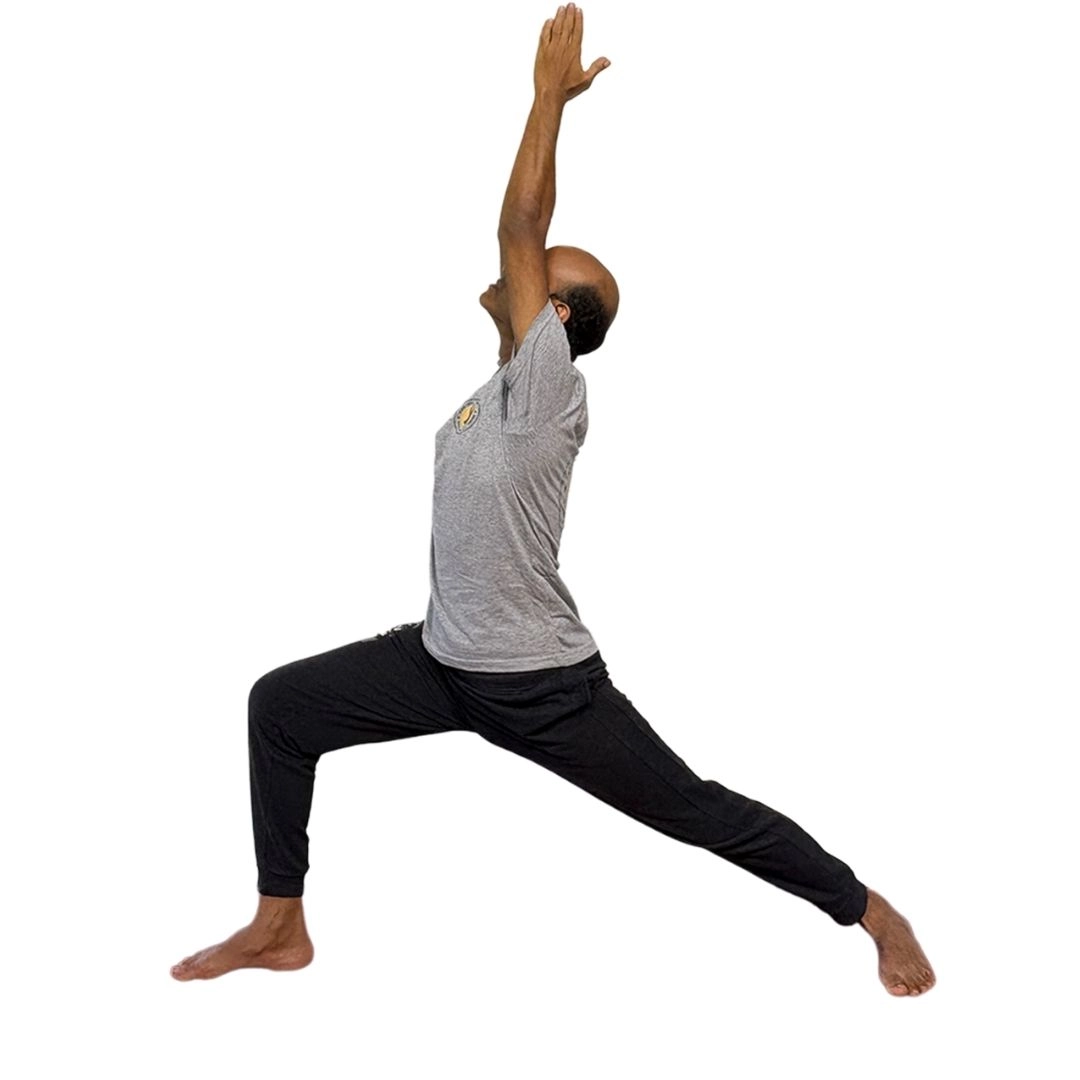
Virabhadrasana I (Warrior I)
A strong and grounding standing pose that opens the hips and shoulders.

How to do it:

  1. Start in Mountain Pose (Tadasana). Step your left foot back about 3-4 feet, turning it out to a 45-degree angle.
  2. Align your hips to face the front of the mat, squaring them as much as possible.
  3. Bend your front (right) knee to a 90-degree angle, stacking it directly over your ankle. Keep the back leg straight and strong, pressing the outer edge of the back foot into the mat.
  4. Inhale and sweep your arms overhead, either parallel to each other or with palms touching. Relax your shoulders away from your ears.
  5. Gaze forward or slightly upward. Hold for 5-10 breaths before repeating on the other side.

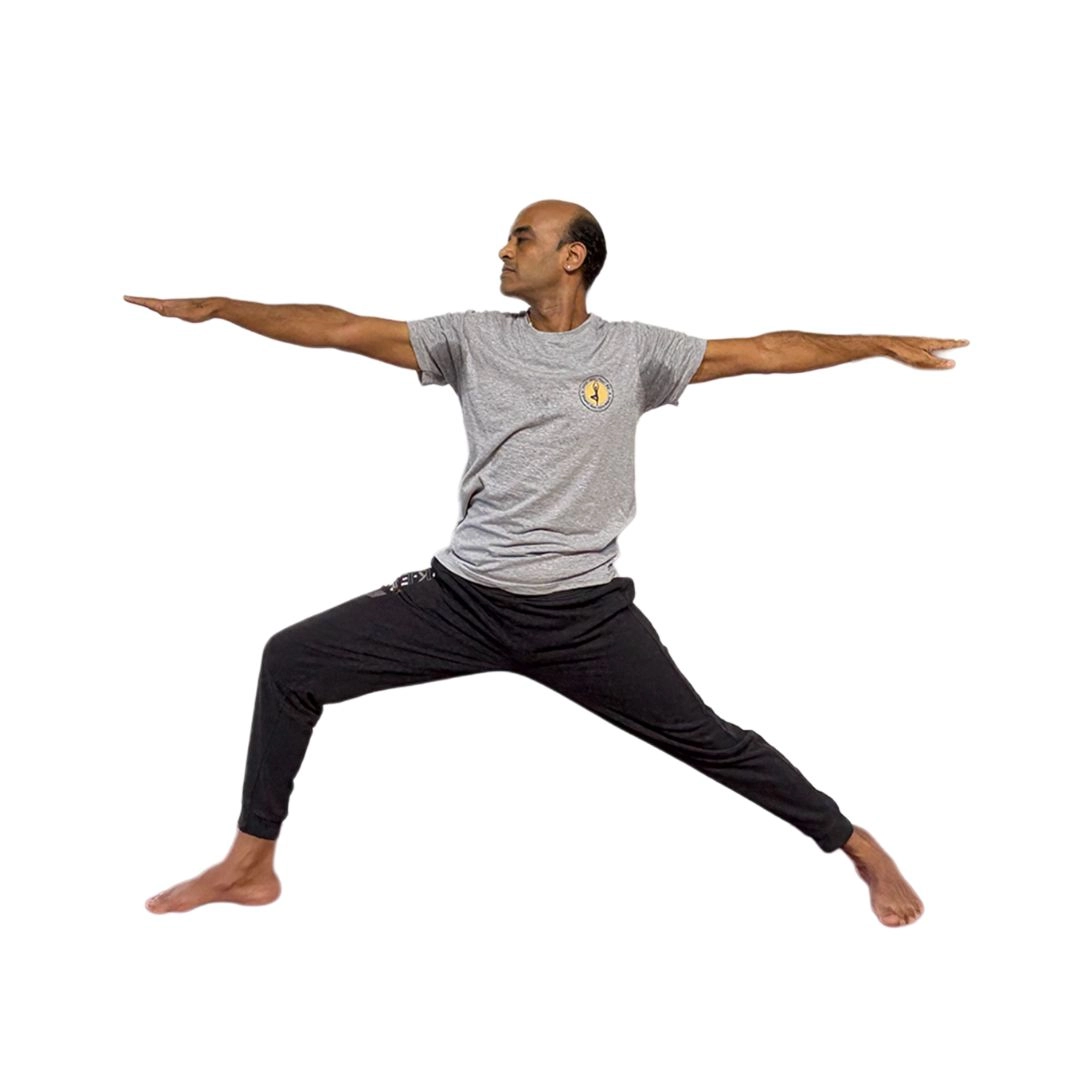
Virabhadrasana II (Warrior II)
A powerful pose that strengthens the legs and core while opening the hips and groin.

How to do it:

  1. From Mountain Pose, step your left foot back 3-4 feet. Turn your right foot to face the front of the mat and your left foot to a 90-degree angle. Align your front heel with the arch of your back foot.
  2. Open your hips to face the long side of the mat.
  3. Bend your front (right) knee to a 90-degree angle, ensuring it is stacked over your ankle.
  4. Extend your arms parallel to the floor, reaching actively from your fingertips. Your palms should face down.
  5. Turn your head to gaze over the fingertips of your front hand. Hold for 5-10 breaths before switching sides.

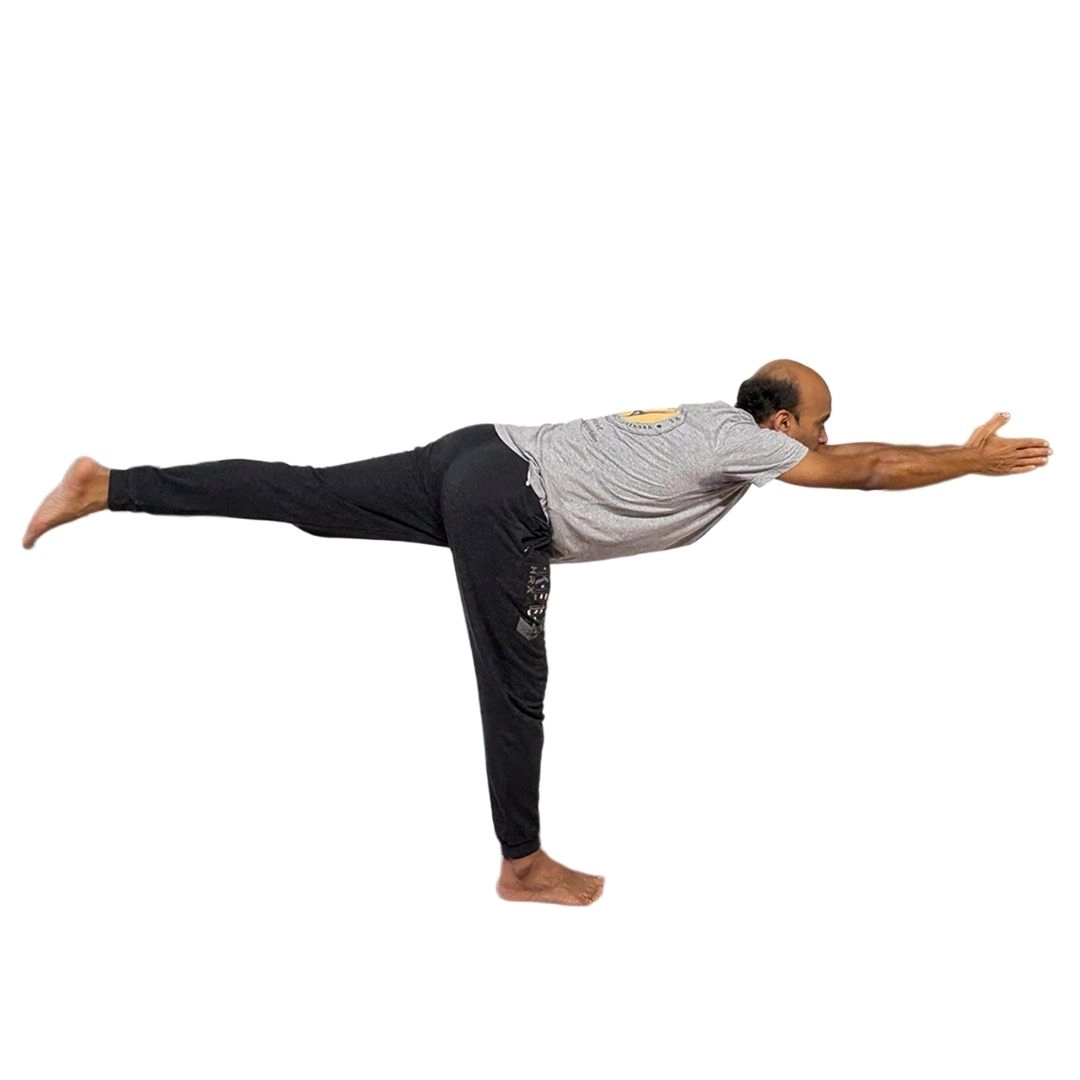
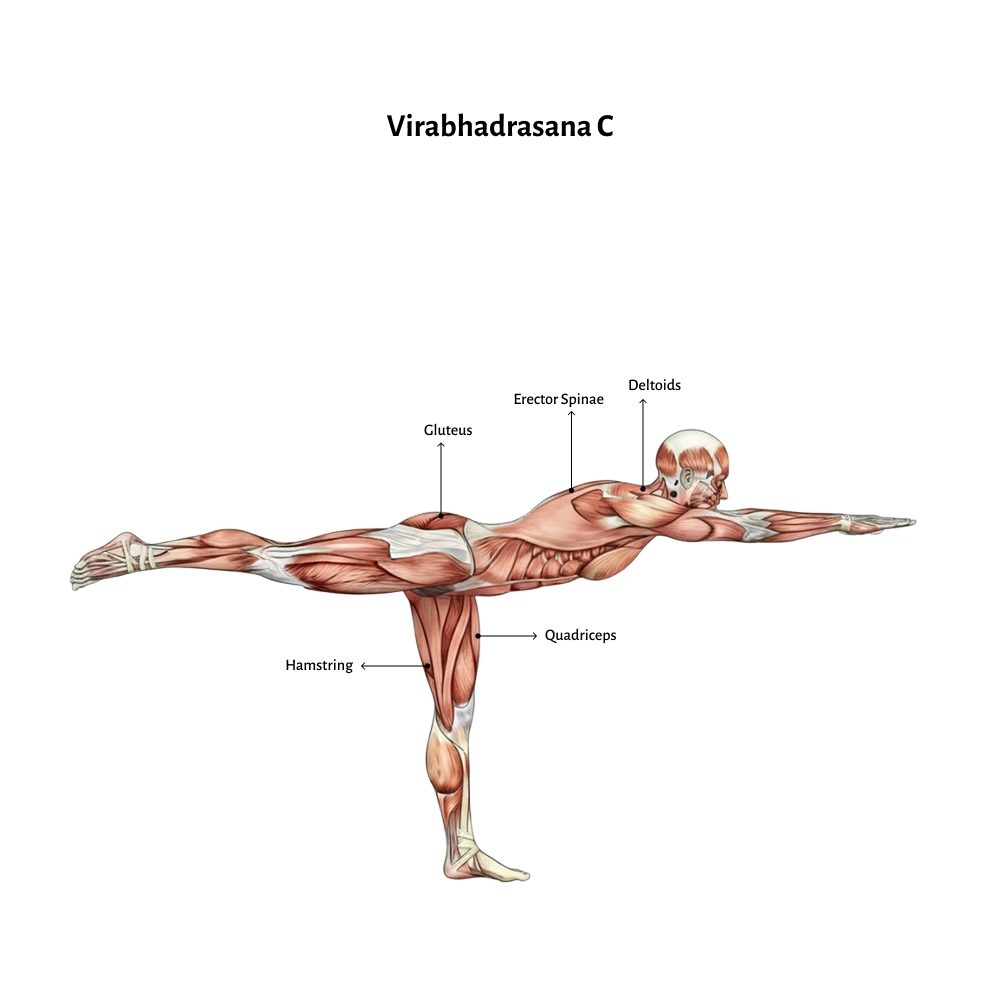
Virabhadrasana III (Warrior III)

How to do it:

  1. Start in Mountain Pose or transition from Warrior I.
  2. Shift your weight onto your right foot and begin to hinge forward from your hips, lifting your left leg straight back.
  3. Keep your torso and lifted leg in one straight line, parallel to the floor. Your hips should remain squared and facing the floor.
  4. Extend your arms forward alongside your ears, back along your sides, or in reverse prayer.
  5. Keep a micro-bend in your standing knee to avoid locking the joint. Gaze down at a fixed point to maintain balance.
  6. Hold for 3-5 breaths before slowly returning to a standing position and repeating on the other side.

Other Warrior Variations (D & E)
While not officially part of the A, B, C sequence, there are other well-known “Warrior” variations.

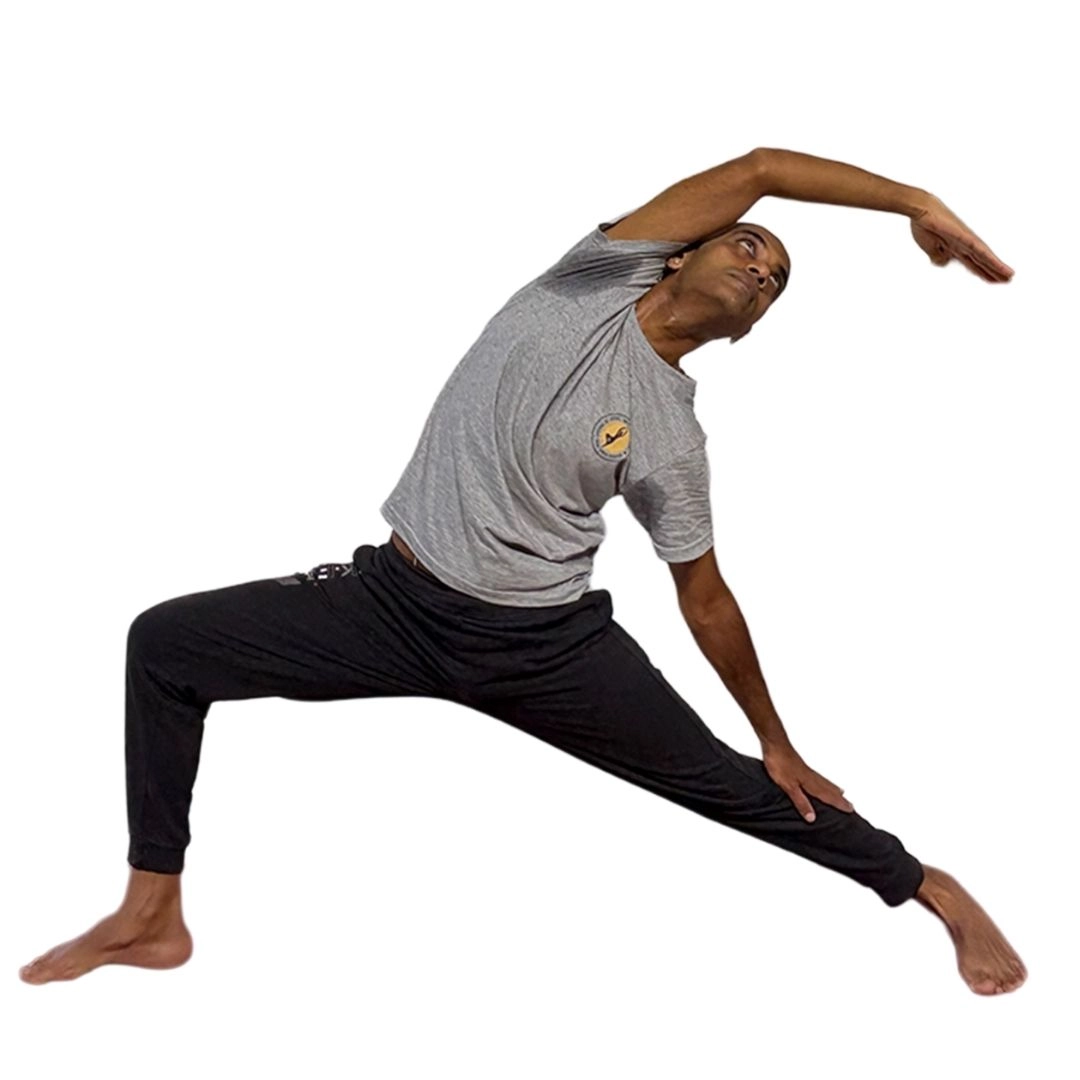
  • Reverse Warrior (Viparita Virabhadrasana):
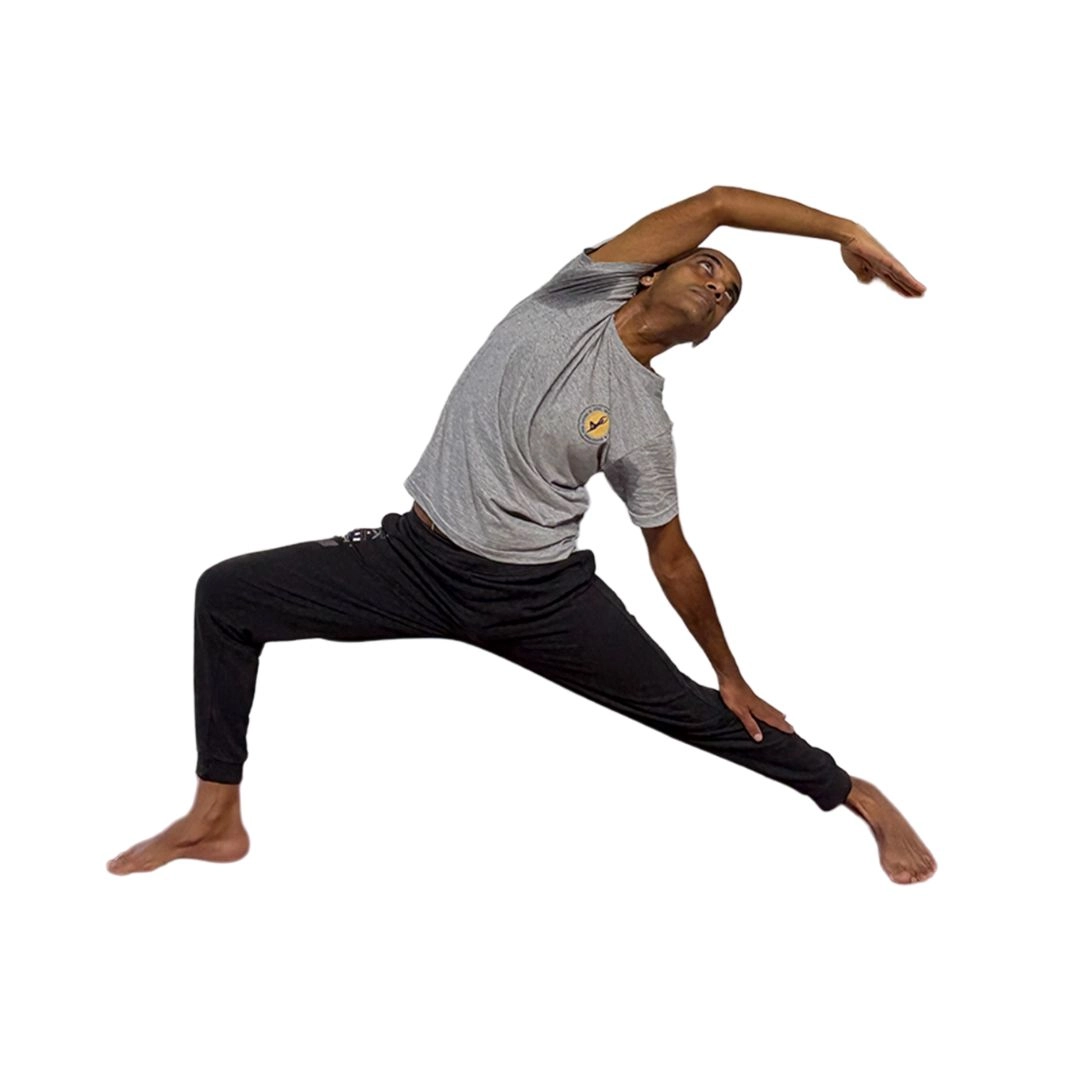
    A variation of Warrior II where you reach your front arm up and back in a gentle backbend, with your back arm resting on your back leg. It provides a deep stretch to the side of the body.
  • Humble Warrior (Baddha Virabhadrasana):
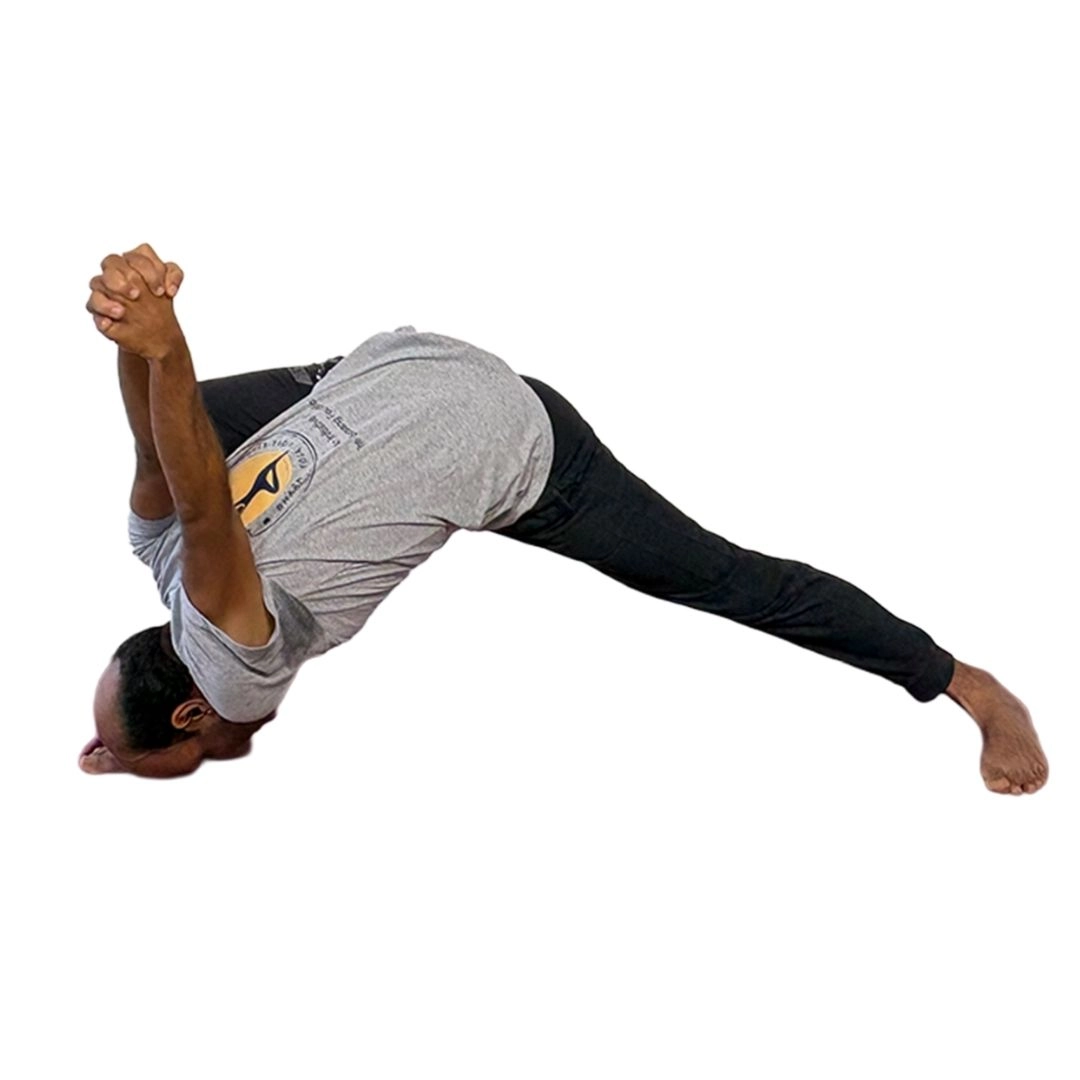
    A variation of Warrior I where you fold forward, bringing your torso to the inside of your front thigh while clasping your hands behind your back. It offers a deeper hip and shoulder stretch.

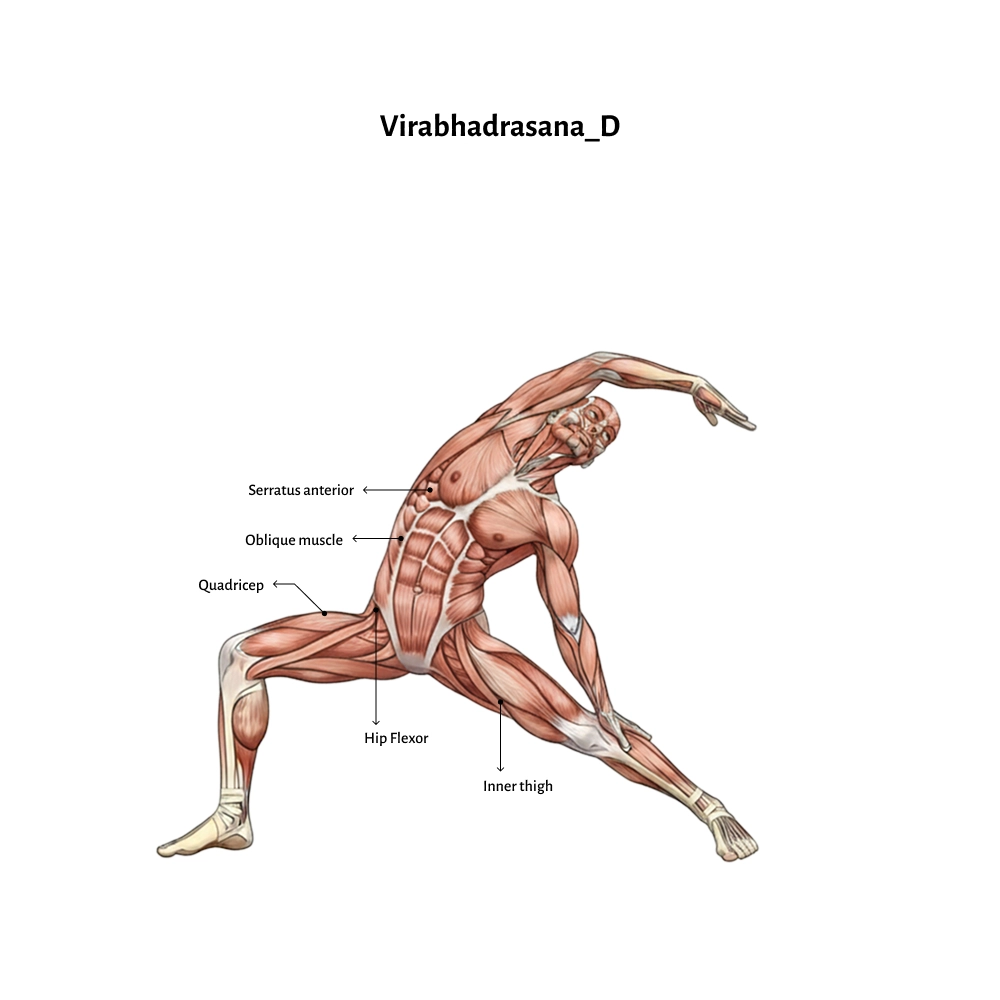
Virabhadrasana 4: Reverse Warrior (Viparita Virabhadrasana)

Reverse Warrior is a side stretch that’s usually performed as a fluid movement out of Warrior II. It lengthens the side of the body and provides a nice counter-stretch to the strength-building of the first two warrior poses.

How to do it:

  1. Start in Warrior II (Virabhadrasana II):
    From Warrior II, with your front knee bent and your arms extended parallel to the floor, flip the palm of your front hand to face the ceiling.
  2. Move into the pose:
    Inhale, and as you exhale, slowly lift your front arm up and back, reaching towards the sky. At the same time, let your back hand slide down the back of your leg.
  3. Find the stretch:
    The goal is to create a deep stretch along the side of your front body, from your hip all the way to your fingertips. Keep your front knee bent at a 90-degree angle, and avoid straightening it. Your gaze can be up at your hand or down at your back foot.
  4. Hold and breathe:
    Hold the pose for a few breaths, feeling the length and expansion in your side body.
  5. Release:
    Inhale and return to Warrior II. You can then transition to the other side.

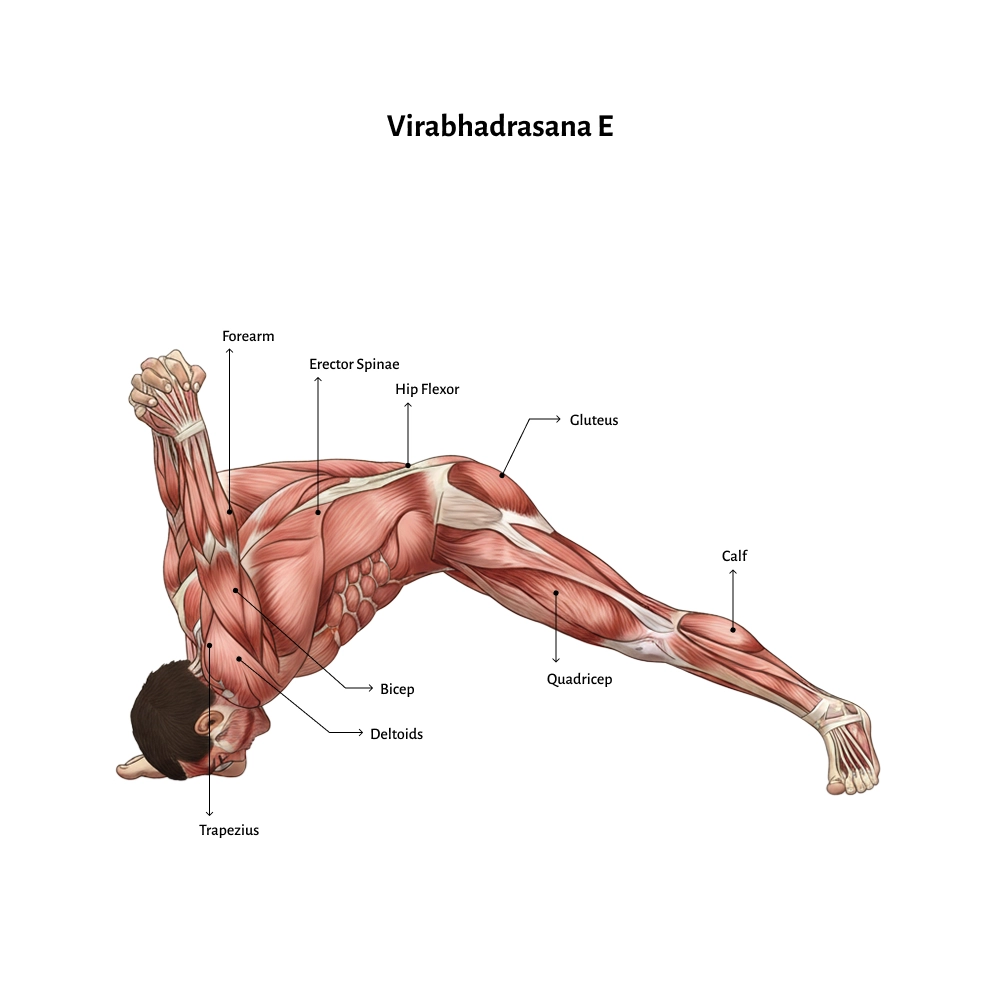
Virabhadrasana 5: Humble Warrior (Baddha Virabhadrasana)
Humble Warrior is a deep forward fold that challenges balance, flexibility, and humility. It’s a great hip opener and shoulder stretch.

How to do it:

  1. Start in Warrior I (Virabhadrasana I):
    From a standing position, step one foot back into Warrior I, with your hips squared to the front of the mat.
  2. Clasp your hands:
    Bring your hands behind your back and interlace your fingers, as if you’re making a fist. Roll your shoulders back and down, opening your chest.
  3. Fold forward:
    Inhale, lengthen your spine, and on an exhale, begin to hinge forward from your hips. Fold your torso down to the inside of your front thigh.
  4. Lift your arms:
    As you fold, lift your clasped hands away from your back and towards the ceiling, stretching your shoulders.
  5. Find your alignment:
    Allow your head to hang heavy, with the crown of your head moving towards the floor. Keep your front knee bent directly over your ankle and your back leg strong.
  6. Hold and breathe:
    Hold the pose for several breaths, focusing on the deep stretch in your hips and shoulders, and the balance required to stay steady.
  7. Release:
    Inhale, press into your feet, and slowly lift your torso back up to a standing position. Release your hands and return to Tadasana before repeating on the other side.

Benefits of Virabhadrasana*

  • Deep hip opener:
    Provides a significant stretch to the hips and inner thighs.
  • Shoulder flexibility:
    Stretches the shoulders and chest.
  • Strengthens core and legs:
    Requires strong engagement of the core and legs for stability.
  • Cultivates humility:
    The forward fold and “”humble”” nature of the pose can have a calming, centering effect.
  • Stretches the side body:
    Opens the intercostal muscles, abdomen, and obliques.

Contraindications of Virabhadrasana*

General Contraindications for All Virabhadrasana Poses

  • Recent or Chronic Injuries:
    Avoid these poses if you have recent or chronic injuries to your knees, hips, ankles, shoulders, or back. The poses put significant weight and strain on these joints.
  • High Blood Pressure:
    Holding the arms overhead (especially in Warrior I) can temporarily increase blood pressure. Individuals with high blood pressure should proceed with caution or avoid the poses.
  • Heart Conditions:
    People with heart problems should avoid holding standing poses for extended periods, as they can put a strain on the cardiovascular system.
  • Balance Issues:
    If you have conditions that affect your balance, such as vertigo or inner ear problems, you should be extremely cautious. It is highly recommended to practice near a wall or use other support.
  • Back Problems:
    The forward-leaning and balancing nature of this pose can be hard on the lower back. Individuals with back issues, including a herniated disc, should avoid this pose.
  • Knee Pain:
    If you have pre-existing knee pain or arthritis, be very careful with the deep bend in the front knee. Ensure your knee is aligned directly over your ankle and not jutting past it. You can also take a shorter stance.
  • Hip Injuries: The external rotation of the hips in Warrior II can aggravate existing hip injuries. Proceed with caution and don’t force the pose.”

Anatomy (Muscles involved)

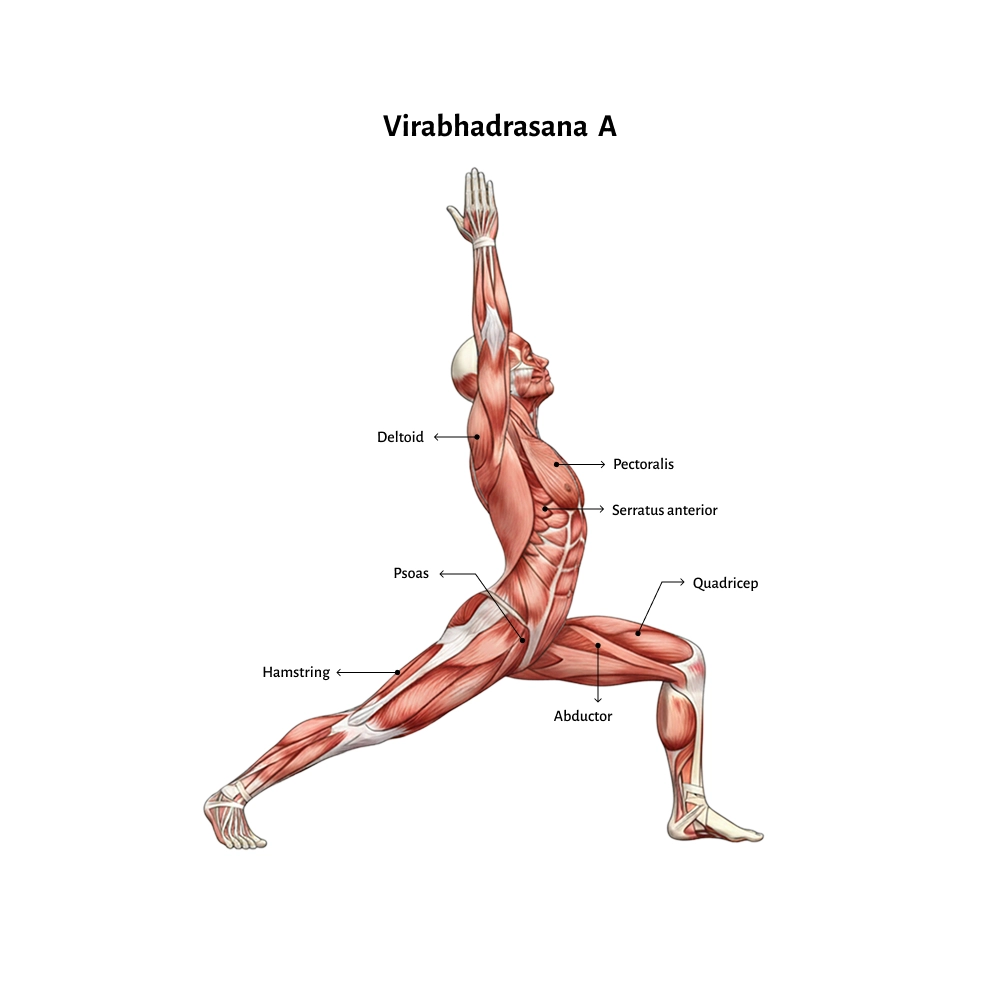
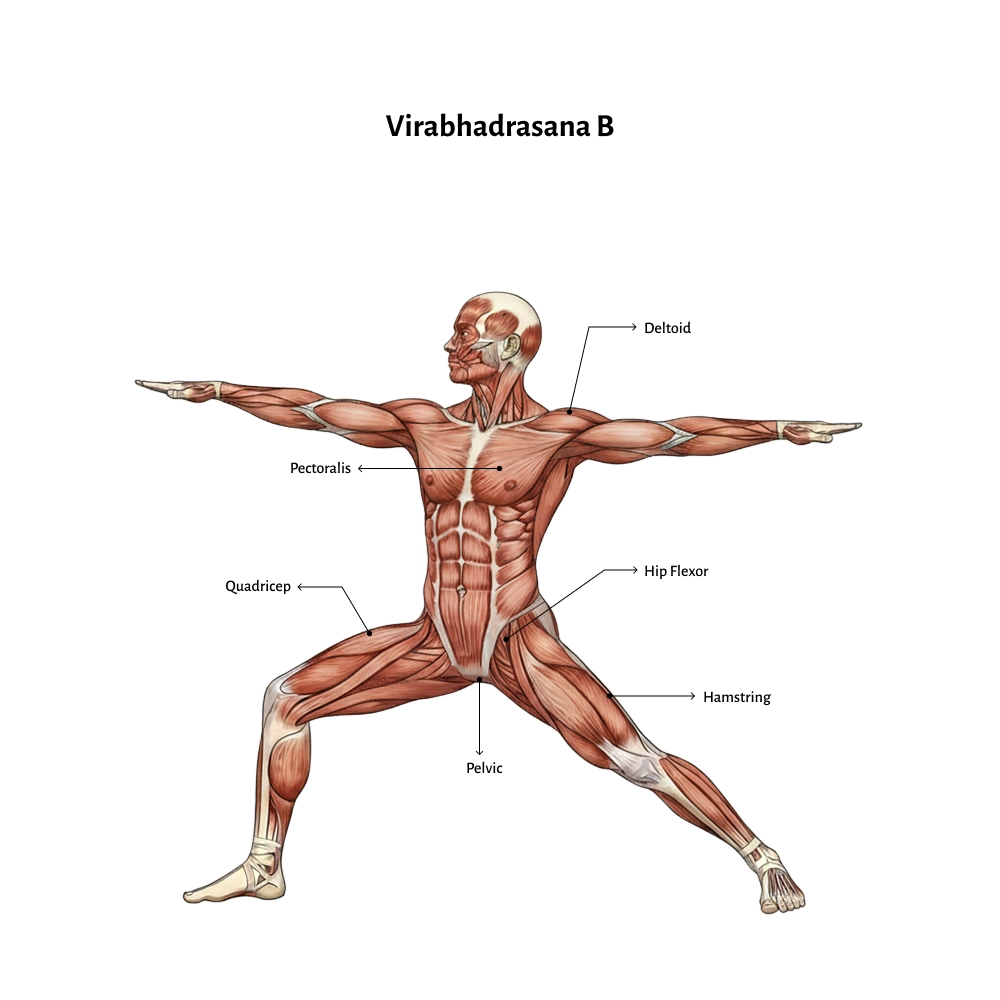
The anatomy of Virabhadrasana is fascinating because it’s a full-body pose that requires a blend of strength, flexibility, and stability. While each of the main variations (I, II, and III) works a different set of muscles and joints, they all share a common theme of engaging the lower body and core.

This pose is all about opposing forces and creating a stable, powerful foundation while reaching upward.

Lower Body:

  • Front Leg:
    The quadriceps (rectus femoris, vastus medialis, vastus lateralis, vastus intermedius) are strongly engaged to straighten and stabilize the knee. The hamstrings (biceps femoris, semitendinosus, semimembranosus) also play a role in knee flexion and hip extension. The gluteus maximus and medius are active to stabilize the hip joint.
  • Back Leg:
    The gluteus maximus and adductor magnus are active to extend the hip and turn the pelvis forward. The calf muscles (gastrocnemius and soleus) are stretched as the heel is rooted down.
  • Feet and Ankles:
    The muscles of the feet, including the tibialis anterior and fibularis muscles, work to stabilize the ankles and create a solid base.

Upper Body & Core:

  • Core: The abdominal muscles (rectus abdominis, obliques) and the erector spinae (muscles along the spine) are engaged to support the torso, maintain a neutral spine, and prevent the lower back from over-arching.
  • Shoulders & Arms: The deltoids (shoulder muscles) and serratus anterior are engaged to lift the arms overhead. The trapezius muscles help to stabilize the shoulder blades, and the biceps are active to help hold the arms up.
  • Key Actions: Hip flexion in the front leg, hip extension in the back leg, and spinal extension.