Vatayanasana (वातयानासन)
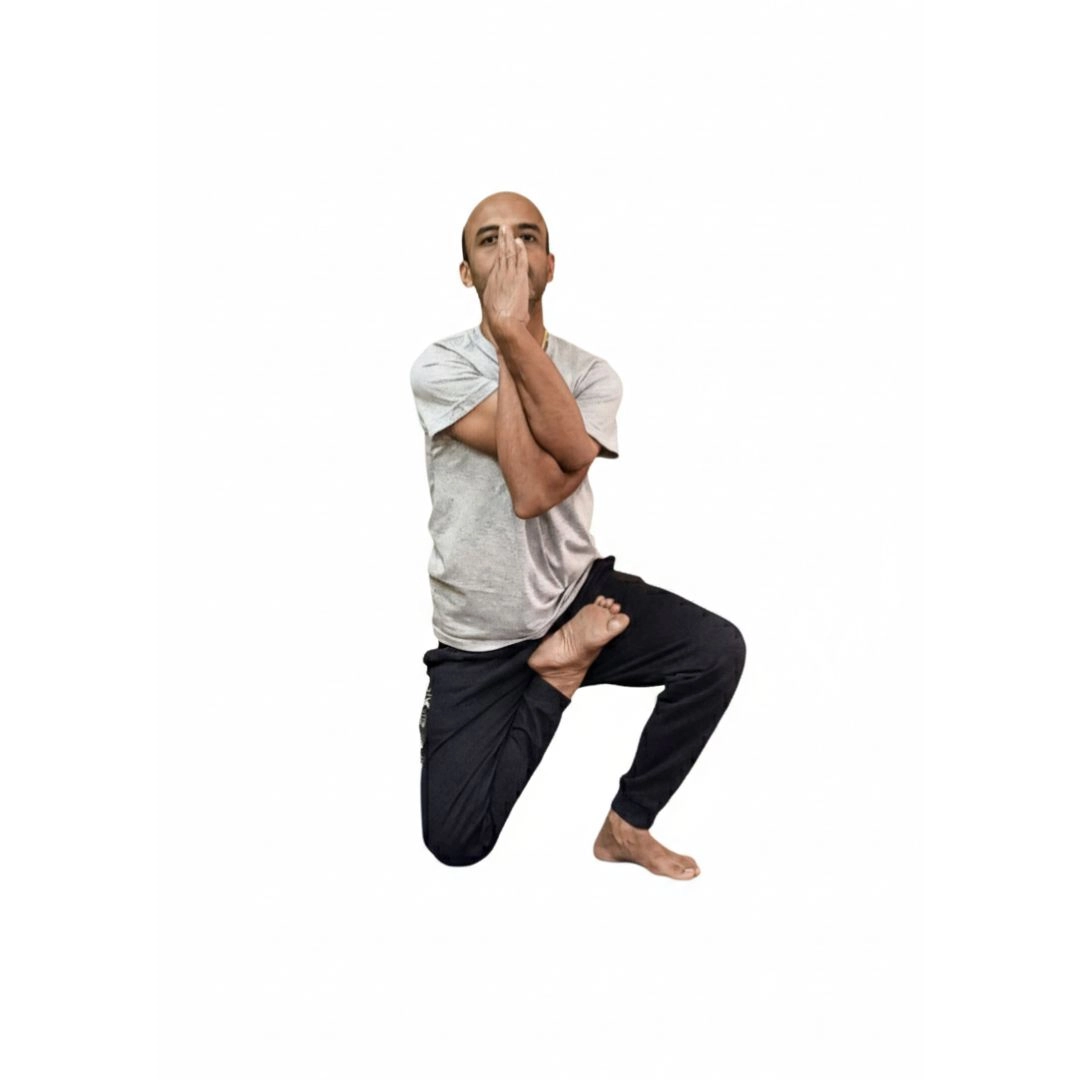
Vatayanasana वातयानासन, or “Flying Horse Pose,” is an advanced balancing pose that requires significant flexibility in the hips, knees, and ankles. It is a complex pose that combines elements of Ardha Padmasana (Half-Lotus Pose) and Garudasana (Eagle Pose).
How to do Vatayanasana
Benefits of Vatayanasana
- Strengthens and Stretches:
Vatayanasana intensely stretches the hips, glutes, and inner thighs. It also strengthens the ankles, knees, and the muscles of the standing leg, including the quadriceps. - Improves Balance and Concentration:
As a balancing pose, it demands a high degree of focus, which helps to calm the mind and improve overall concentration.
- Enhances Flexibility:
Regular practice can significantly improve the flexibility of the hip and knee joints. - Aids in Alignment:
It helps correct minor asymmetries in the hips and legs.
Contraindications of Vatayanasana
Avoid or modify this pose if you have:
- Joint Injuries:
Avoid this pose if you have any existing injuries in your knees, ankles, or hips. The pressure on the joints can worsen a pre-existing condition. - High Blood Pressure/Heart Problems:
The strenuous nature of the pose and the change in blood flow are not recommended for individuals with high blood pressure or heart conditions.
- Sciatica or Slipped Disc:
People with these conditions should not perform this pose. - Pregnancy:
This pose is not safe for pregnant women. - Lack of Flexibility: Do not force yourself into this pose. Pushing beyond your current flexibility can lead to injury. It is a slow and gradual process.
Anatomy (Muscles involved)
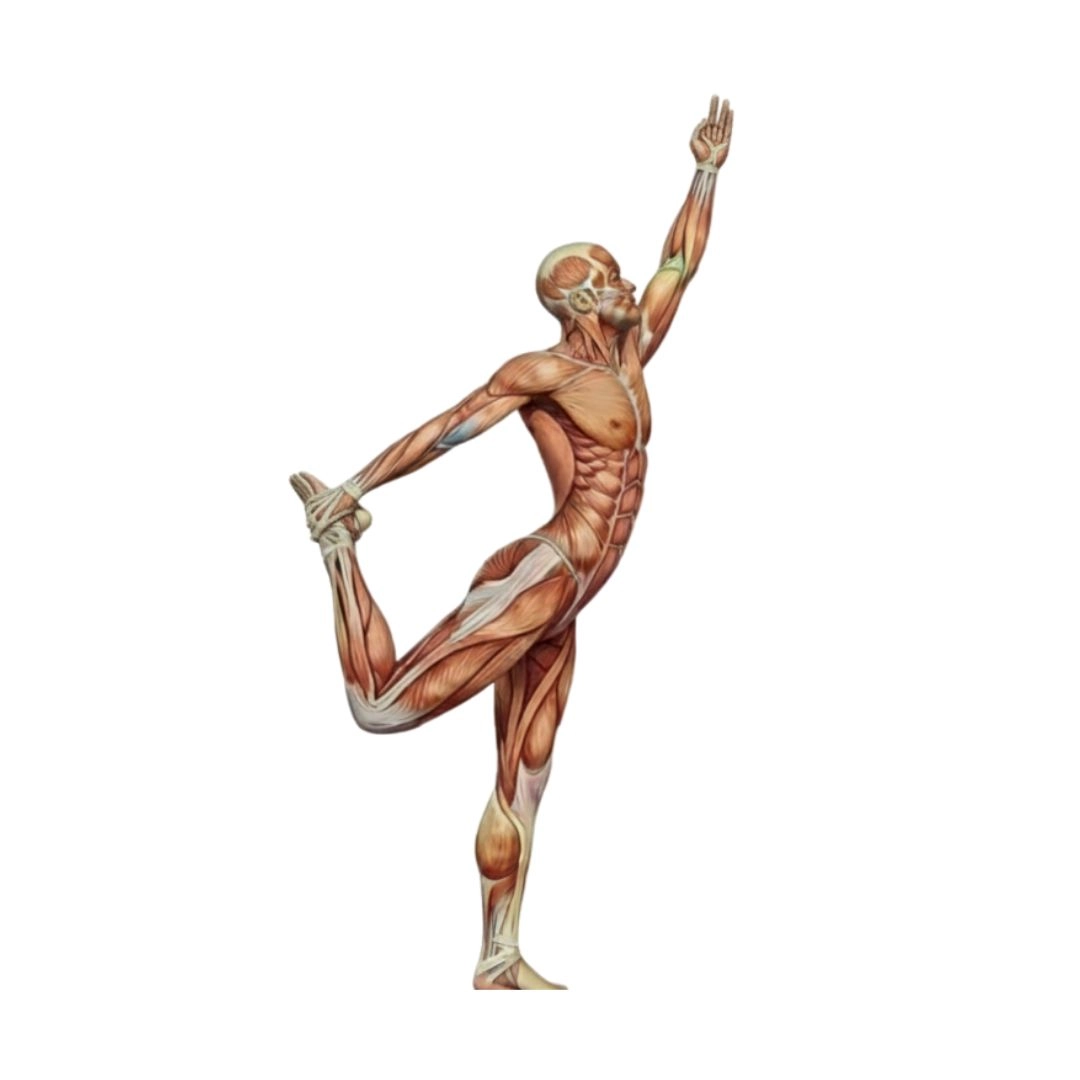
This pose engages a complex network of muscles and joints:
- Lower Body:
The standing leg is under a lot of strain, with the quadriceps, hamstrings, and glutes working to stabilize the body. The folded leg requires a deep external rotation of the hip, engaging the hip rotators and stretching the inner thigh muscles. The pose places significant pressure on the ankle and knee joints, which is why proper alignment is crucial. - Core:
The core muscles (abdominals, obliques, and lower back) are engaged to keep the torso upright and stable. - Upper Body:
The shoulders and arms are involved in the Eagle Arms variation, which stretches the upper back and shoulders.