Eka Pada Sirasana एक पाद सिर्सासन
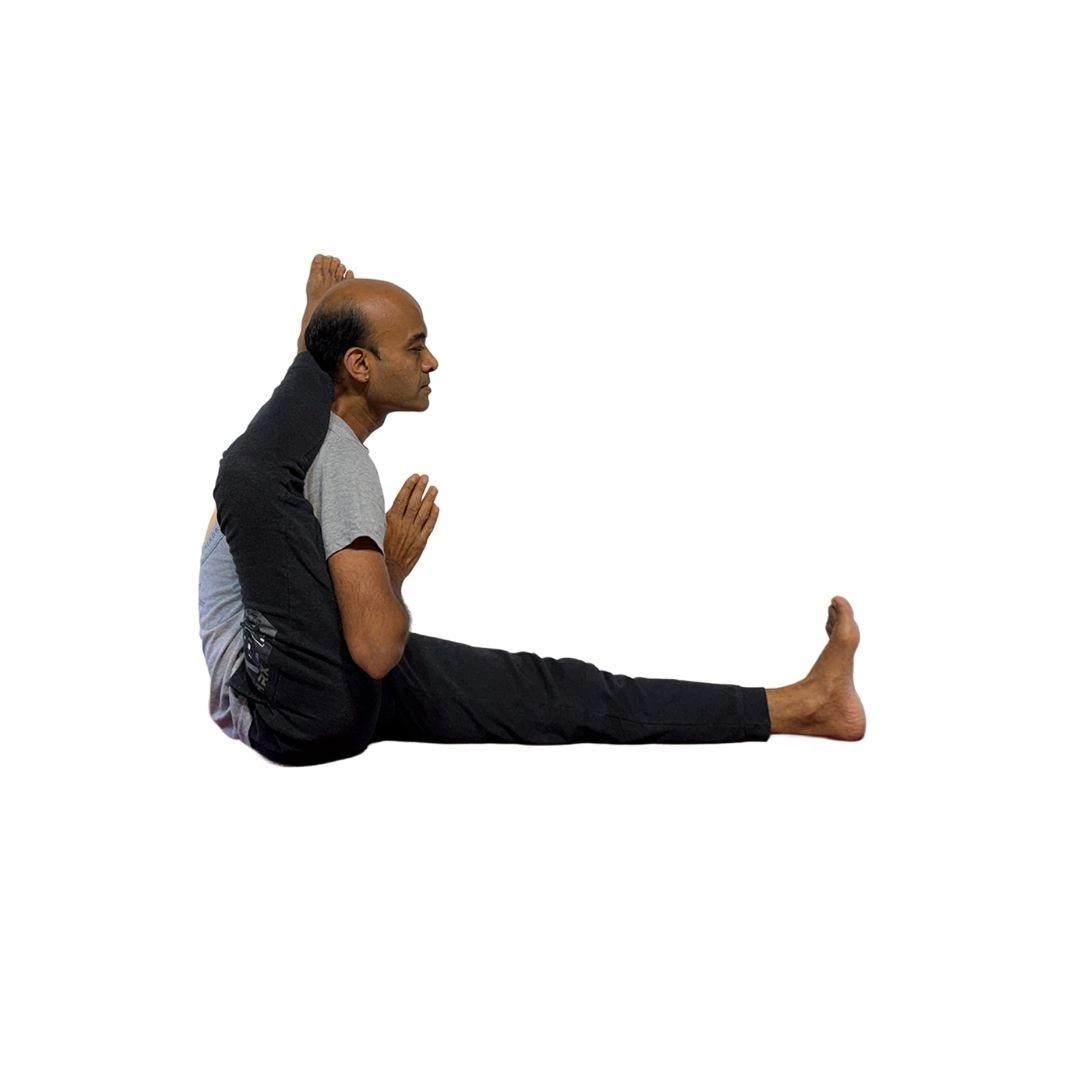
Eka Pada Sirasana एक पाद सिर्सासन, or Foot Behind the Head Pose, is a challenging and advanced seated hip-opening pose. It requires significant flexibility in the hips, hamstrings, and shoulders, as well as strength in the neck and back. Due to its complexity, it is crucial to approach this pose with proper preparation and guidance.
How to do Eka Pada Sirasana
Benefits of Eka Pada Sirasana
- Deep Hip Opening:
This pose provides an intense stretch for the hamstrings, glutes, and hip flexors, significantly increasing hip mobility and range of motion. - Strengthens Core and Back:
Maintaining an upright posture and holding the leg in place requires substantial core and back strength.
- Improves Flexibility:
The pose stretches the entire length of the legs, spine, and shoulders. - Stimulates Organs:
The compression on the sides of the abdomen can help massage internal organs, which may improve digestion. - Calms the Mind:
Like many advanced poses, Ek Pada Sirasana demands intense focus, which helps to calm the mind and improve concentration.
Contraindications of Eka Pada Sirasana
Avoid or modify this pose if you have:
- Injuries:
Do not practice if you have any injury or chronic pain in the neck, shoulders, hips, knees, or spine. This includes conditions like sciatica, herniated discs, or arthritis. - Lack of Flexibility:
The pose should not be forced. If you do not have a great deal of flexibility in your hips and hamstrings, you risk injury by attempting it.
- High Blood Pressure or Heart Conditions:
The pose involves a change in blood flow and can put a strain on the cardiovascular system. - Pregnancy:
The abdominal pressure and intense stretch are not safe during pregnancy. - Dizziness or Vertigo:
The inversion and deep forward bend can cause or worsen these conditions.
Anatomy (Muscles involved)
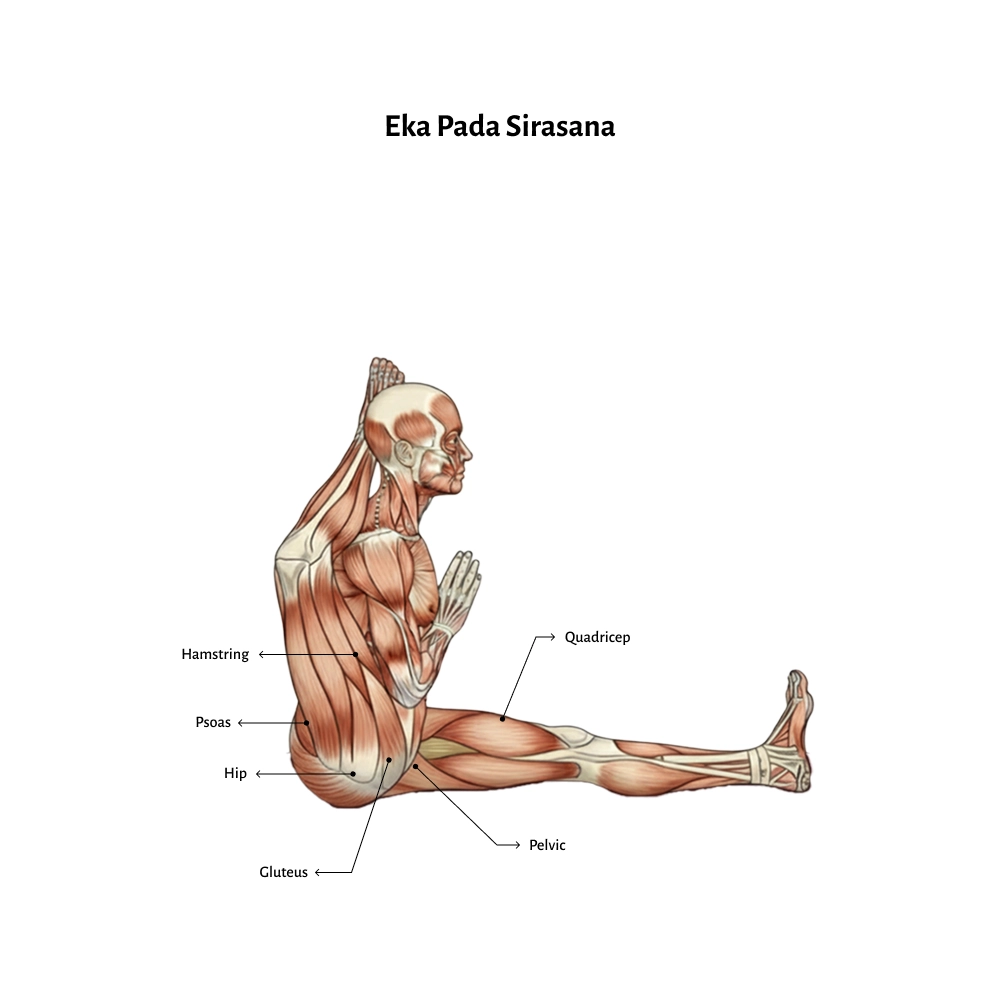
This pose engages a complex network of muscles and joints:
Hip Flexion:
The femur (thigh bone) of the lifted leg is deeply flexed at the hip joint.
Hip Abduction:
The leg is moved out to the side away from the midline.
External Rotation:
The hip of the lifted leg is externally rotated to allow the foot to move behind the head.
Spinal Elongation:
The spine must be actively lengthened to create space and proper posture.
Pelvic Neutrality:
The goal is to keep the pelvis as neutral as possible and prevent it from tilting excessively, which would put strain on the lower back.
Scapular Depression:
The shoulder blades are drawn down the back to create stability in the upper body.