Ustrasana (उष्ट्रासन)
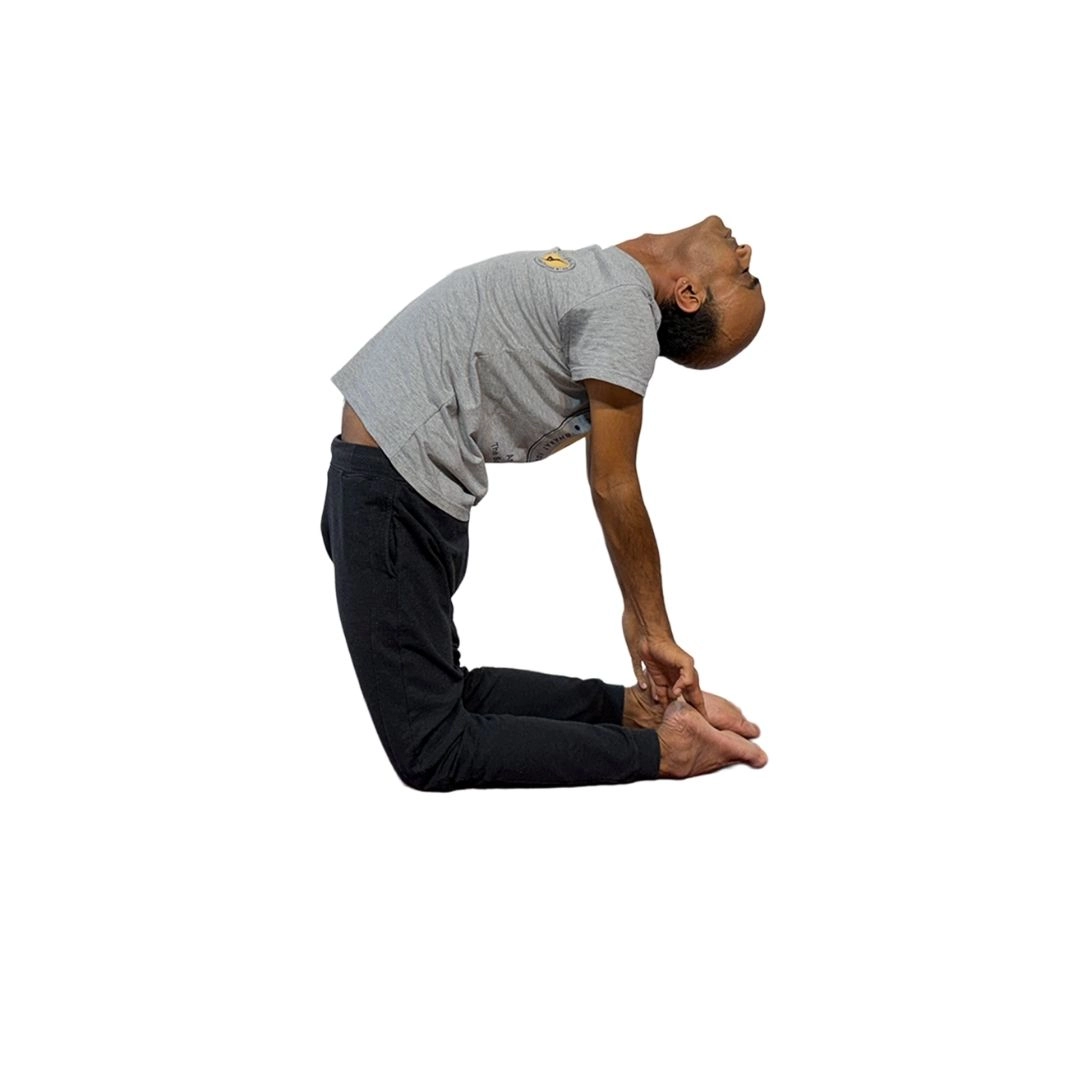
Ustrasana (उष्ट्रासन), or Camel Pose, is a deep backbending posture performed from a kneeling position. The name comes from the Sanskrit word “ustra” (camel) and “asana” (posture), as the final shape of the pose resembles a camel’s hump.
How to do Ustrasana
Benefits of Ustrasana
- Improves Flexibility:
It provides a deep stretch for the entire front of the body, including the chest, abdomen, quadriceps, and hip flexors. It also increases the flexibility of the spine. - Strengthens Muscles:
It strengthens the back muscles, shoulders, and core. - Enhances Digestion:
The deep abdominal stretch can help stimulate internal organs, which may aid in digestion and relieve constipation.
- Improves Posture:
By opening the chest and shoulders, Ustrasana helps to counteract the effects of a sedentary lifestyle and poor posture, such as slouching. - Boosts Energy and Mood:
As a heart-opening pose, it is believed to stimulate the heart chakra, helping to relieve stress, anxiety, and fatigue.
Contraindications of Ustrasana
Avoid or modify this pose if you have:
- Spinal Injuries:
Any severe back, neck, or spinal injuries, including a herniated disc. - High or Low Blood Pressure:
The inversion and deep backbend can affect blood pressure. - Headaches or Migraines:
The pose can sometimes trigger or worsen headaches. - Insomnia:
The stimulating nature of the pose can make it difficult to sleep if practiced late at night.
- Recent Surgery:
Especially recent abdominal or chest surgery. - Severe Arthritis:
In the knees, back, or neck. - Knee Pain:
Place a folded blanket or towel under your knees to reduce pressure, or avoid the pose entirely if the pain is sharp. - Pregnancy:
It is not recommended to practice deep backbends during pregnancy.
Anatomy (Muscles involved)
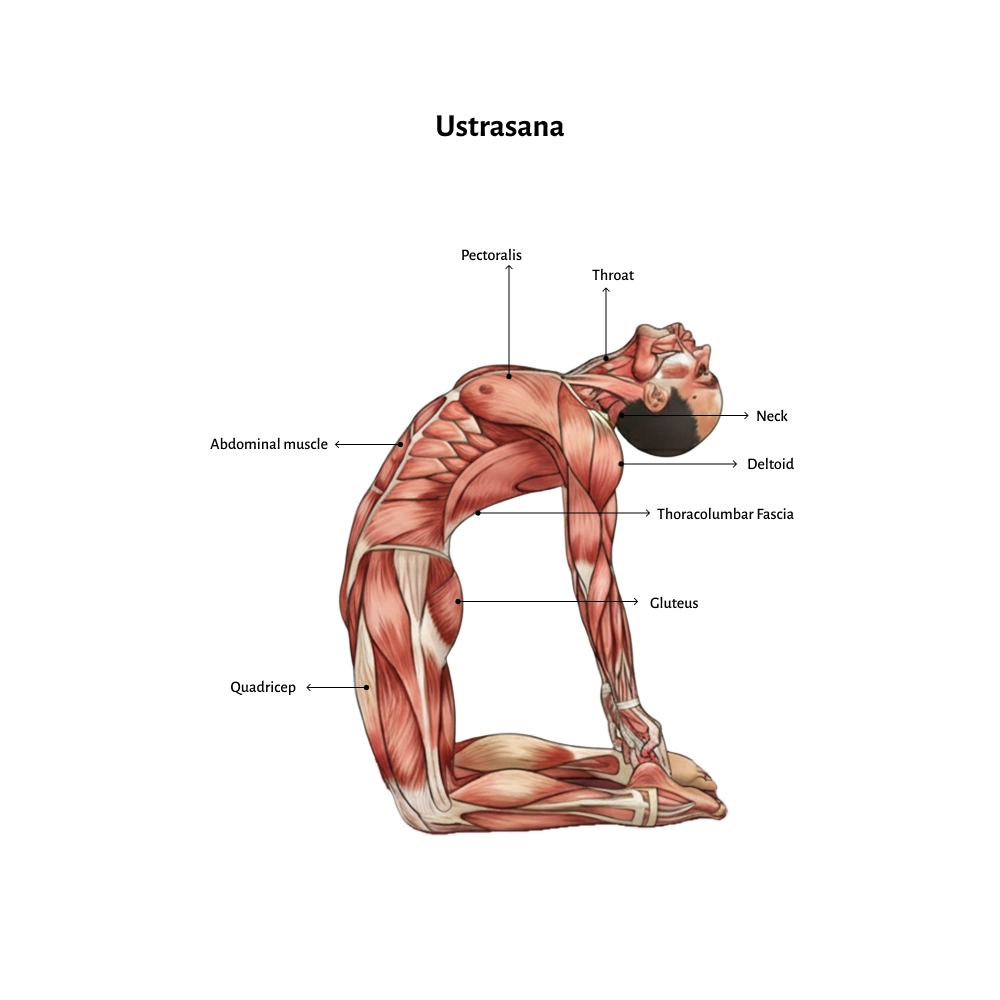
This pose engages a complex network of muscles and joints:
Muscles Stretched:
- Abdomen: Rectus abdominis and obliques.
- Thighs: Quadriceps.
- Hip Flexors: Psoas.
- Chest and Shoulders: Pectoralis major and deltoids.
Muscles Strengthened:
- Back: Erector spinae, which supports the spine.
- Core: Abdominal muscles to stabilize the torso.
- Glutes and Hamstrings: To support the backbend and maintain the position.