Purvottanasana (पूर्वोत्तानासन)
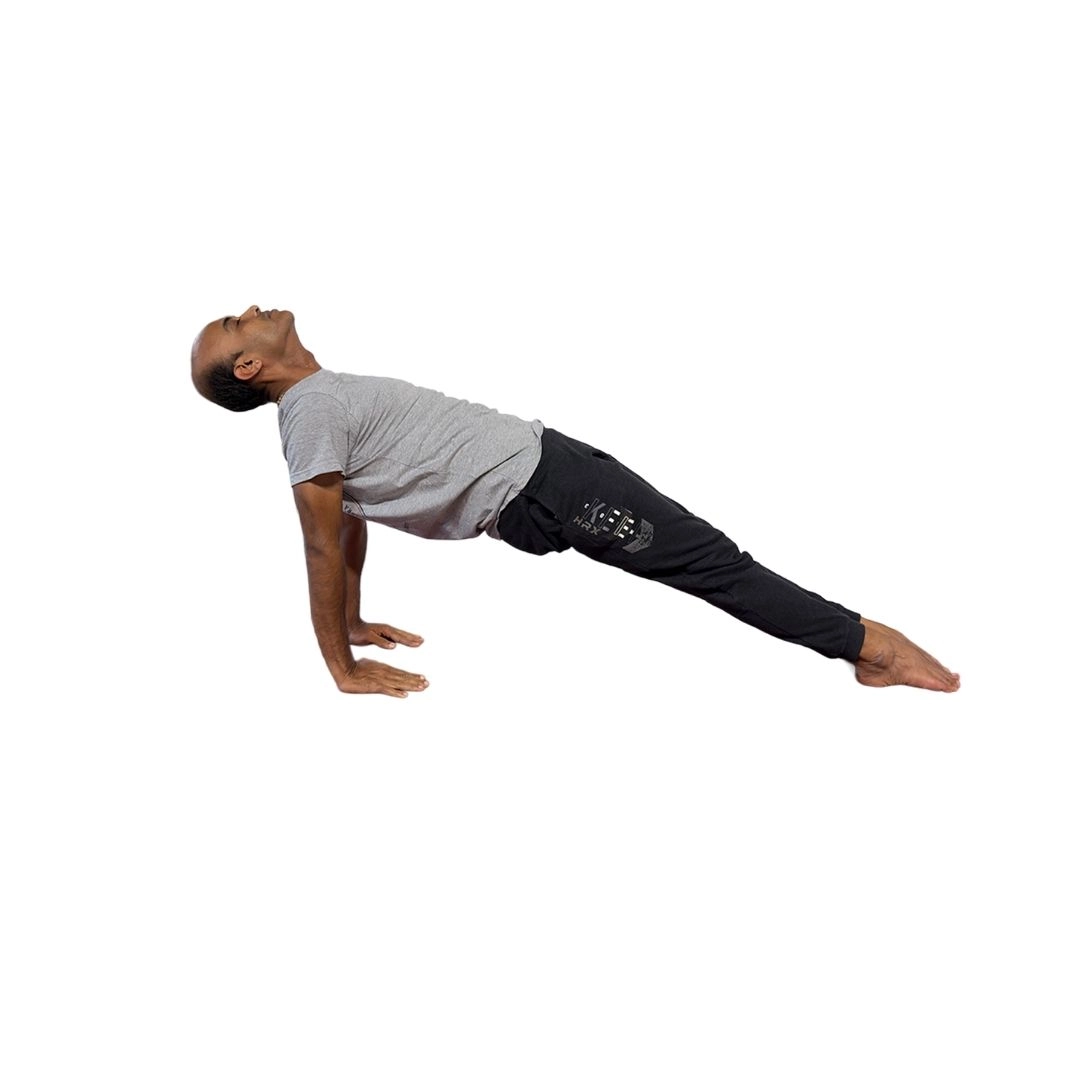
Purvottanasana (पूर्वोत्तानासन), also known as Upward Plank Pose or Reverse Plank Pose, is a powerful backbending and arm-balancing posture in yoga. The name comes from the Sanskrit words “purva” (east, or the front of the body), “uttana” (intense stretch), and “asana” (posture).
How to do Purvottanasana
Benefits of Purvottanasana
- Strengthens:
This pose is highly effective for strengthening the arms, wrists, shoulders, core, glutes, hamstrings, and the entire back of the body (posterior kinetic chain). - Stretches:
It provides an intense stretch for the front of the body, including the chest, shoulders (pectoralis major and minor), abdomen, and the front of the ankles.
- Improves Posture:
As a strong backbend, it helps to counteract the effects of a sedentary lifestyle and poor posture, such as rounded shoulders. - Stimulates Organs:
The intense stretch and engagement of the core and chest can stimulate the abdominal organs, as well as the thyroid, thymus, and adrenal glands. - Energizes:
Purvottanasana is considered an energizing pose that can help to combat fatigue and calm the mind.
Contraindications of Purvottanasana
Avoid or modify this pose if you have:
- Wrist Injuries:
Carpal tunnel syndrome or any pain in the wrists or forearms. - Shoulder Injuries:
Rotator cuff issues or any instability. - Neck Injuries:
Cervical spondylitis or disc issues.
- Back Injuries:
Slipped discs, chronic back pain, or any acute back injury. - High Blood Pressure:
The inversion and head position can be unsafe. - Pregnancy: The pose puts significant pressure on the abdomen and is not recommended.
Anatomy (Muscles involved)
This pose engages a complex network of muscles and joints:
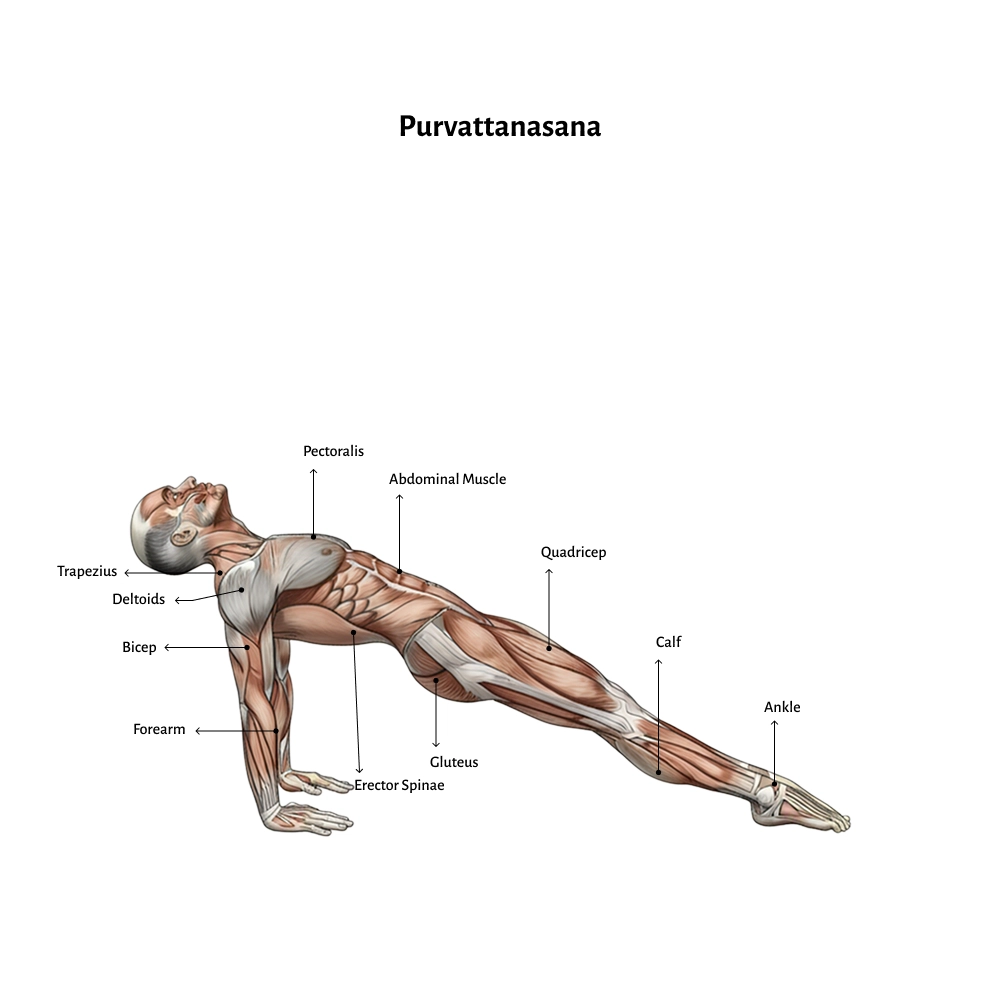
Muscles Strengthened:
- Posterior Chain: Gluteus maximus, hamstrings, and erector spinae (muscles of the lower back).
- Upper Body: Triceps, deltoids, and the muscles of the rotator cuff.
Muscles Stretched:
- Anterior Chain: Quadriceps, pectorals (chest), and anterior deltoids (front of shoulders).
- Core: The abdominal muscles are stretched.
- Connective Tissue: The pose also stretches the psoas muscles and the fascia on the front of the body.