Ardha Baddha Paschimottanasana (अर्ध बद्ध पद्म पश्चिमोत्तनासन)
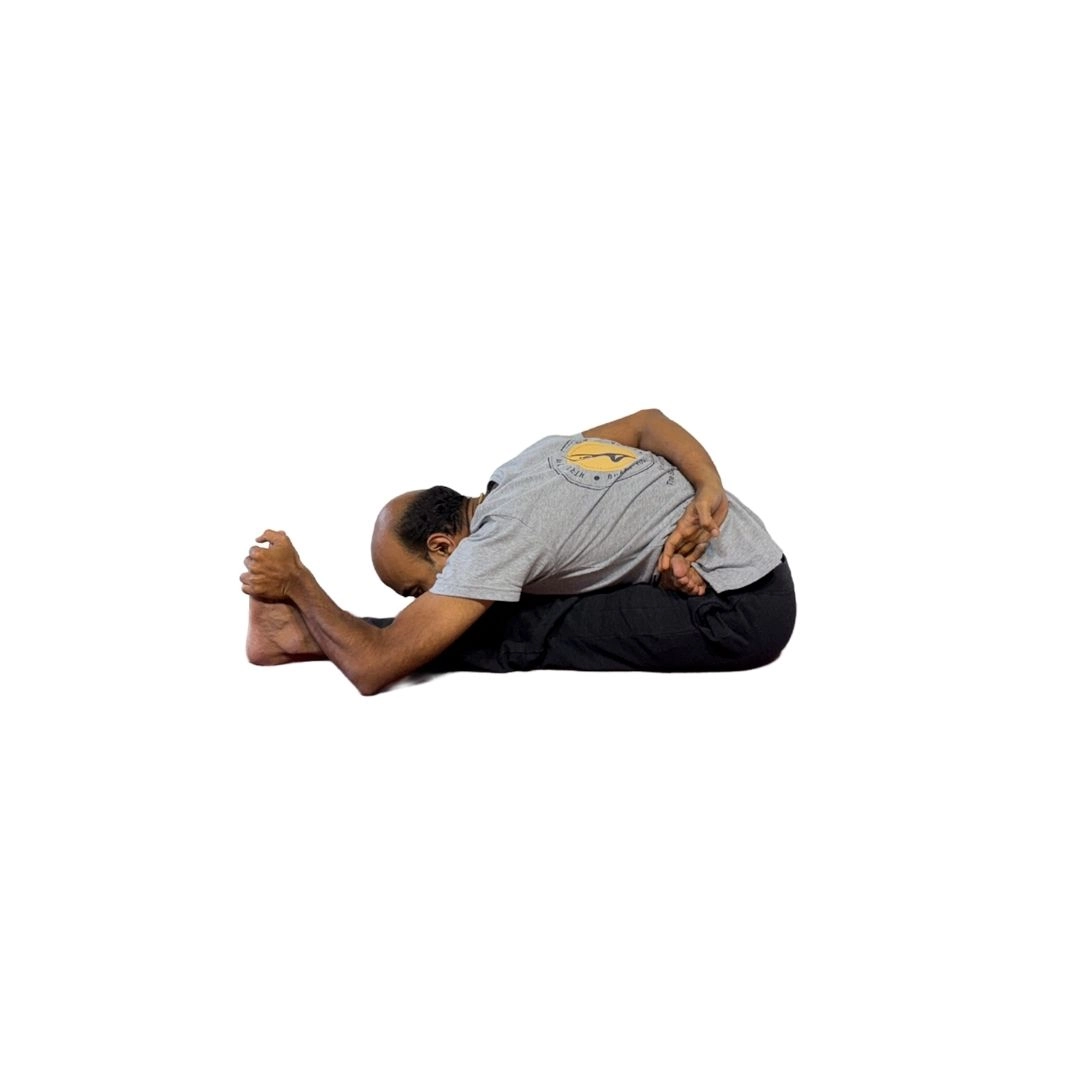
Ardha Baddha Paschimottanasana (अर्ध बद्ध पद्म पश्चिमोत्तनासन), also known as Half Bound Lotus Forward Fold, is a challenging seated forward bend that combines a hip-opening action with a deep hamstring stretch and a shoulder bind. As an advanced posture, it requires flexibility in the hips, knees, and shoulders.
How to do Ardha Baddha Paschimottanasana
Benefits of Ardha Baddha Paschimottanasana
- Deep Stretches:
Provides an intense stretch for the hamstrings, glutes, and calves of the extended leg, and a deep opening for the hip and knee of the bent leg. - Shoulder Flexibility:
The bind behind the back significantly improves the range of motion and flexibility of the shoulders and chest.
- Organ Stimulation:
The forward fold, combined with the pressure from the heel, can massage and stimulate abdominal organs like the liver, spleen, and kidneys, which is believed to aid digestion. - Spinal Health:
It stretches and lengthens the entire spine, improving flexibility and posture. - Calming Effect:
As a forward bend, it helps to calm the nervous system, relieve stress, and can be beneficial for conditions like anxiety and insomnia.
Contraindications of Ardha Baddha Paschimottanasana
Avoid or modify this pose if you have:
- Knee, Ankle, or Hip Injuries:
The pose places significant pressure on these joints, especially the knee of the bent leg. Any pain or injury in these areas is a major contraindication. - Lower Back Issues:
If you have a herniated disc or other severe back pain, the deep forward bend could be harmful. - Sciatica:
The pose may aggravate sciatica symptoms.
- High Blood Pressure:
The forward bend can temporarily increase blood pressure. - Pregnancy or Menstruation:
The pose puts pressure on the abdomen and pelvic region. - Vertigo or Dizziness:
The forward bend can cause a rush of blood to the head, which may worsen these conditions.
Anatomy (Muscles involved)
This pose engages a complex network of muscles and joints:
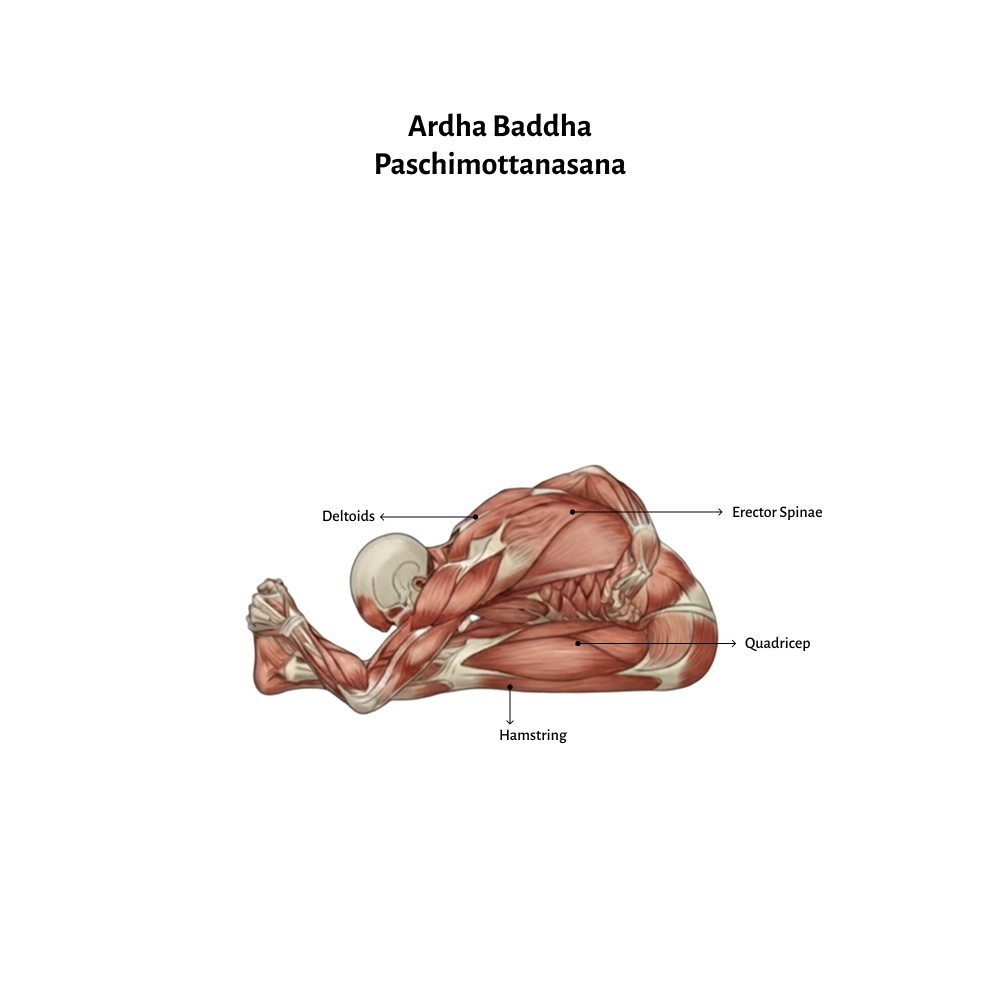
Hamstrings and Calves:
These muscles of the extended leg are intensely stretched to allow for the forward bend.
Hips:
The hip of the bent leg is in external rotation, while the hip of the extended leg is in flexion, creating a deep stretch in the hip joints and glute muscles.
Spine:
The forward fold lengthens the entire spine, stretching the erector spinae muscles.
Shoulders and Chest:
The bind requires significant internal and external rotation of the shoulder and stretches the pectoralis muscles in the chest.