Trianga Mukaikapada Paschimottanasana (त्रिअंग मुखैकापद पश्चिमोत्तनासन)
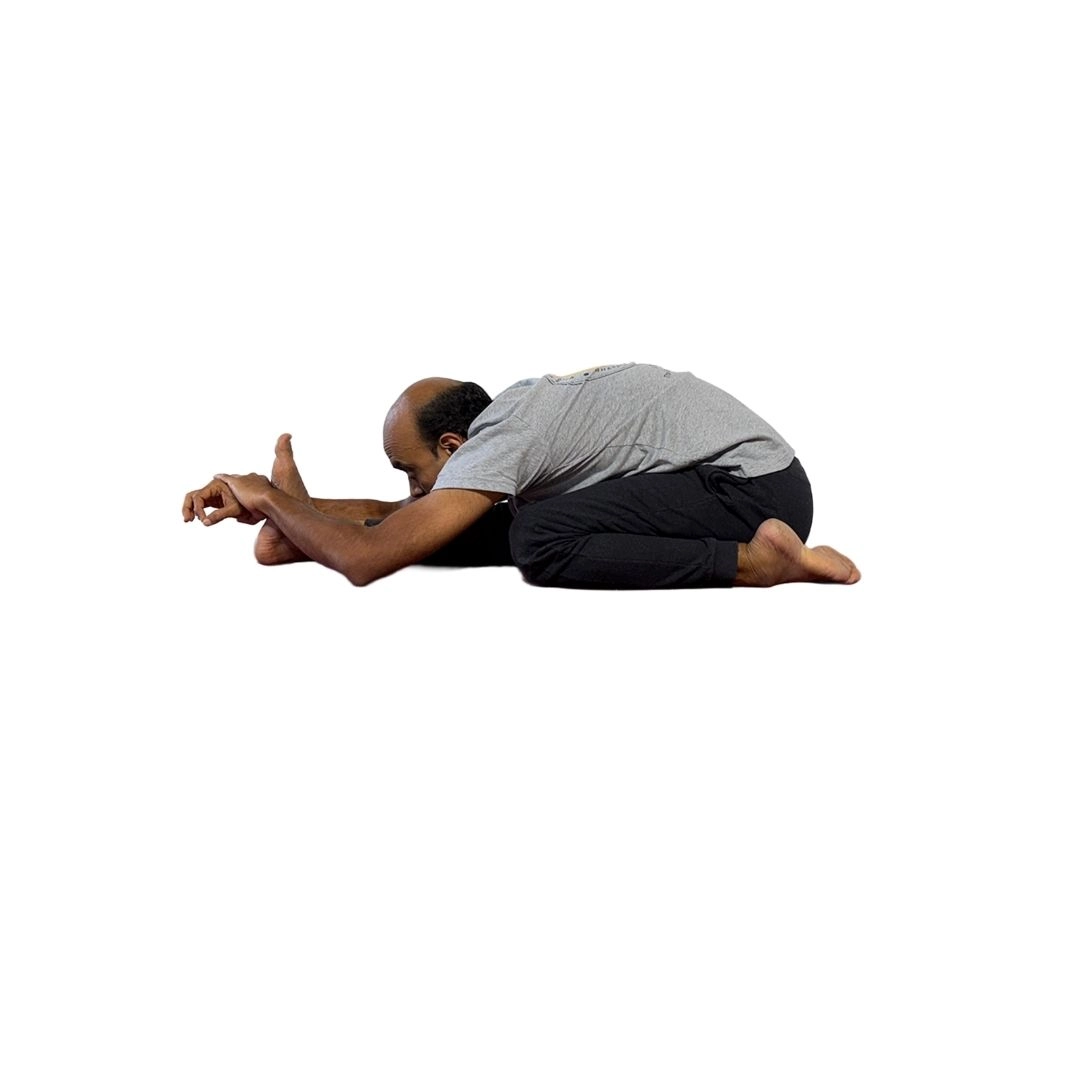
Trianga Mukaikapada Paschimottanasana (त्रिअंग मुखैकापद पश्चिमोत्तनासन), or “Three-Limbed One-Foot Forward Bend,” is a seated forward bend that combines a deep hamstring stretch with a unique hip and knee stretch. Is an asymmetrical seated forward fold that combines elements of Dandasana (Staff Pose), Virasana (Hero’s Pose), and Paschimottanasana (Seated Forward Bend).
How to do Trianga Mukaikapada Paschimottanasana
Benefits of Trianga Mukaikapada Paschimottanasana
- Deep Hip and Leg Stretch:
The pose provides an intense stretch for the hamstrings of the extended leg and the quadriceps and ankles of the bent leg. - Spinal Flexibility:
The forward bend helps to lengthen and decompress the spine, improving overall flexibility. - Stimulates Internal Organs:
The compression on the abdomen stimulates and tones the digestive organs, such as the liver, stomach, and kidneys. This can aid in digestion and prevent constipation.
- Therapeutic for Flat Feet:
The position of the bent foot with the arch engaged is believed to have a therapeutic effect on flat feet. - Calming Effect:
As a forward bend, it helps to calm the nervous system, reduce stress, and can alleviate anxiety.
Contraindications of Trianga Mukaikapada Paschimottanasana
Avoid or modify this pose if you have:
- Knee Injuries:
The pose puts significant pressure on the knee of the bent leg. Avoid this pose if you have any recent or chronic knee injuries, including a torn meniscus. - Sciatica:
The intense hamstring stretch can aggravate sciatica.
- Back Injuries:
People with severe back pain, a herniated disc, or other spinal injuries should avoid or be extremely cautious with this pose. - Ankle Injuries:
The pressure on the ankle of the bent foot can be problematic if you have an injury or arthritis in that joint. - Pregnancy:
The deep abdominal compression is not recommended for pregnant women.
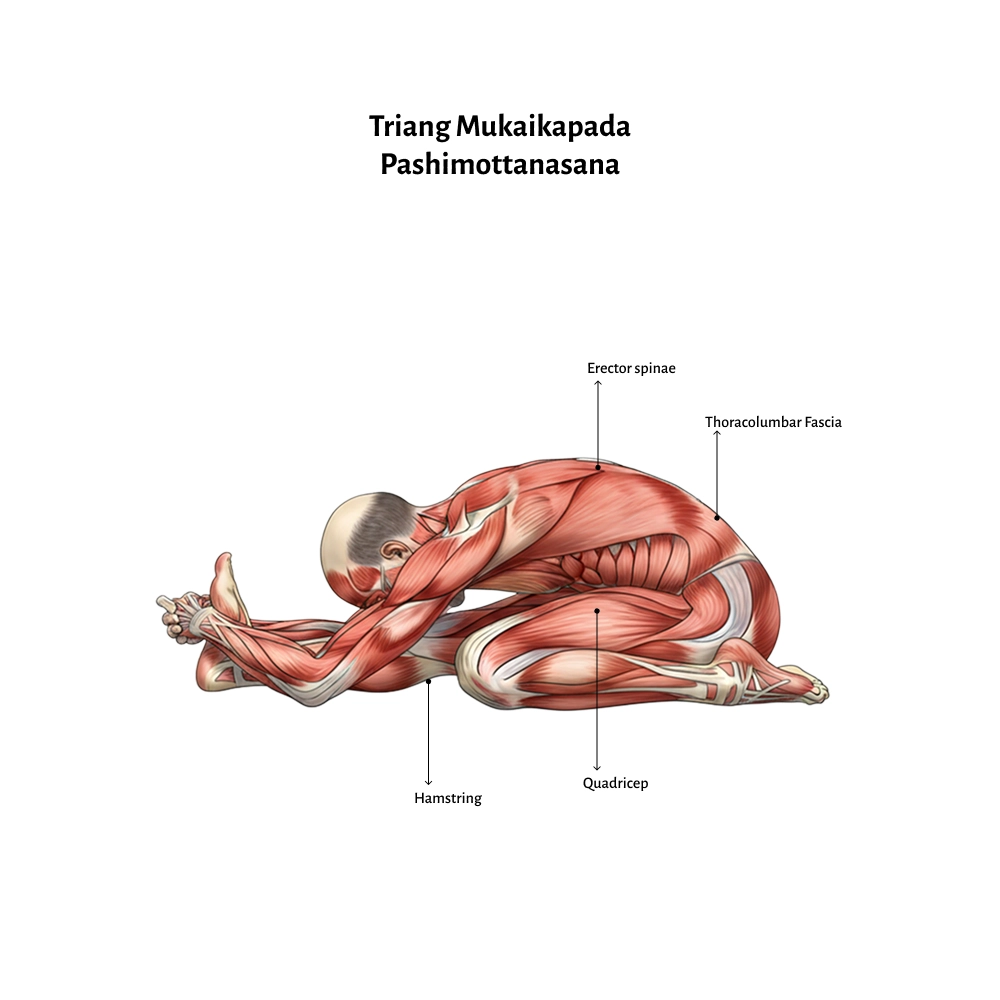
Anatomy (Muscles involved)
This pose engages a complex network of muscles and joints:
Hamstrings:
The primary muscle group stretched on the extended leg.
Quadriceps:
The quadriceps of the bent leg, particularly the rectus femoris, are stretched as the knee is flexed.
Hips:
The pose involves deep hip flexion and internal rotation of the femur on the bent leg side, which is a unique action that helps to increase hip mobility.
Spinal Muscles:
The forward fold lengthens the muscles of the back, including the erector spinae, which helps to improve posture.
Knees:
The pose deeply flexes the knee of the bent leg.