Kurmasana (कूर्मासन)
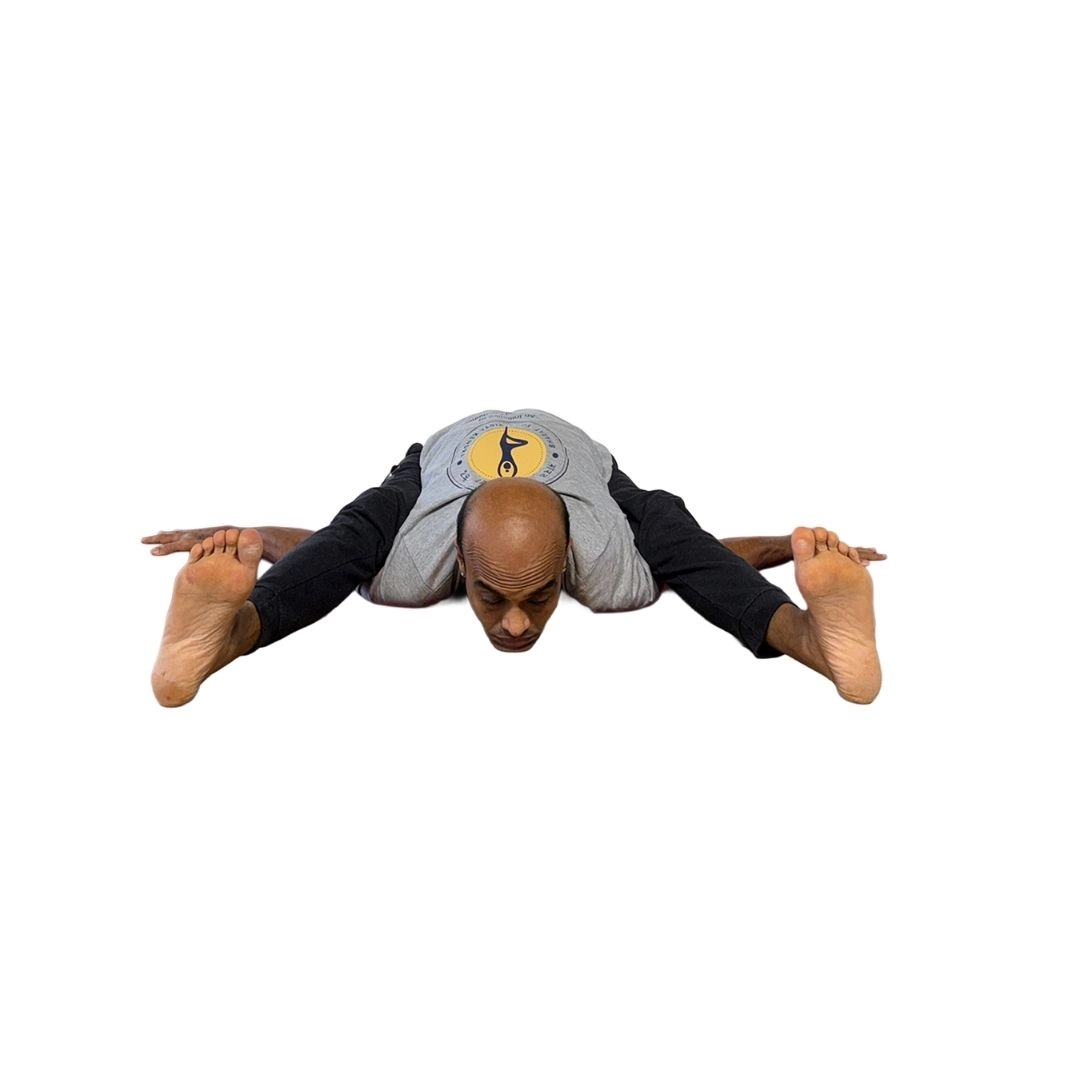
Kurmasana (कूर्मासन), or Tortoise Pose, is a deep seated forward bend in yoga that requires significant flexibility in the hips, hamstrings, and shoulders. The name comes from the Sanskrit word “kurma,” meaning “tortoise” or “turtle,” and “asana,” meaning “posture.” In this pose, the body resembles a tortoise, with the arms and legs representing its limbs and the torso tucked in like a shell.
How to do Kurmasana
Benefits of Kurmasana
- Deeply Stretches:
This pose provides an intense stretch for the hamstrings, hips, shoulders, groin, and entire back. - Stimulates Organs:
The forward bend and abdominal compression can massage and stimulate internal organs, which may improve digestion and metabolism. - Calms the Nervous System:
Kurmasana is a quieting pose that encourages a state of “”pratyahara,”” or the withdrawal of senses. It can help calm the mind, reduce stress and anxiety, and alleviate symptoms of insomnia.
- Spinal Health:
It helps to lengthen and decompress the spine, improving flexibility and relieving mild backaches. - Improves Flexibility:
Regular, careful practice can significantly increase the range of motion in the hips, shoulders, and spine.
Contraindications of Kurmasana
Avoid or modify this pose if you have:
- Injuries:
Any current or chronic injury to the knees, hips, ankles, shoulders, or spine. - Back Issues:
People with a herniated disc, sciatica, or severe lower back pain should avoid this pose. - Hernia or Ulcers:
The deep abdominal compression can be harmful for those with these conditions.
- Pregnancy:
The pose places significant pressure on the abdomen and is not recommended during pregnancy. - Extremely Tight Hamstrings:
This can lead to overstretching and injury. It is crucial to properly warm up with preparatory poses and to listen to your body, bending the knees if necessary.
Anatomy (Muscles involved)
This pose engages a complex network of muscles and joints:
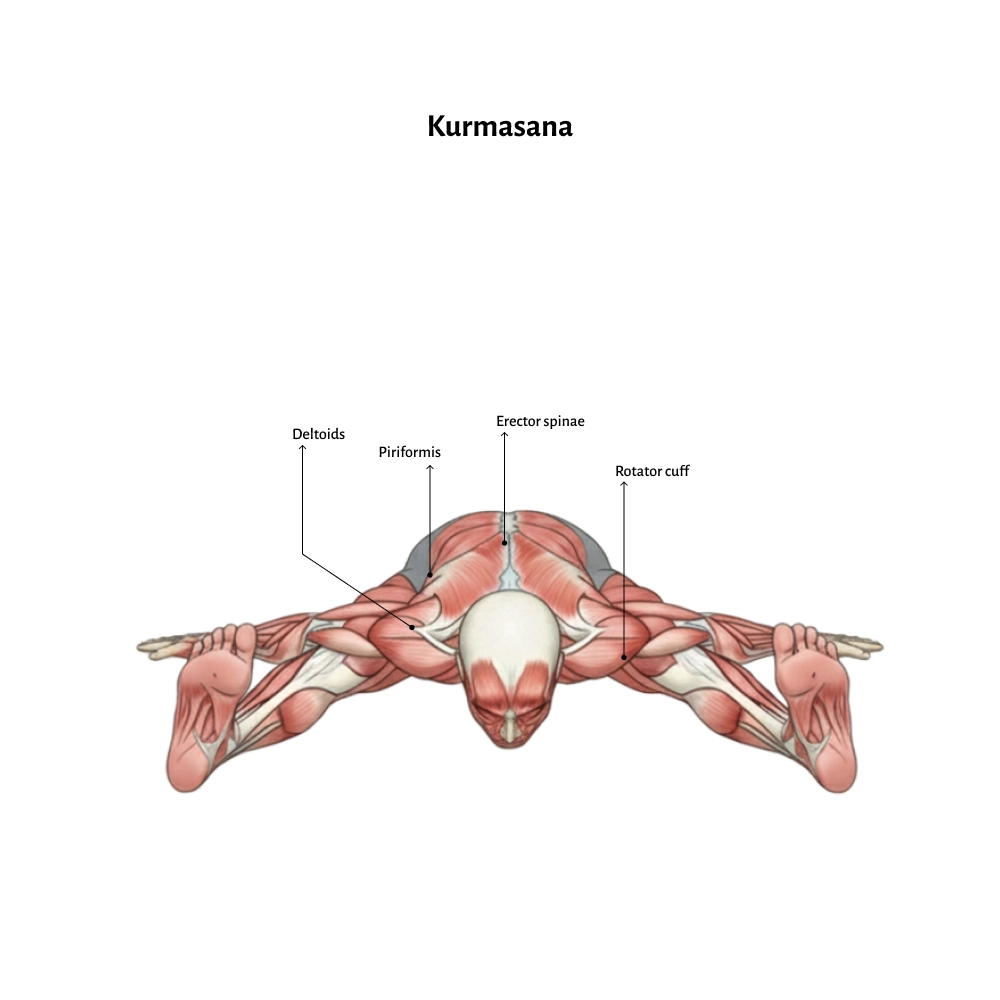
Hip Flexion:
The hips are in deep flexion as the torso folds forward.
Hip Abduction:
The legs are spread wide to the side.
Knee Extension:
The knees are fully extended to straighten the legs.
Spinal Flexion:
The spine is flexed forward, especially in the lumbar region.
Pelvic Tilt:
The pelvis is tilted anteriorly (forward), which is essential for a safe and effective forward fold.
Shoulder Internal Rotation:
The shoulders are internally rotated as the arms are threaded underneath the legs.
Scapular Protraction:
The shoulder blades are moved away from the spine as the torso folds forward.