Sarpasana (सर्पासन)
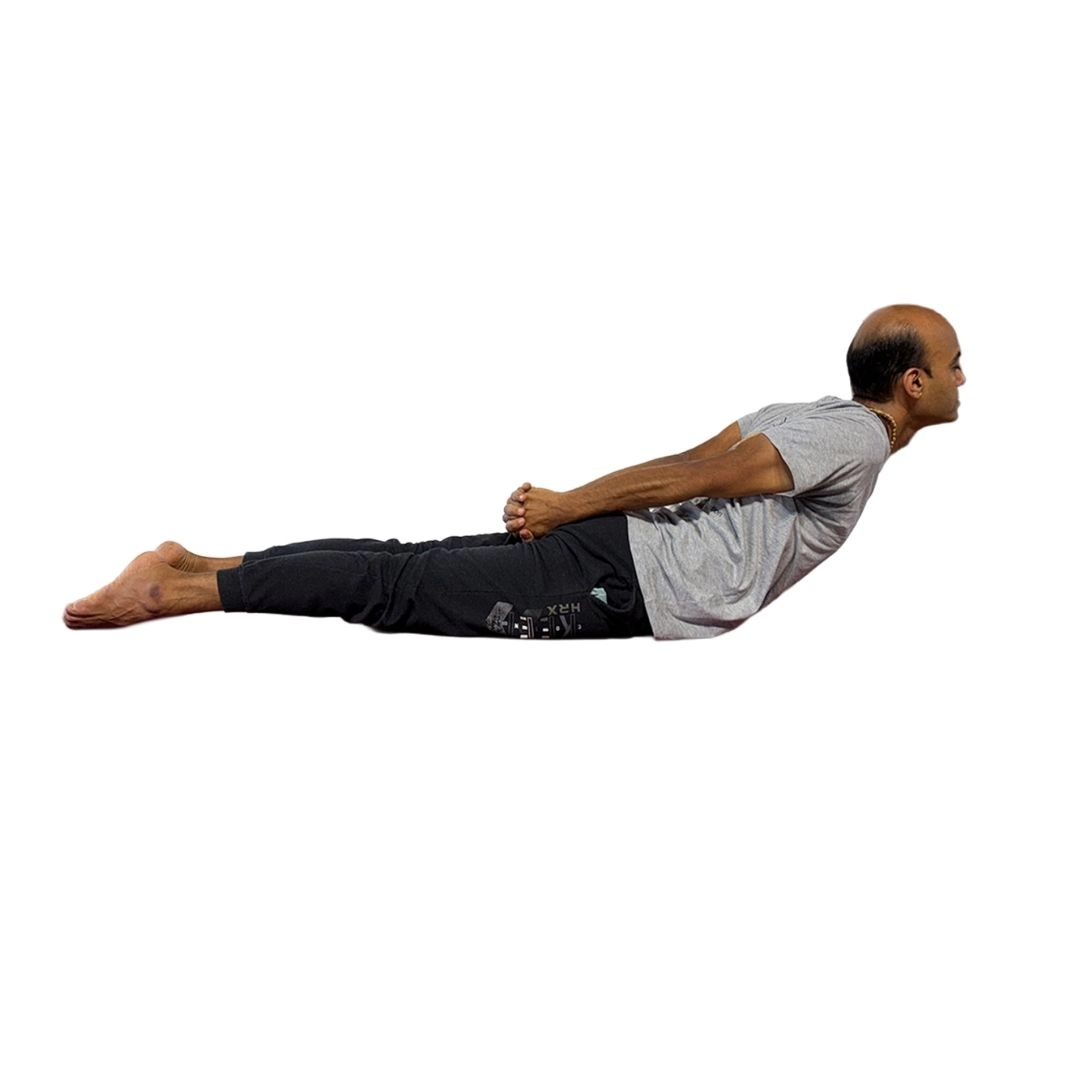
Sarpasana (सर्पासन), or Snake Pose, is a prone backbend in yoga that gets its name from the way the body resembles a snake rising up. It is often compared to Bhujangasana (Cobra Pose), but the key difference is that Sarpasana is a more unsupported backbend, using the muscles of the back and core rather than the arms for support.
How to do Sarpasana
Benefits of Sarpasana
- Strengthens the Back:
This pose has a profound strengthening effect on the muscles of the back, particularly the lower back. - Improves Posture:
By strengthening the back and opening the chest, Sarpasana helps to correct rounded shoulders and improve overall posture. - Enhances Flexibility:
It increases the flexibility of the spine.
- Opens the Chest:
The pose provides a deep stretch to the chest and shoulders, which can improve lung capacity and breathing. - Tones Abdominal Organs:
The gentle compression on the abdomen stimulates the digestive organs, which can aid in digestion and relieve issues like constipation. - Reduces Stress:
Like many yoga poses, Sarpasana can help to release tension and stress stored in the body.
Contraindications of Sarpasana
Avoid or modify this pose if you have:
- Back Injuries:
If you have severe back pain, a herniated disc, or any other significant spinal injury. - High Blood Pressure or Heart Conditions:
The backbend and chest opening can be strenuous. - Recent Abdominal Surgery or Hernia:
The pressure on the abdomen may be harmful.
- Pregnancy:
This pose is not recommended for pregnant women as it puts pressure on the abdomen. - Stomach Ulcers:
The compression on the abdomen can be problematic.
Anatomy (Muscles involved)
This pose engages a complex network of muscles and joints:
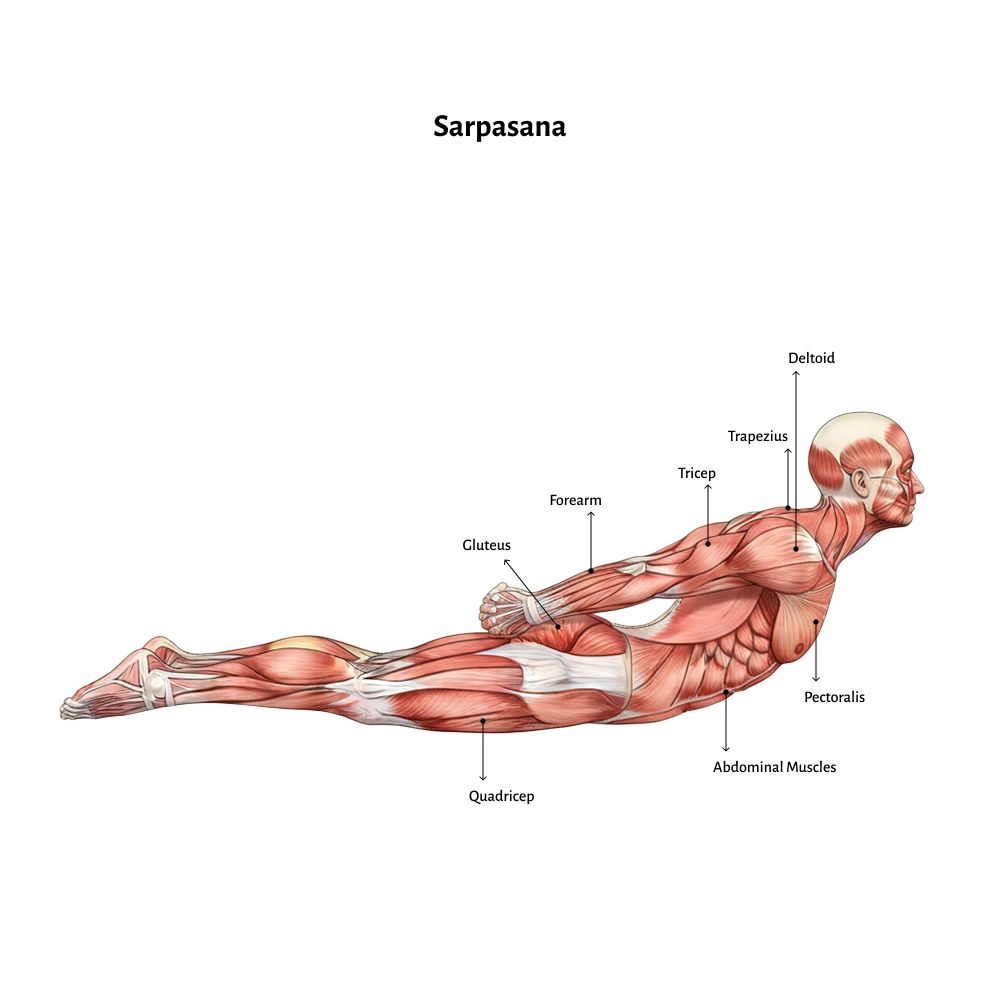
Spinal Erector Muscles:
These muscles run along the spine and are crucial for extending the back and maintaining the backbend.
Gluteus Maximus:
The glutes are engaged to help lift the legs and stabilize the pelvis.
Trapezius and Rhomboids:
These muscles in the upper back and shoulders are contracted to pull the shoulder blades together, which helps to open the chest.
Core Muscles:
The abdominal muscles are engaged to protect the lower back and support the pose.
Deltoids and Triceps:
The muscles of the shoulders and back of the arms are used to pull the clasped hands toward the feet.