Niralamba Bhujangasana (निरालम्ब भुजंगासन)
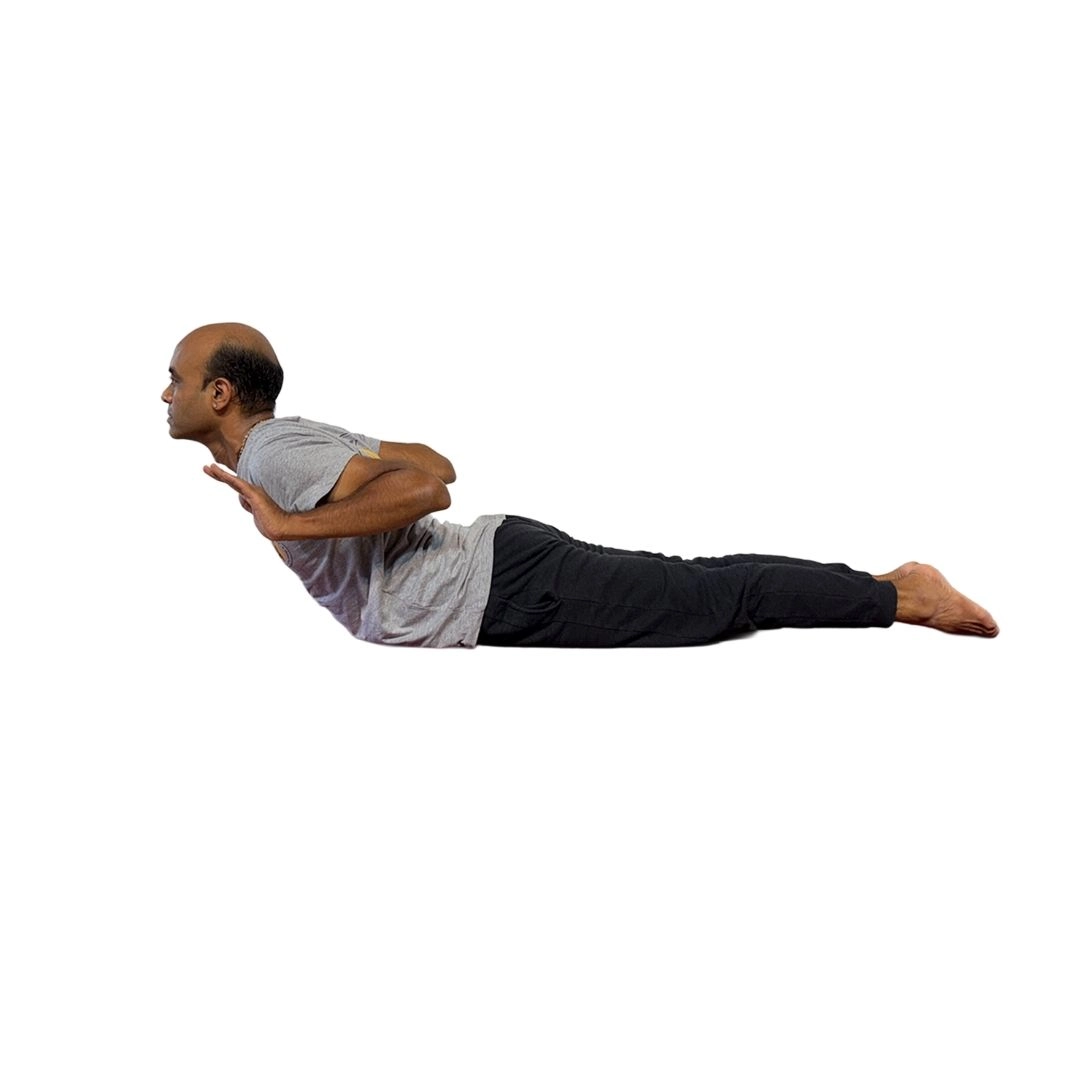
Niralamba Bhujangasana (निरालम्ब भुजंगासन), or Sphinx Pose, is a variation of Bhujangasana (Cobra Pose). The name comes from the Sanskrit words nira (without), alamba (support), and bhujanga (serpent), which means unsupported cobra pose. It is a gentler backbend than Bhujangasana, but it is also a great way to strengthen the back and core.
How to do Niralamba Bhujangasana
Benefits of Niralamba Bhujangasana
- Strengthens the Back:
This pose is excellent for building strength in the spinal erectors and other muscles of the middle and upper back, which are crucial for good posture. - Improves Posture:
By strengthening the back, it helps to counteract the effects of slouching and sitting for long periods, leading to a more erect and aligned posture. - Increases Spinal Flexibility:
The backbend stretches and mobilizes the entire spine, helping to improve its flexibility and reduce stiffness.
- Opens the Chest and Shoulders:
It provides a deep stretch to the chest and shoulders, which can help relieve tension and improve breathing. - Tones the Abdomen:
The gentle pressure on the abdominal area can help tone the core muscles and stimulate the digestive organs. - Stress Relief:
Like many backbends, it can help reduce stress and anxiety by opening the chest and stimulating the heart chakra.
Contraindications of Niralamba Bhujangasana
Avoid or modify this pose if you have:
- Back Injuries:
If you have any acute or chronic back injuries, such as a herniated disc or sciatica, avoid this pose as it can worsen the condition. - Recent Surgeries:
People who have recently undergone abdominal, hip, or spinal surgery should not practice this pose. - Pregnancy:
The pressure on the abdomen makes this pose unsuitable for pregnant women.
- Carpal Tunnel Syndrome:
While this pose doesn’t use the hands for support, the movement can still cause discomfort. If you have carpal tunnel syndrome, practice with caution. - High Blood Pressure:
The backbend and lifting of the head can increase blood pressure, so those with high blood pressure should avoid or practice with caution. - Hernia:
Avoid this pose if you have an abdominal hernia due to the pressure on the abdomen.
Anatomy (Muscles involved)
This pose engages a complex network of muscles and joints:
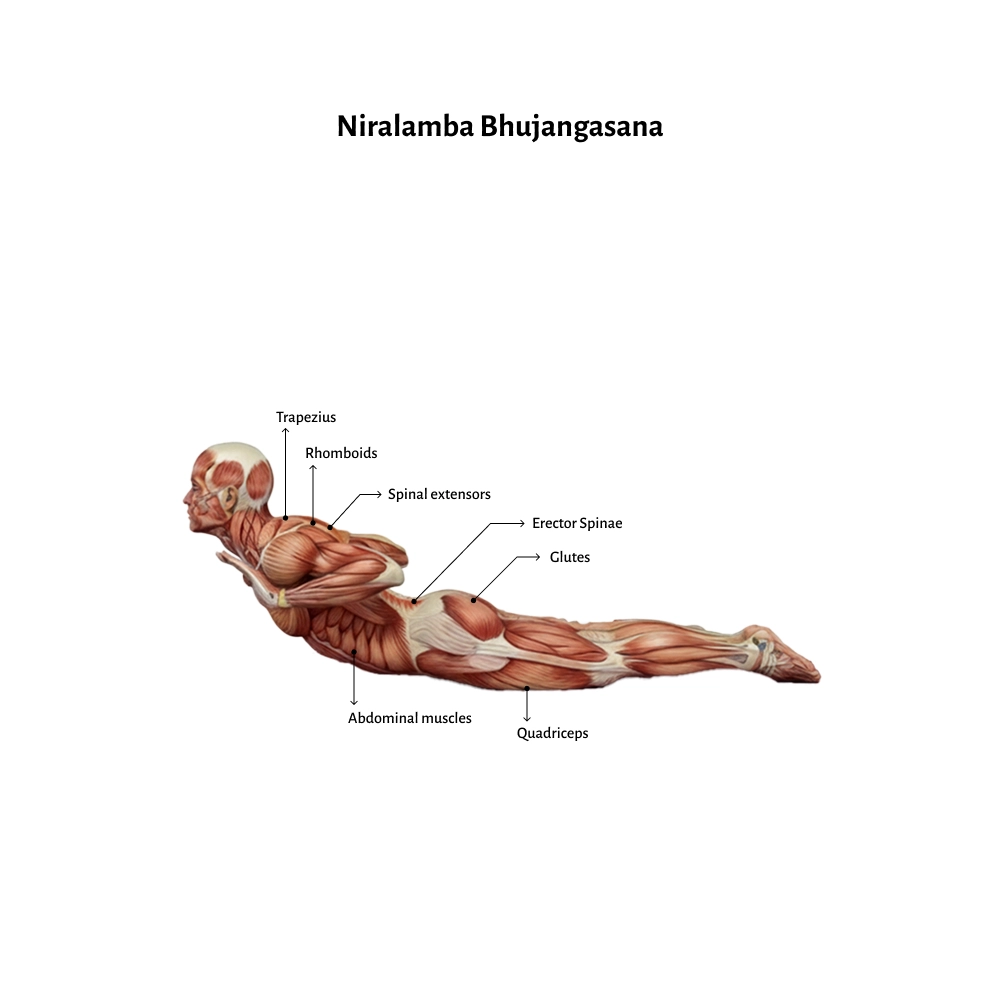
Spinal Erector Muscles:
These muscles run along the spine and are the primary movers in this backbend, working to lift and extend the torso.
Trapezius and Rhomboids:
These muscles in the upper back and between the shoulder blades are engaged to pull the shoulder blades together and down, helping to open the chest.
Gluteus Maximus and Hamstrings:
While the hips remain on the floor, these muscles are engaged to stabilize the lower body.
Abdominals (Rectus Abdominis, Obliques):
The core muscles are engaged to support the lower back and prevent excessive arching.
Psoas:
This deep hip flexor is stretched as the front of the body lengthens in the backbend.