Ardha Pincha Mayurasana (अर्ध पिंच मयूरासन)
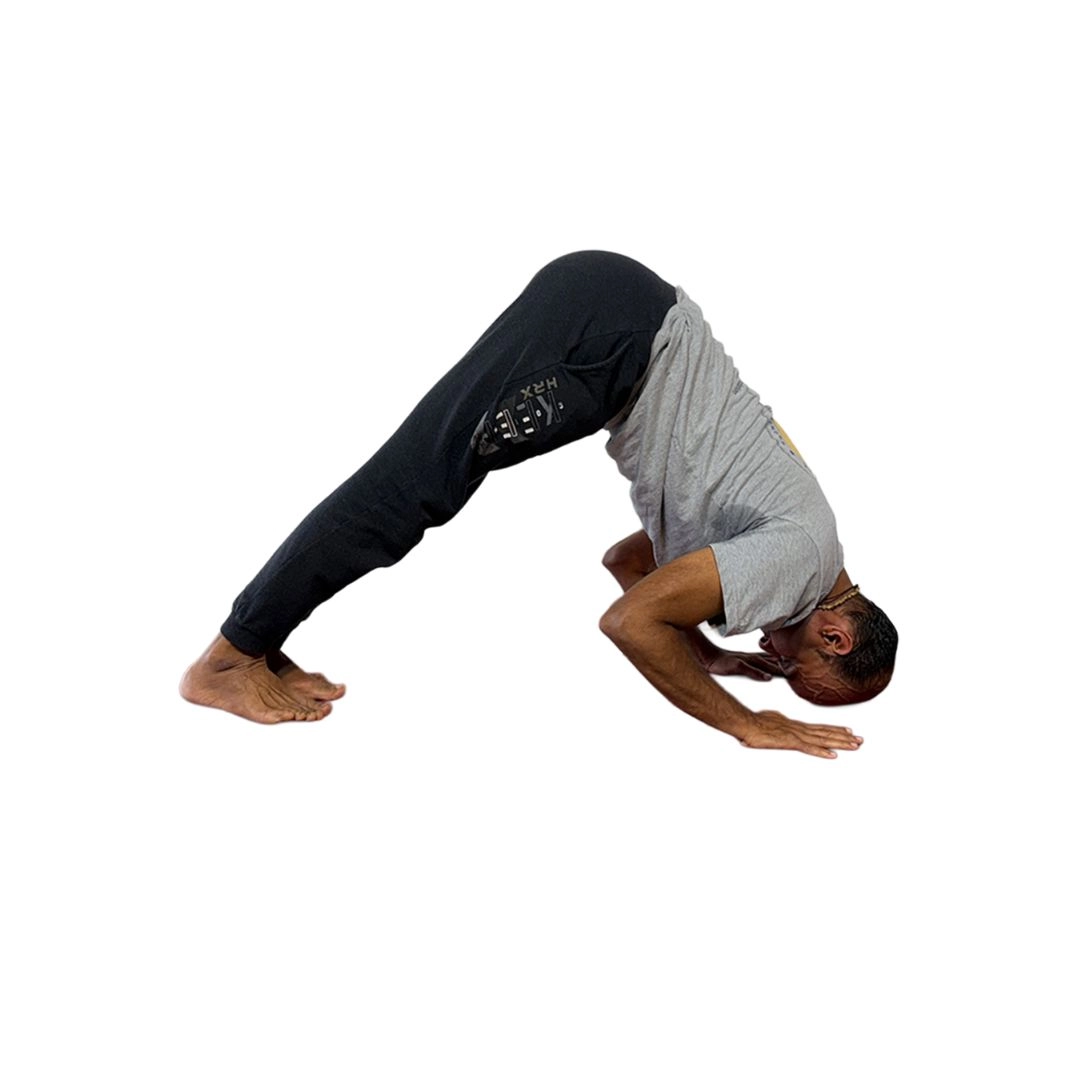
Ardha Pincha Mayurasana (अर्ध पिंच मयूरासन), or Dolphin Pose, is a foundational yoga pose that serves as a powerful preparatory posture for inversions like Pincha Mayurasana (Forearm Stand) and Sirsasana (Headstand). The name comes from the Sanskrit words “ardha” (half), “pincha” (feathers), “mayura” (peacock), and “asana” (posture).
How to do Ardha Pincha Mayurasana
Benefits of Ardha Pincha Mayurasana
- Strengthens the upper body:
Ardha Pincha Mayurasana builds strength in the arms, shoulders, and upper back. It is an excellent way to prepare the body for forearm balances and other inversions. - Stretches the lower body:
The pose provides a deep stretch for the hamstrings, calves, and the arches of the feet. - Improves core stability:
Engaging the abdominal muscles to stabilize the body helps to strengthen the core.
- Increases circulation:
As a mild inversion, it increases blood flow to the brain, which can help to calm the mind and relieve stress, fatigue, and mild depression. - Promotes spinal health:
It helps to lengthen the spine, which can relieve back pain and improve posture. - Therapeutic effects:
It is considered therapeutic for conditions like asthma, high blood pressure, and flat feet. It can also help relieve menstrual discomfort and symptoms of menopause.
Contraindications of Ardha Pincha Mayurasana
Avoid or modify this pose if you have:
- Shoulder, neck, or back injuries:
Individuals with pre-existing injuries in these areas should avoid the pose or practice with extreme caution and under the guidance of a qualified instructor. - High blood pressure or heart conditions:
The inverted nature of the pose can affect blood pressure. Consult a doctor before practicing if you have these conditions. - Glaucoma or detached retina:
The increased blood flow to the head can exacerbate these eye conditions.
- Pregnancy:
Pregnant women, especially in the later trimesters, should avoid this pose due to the pressure on the abdomen. - Menstruation:
Some traditions advise against inversions during the first day or two of menstruation.
Anatomy (Muscles involved)
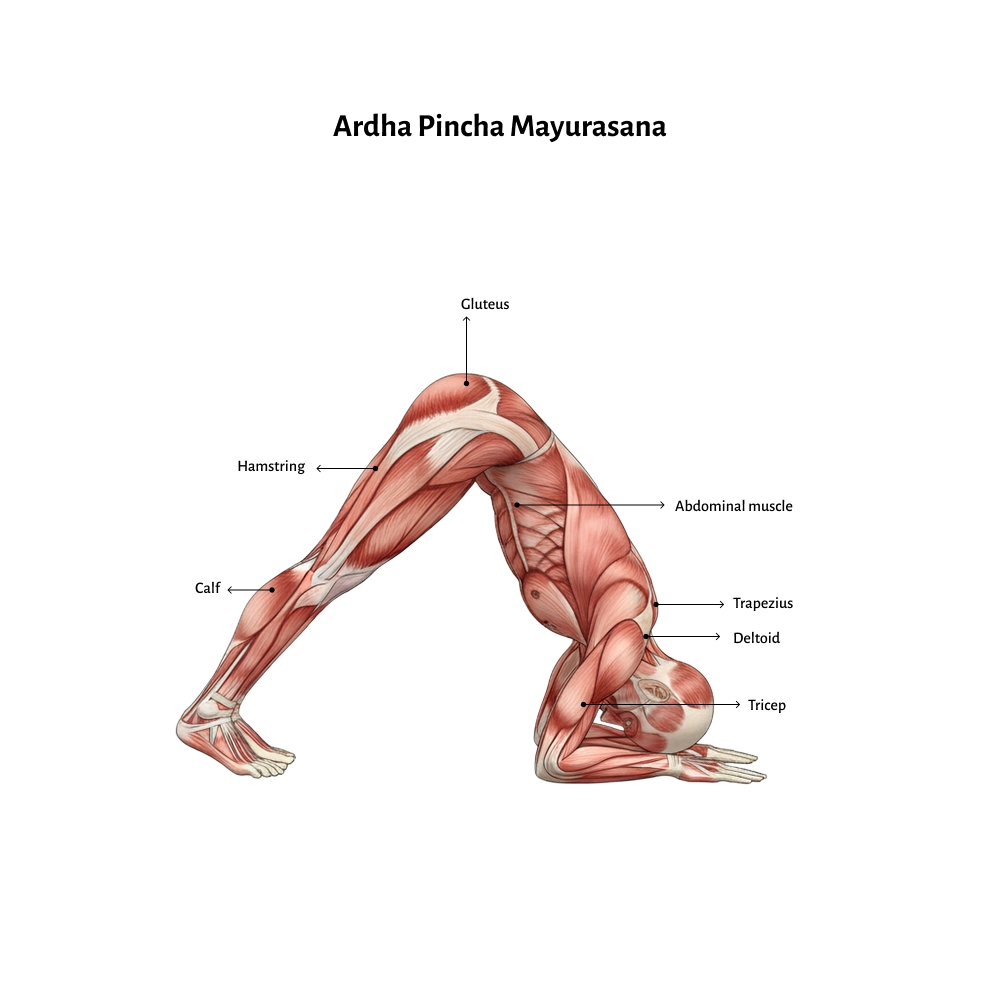
This pose engages a complex network of muscles and joints:
Muscles that strengthen:
- Arms and Shoulders:
Deltoids, triceps, biceps. - Back:
Latissimus dorsi, rhomboids, trapezius. - Core:
Abdominals (rectus abdominis, obliques) and hip flexors (psoas).
Muscles that stretch:
- Back of the legs:
Hamstrings, calves (gastrocnemius, soleus). - Shoulders and chest:
Pectoralis muscles. - Spine:
Entire length of the spine.