Bakasana (बकासन)
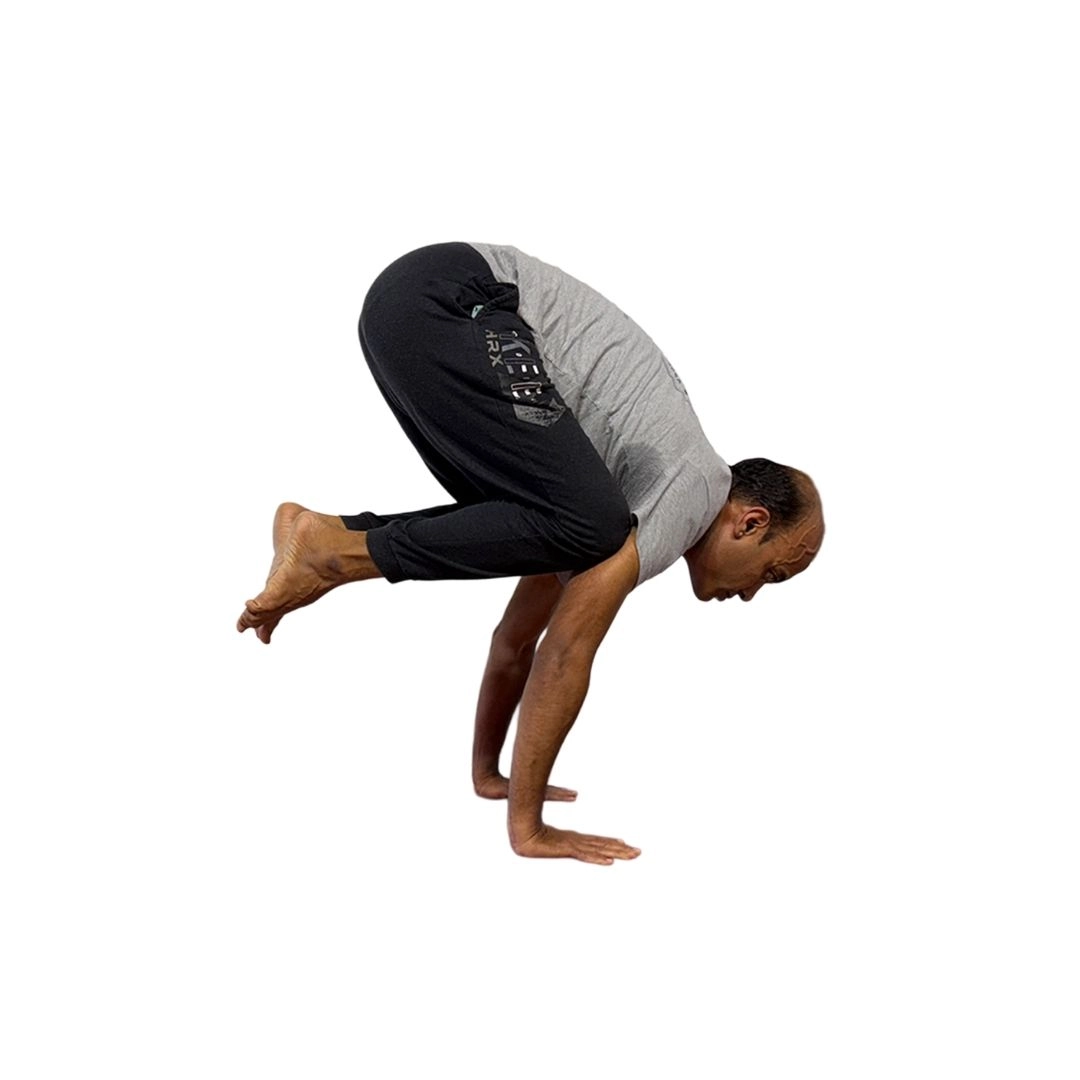
Bakasana (बकासन), or Crane Pose, is a foundational arm-balancing posture in yoga. The name comes from the Sanskrit word “baka” (crane) and “asana” (posture). The pose resembles a crane perched on its long legs, which are represented by the arms in this case. Bakasana is an excellent pose for building arm and core strength, as well as mental focus and balance.
How to do Bakasana
Benefits of Bakasana
- Strengthens Upper Body and Core:
It builds strength in the wrists, forearms, biceps, triceps, shoulders, and abdominal muscles. - Improves Balance and Coordination:
The pose demands significant balance and proprioception (awareness of your body’s position in space), which helps to improve overall coordination. - Enhances Mental Focus and Concentration:
Mastering Bakasana requires intense concentration and mindfulness, which helps to calm the mind and reduce stress.
- Boosts Confidence and Courage:
Overcoming the fear of falling and successfully holding the pose can be a powerful confidence booster. - Stretches the Upper Back and Groin:
The pose helps to mobilize the upper back and stretch the inner groins. - Tones Abdominal Organs:
The compression of the abdomen can aid in digestion and help reduce belly fat.
Contraindications of Bakasana
Avoid or modify this pose if you have:
- Wrist, Elbow, or Shoulder Injuries:
People with carpal tunnel syndrome, tennis elbow, or other injuries to the wrists, elbows, or shoulders should avoid Bakasana, as it puts significant pressure on these joints. - High Blood Pressure or Migraines:
The pose can cause a sudden rush of blood to the head, which can be problematic for those with high blood pressure or a history of migraines.
- Pregnancy or Menstruation:
Pregnant women and those on their menstrual cycle should avoid this pose due to the pressure on the abdominal and pelvic regions. - Weak Joints or Arthritis:
Individuals with general body weakness or joint problems should not attempt this pose. - Spondylitis:
The pose can put additional pressure on the neck and spine, making it unsuitable for those with spondylitis or other spinal injuries.
Anatomy (Muscles involved)
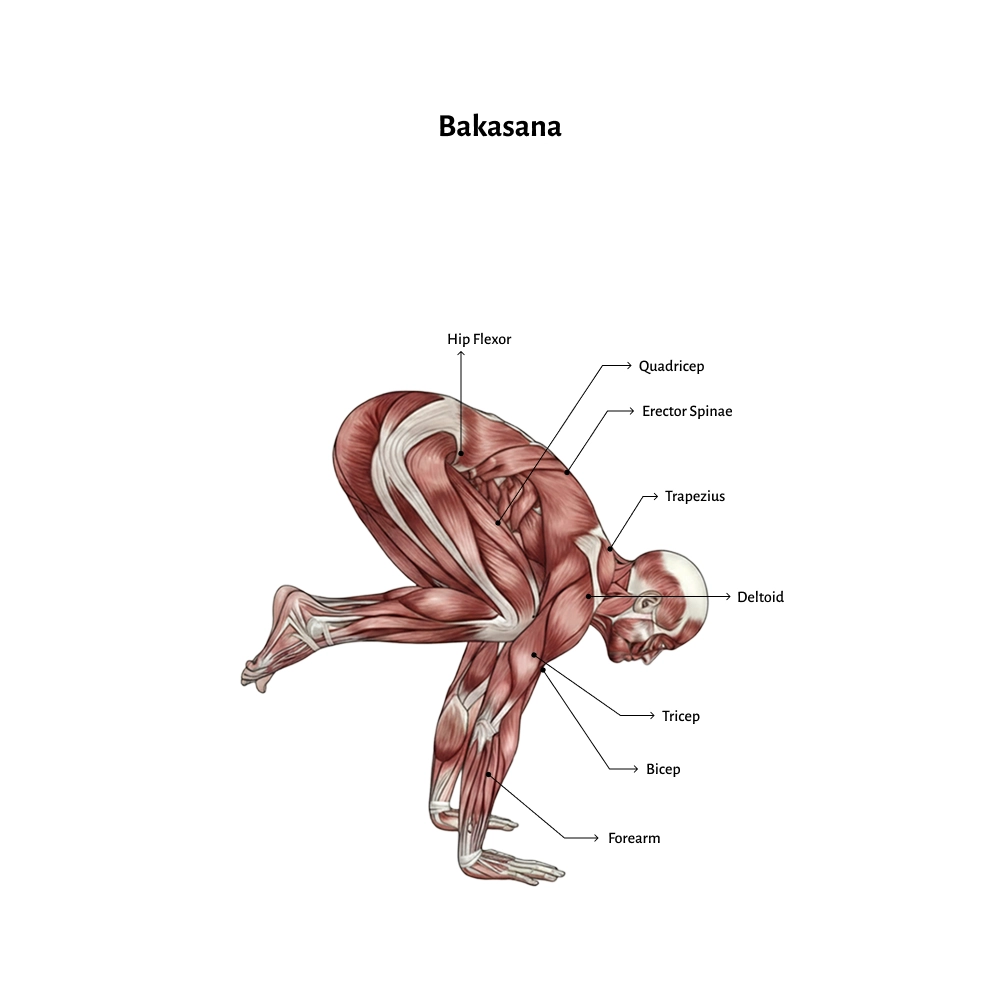
This pose engages a complex network of muscles and joints:
Arms and Shoulders:
The triceps and biceps work to support the body’s weight. The deltoids and pectoralis muscles in the shoulders are engaged to lift and stabilize the torso.
Core:
The rectus abdominis, transverse abdominis, and obliques are crucial for lifting the legs and stabilizing the body.
Back:
The rhomboids and middle trapezius muscles in the upper back are stretched and engaged to abduct the scapulae.
Hips and Legs:
The hip flexors and adductors (inner thighs) are engaged to lift the legs and hug them toward the body.