Parshva Bakasana (पार्श्व बकासन)
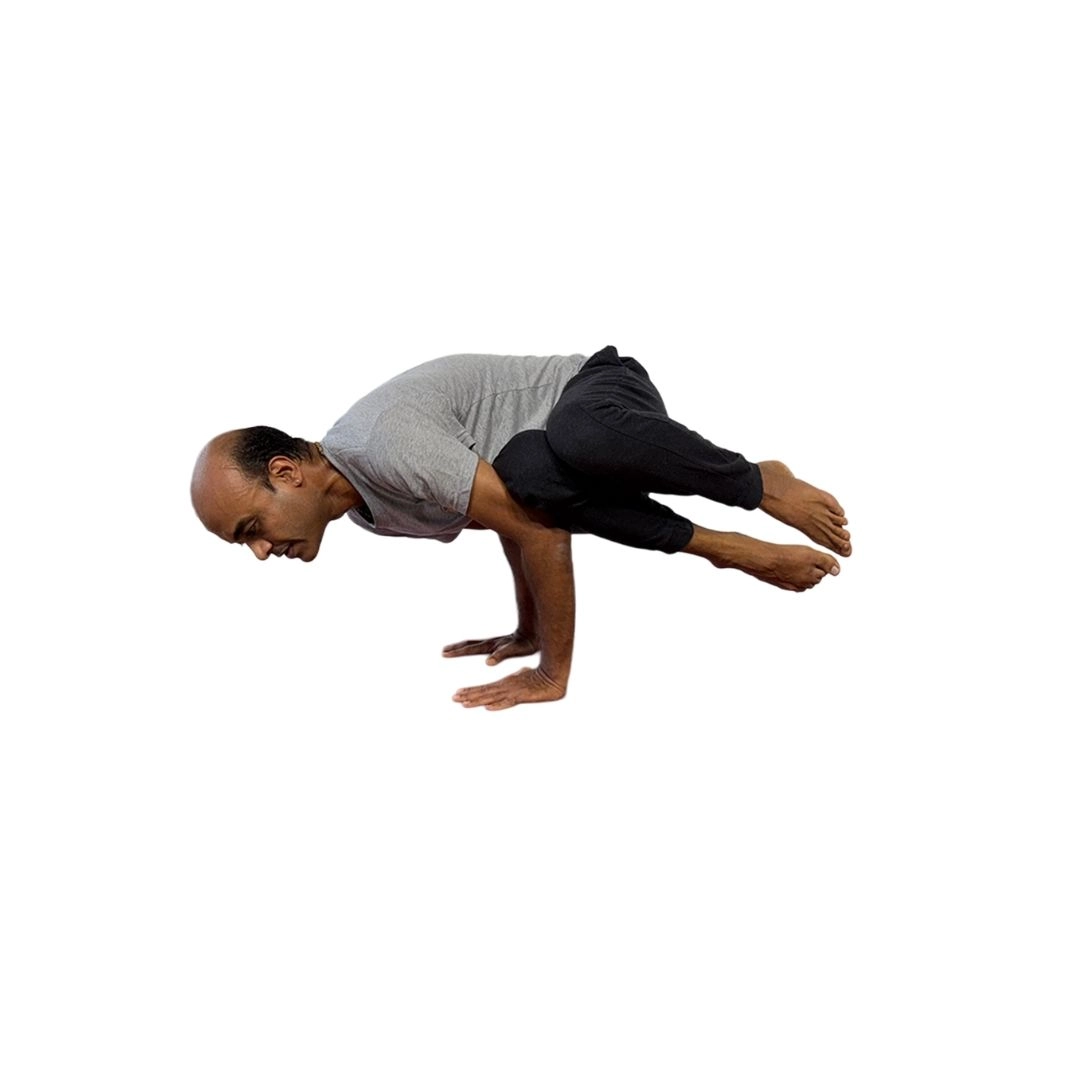
Parshva Bakasana (पार्श्व बकासन), or Side Crane Pose, is an advanced arm-balancing yoga pose. The name comes from the Sanskrit words “parshva” (side or flank), “baka” (crane), and “asana” (posture). It’s a twisting variation of Bakasana (Crane Pose), requiring a combination of core strength, arm stability, and a deep spinal twist.
How to do Parshva Bakasana
Benefits of Parshva Bakasana
- Strengthens Upper Body:
The pose significantly strengthens the wrists, forearms, arms, and shoulders as they bear the body’s weight. - Tones Core Muscles:
It engages the deep abdominal muscles, especially the obliques, which are crucial for the twisting action and stability. - Increases Spinal Flexibility:
The deep twist in the pose helps to increase the rotational flexibility of the spine.
- Improves Balance and Concentration:
Parshva Bakasana requires intense focus and mental concentration to find and maintain the balance, improving both physical and mental stability. - Stimulates Internal Organs:
The twisting and compressing action of the abdomen is believed to massage the internal organs, which can aid in digestion and detoxification.
Contraindications of Parshva Bakasana
Avoid or modify this pose if you have:
- Wrist, Elbow, or Shoulder Injuries:
The pose places significant weight and pressure on the wrists and arms. Individuals with any injuries in these areas, or conditions like carpal tunnel syndrome or tennis elbow, should avoid it. - Back Injuries:
The deep twist can be stressful for the spine, so it is contraindicated for people with back pain or injuries. - Pregnancy:
The intense twisting and core engagement can be harmful during pregnancy.
- High or Low Blood Pressure:
The pose is not recommended for individuals with blood pressure issues. - Lack of Strength:
If you don’t have a strong foundation in core and upper body strength, it’s best to work on preparatory poses before attempting Parshva Bakasana.
Anatomy (Muscles involved)
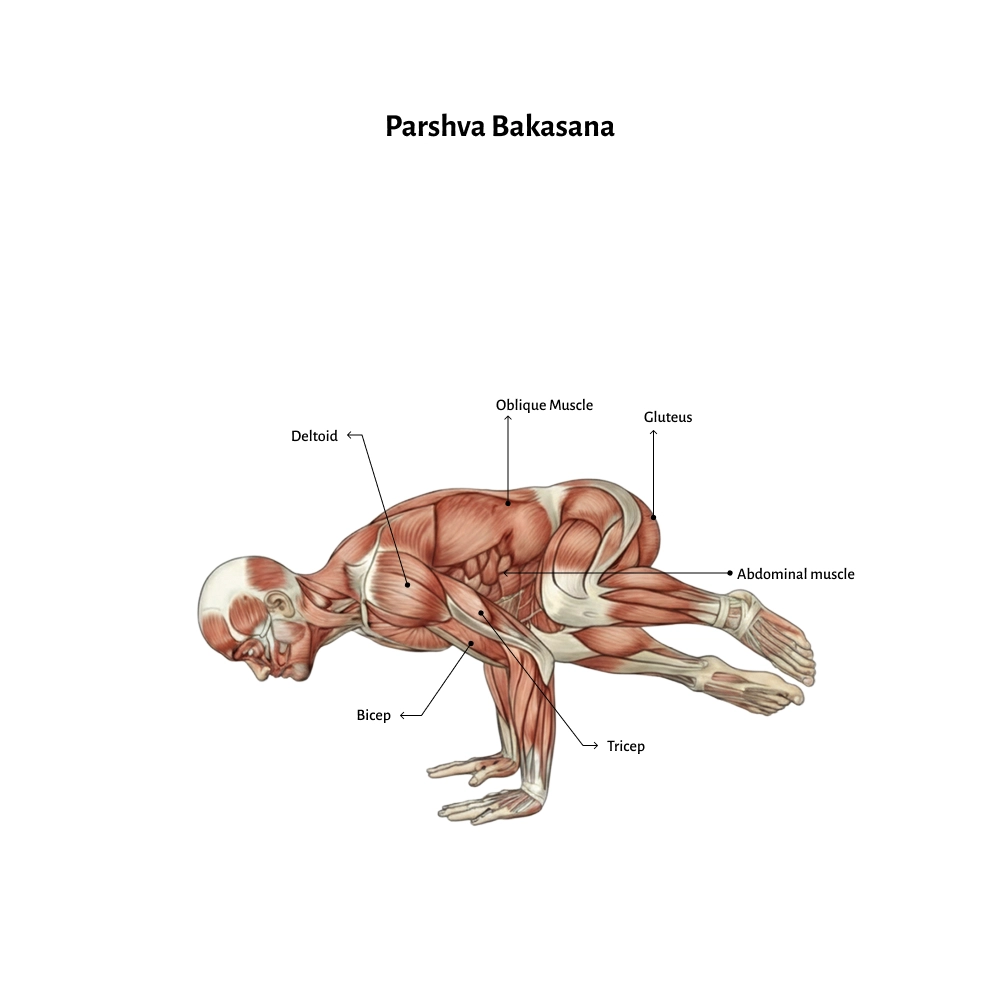
This pose engages a complex network of muscles and joints:
Core:
The transverse abdominis and rectus abdominis work to keep the spine lifted, while the internal and external obliques are key for the deep twist.
Arms and Shoulders:
The deltoids (shoulder muscles), pectoralis major and minor (chest muscles), and serratus anterior work to stabilize the shoulder girdle. The triceps and biceps are engaged to support the body’s weight.
Back:
The erector spinae, rotators, and multifidi muscles support the spine in the twist.
Hips and Legs:
The hip flexors (psoas and iliacus) work to keep the knees elevated, while the adductor muscles of the inner thighs are engaged to keep the legs together.