Kapotasana (कपोतासन)
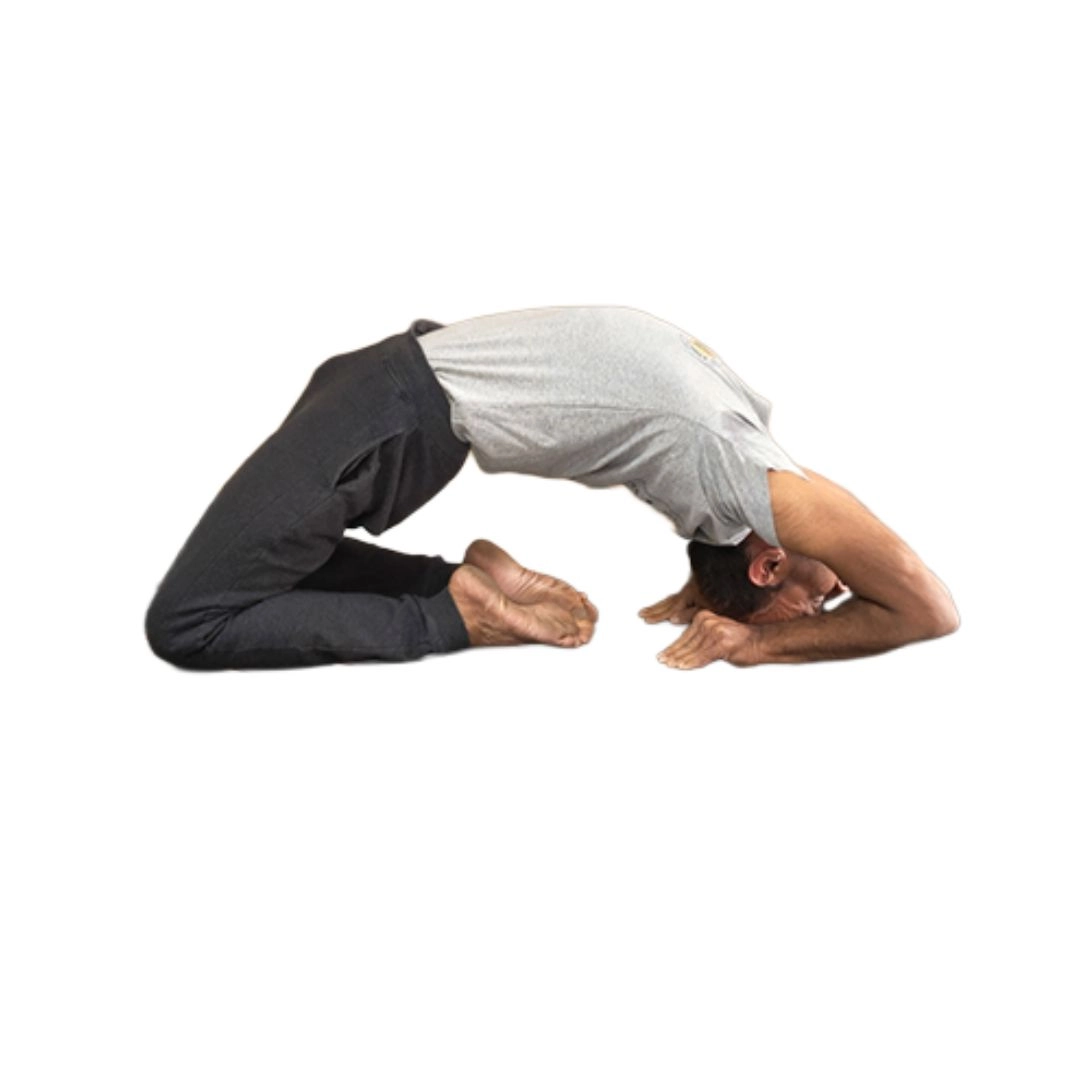
Kapotasana (कपोतासन), or Pigeon Pose, is a deep backbend and chest-opening yoga posture. The name comes from the Sanskrit words “kapota” (pigeon or dove) and “asana” (posture). The pose is an intense heart opener and an excellent way to increase spinal flexibility.
How to do Kapotasana
Benefits of Kapotasana
- Stretches and strengthens:
It deeply stretches the entire front of the body, including the ankles, thighs, groins, abdomen, chest, and throat. It also strengthens the back and leg muscles. - Improves flexibility:
It increases the flexibility and elasticity of the spine, hips, and shoulders. This can lead to improved posture and a greater range of motion.
- Stimulates organs:
The pose stimulates the abdominal organs, which can aid digestion and improve overall organ function. - Relieves tension:
It helps to release tension in the hips, which can be a common area for storing stress and emotions. - Mental and emotional effects:
Kapotasana can help calm the mind, reduce stress, and improve focus. It is considered a heart-opening pose, encouraging a deeper breath and emotional release.
Contraindications of Kapotasana
Avoid or modify this pose if you have:
- Injuries:
Avoid Kapotasana if you have recent or chronic injuries to the spine, neck, shoulders, hips, or knees. - Back pain:
Individuals with acute or severe lower back pain, a slipped disc, or sciatica should avoid this pose. - High or low blood pressure:
The pose can affect blood flow and should be avoided by those with blood pressure issues.
- Insomnia or migraine:
The inversion and deep backbend can exacerbate these conditions. - Pregnancy or menstruation:
Pregnant women and those who are menstruating should avoid this pose. - Other conditions:
People with abdominal hernias, severe osteoporosis, or those recovering from a long illness should refrain from practicing Kapotasana.
Anatomy (Muscles involved)
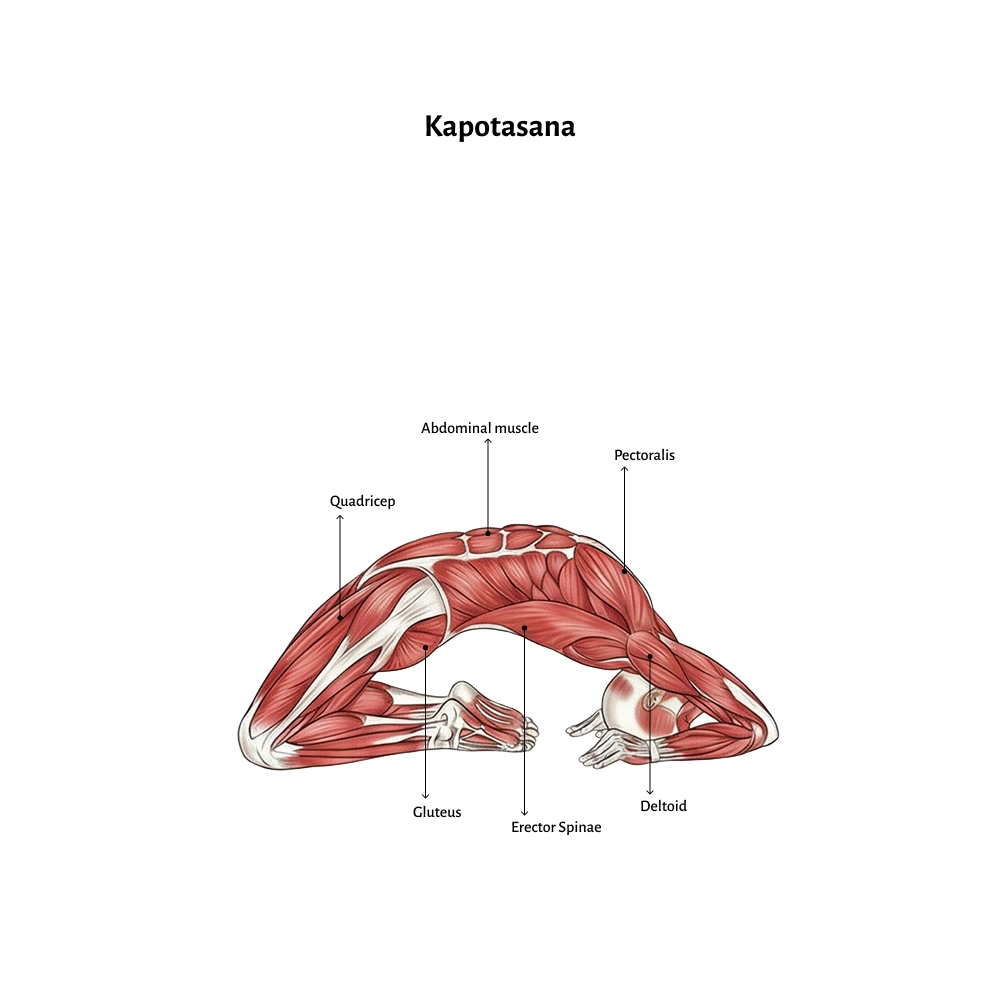
This pose engages a complex network of muscles and joints:
Spine:
The pose requires a deep backbend, which mobilizes the entire spine.
Hip Flexors:
The deep hip flexors, including the psoas and iliacus, are significantly lengthened in this pose. Tightness in these muscles can be a major limiting factor.
Quadriceps:
The rectus femoris, which is a hip flexor and part of the quadriceps, is stretched.
Shoulder Girdle:
The shoulder joints are extended, and muscles like the latissimus dorsi and triceps are stretched.
Core:
A strong core is essential for supporting the lower back and maintaining stability in the pose.