Eka Pada Rajakapotasana (एक पाद राजकपोतासन)
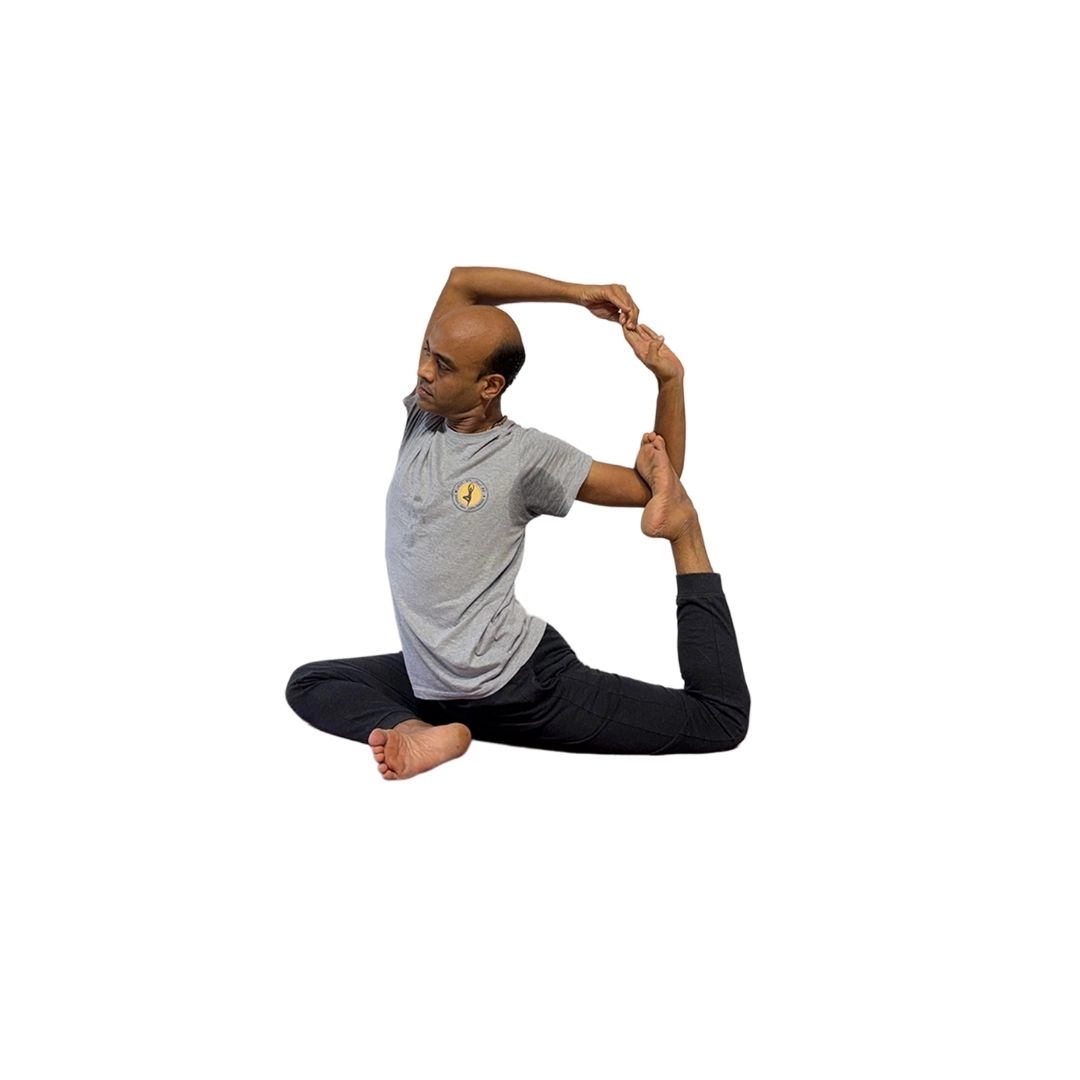
Eka Pada Rajakapotasana (एक पाद राजकपोतासन), or One-Legged King Pigeon Pose, is a deep hip-opening and backbending yoga posture. The name comes from the Sanskrit words “eka” (one), “pada” (foot), “raja” (king), “kapota” (pigeon), and “asana” (posture). This pose combines a forward-bending hip opener with a backbend, creating a challenging and therapeutic stretch.
How to do Eka Pada Rajakapotasana
Benefits of Eka Pada Rajakapotasana
- Increases Flexibility:
It’s a powerful hip opener that stretches the hip flexors, groin, thighs, and psoas muscles. It also improves the flexibility of the spine, shoulders, and chest. - Improves Posture:
The deep backbend strengthens the back muscles and helps to counteract the effects of a sedentary lifestyle, which often leads to rounded shoulders and a curved spine.
- Stimulates Internal Organs:
The compression and stretch in the abdomen can help stimulate the digestive and reproductive organs, improving their function. - Reduces Pain and Stiffness:
It can help alleviate lower back pain and relieve tension in the hips and glutes, which can be beneficial for those with sciatica. - Relieves Stress:
As a deep hip opener, it can help release emotional and energetic tension often stored in the hips, leading to feelings of relaxation and mental clarity.
Contraindications of Eka Pada Rajakapotasana
Avoid or modify this pose if you have:
- Knee, Ankle, or Hip Injuries:
The pose places significant pressure on these joints. - Sacroiliac (SI) Joint Issues:
The asymmetrical nature of the pose can aggravate existing SI joint problems. - Lower Back Pain or Injury:
People with herniated discs, sciatica, or other back issues should be extremely cautious or avoid the pose, as the deep backbend can cause further strain.
- Tight Hips or Thighs:
Individuals with limited flexibility should not force the pose and should use props to support their hips. - High Blood Pressure or Heart Problems:
The deep chest opening and backbend can affect circulation. - Pregnancy:
The abdominal pressure and deep stretch are not recommended for pregnant women.
Anatomy (Muscles involved)
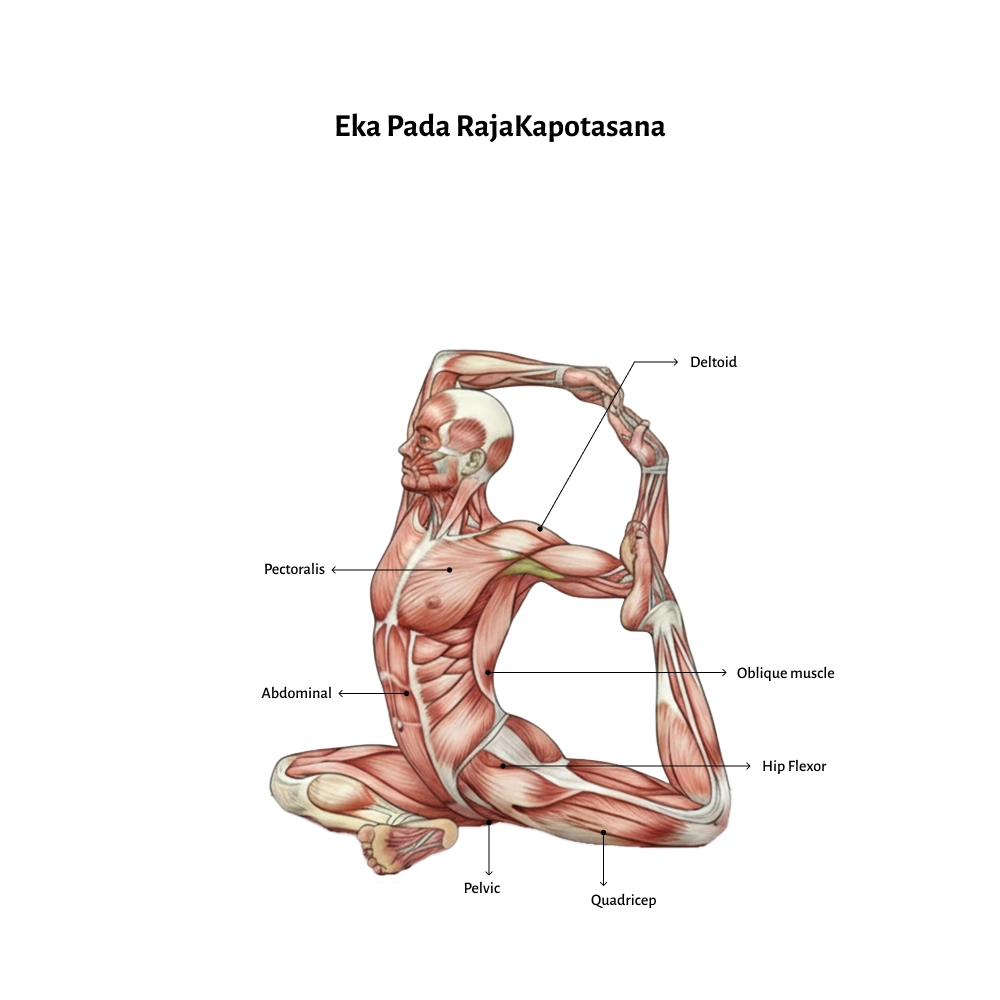
This pose engages a complex network of muscles and joints:
Muscles Stretched:
- Hip Flexors:
The muscles on the front of the hip (iliacus and psoas) of the back leg. - Glutes and Piriformis:
The deep hip rotators and gluteal muscles of the front leg. - Quadriceps:
The muscles on the front of the back leg. - Spine:
The extensors of the spine are engaged in the backbend. - Chest and Shoulders:
Pectorals and deltoids are stretched as the arms reach back.
Muscles Strengthened
- Core Muscles:
The abdominal muscles are engaged to stabilize the backbend. - Spinal Extensors:
The muscles along the spine that support the backbend. - Lower Body:
The pose requires strength and stability in the legs and hips.