Halasana (हलासन)
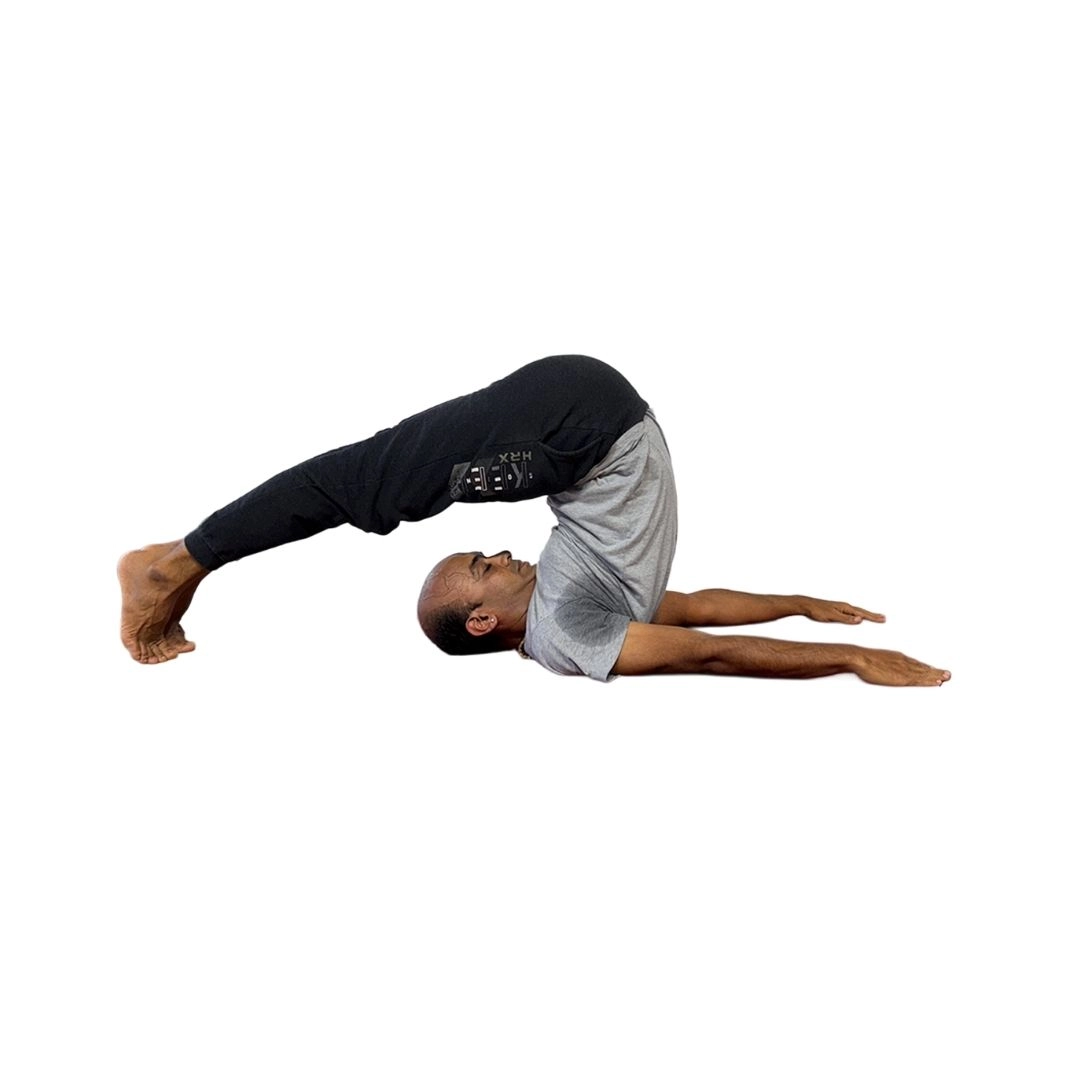
Halasana (हलासन), or Plough Pose, is a classic yoga posture that is typically practiced as a follow-up to Sarvangasana (Shoulder Stand). The name comes from the Sanskrit word “hala” (plough) and “asana” (posture). The pose gets its name from its final shape, which resembles a traditional Indian plough used to cultivate fields. Halasana is a deep inversion and forward bend that provides an intense stretch to the entire back of the body.
How to do Halasana
Benefits of Halasana
- Spinal Health:
It stretches and strengthens the entire spine, from the cervical (neck) to the lumbar (lower back) regions, which can help alleviate back pain and improve posture. - Flexibility:
It increases flexibility in the spine, shoulders, and hamstrings. - Improved Digestion:
The deep compression of the abdominal organs stimulates the digestive system, which can help with issues like constipation and indigestion.
- Endocrine System Stimulation:
The chin-lock position (Jalandhara Bandha) and the inversion stimulate the thyroid and parathyroid glands, which are crucial for metabolism and hormonal balance. - Stress and Anxiety Relief:
Halasana has a calming effect on the nervous system, helping to reduce stress and anxiety. It can also be beneficial for managing insomnia. - Circulation:
The inverted nature of the pose improves blood circulation throughout the body, especially to the upper body, brain, and reproductive organs.
Contraindications of Halasana
Avoid or modify this pose if you have:
- Neck and Spinal Issues:
People with cervical spondylitis, a slipped disc, or any recent neck or back injury should avoid this pose due to the pressure on the cervical spine. - High Blood Pressure or Heart Conditions:
The inverted position can increase blood pressure and is not recommended for individuals with hypertension or other heart ailments.
- Pregnancy and Menstruation:
It is generally advised to avoid this pose during pregnancy and menstruation. - Other Conditions:
Individuals with glaucoma, peptic ulcers, hernias, or an enlarged thyroid, spleen, or liver should also refrain from practicing Halasana.
Anatomy (Muscles involved)
This pose engages a complex network of muscles and joints:
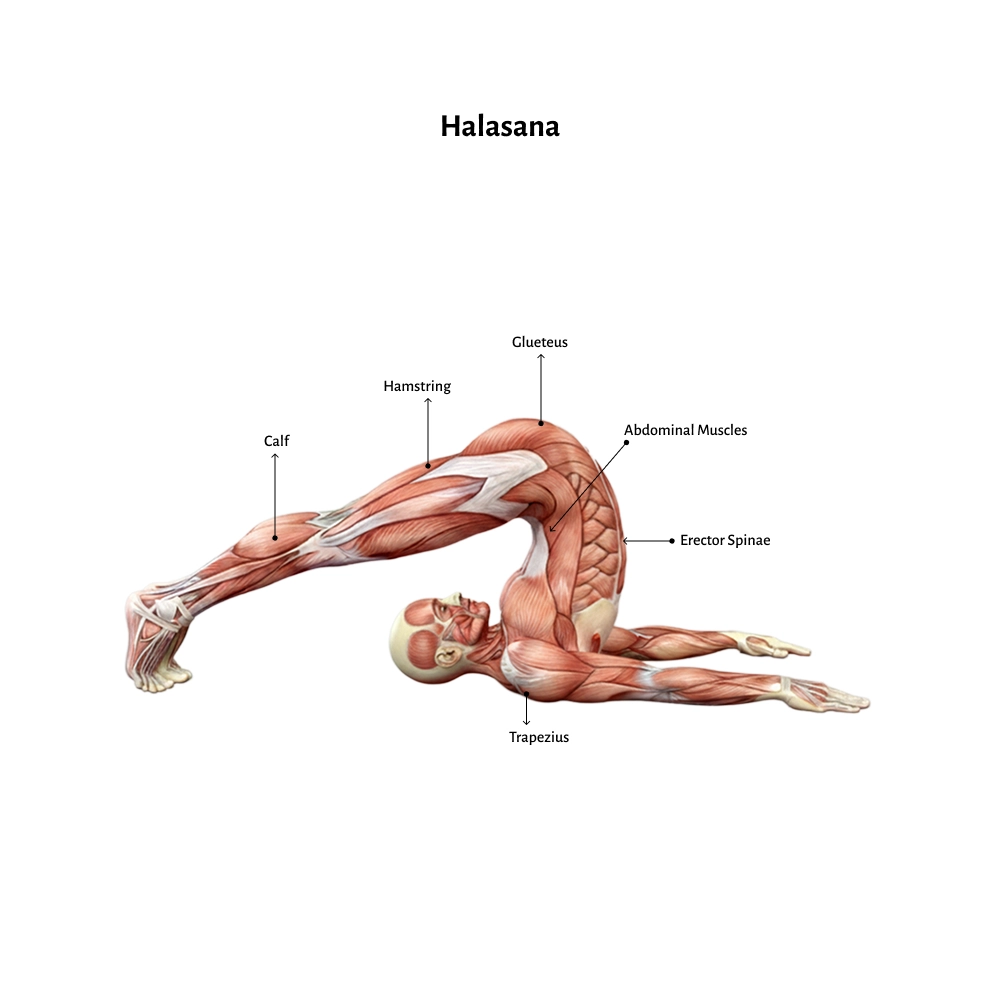
- Spine and Back:
The pose deeply stretches the erector spinae, the long muscles that run along the spine, and the quadratus lumborum in the lower back. The inversion decompresses the vertebrae, improving spinal flexibility. - Shoulders and Neck:
It stretches the muscles of the shoulders and neck. The pectoralis major and minor and the anterior deltoids are stretched as the chest opens. - Legs and Hips:
The pose provides a significant stretch to the hamstrings (biceps femoris, semitendinosus, and semimembranosus), as well as the gluteal muscles and calves. - Abdomen and Core:
The core muscles (rectus abdominis, obliques) are engaged to lift the hips and maintain stability.