Urdhva Padmasana (ऊर्ध्व पद्मासन)
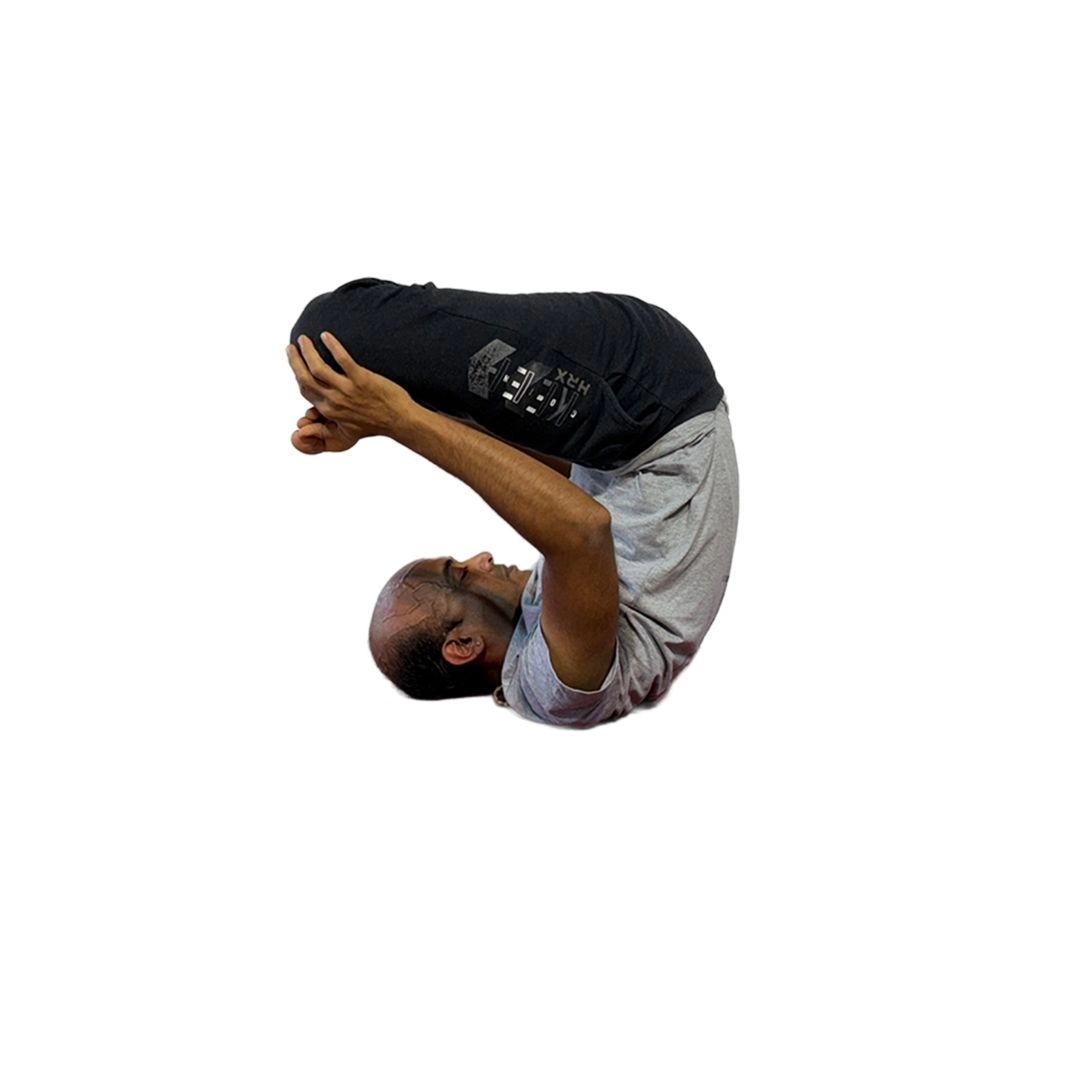
Urdhva Padmasana (ऊर्ध्व पद्मासन), or Upward Lotus Pose, is an advanced and complex inversion that combines the benefits of an inverted posture with the deep hip-opening of Padmasana (Lotus Pose). The name comes from the Sanskrit words “urdhva” (upward), “padma” (lotus), and “asana” (posture). It is typically practiced as a part of a finishing sequence in a traditional yoga class.
How to do Urdhva Padmasana
Benefits of Urdhva Padmasana
- Strength and Stability:
It builds strength in the core, shoulders, neck, and back muscles, particularly the erector spinae, which are essential for maintaining good posture. - Flexibility:
It’s an intense hip opener that deepens the flexibility of the hips, knees, and ankles. It also stretches the hamstrings and spinal flexors. - Improved Circulation:
As an inversion, it reverses the flow of blood, increasing circulation to the brain, which is said to improve mental clarity, focus, and memory.
- Stimulates Glands and Organs:
The pressure on the throat and abdomen stimulates the thyroid, parathyroid, and digestive organs. It can aid in lymphatic drainage, which supports the body’s natural detoxification process. - Calming Effect:
Like other inversions, it can calm the nervous system, reduce stress and anxiety, and alleviate insomnia. - Energy and Prana Flow:
According to yogic philosophy, this pose can help balance the flow of prana (life force) and is believed to activate and balance the chakras, particularly the crown, throat, and root chakras.
Contraindications of Urdhva Padmasana
Avoid or modify this pose if you have:
- Neck or Shoulder Injuries:
Any pain or injury in these areas, including cervical spondylitis, makes this pose extremely dangerous. - Knee or Ankle Injuries:
The deep flexion and external rotation required can exacerbate existing knee or ankle issues, including ligament tears or arthritis. - Cardiovascular Conditions:
Individuals with high blood pressure, heart conditions, or a history of stroke should avoid all inversions.
- Glaucoma or Inner Ear Issues:
Increased blood flow to the head can worsen these conditions. - Pregnancy:
It’s generally advised to avoid this pose during pregnancy. - Menstruation:
Many traditions advise against inversions during menstruation.
Anatomy (Muscles involved)
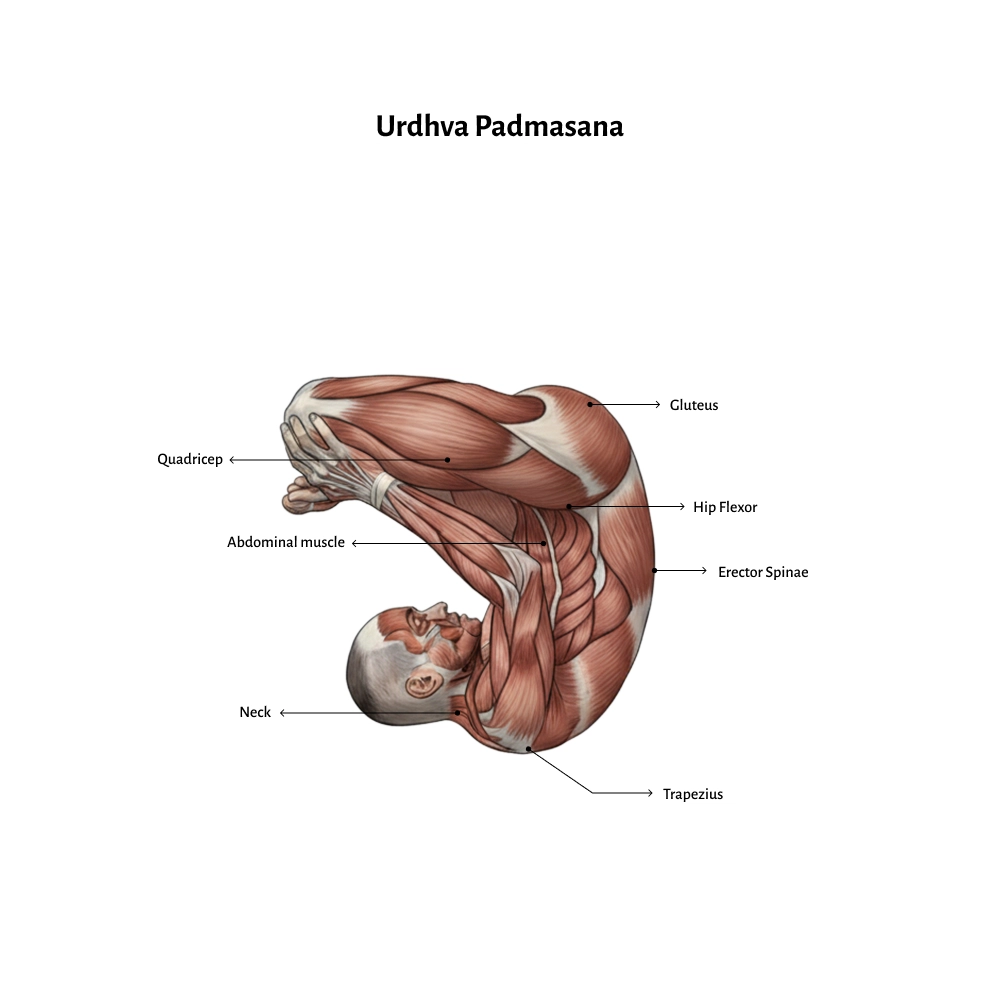
This pose engages a complex network of muscles and joints:
Muscles Engaged:
- Core:
The abdominals and obliques are heavily engaged to maintain stability and balance. - Shoulders and Arms:
The deltoids, triceps, and muscles of the upper back are activated to support the body’s weight. - Spine:
The erector spinae muscles along the spine are active to keep the body straight and lifted. - Hips and Legs:
The external rotators of the hips are stretched, as are the hamstrings and muscles of the calves.
Joints Involved:
- Shoulder Girdle:
The shoulders are the foundation of the pose, bearing the body’s weight. - Spine:
The spine is elongated and held straight. - Hips:
The hip joints are in deep external rotation and flexion. - Knees and Ankles:
The knees are flexed and the ankles are crossed, requiring significant flexibility.