Ubhaya Padangusthasana (उभय पादांगुष्ठासन)
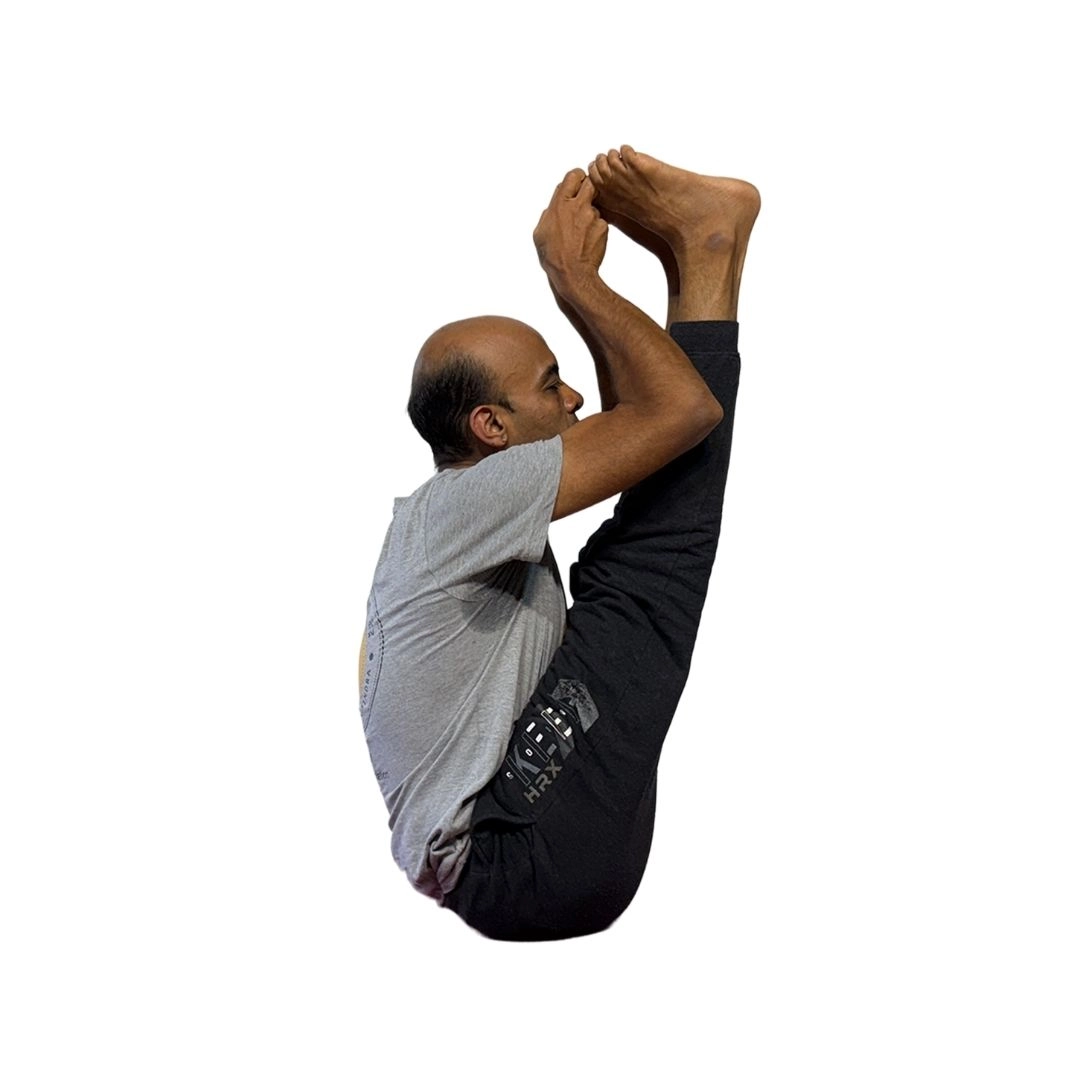
Ubhaya Padangusthasana (उभय पादांगुष्ठासन), or Both Big Toes Pose, is a challenging seated balancing posture in yoga. The name comes from the Sanskrit words “ubhaya” (both), “pada” (foot), “angustha” (big toe), and “asana” (posture). It is a demanding pose that combines a deep hamstring stretch with core strength and balance.
How to do Ubhaya Padangusthasana
Benefits of Ubhaya Padangusthasana
- Strengthens the Core:
It intensely tones and strengthens the abdominal muscles, which are crucial for stability and posture. - Improves Balance and Concentration:
As a balancing pose, it challenges and enhances your sense of balance and proprioception. The focus required to hold the pose also improves concentration and calms the mind. - Stretches the Hamstrings:
It provides a deep stretch to the hamstrings and calves, increasing flexibility in the legs.
- Spinal Health:
It helps to lengthen and strengthen the spine, improving posture. - Stimulates Digestion:
The pose can help massage the abdominal organs, stimulating the digestive system. - Stress Reduction:
The combination of physical effort and mindful breathing can help relieve stress and anxiety.
Contraindications of Ubhaya Padangusthasana
Avoid or modify this pose if you have:
- Injuries:
Avoid this pose if you have injuries in your hips, shoulders, neck, lower back, or hamstrings. - Back Issues:
Individuals with a slipped disc, herniated discs, or other serious back problems should not practice this pose without the guidance of a qualified instructor. - High Blood Pressure:
The pose can be challenging and may increase blood pressure. Those with hypertension should consult a doctor before attempting it.
- Abdominal Surgery or Hernia:
The intense abdominal engagement required can be unsafe if you have recently had surgery or have a hernia. - Pregnancy and Menstruation:
Pregnant women and women who are menstruating should avoid this pose due to the strong engagement of the abdominal and pelvic muscles. - Lack of Core Strength:
If you are new to yoga or do not have sufficient core strength, it is recommended to start with preparatory poses like Boat Pose (Navasana) before attempting Ubhaya Padanghusthasana.
Anatomy (Muscles involved)
This pose engages a complex network of muscles and joints:
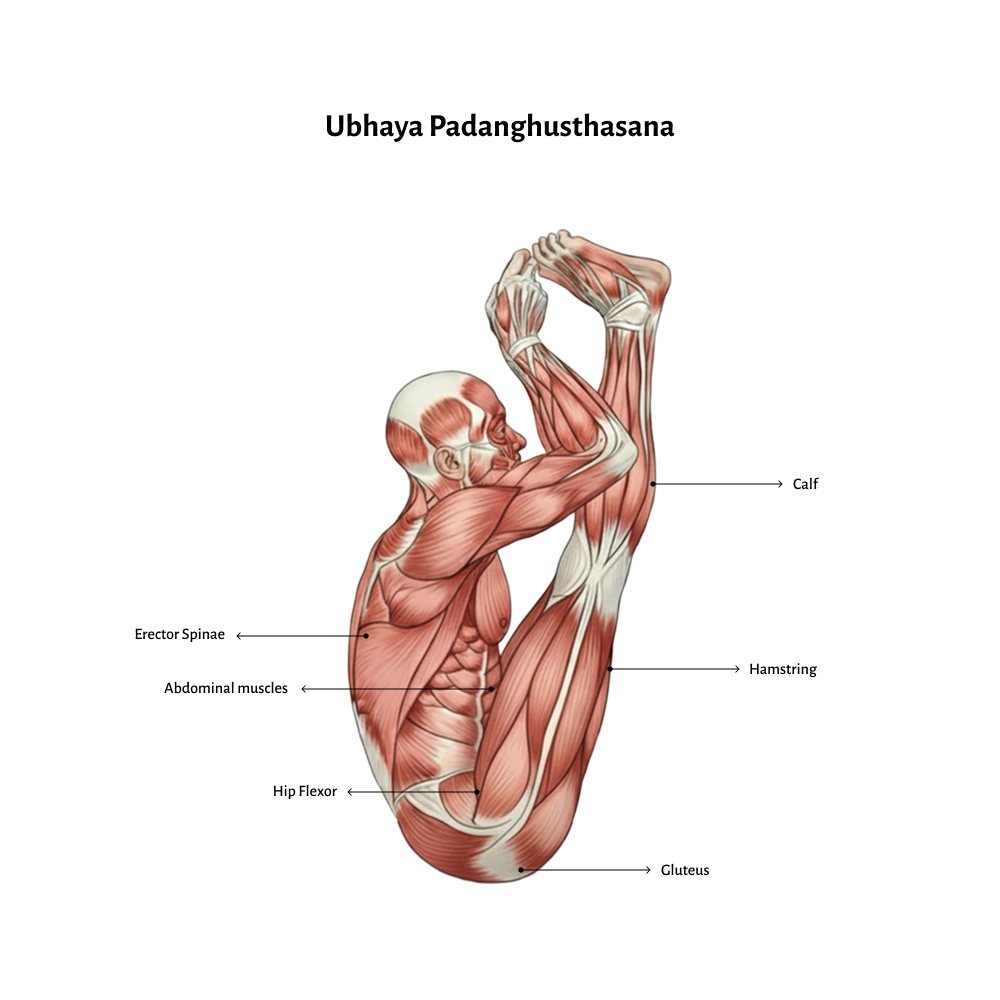
Muscles Stretched:
- Hamstrings:
Biceps femoris, semitendinosus, and semimembranosus. - Calves:
Gastrocnemius. - Adductors:
Inner thigh muscles. - Spine and Shoulders:
A gentle stretch and opening.
Joints Involved:
- Hip flexion and extension.
- Knee extension.
- Shoulder blade depression and retraction.