Mayurasana (मयूरासन)
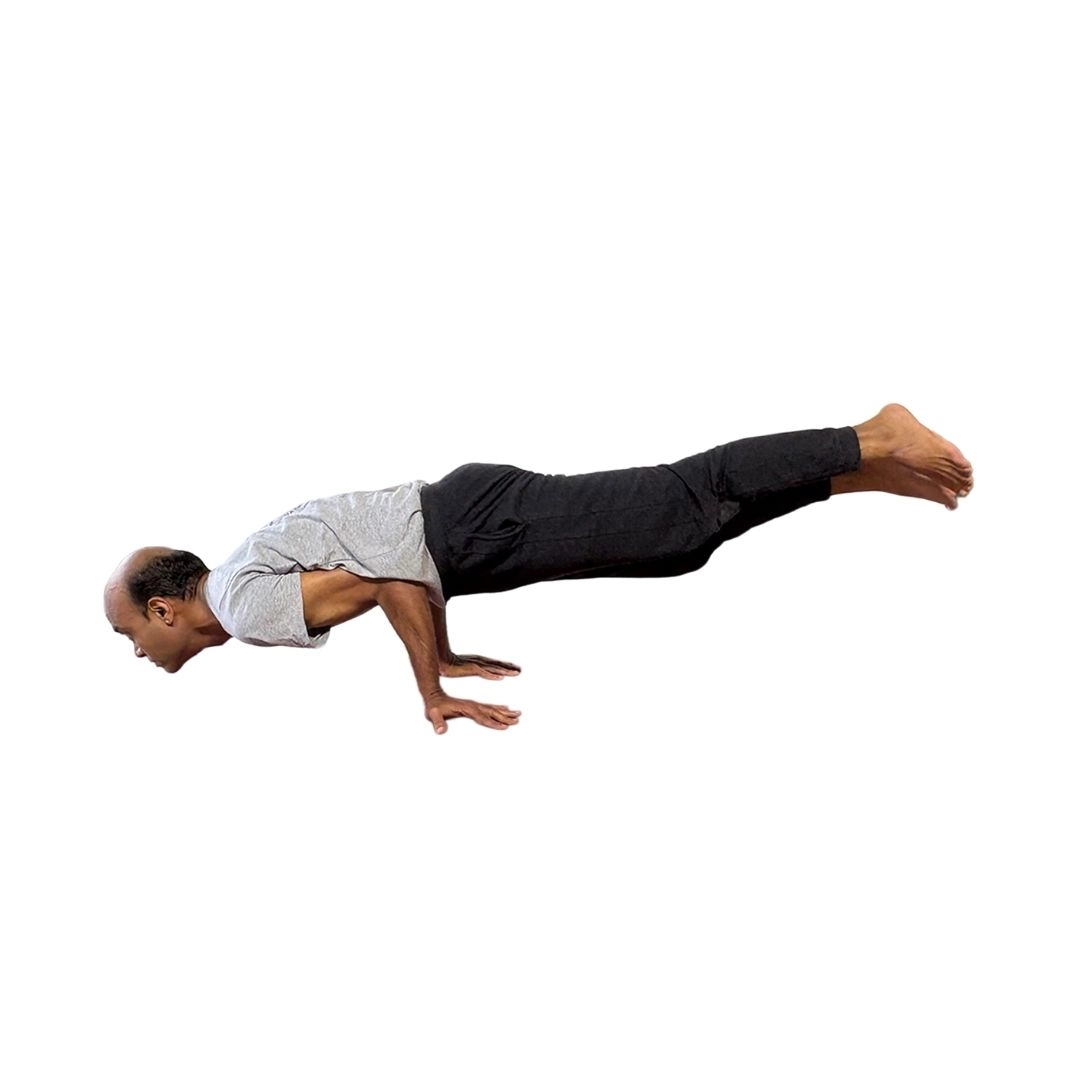
Mayurasana (मयूरासन), or Peacock Pose, is a challenging arm-balancing yoga posture that resembles a peacock ready to display its tail feathers. The name comes from the Sanskrit words “mayura” (peacock) and “asana” (posture). It is a demanding pose that requires a high degree of core strength, arm strength, and balance, as well as a strong internal focus.
How to do Mayurasana
Benefits of Mayurasana
- Strengthens the Upper Body and Core:
Mayurasana is a powerful pose for building strength in the arms, shoulders, wrists, and core muscles. It also tones the abdominal muscles. - Aids Digestion and Detoxification:
The pressure of the elbows on the abdomen stimulates the digestive system, massaging internal organs like the liver, spleen, and pancreas. This can help improve digestion, relieve constipation, and promote the body’s natural detoxification processes.
- Enhances Balance and Focus:
Balancing on your hands requires intense concentration and stability, which helps to improve physical balance and mental focus. - Improves Circulation:
The pose increases blood flow, particularly to the abdominal organs and upper body, which can promote overall vitality. - Boosts Confidence:
Mastering this challenging pose can lead to a sense of accomplishment and improved self-confidence.
Contraindications of Mayurasana
Avoid or modify this pose if you have:
- Injuries:
Any wrist, elbow, shoulder, or back injuries. - Abdominal Issues:
Recent abdominal surgery, hernia, or peptic ulcers. The pressure on the abdomen can be harmful. - Heart Conditions or High Blood Pressure:
The pose can put strain on the circulatory system.
- Pregnancy or Menstruation:
The pressure on the abdomen is not recommended for pregnant women or those who are menstruating. - Other Conditions:
Glaucoma, severe headache, or carpal tunnel syndrome. - Weakness:
If you have weak bones or a generally weak body structure.
Anatomy (Muscles involved)
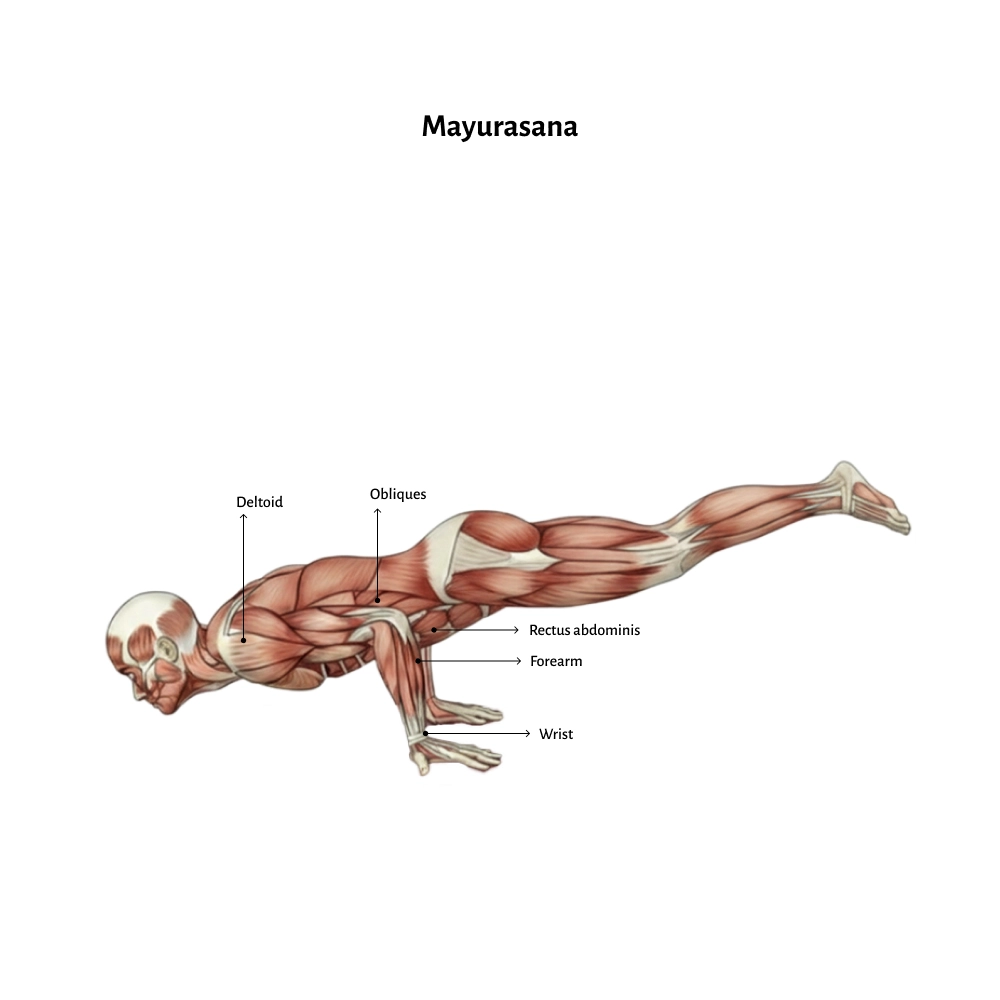
This pose engages a complex network of muscles and joints:
Core:
The transverse abdominis, rectus abdominis, and obliques are crucial for stabilizing the spine and maintaining the horizontal alignment of the body.
Arms and Shoulders:
The biceps, triceps, and deltoids (shoulder muscles) work to support your body weight. The forearms are also engaged to maintain the balance.
Wrists:
The pose places significant pressure on the wrists, requiring strength in the wrist extensors and flexors.
Legs and Glutes:
The quadriceps, hamstrings, and gluteus maximus are engaged to keep the legs straight, lifted, and together, contributing to the overall balance and stability of the pose.
Spine:
The erector spinae muscles along the back are activated to lift and extend the spine, preventing it from rounding.