Kakasana (काकासन)
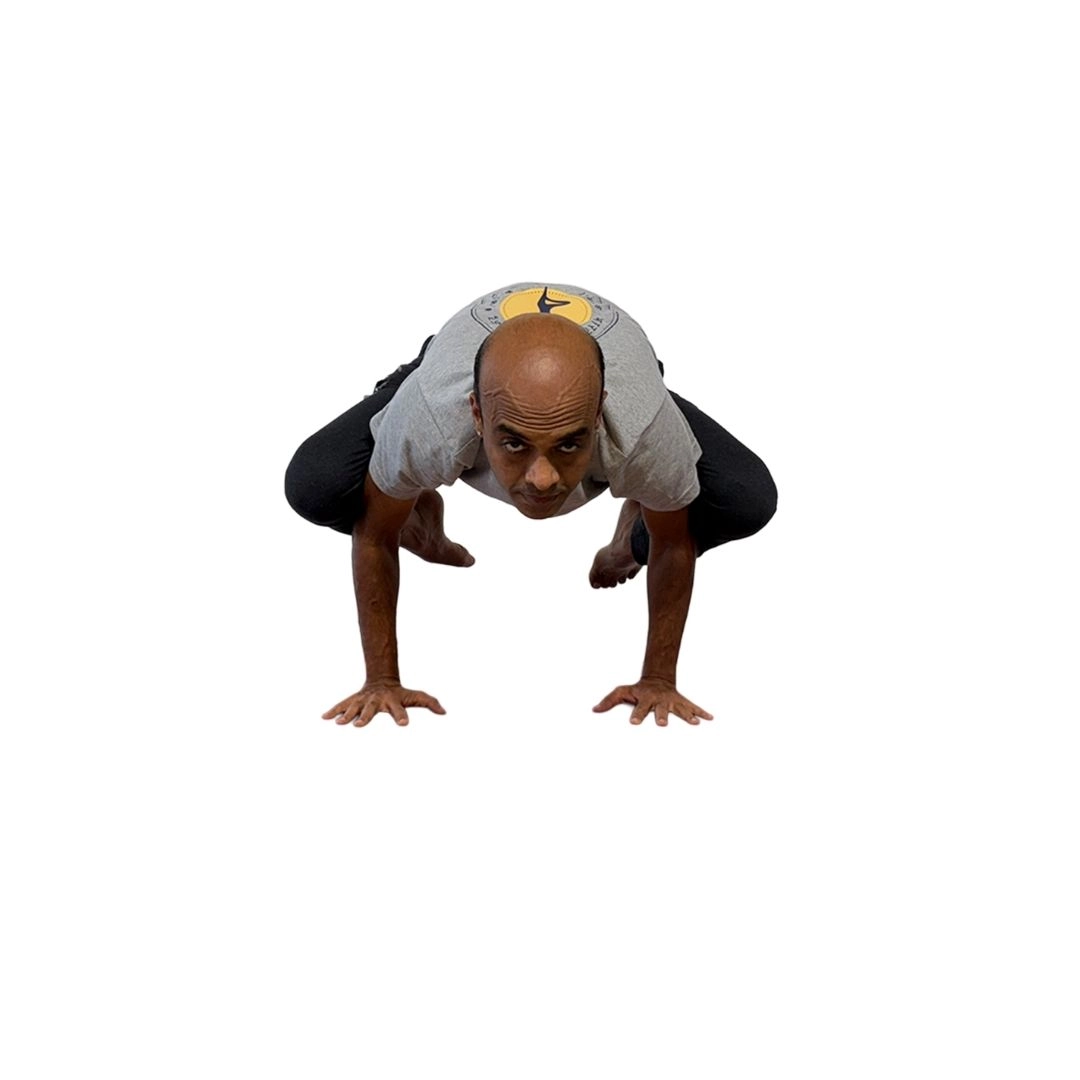
Kakasana (काकासन), or Crow Pose, is a foundational arm-balancing yoga posture. The name comes from the Sanskrit words “kaka” (crow) and “asana” (posture). In this pose, the body is balanced on the hands, with the shins resting on the backs of the upper arms. It is often one of the first arm balances that students learn and is a great way to build confidence, strength, and balance.
How to do Kakasana
Benefits of Kakasana
- Strengthens the Upper Body:
Kakasana builds significant strength in the wrists, arms, shoulders, and forearms. - Engages the Core:
The pose requires strong engagement of the abdominal muscles, which helps tone and stabilize the core and pelvic floor. - Improves Balance and Coordination:
Balancing on your hands enhances your overall body coordination and spatial awareness.
- Boosts Concentration and Confidence:
The intense focus required to maintain the pose helps improve mental clarity and concentration. Successfully holding the pose can be a huge confidence booster. - Stretches and Tones:
It stretches the upper back and inner groin, while also toning the hips, hamstrings, and biceps. - Aids Digestion:
The compression of the abdominal area can stimulate the digestive system and help with issues like indigestion.
Contraindications of Kakasana
Avoid or modify this pose if you have:
- Wrist Injuries:
This pose puts a lot of pressure on the wrists. Those with carpal tunnel syndrome, arthritis, or other wrist injuries should avoid it. - Shoulder, Elbow, or Neck Problems:
Any pre-existing injuries in these areas can be aggravated. - High Blood Pressure:
Inversions and arm balances can increase blood pressure.
- Pregnancy:
The pressure on the abdomen makes this pose unsuitable for pregnant women. - Recent Surgery:
If you have had recent surgery in the abdomen, shoulder, neck, or back, it is best to avoid this pose. - Weak Wrists or General Weakness:
If you are new to arm balances, it is crucial to build up strength in your wrists and core with preparatory poses before attempting Kakasana.
Anatomy (Muscles involved)
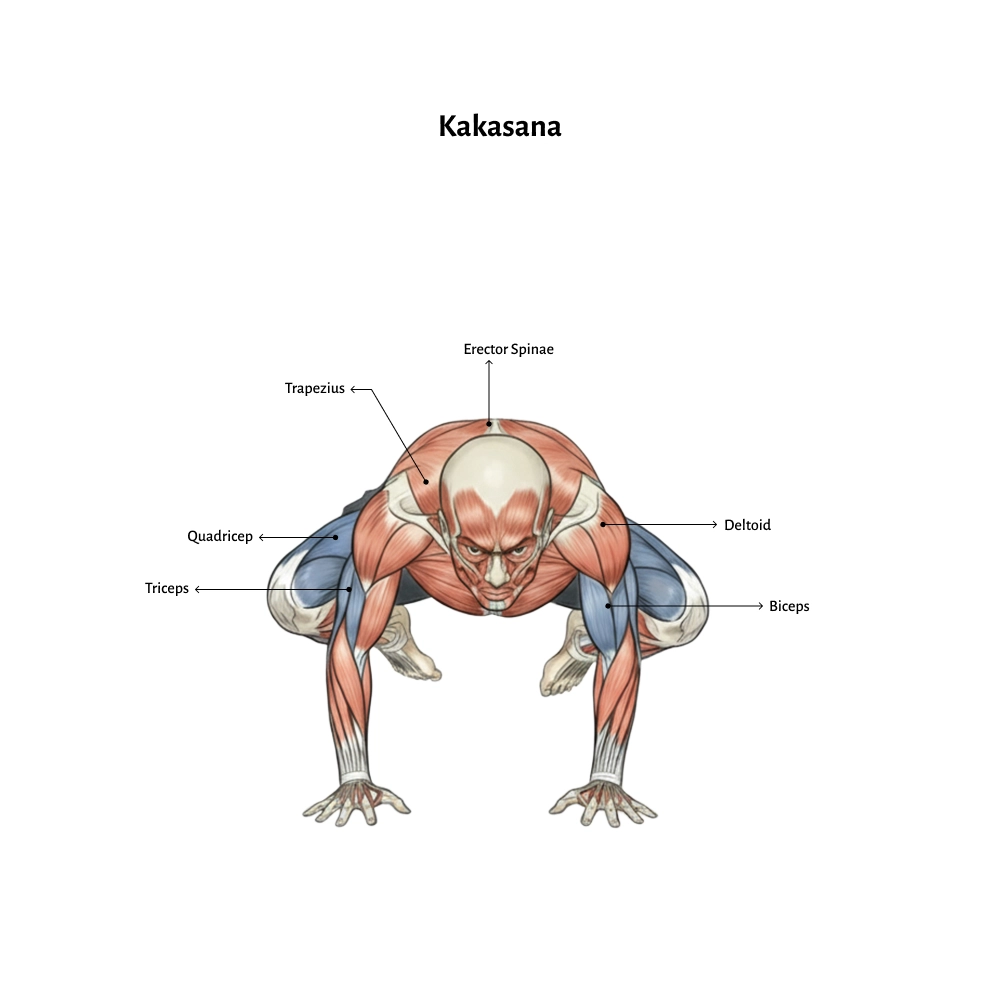
This pose engages a complex network of muscles and joints:
Arms and Shoulders:
Deltoids, pectoralis major, triceps, and biceps are all actively engaged to support your body weight.
Wrists and Hands:
The wrist flexors and muscles in the hands are crucial for maintaining stability and balance.
Core:
The rectus abdominis and transverse abdominis work to stabilize the spine and lift the hips.
Legs and Hips:
The adductor muscles of the inner thighs are key, as they press into the upper arms to create the “”shelf”” for your knees. The gluteus maximus and hamstrings also work to lift the legs.