Ardha Kapotasana (अर्ध कपोतासन)
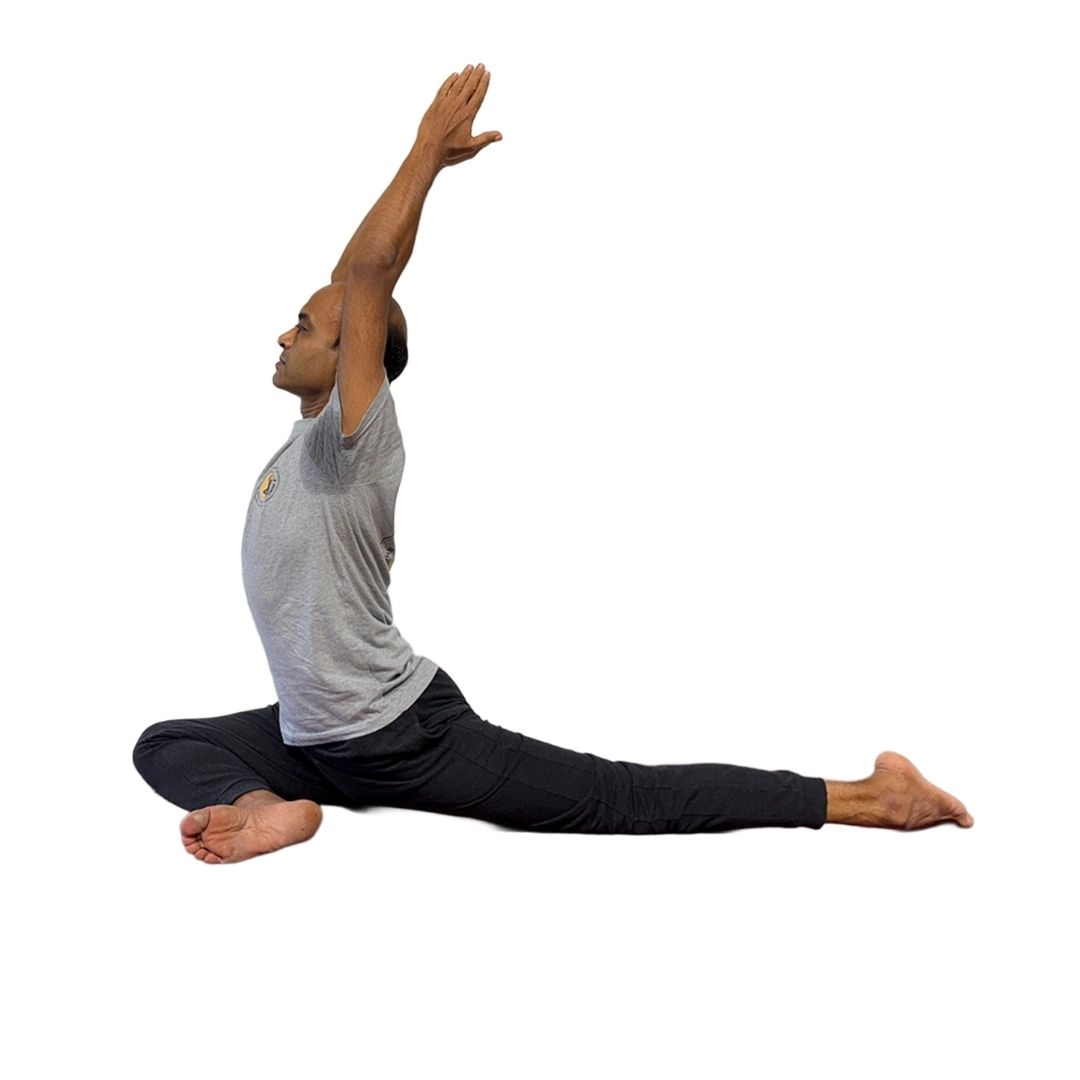
Ardha Kapotasana (अर्ध कपोतासन), or Half Pigeon Pose, is one of the most popular and effective hip openers in modern yoga. The name comes from the Sanskrit words “ardha” (half), “kapota” (pigeon), and “asana” (posture).
How to do Ardha Kapotasana
Benefits of Ardha Kapotasana
- Deep Hip Opener:
It dramatically increases flexibility and range of motion in the hips, particularly targeting the external rotators (gluteal muscles). - Relieves Sciatica:
By stretching the piriformis muscle (which can sometimes press on the sciatic nerve), it can help relieve mild symptoms of sciatica or piriformis syndrome. - Stretches the Front Body:
It stretches the thighs, groins, and psoas (hip flexors) of the back leg.
- Stress and Anxiety Relief:
Hips are often an area where emotional tension is stored. Opening the hips can lead to a significant release of stress and calming of the nervous system. - Improves Posture:
By working on the tight muscles that pull the pelvis out of alignment, it can help improve overall body posture. - Emotional Release:
Many practitioners find that holding this pose helps release “”stored”” tension or stress often held in the pelvic region.
Contraindications of Ardha Kapotasana
Avoid or modify this pose if you have:
- Knee, Ankle, or Hip Injury:
The pose places substantial stress on the knee joint of the bent leg. If you have any instability or recent injury in these areas, use extreme caution or avoid the pose. - Sacroiliac (SI) Joint Issues:
The external rotation of the hip can be challenging for those with SI joint instability or pain. Ensure your hips are absolutely square and supported with a block.
- Severe Sciatica:
While it can help mild sciatica, if your pain is sharp, acute, or intense, the compression and stretching may aggravate the condition. - High Blood Pressure:
If you are holding the upright version with an active backbend, this may be stimulating. Stick to the “”Sleeping Pigeon”” variation or choose a different hip opener.
Anatomy (Muscles involved)
The Hips (The Primary Target):
The two legs perform opposing actions, which creates the “splitting” sensation in the pelvis.
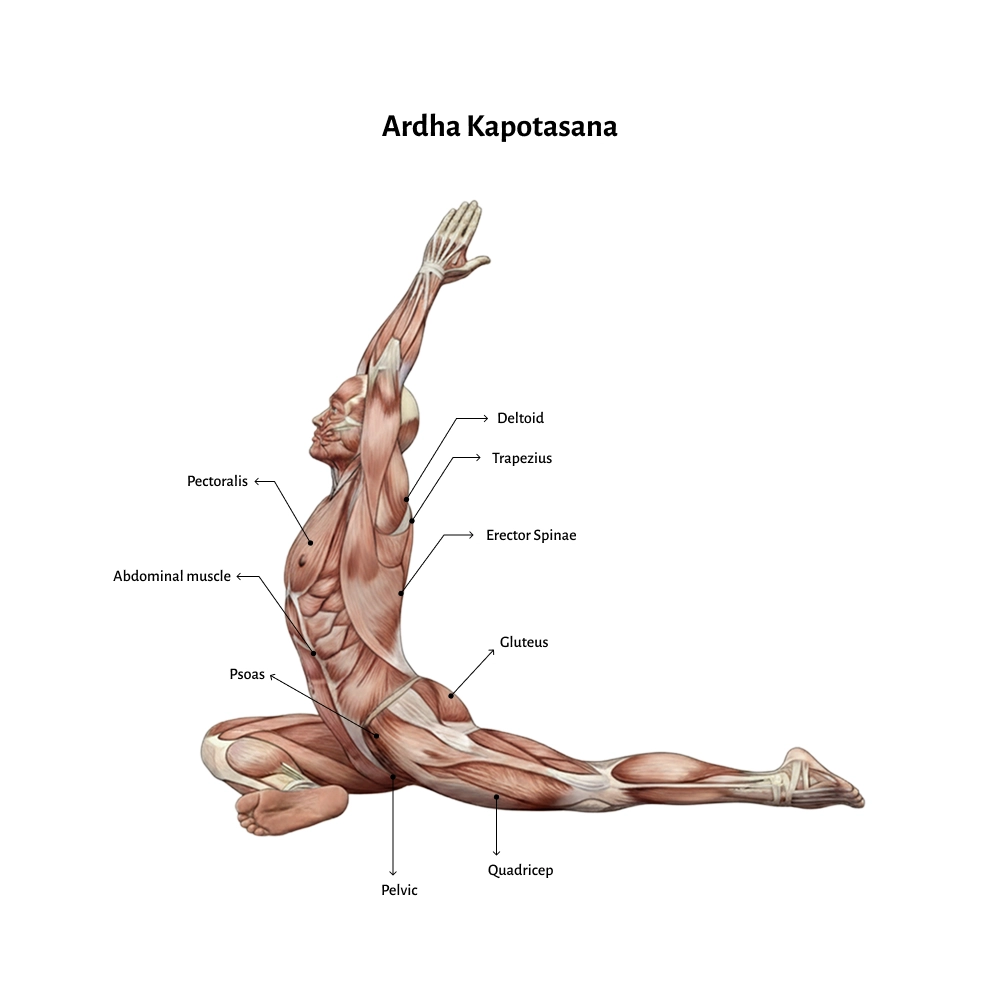
Front Leg (The External Rotator):
Flexion (knee comes up) + External Rotation (thigh rotates outward) +
Abduction (leg moves away from center).
Muscles Stretched:
- Piriformis: This is often the main target. When tight, it can compress the sciatic nerve.
- Gluteus Maximus & Medius: These large buttock muscles are lengthened significantly.
- Deep Six Rotators: Small stabilizing muscles deep inside the hip socket
(Gemellus superior/inferior, Obturator internus/externus, Quadratus femoris).
Back Leg (The Extensor):
Action: Extension (leg reaches back) + Slight Internal Rotation (to keep the kneecap facing down).
Muscles Stretched:
- Psoas Major & Iliacus: The primary hip flexors that connect the thigh to the lower spine.
- Rectus Femoris: The only quadriceps muscle that crosses the hip joint; feels a deep pull along the front of the thigh.
-
-