Adho Mukha Svanasana (अधो मुख श्वानासन)
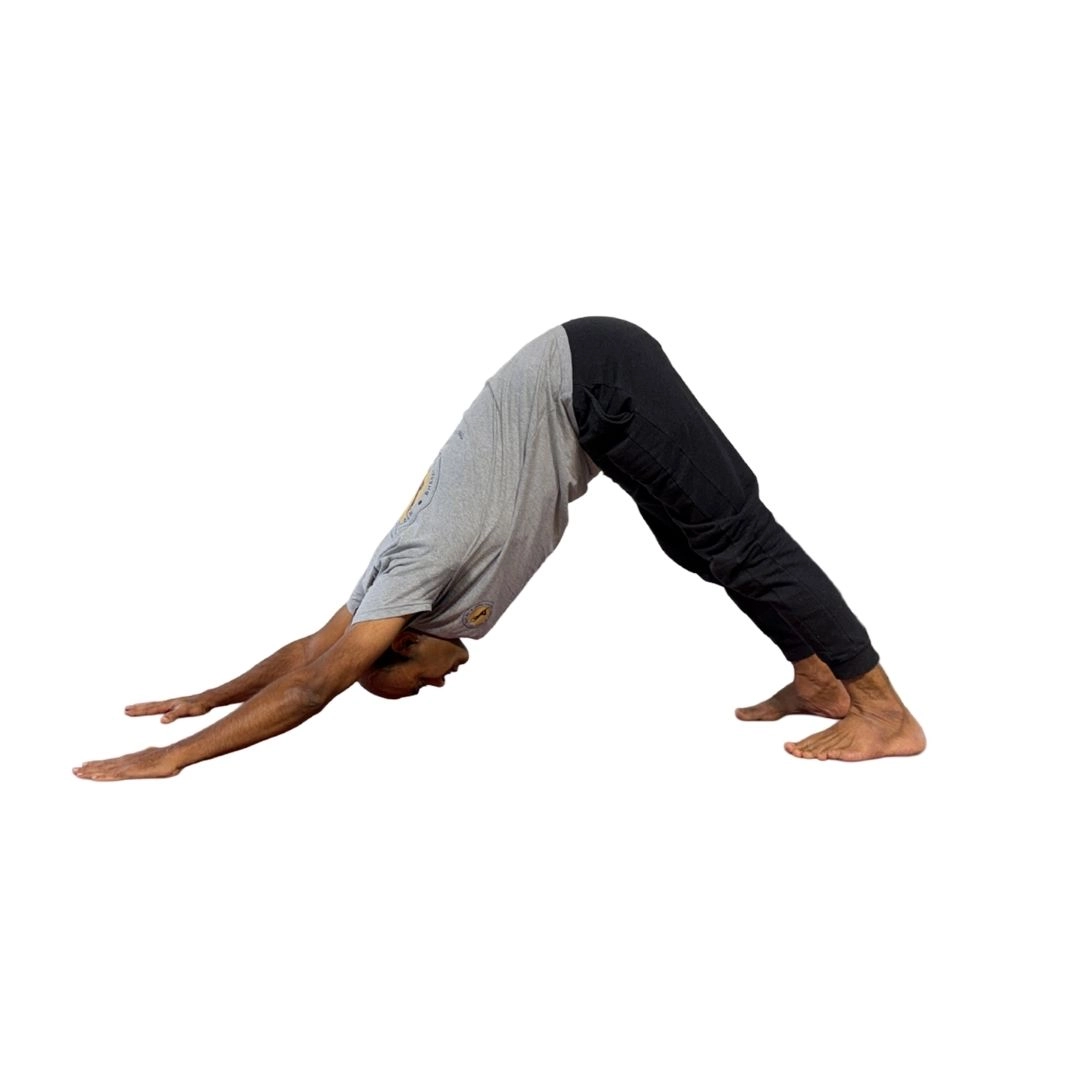
Adho Mukha Svanasana (अधो मुख श्वानासन), or Downward-Facing Dog Pose, is one of the most widely recognized and practiced yoga postures. The name comes from the Sanskrit words “adho” (downward), “mukha” (face), “svana” (dog), and “asana” (posture). It is a foundational pose in almost every style of yoga and is known for its ability to both strengthen and stretch the entire body.
How to do Adho Mukha Svanasana
Benefits of Adho Mukha Svanasana
- Strengthens:
It builds strength in the arms, shoulders, wrists, and core. It also tones the legs. - Stretches:
It provides a deep stretch for the hamstrings, calves, and the arches of the feet. It also lengthens the spine and stretches the shoulders and chest. - Improves Circulation:
As an inversion, it encourages blood flow to the brain, which can help calm the nervous system, reduce stress, and improve focus.
- Relieves Pain:
Regular practice can help alleviate chronic back pain by strengthening the back muscles and decompressing the spine. It can also relieve neck and shoulder tension. - Energizes the body:
The pose is considered both energizing and restorative, helping to boost mood and relieve fatigue.
Contraindications of Adho Mukha Svanasana
Avoid or modify this pose if you have:
- Injuries:
Avoid this pose if you have recent or chronic injuries to the wrists, shoulders, or back. It’s not recommended for those with carpal tunnel syndrome. - Pregnancy:
Pregnant women, especially after the first trimester, should avoid this pose due to the intense abdominal stretch. - Spinal Conditions:
Individuals with spinal ailments like scoliosis, kyphosis, or acute lumbar spondylitis should be cautious or avoid the pose.
- Headaches:
This pose can be a trigger for some people with headaches. - Weakness:
If you have weak joints, especially in the wrists or shoulders, or weak body frames, it’s best to modify the pose or avoid it to prevent joint dislocation. - High Blood Pressure or Heart Conditions:
People with heart conditions or high blood pressure should consult a doctor or an experienced yoga instructor before practicing this pose.
Anatomy (Muscles involved)
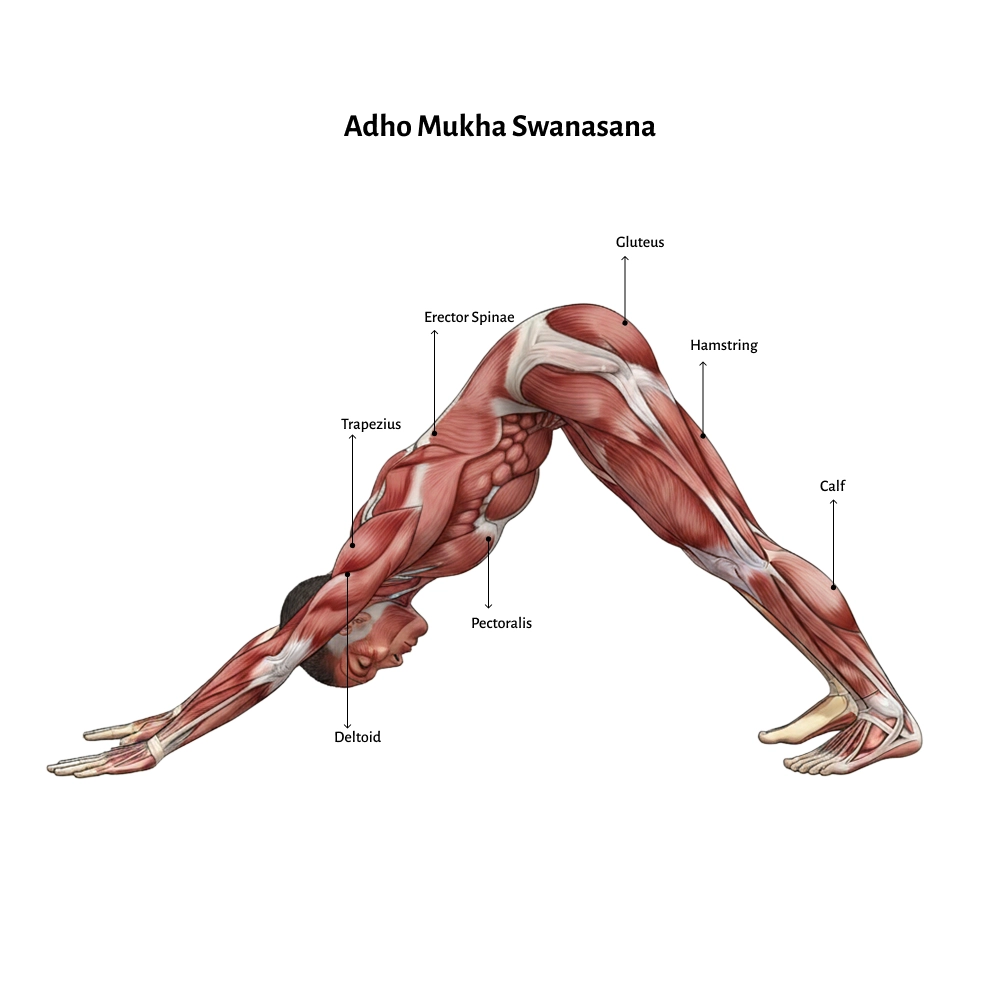
This pose engages a complex network of muscles and joints:
Muscles stretched:
- Hamstrings:
The muscles on the back of your thighs. - Calves:
The gastrocnemius and soleus muscles on the back of your lower legs. - Spinal muscles:
The erector spinae group along the length of your spine. - Shoulders and Chest:
The pectoralis major and minor, and the latissimus dorsi.
Muscles strengthened:
- Arms and shoulders:
The triceps, deltoids, and serratus anterior. - Core:
The transverse abdominis and rectus abdominis to stabilize the spine. - Legs:
The quadriceps engage to protect the knees and deepen the hamstring stretch.