Agnistambhasana अग्निस्तम्भासन
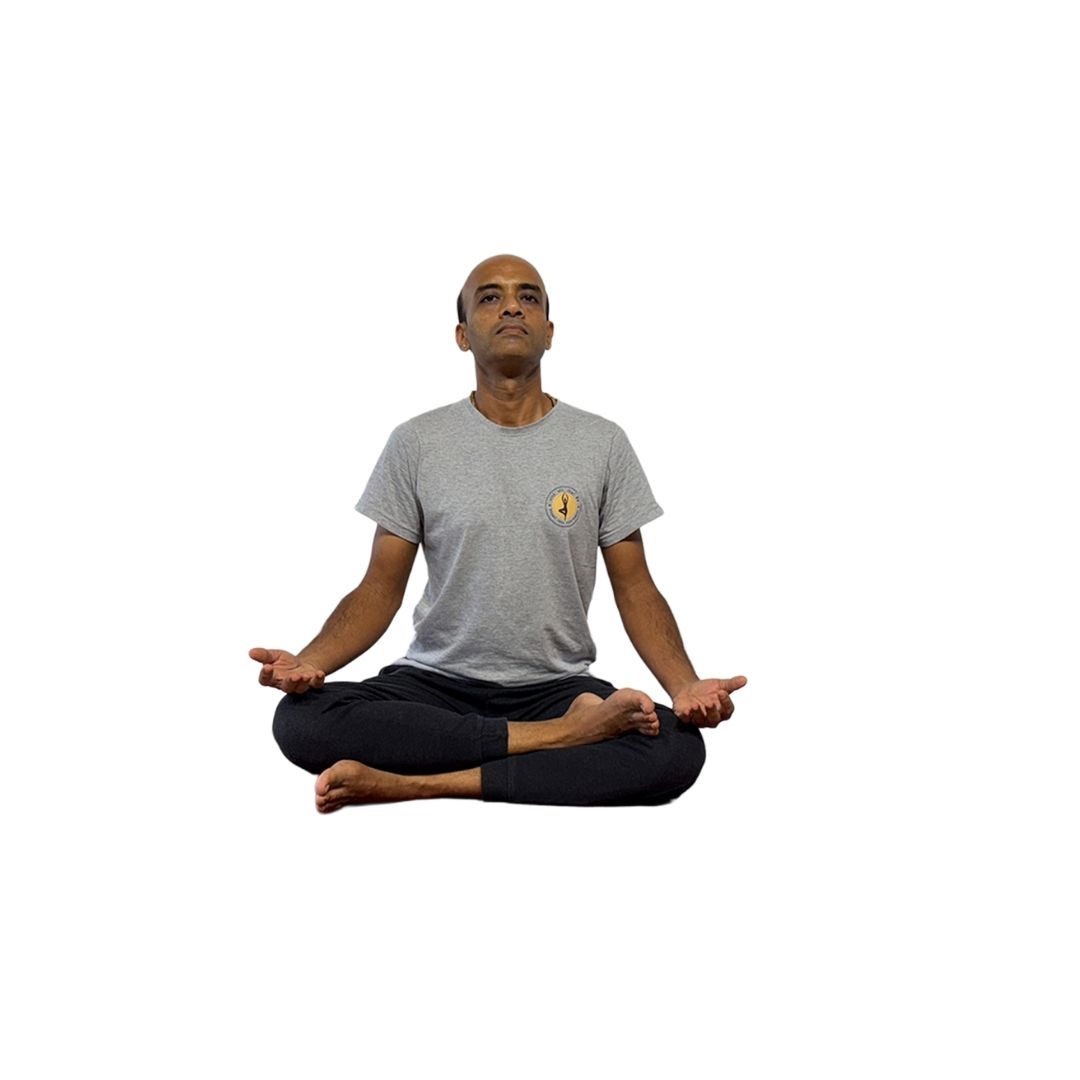
Agnistambhasana अग्निस्तम्भासन, also known as Fire Log Pose or Double Pigeon Pose, is a deep hip-opening yoga posture. Its name comes from the Sanskrit words “Agni” (fire) and “Stambha” (log or pillar), as the legs are stacked like logs and the pose can create a “fiery” sensation in the hips.
How to do Agnistambhasana
Benefits of Agnistambhasana
- Deep Hip Opener:
Agnistambhasana is an excellent pose for releasing deep tension in the hips, glutes, and groin area. - Improves Flexibility:
It increases the range of motion in the hips, knees, and ankles.
- Strengthens and Tones:
It helps to strengthen the core, pelvic floor, and lower body muscles. - Aids Digestion:
The forward fold variation of the pose can massage the abdominal organs, which may help stimulate digestion. - Calms the Mind:
As a seated, grounding pose, it helps to reduce stress and anxiety and promotes a sense of peace.
Contraindications of Agnistambhasana
Avoid or modify this pose if you have:
- Knee, Hip, or Ankle Injuries:
This pose puts significant pressure on these joints. - Sciatica:
The deep stretch can compress the sciatic nerve and exacerbate symptoms.
- Chronic Lower Back Pain:
The forward fold can be strenuous on the lower back if not performed with proper alignment. - Lack of Flexibility:
Forcing the pose without sufficient flexibility can lead to injury. It is highly recommended to use props like blocks or blankets to support the pose and avoid straining your joints.
Anatomy (Muscles involved)
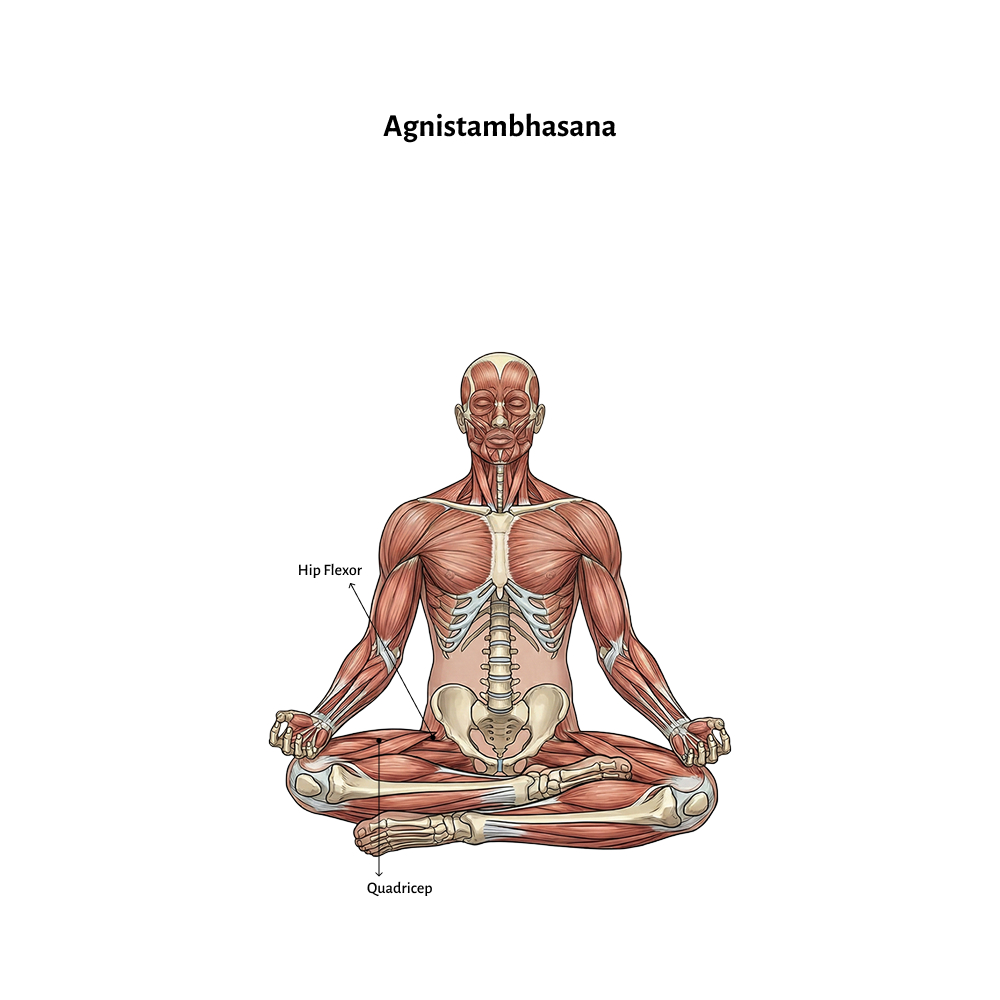
This pose engages a complex network of muscles and joints:
Muscles Stretched:
The gluteus maximus, gluteus medius, and piriformis muscles are all intensely stretched. The adductors (inner thigh muscles) and the IT band also receive a stretch.
Joints Engaged:
It involves deep external rotation of the hip joint and flexion of the knee joints.