Anantasana (अनंतासन)
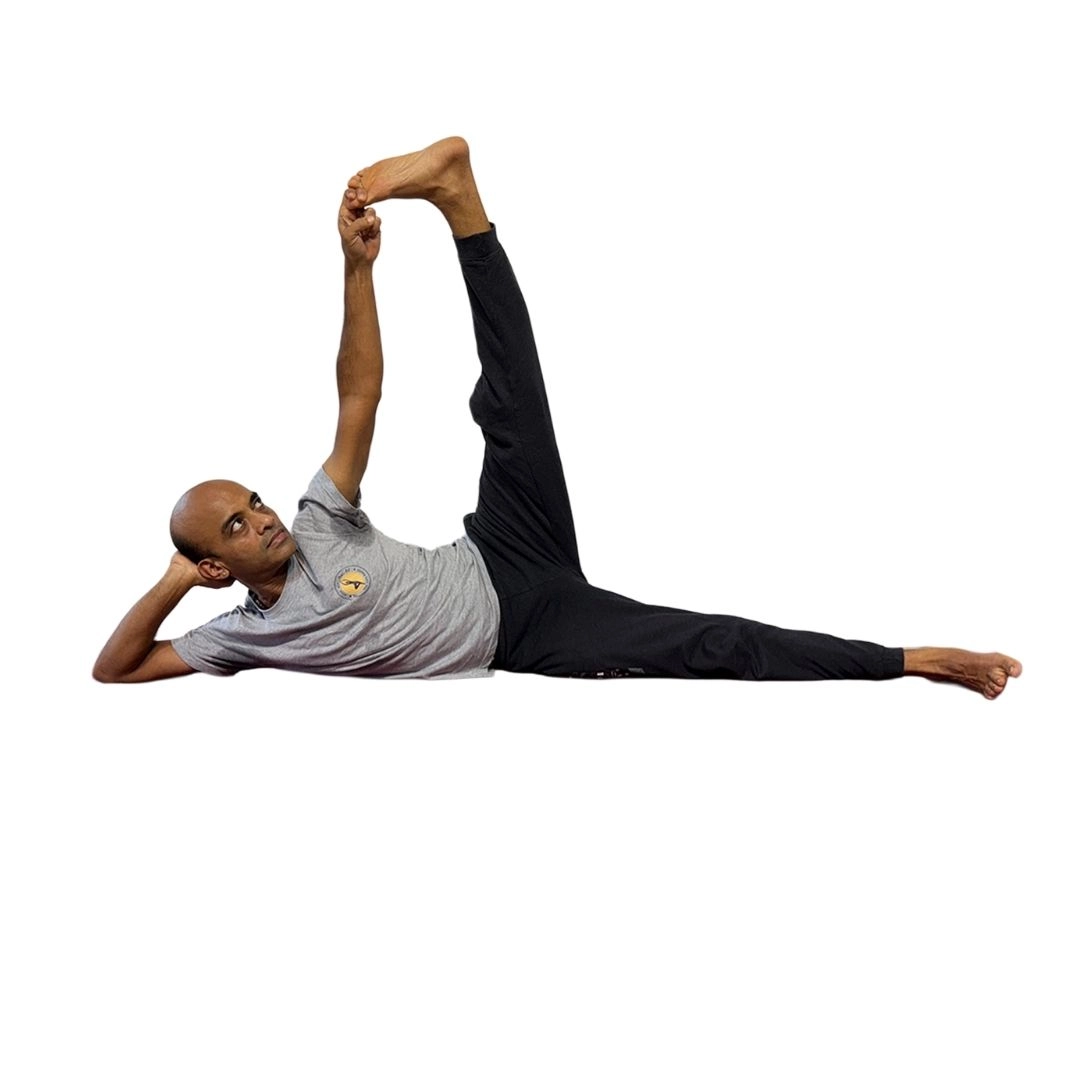
Anantasana (अनंतासन), or Side-Reclining Leg Lift, is a reclining yoga pose that provides a deep stretch to the hamstrings, hips, and inner thighs while also strengthening the core. The name comes from the Sanskrit word Ananta, which is another name for the Hindu god Vishnu, who is often depicted reclining on the serpent Ananta.
How to do Anantasana
Benefits of Anantasana
- Strengthens Core Muscles:
Anantasana requires significant core engagement to maintain balance, activating the abdominal muscles, especially the obliques. - Improves Balance and Coordination: Balancing on one side challenges your sense of proprioception (body awareness), which enhances overall balance and coordination.
- Increases Flexibility:
This pose provides a deep stretch to the hamstrings, calves, and inner thighs. - Promotes Hip Mobility:
The leg lift and external rotation help to open and increase the mobility of the hip joint, which is beneficial for those with tight hips from prolonged sitting.
- Strengthens Arms and Shoulders:
The supporting arm and hand, as well as the arm holding the leg, are strengthened during the pose. - Relieves Stress and Anxiety:
The focused, steady breathing required to hold the pose helps to calm the nervous system and reduce stress. - Aids Digestion:
The gentle stretching and massaging of the abdominal area can stimulate the digestive organs.
Contraindications of Anantasana
Avoid or modify this pose if you have:
- Injuries:
Any injuries to the ankles, knees, hips, shoulders, or neck. - Recent Surgery:
Especially a recent surgery on the spine, hip, or knee. - Sciatica:
Practice with extreme caution and under the guidance of a yoga teacher if you have sciatica.
- Slipped Disc or Cervical Spondylitis:
The pose can put strain on the spine and neck. - Weak Joints:
Individuals with weak joints in the ankles, knees, or shoulders should avoid this pose until their strength improves.
Anatomy (Muscles involved)
This pose engages a complex network of muscles and joints:
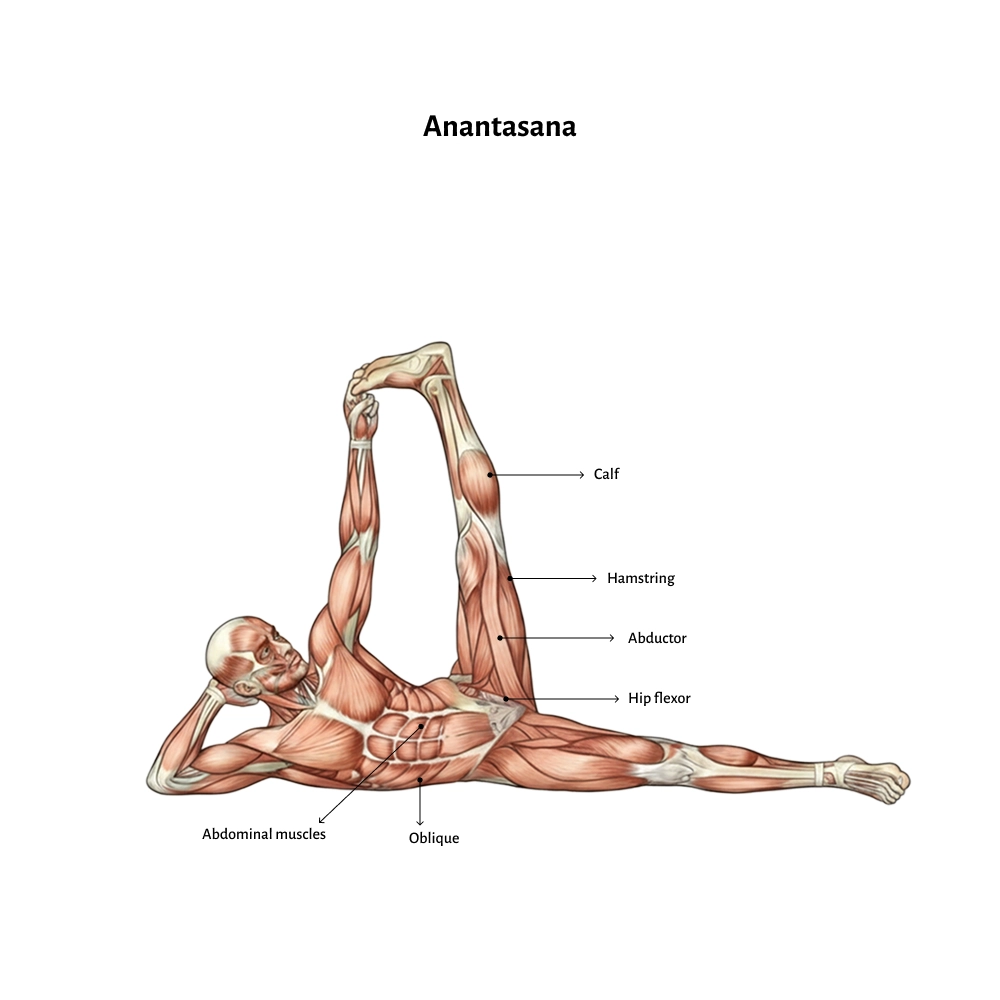
Hamstrings and Calves:
The muscles on the back of the leg are deeply stretched.
Glutes:
The gluteus maximus and medius are engaged for stabilization.
Core Muscles:
The obliques, rectus abdominis, and other core muscles are active to maintain balance and alignment.
Hip Flexors and Abductors:
The hip flexors are engaged to lift the leg, while the hip abductors are stretched.
Shoulders and Neck
The muscles of the neck and shoulder on the supporting side are engaged.