Anjaneyasana (अञ्जनेयासन)
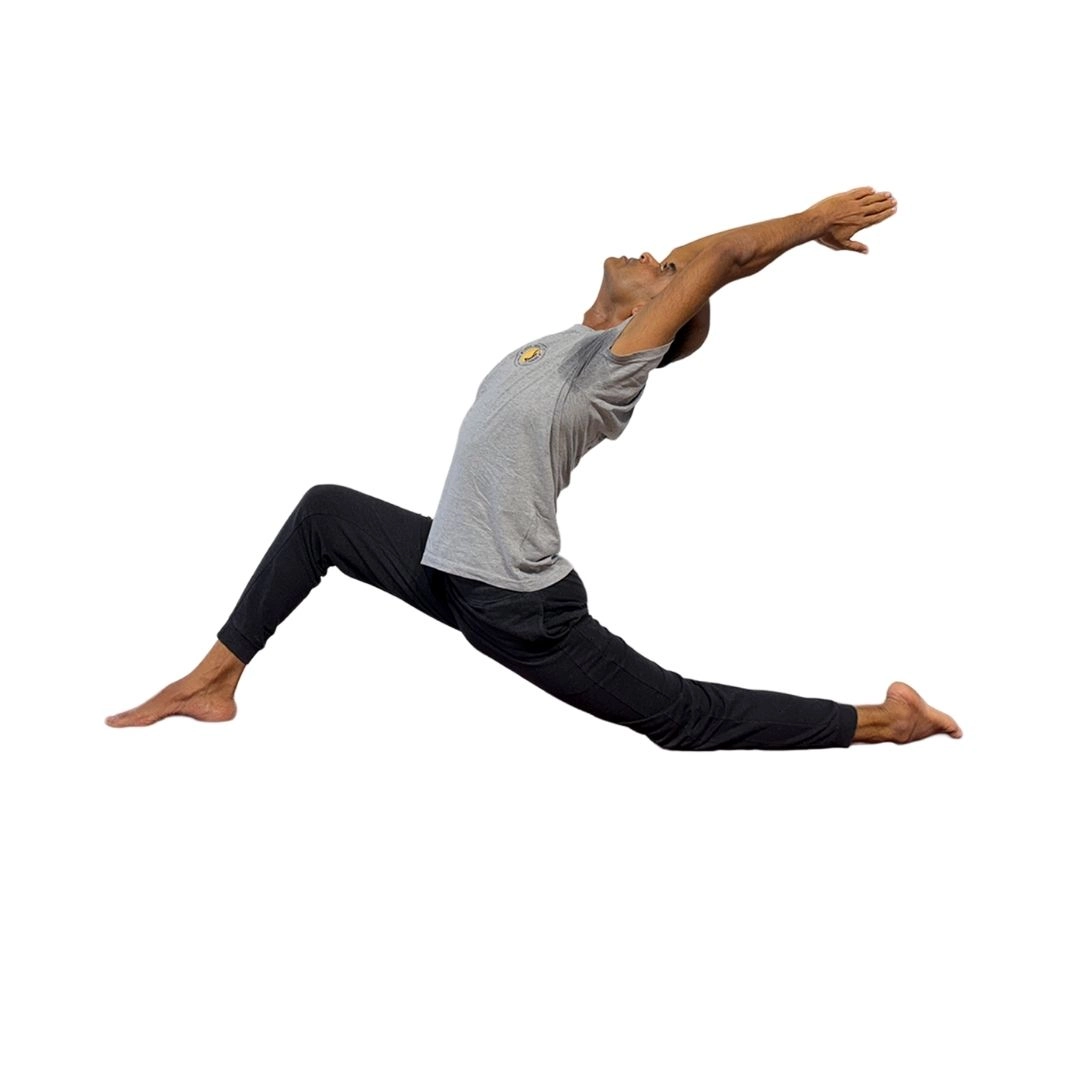
Anjaneyasana (अञ्जनेयासन), or Low Lunge Pose, is a foundational yoga posture that deeply stretches the hips and strengthens the legs. The name is derived from the Sanskrit word “Anjaneya,” another name for Hanuman, the monkey god, whose mother’s name was Anjani. It is believed that this pose represents the devotion and strength of Hanuman.
How to do Anjaneyasana
Benefits of Anjaneyasana
- Stretches and Strengthens:
It deeply stretches the hip flexors, psoas muscle, quadriceps, and groins of the back leg. At the same time, it strengthens the legs (quadriceps and hamstrings of the front leg), glutes, and core. - Improves Flexibility and Mobility:
It is an excellent hip opener, which is particularly beneficial for people who sit for long periods. This can help alleviate lower back pain and stiffness. - Enhances Balance and Stability:
This pose requires and builds a strong sense of balance and stability, both physically and mentally.
- Opens the Chest and Shoulders:
The gentle backbend and arm-raising action open the chest and shoulders, improving breathing capacity and promoting better posture. - Stimulates Organs:
The deep abdominal stretch can stimulate the digestive and reproductive systems. - Calming and Energizing:
It can help release physical and emotional tension stored in the hips, leading to a sense of calm and a boost in energy.
Contraindications of Anjaneyasana
Avoid or modify this pose if you have:
- Knee Injuries:
The back knee bears a significant amount of pressure. If you have any chronic knee injuries, sensitivity, or pain, place a thick blanket or cushion under the knee or avoid the pose entirely. - Hip or Groin Injuries:
The deep stretch in the hip and groin can be intense. Avoid the pose if you have a current injury in these areas. - High Blood Pressure:
The head-above-heart position and backbend can increase blood pressure. Individuals with high blood pressure should exercise caution and may want to keep their hands on their front thigh or hips.
- Back Problems:
While the pose can be therapeutic for some back issues, a deep backbend can be a problem for others. Individuals with chronic or severe lower back pain should keep the backbend very mild and focus on lengthening the spine. - Pregnancy:
Pregnant women should avoid deep backbends and positions that put pressure on the abdomen. It’s best to consult a doctor or a prenatal yoga instructor for modifications. - Balance Issues:
The pose requires balance. If you feel wobbly, you can practice with your hands on blocks or the floor, or with your front foot pressed against a wall for support.
Anatomy (Muscles involved)
This pose engages a complex network of muscles and joints:
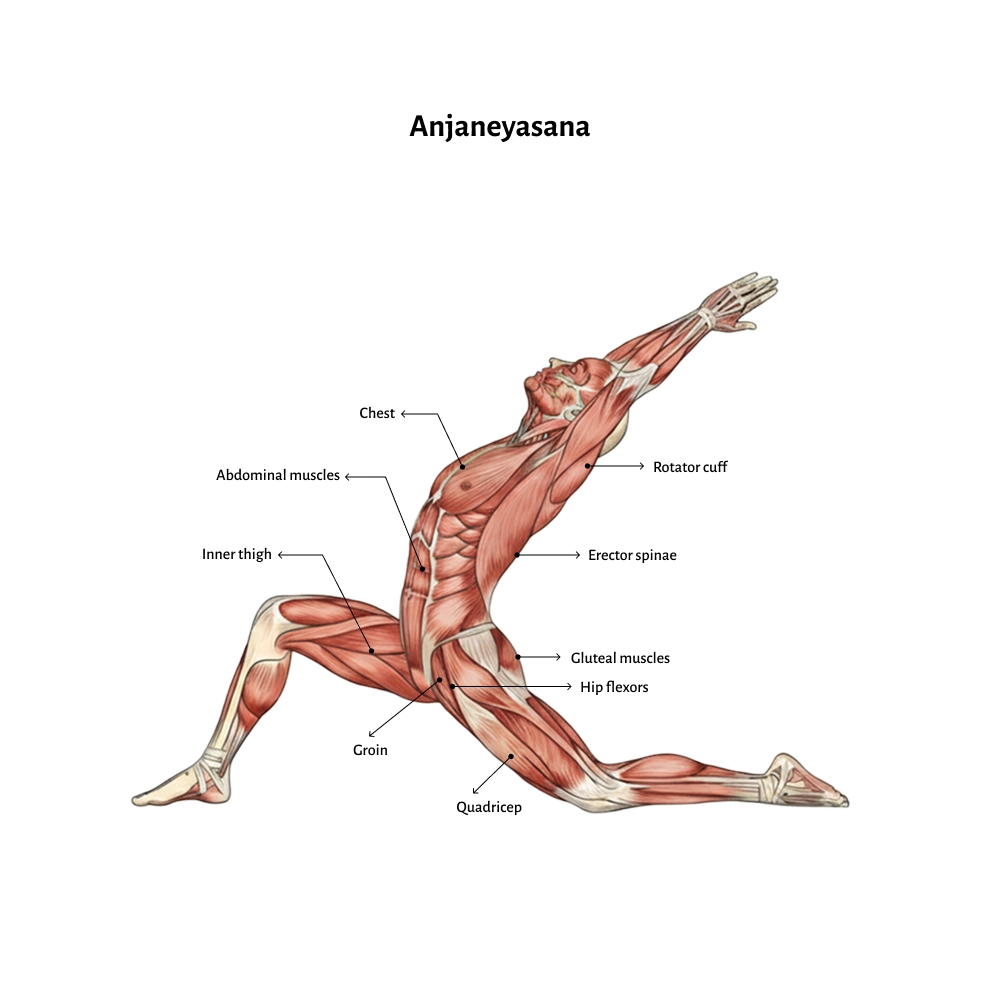
Muscles Stretched:
- Psoas Major and Iliacus (Hip Flexors):
The primary muscles stretched on the side of the back leg. - Quadriceps:
The muscles on the front of the back thigh. - Groin/Inner Thighs:
The adductor muscles.
Muscles Strengthened:
- Quadriceps and Hamstrings:
The muscles of the front leg are engaged to stabilize the pose. - Gluteal Muscles:
The glutes of both legs are active to support the hips. - Core Muscles:
The abdominal muscles are engaged to maintain balance and protect the lower back. - Spinal Erector Muscles:
These muscles along the spine are engaged in the backbend.