Ardha Baddha Padmottanasana (अर्ध बद्ध पद्मोत्तनासन)
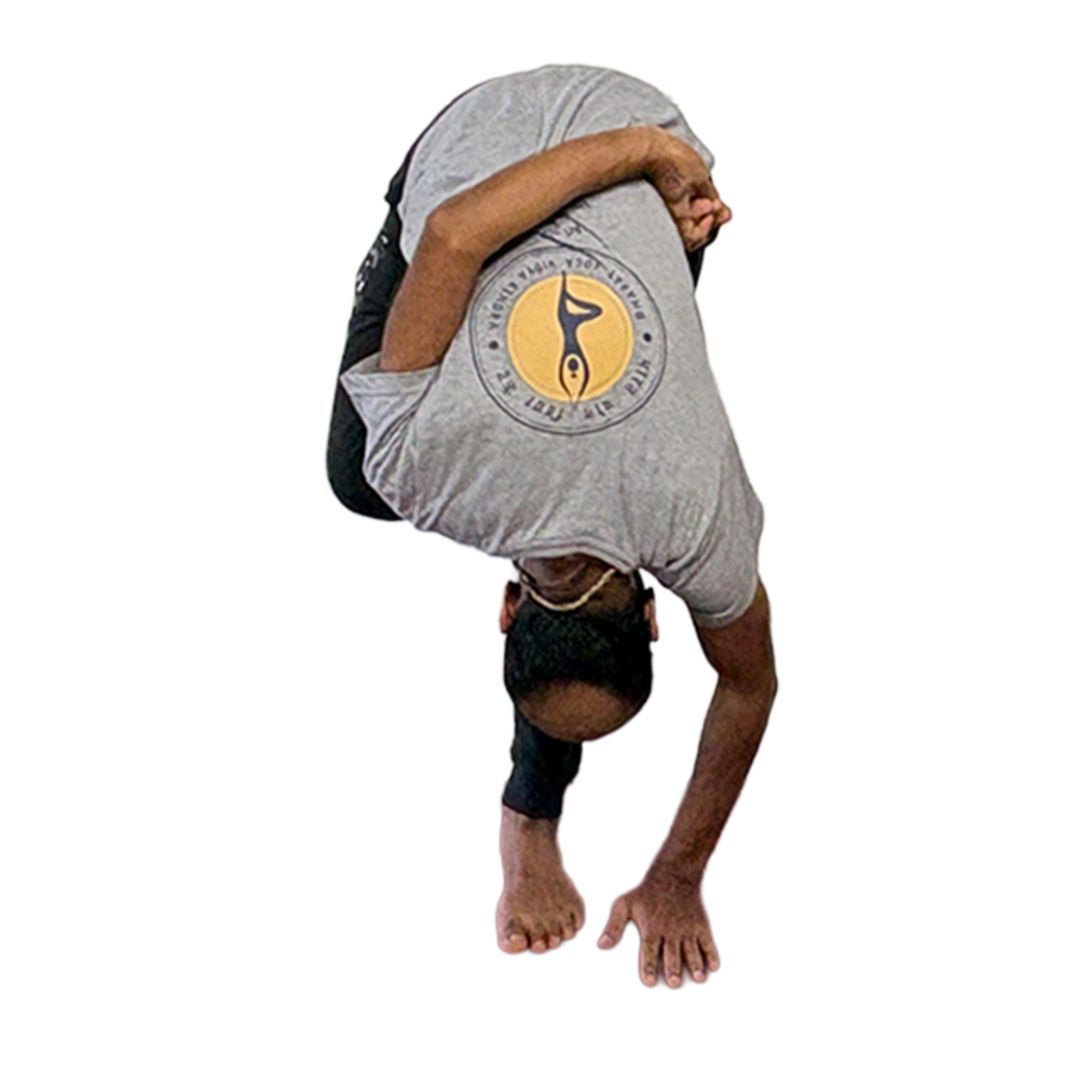
Ardha Baddha Padmottanasana (अर्ध बद्ध पद्मोत्तनासन) is an advanced standing balance pose that is a deep combination of a forward fold, a half lotus, and a bind.
How to do Ardha Baddha Padmottanasana
Benefits of Ardha Baddha Padmottanasana
- Flexibility and Strength:
This pose provides an intense stretch for the hamstrings, hips, and shoulders. It also strengthens the standing leg, ankle, and core, improving stability and balance. - Balance and Focus:
The combination of balancing on one leg and binding requires deep concentration, which helps to calm the mind and improve your sense of equilibrium.
- Digestion:
The forward fold, with the heel pressing into the abdomen, gently massages the internal organs, which can aid in digestion and elimination. - Postural Alignment:
The pose helps to improve posture by lengthening the spine and creating a healthy external rotation in the hip joint.
Contraindications of Ardha Baddha Padmottanasana
Avoid or modify this pose if you have:
- Knee, Ankle, or Hip Injuries:
The pose puts significant pressure on these joints. - Lower Back Issues:
If you have a slipped disc or any chronic lower back pain, a forward fold with a bind can be risky. - High Blood Pressure, Glaucoma, or Vertigo:
The inversion and pressure can be problematic for these conditions.
- Sciatica:
This pose can aggravate sciatic nerve pain. - Pregnancy or Menstruation:
The deep abdominal compression and balancing nature of the pose are not recommended.
Anatomy (Muscles involved)
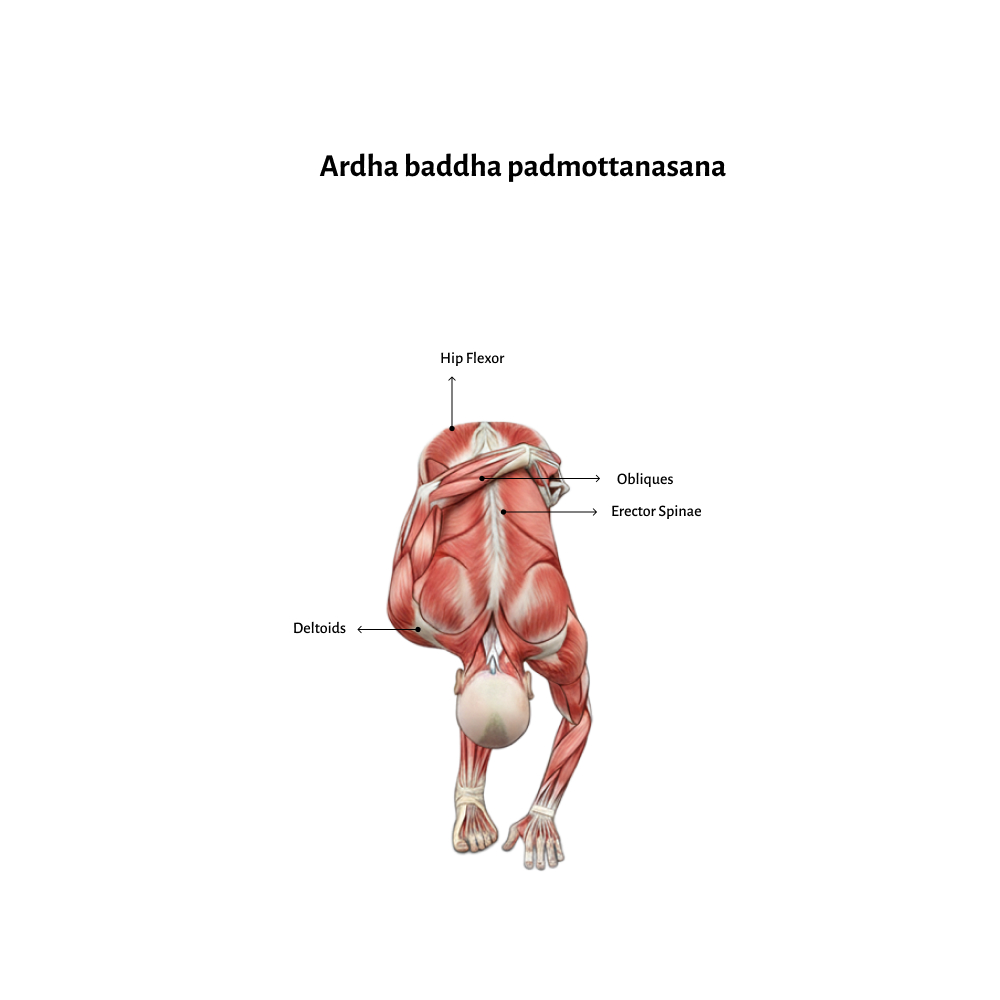
Ardha Baddha Padmottanasana engages and stretches a wide range of muscles and joints:
Standing Leg:
The hamstrings are intensely stretched, while the quadriceps, gluteus, and calf muscles are engaged to maintain stability. The ankle and foot are also strengthened.
Folded Leg:
The hip joint undergoes a deep external rotation to accommodate the half-lotus position. The muscles of the inner thigh and groin are stretched.
Upper Body:
The chest and shoulders are opened and stretched due to the bind. The latissimus dorsi and the rotator cuff muscles are involved in this action. The spine is lengthened and stretched during the forward fold.