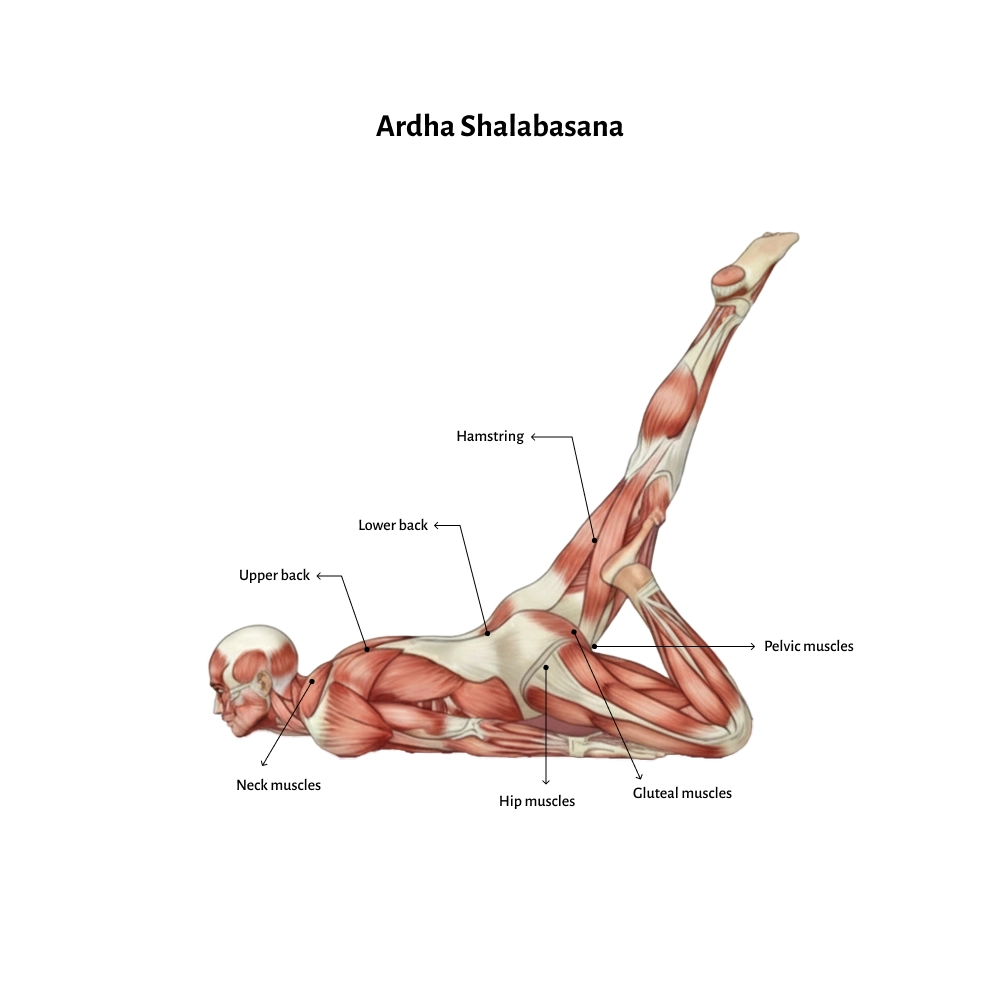
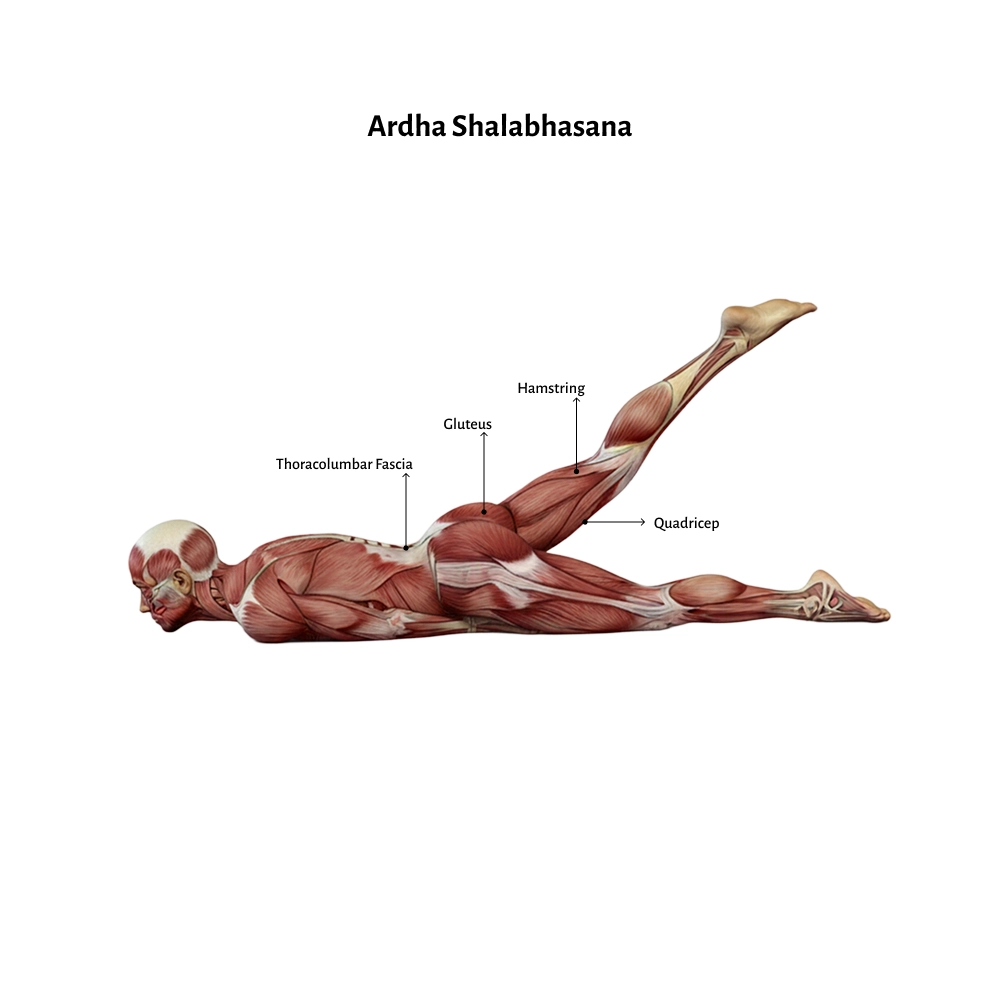
Ardha Shalabhasana (अर्ध शलभासन)
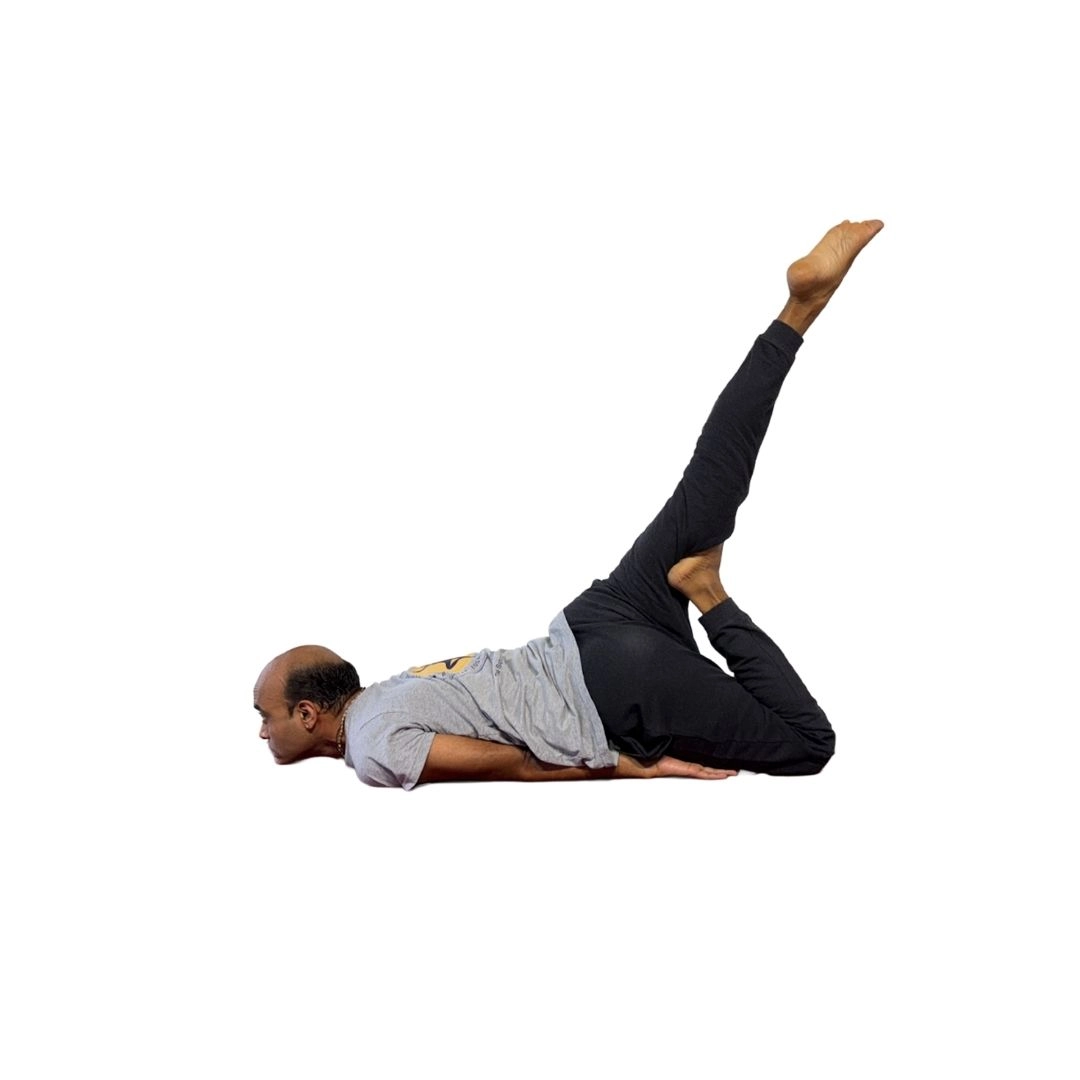
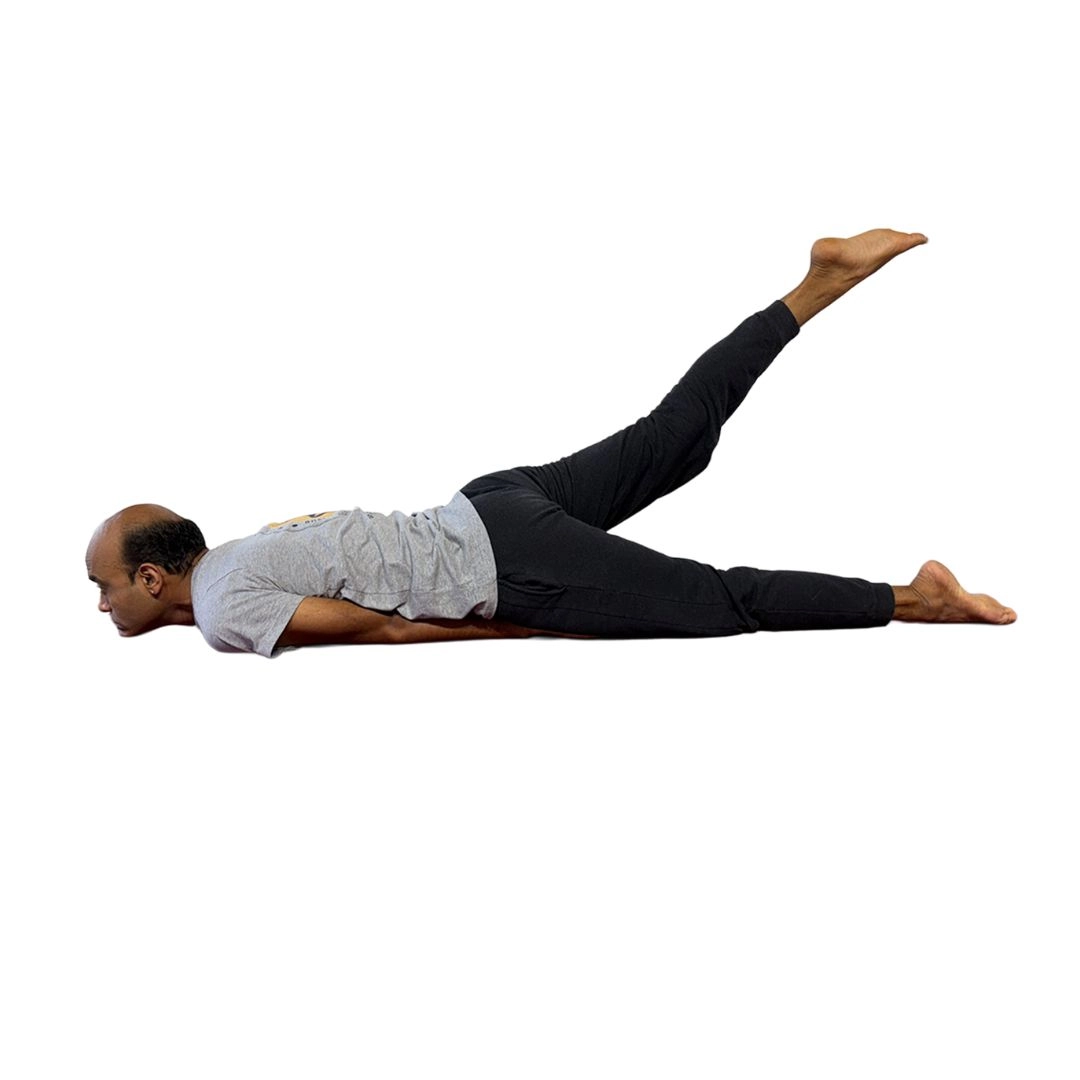
Ardha Shalabhasana (अर्ध शलभासन), or Half Locust Pose, is a variation of Shalabhasana (Locust Pose) that focuses on strengthening the back and core by lifting one leg at a time. The name comes from the Sanskrit words “ardha” (half), “shalabha” (locust), and “asana” (posture).
How to do Ardha Shalabhasana
Benefits of Ardha Shalabhasana
- Spinal Health:
Strengthens the muscles of the lower back (sacral and coccygeal regions) and provides stability to the spine. It’s often recommended for managing mild lower back pain and sciatica. - Digestive System:
The pose applies gentle pressure to the abdomen, which stimulates the digestive and endocrine organs. It can help relieve constipation and improve digestion by promoting peristalsis (the muscle movement that moves food through the intestines).
- Muscle Toning:
Tones and strengthens the muscles of the legs, thighs, hips, and glutes. It also engages the core, building abdominal strength. - Circulation:
Improves blood circulation, particularly to the pelvic area and lower body. - Stress Relief:
The pose stimulates the autonomic nervous system, which can lead to a sense of calm and relaxation. It can also help relieve tension in the pelvic area.
Contraindications of Ardha Shalabhasana
Avoid or modify this pose if you have:
- Back or Neck Injury:
Individuals with severe or chronic back injuries, slipped discs, or a recent neck injury should avoid this pose. - Abdominal Issues:
If you have a hernia, peptic ulcer, or have recently undergone abdominal surgery, you should not perform this asana. - Cardiovascular Conditions:
People with a weak heart or high blood pressure should avoid this pose.
- Pregnancy and Menstruation:
It is generally recommended that pregnant women and those on their menstrual cycle avoid prone (on the stomach) positions that put pressure on the abdomen. - Lack of Body-Breath Awareness:
If you find yourself straining or holding your breath, it’s a sign to ease out of the pose. Listen to your body and avoid any discomfort.
Anatomy (Muscles involved)
This pose engages a complex network of muscles and joints:
Spine:
The pose strengthens the erector spinae muscles, which run along the spine and are crucial for back extension.
Legs:
It engages the hamstrings, glutes, and quadriceps as you lift and hold the leg.
Hips:
The hip flexors and psoas muscles are stretched and strengthened.
Core:
The abdominal muscles are engaged to support the body and keep the pelvis stable.
Neck and Shoulders:
The neck muscles are stretched as the chin is placed on the floor, and the shoulders are stabilized.