Astavakrasana (अष्टावक्रासन)
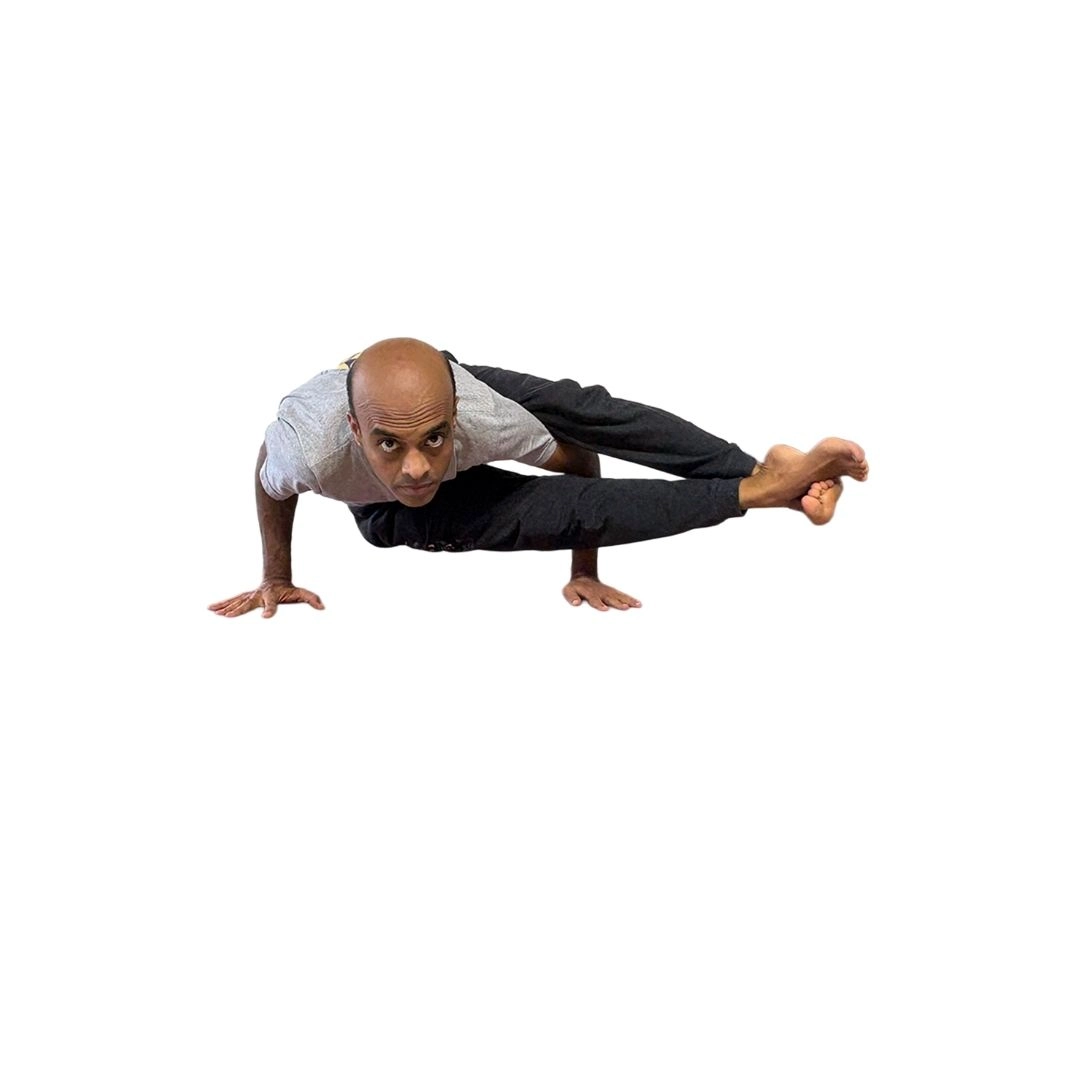
Astavakrasana (अष्टावक्रासन), or Eight-Angle Pose, is a challenging and intricate arm-balancing yoga posture. The name comes from the Sanskrit words “asta” (eight), “vakra” (bent, curved), and “asana” (posture). The pose is named after the sage Astavakra, who was born with eight deformities and became a revered spiritual guru. The physical pose resembles the eight bends in the sage’s body, as the legs and arms are bent and twisted.
How to do Astavakrasana
Benefits of Astavakrasana
- Strengthens Upper Body:
This pose is an excellent way to build strength in your arms, wrists, shoulders, and back muscles. - Tones Abdominal Muscles:
It requires significant core strength, which helps to strengthen and tone your abdominal muscles. - Improves Balance and Concentration:
Balancing on your hands requires intense focus and body awareness, which enhances both physical and mental balance.
- Enhances Digestion:
The pose puts gentle pressure on your abdominal organs, which can stimulate digestion and help with issues like constipation. - Spiritual and Energetic Benefits:
In yogic tradition, it is believed to help in the conservation and sublimation of vital energy (ojas) for spiritual growth and overall health.
Contraindications of Astavakrasana
Avoid or modify this pose if you have:
- Injury:
Avoid this pose if you have any injury to your wrists, elbows, shoulders, hips, neck, or lower back. - Carpal Tunnel Syndrome:
The pose puts significant pressure on the wrists and is not suitable for those with this condition.
- High Blood Pressure or Heart Conditions:
As with many inversions and intense poses, it can put strain on the circulatory system. - Pregnancy:
This pose places pressure on the abdomen and is not recommended for pregnant women.
Anatomy (Muscles involved)
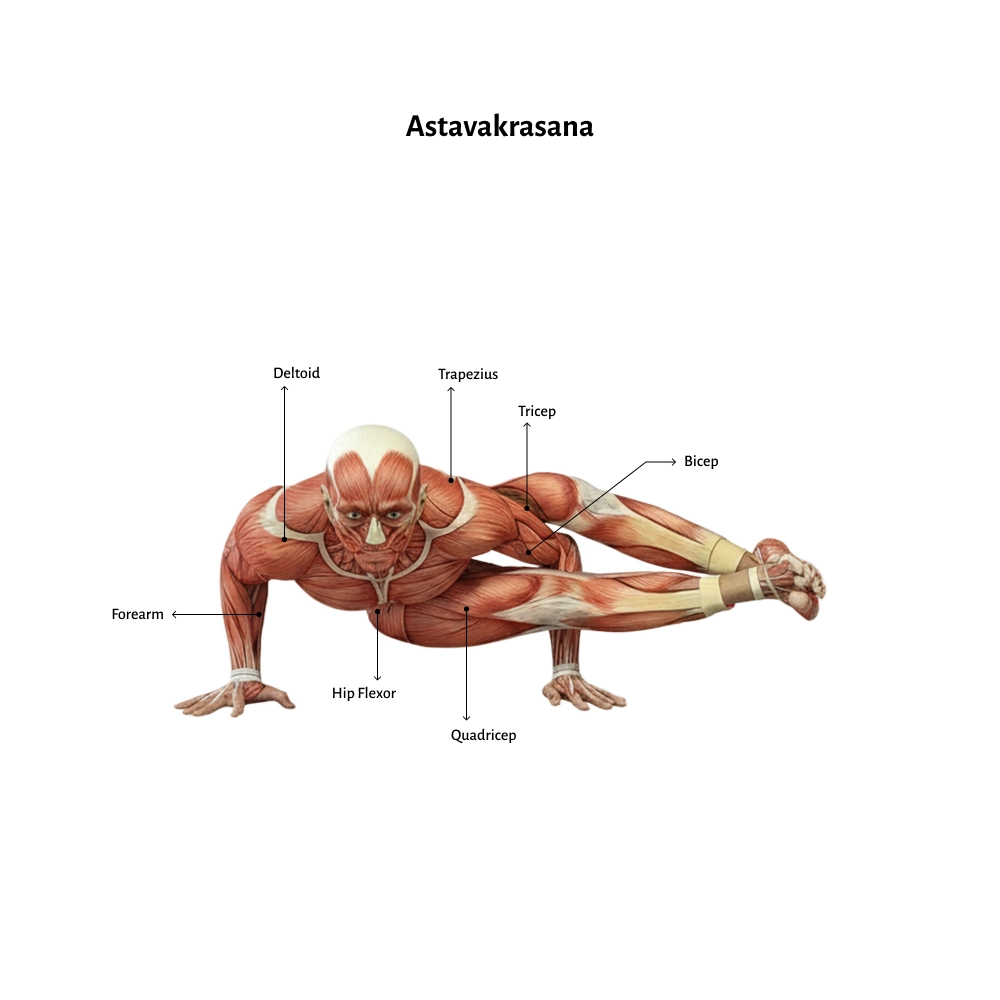
This pose engages a complex network of muscles and joints:
Arms and Shoulders:
The deltoids, triceps, and biceps are all active in supporting the body’s weight. The muscles of the forearms and wrists also play a crucial role in stabilization.
Core:
The rectus abdominis, obliques, and transverse abdominis are all key to lifting and twisting the torso and keeping the body stable.
Legs:
The hamstrings are stretched, while the adductor muscles (inner thighs) are powerfully contracted to grip the arm. The glutes and quadriceps also work to keep the legs in position.
Spine:
The erector spinae and other back muscles are engaged to maintain the spinal twist and prevent the chest from collapsing.