Bharadvajasana भरद्वाजासन
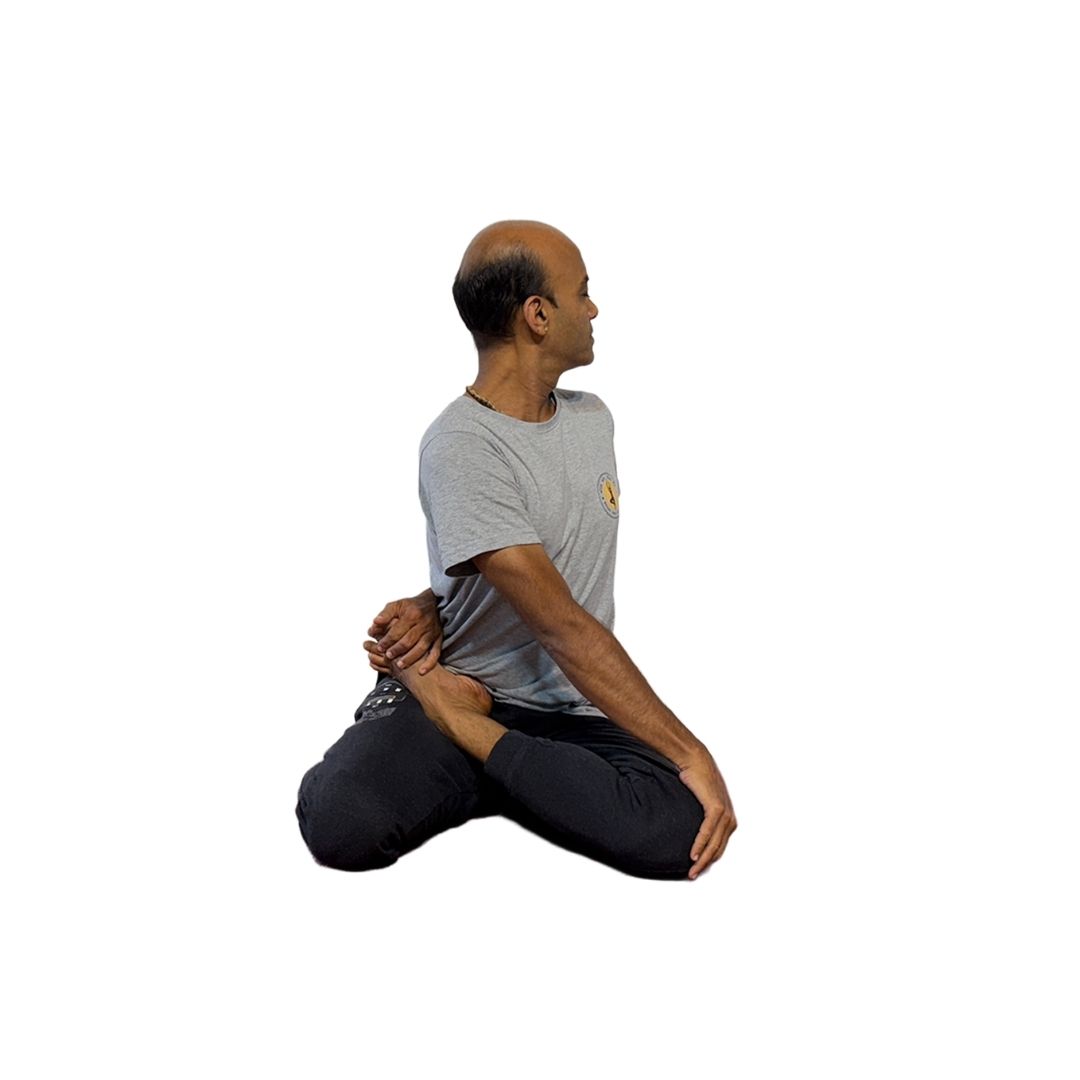
Bharadvajasana भरद्वाजासन (Bharadvaja’s Twist) is a seated spinal twist that offers numerous benefits for the body and mind. It is named after the Vedic sage Bharadvaja.
How to do Bharadvajasana
Benefits of Bharadvajasana
- Spinal Health:
It improves the flexibility and mobility of the entire spine (lumbar, thoracic, and cervical regions). This can help relieve back pain and stiffness. - Stretches:
It provides a deep stretch to the shoulders, hips, and neck. - Internal Organ Massage:
The twisting action massages the abdominal organs, which can improve digestion and help with detoxification.
- Stress Relief:
The gentle twist and focus on the breath help calm the nervous system, reducing stress and anxiety. - Posture Improvement:
Regular practice helps to counteract the effects of a sedentary lifestyle and can improve overall posture.
Contraindications of Bharadvajasana
Avoid or modify this pose if you have:
- Spinal Injury:
Do not practice if you have a recent or chronic spinal injury or a herniated disc. - Headaches:
The twisting motion may exacerbate headaches. - Blood Pressure Issues:
Individuals with high or low blood pressure should be cautious and consult with a healthcare professional before practicing.
- Diarrhea or Insomnia:
It is best to avoid this pose if you are experiencing these conditions. - Pregnancy:
Pregnant women should avoid this pose or practice with extreme caution and with guidance from a qualified instructor, especially in later stages.
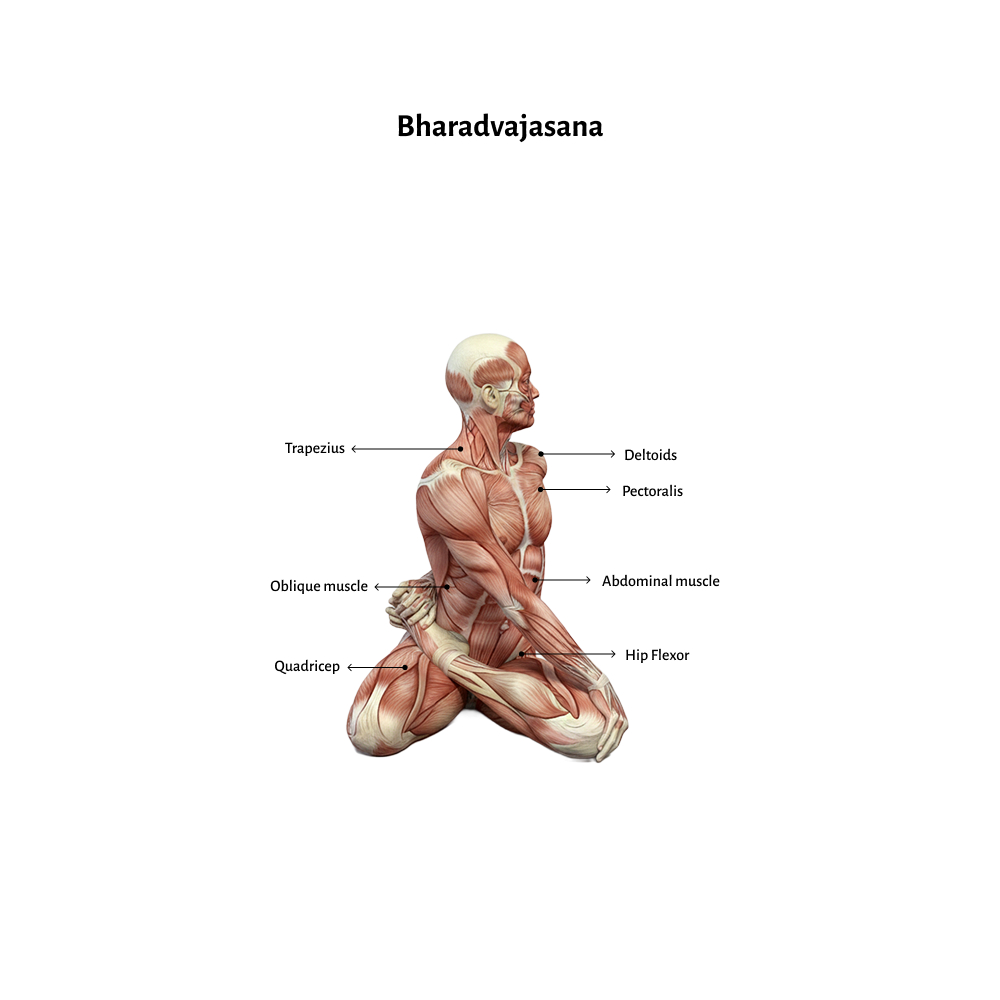
Anatomy (Muscles involved)
Bharadvajasana engages and stretches a wide range of muscles and joints:
Spine:
The pose mobilizes the vertebrae and stretches the muscles supporting the spine, such as the erector spinae.
Core Muscles:
It engages and strengthens the oblique muscles, which are crucial for core stability and rotational movements.
Hips and Glutes:
The positioning of the legs provides a gentle stretch to the hips and gluteal muscles.
Shoulders and Neck:
The twist stretches the muscles of the shoulders and neck, improving their range of motion.