Bhujapidasana (भुजपीडासन)
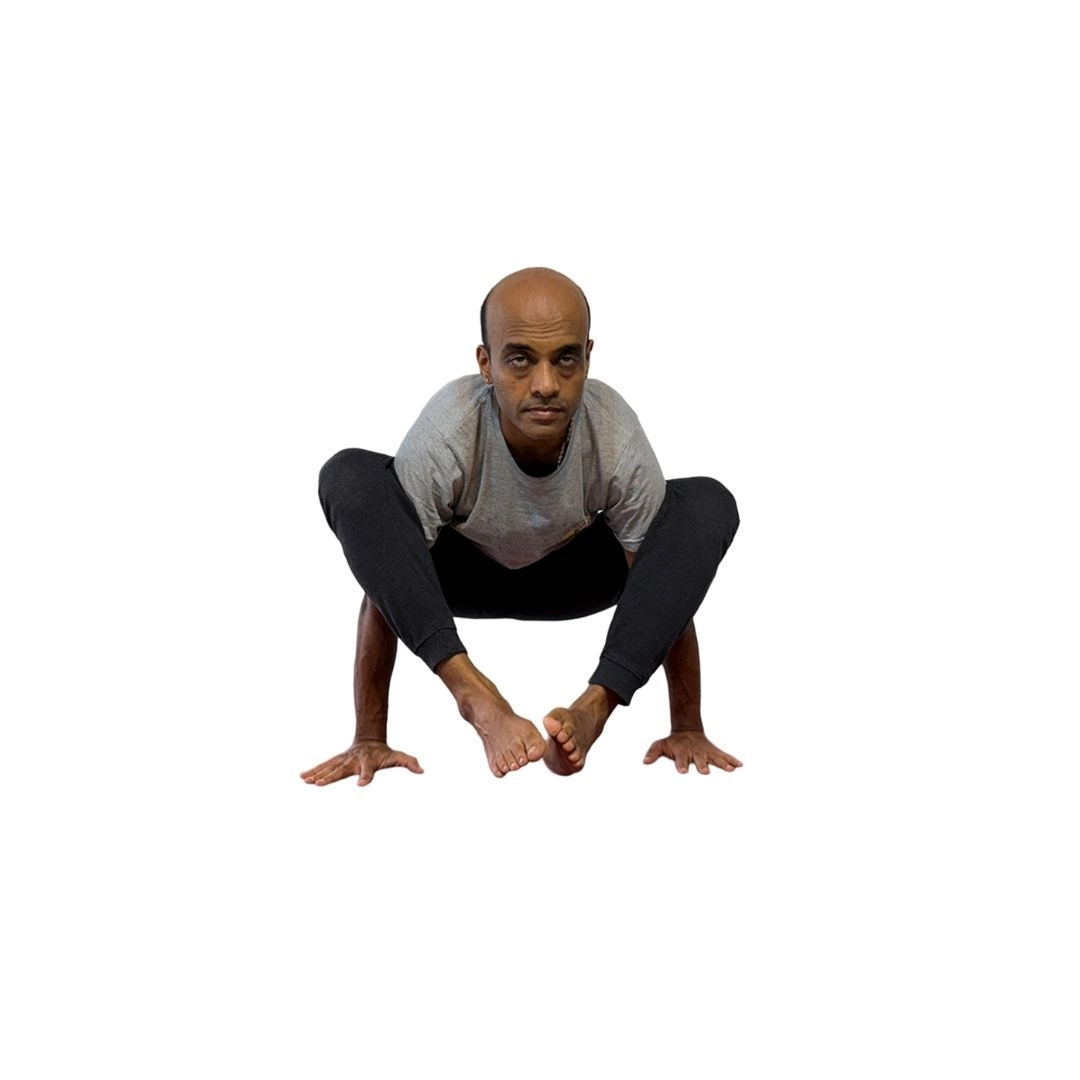
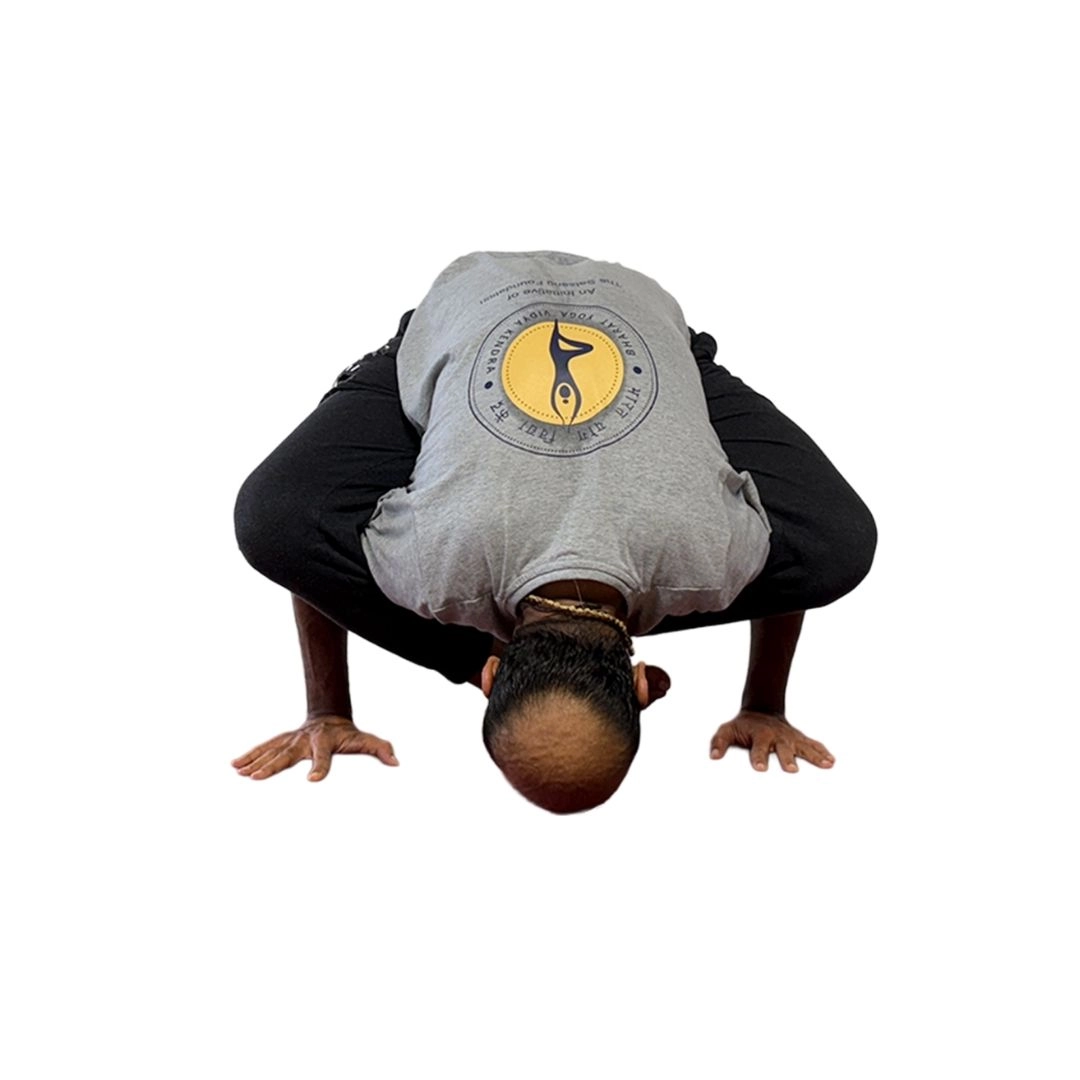
Bhujapidasana (भुजपीडासन), or Shoulder-Pressing Pose, is an advanced arm-balancing yoga posture. The name comes from the Sanskrit words “bhuja” (arm or shoulder), “pida” (pressure), and “asana” (posture). The pose gets its name from the pressure of the inner thighs on the upper arms and shoulders.
How to do Bhujapidasana
Benefits of Bhujapidasana
- Upper Body Strength:
This pose is a powerful builder of strength in the arms, shoulders, wrists, and hands. It also tones the triceps and biceps. - Core Engagement:
It requires a strong and engaged core to lift and stabilize the body, which helps to tone the abdominal muscles. - Hip Mobility and Flexibility:
Bhujapidasana helps to stretch and open the hips and groins, increasing flexibility.
- Improved Balance and Concentration:
Holding this arm balance demands intense focus and mental clarity, which translates to better balance and concentration. - Stimulates Organs:
The pressure on the abdomen can stimulate and tone the digestive and reproductive organs.
Contraindications of Bhujapidasana
Avoid or modify this pose if you have:
- Injuries:
Any wrist, elbow, shoulder, neck, or lower back injuries. The pose puts significant pressure on these areas. - High Blood Pressure or Migraines:
The inverted and compressed nature of the pose can be unsafe for individuals with these conditions. - Carpal Tunnel Syndrome or Arthritis:
The intense pressure on the wrists can exacerbate these conditions.
- Pregnancy:
This pose is not recommended for pregnant women due to the compression of the abdomen and the demands on balance. - Weak Joints or General Weakness:
This pose requires a solid foundation of strength and flexibility. It is not for beginners and should be practiced only after sufficient preparation.
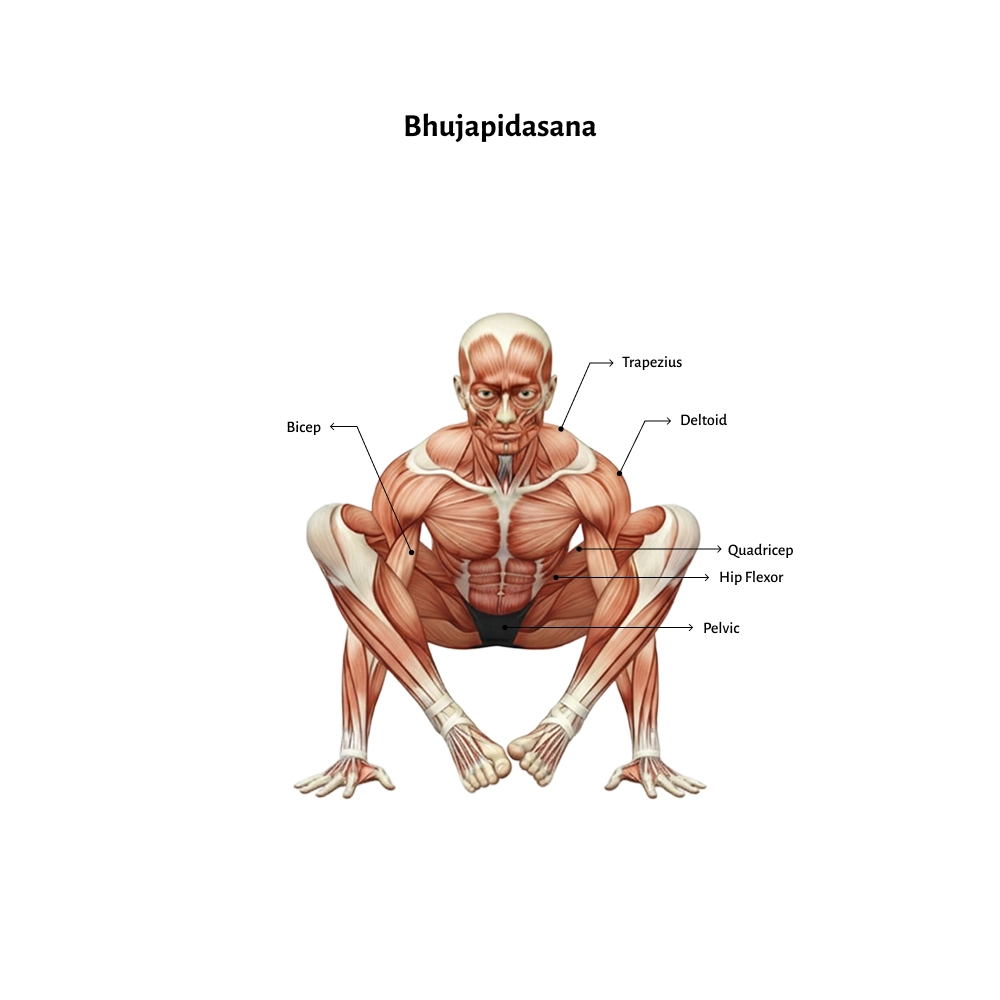
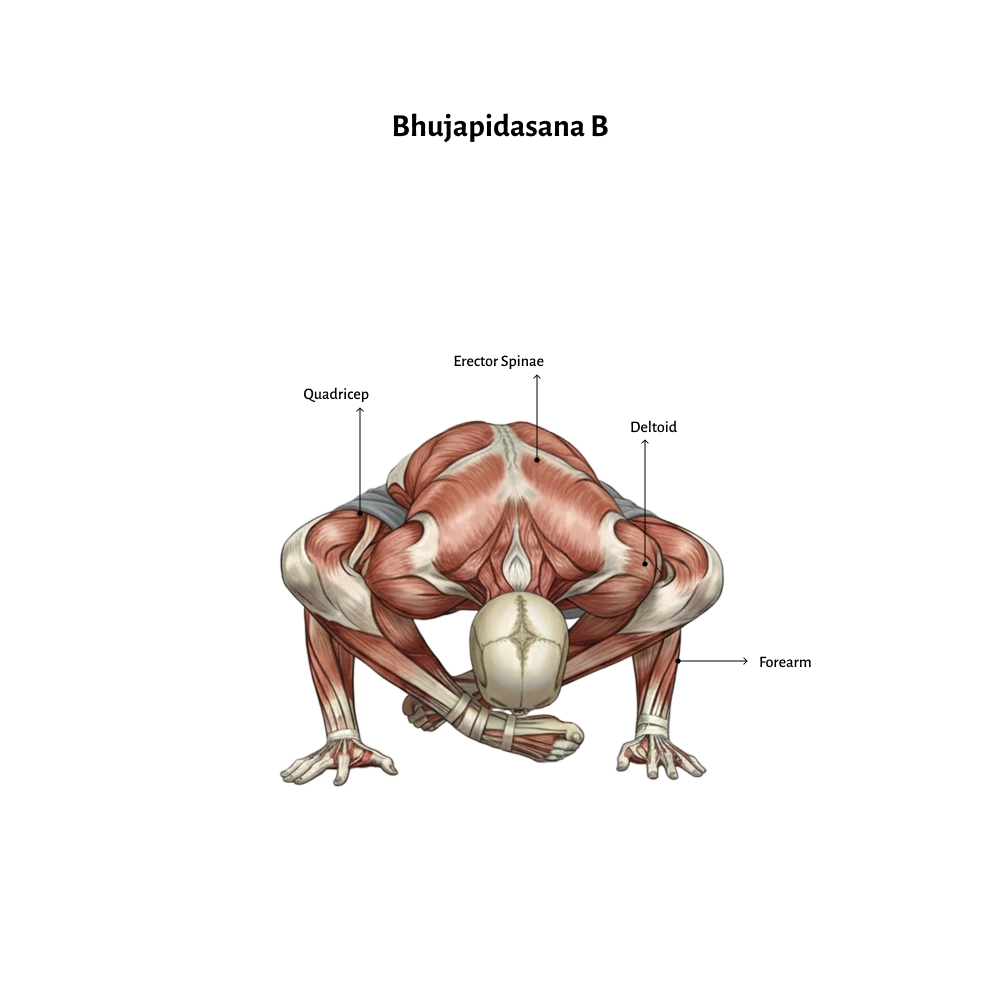
Anatomy (Muscles involved)
This pose engages a complex network of muscles and joints:
Arms and Shoulders:
The deltoids, triceps, and biceps are all highly active to support and stabilize the body’s weight. The serratus anterior is engaged to protract the shoulder blades, providing stability.
Core:
The rectus abdominis and transverse abdominis are key to lifting the hips and keeping the body in a compact, stable shape.
Legs:
The hip flexors, hamstrings, and inner thigh muscles (adductors) are crucial for lifting the legs and squeezing them against the arms.
Wrists and Hands:
The muscles of the hands and forearms are engaged to press firmly into the ground and protect the wrist joints.