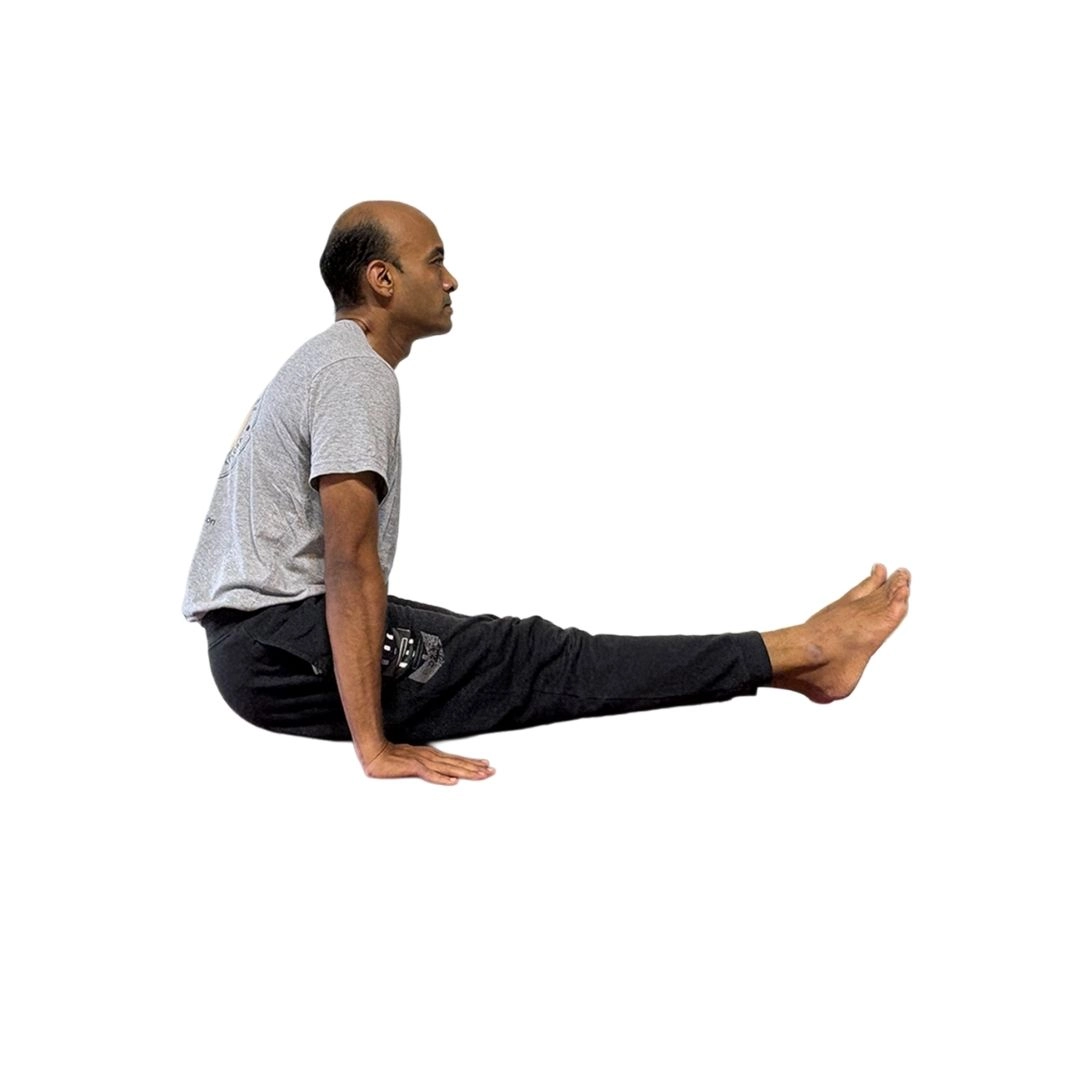
Brahmacharyasana (ब्रह्मचर्यासन)
Brahmacharyasana (ब्रह्मचर्यासन), or Celibate’s Pose, is an advanced arm-balancing yoga posture. The name comes from the Sanskrit words “brahmacharya” (celibacy) and “asana” (posture). The pose is often associated with the practice of Brahmacharya, a concept in yoga and Hinduism that refers to controlling one’s vital energy, often related to sexual continence. The physical pose is a powerful practice that builds strength, focus, and body control.
How to do Brahmacharyasana
Benefits of Brahmacharyasana
- Strengthens Upper Body:
This pose is an excellent way to build strength in your arms, wrists, shoulders, and back muscles. - Tones Abdominal Muscles:
It requires significant core strength, which helps to strengthen and tone your abdominal muscles. - Improves Balance and Concentration:
Balancing on your hands requires intense focus and body awareness, which enhances both physical and mental balance.
- Enhances Digestion:
The pose puts gentle pressure on your abdominal organs, which can stimulate digestion and help with issues like constipation. - Spiritual and Energetic Benefits:
In yogic tradition, it is believed to help in the conservation and sublimation of vital energy (ojas) for spiritual growth and overall health.
Contraindications of Brahmacharyasana
Avoid or modify this pose if you have:
- Injuries:
Any recent or chronic injuries to the wrists, arms, shoulders, elbows, or back. - High Blood Pressure or Heart Conditions:
Inversions and poses that put strain on the upper body and heart should be avoided. - Hernia:
The intense abdominal engagement can be problematic for those with a hernia.
- Pregnancy:
This pose is not recommended for pregnant women. - Carpal Tunnel Syndrome:
The pressure on the wrists can exacerbate this condition.
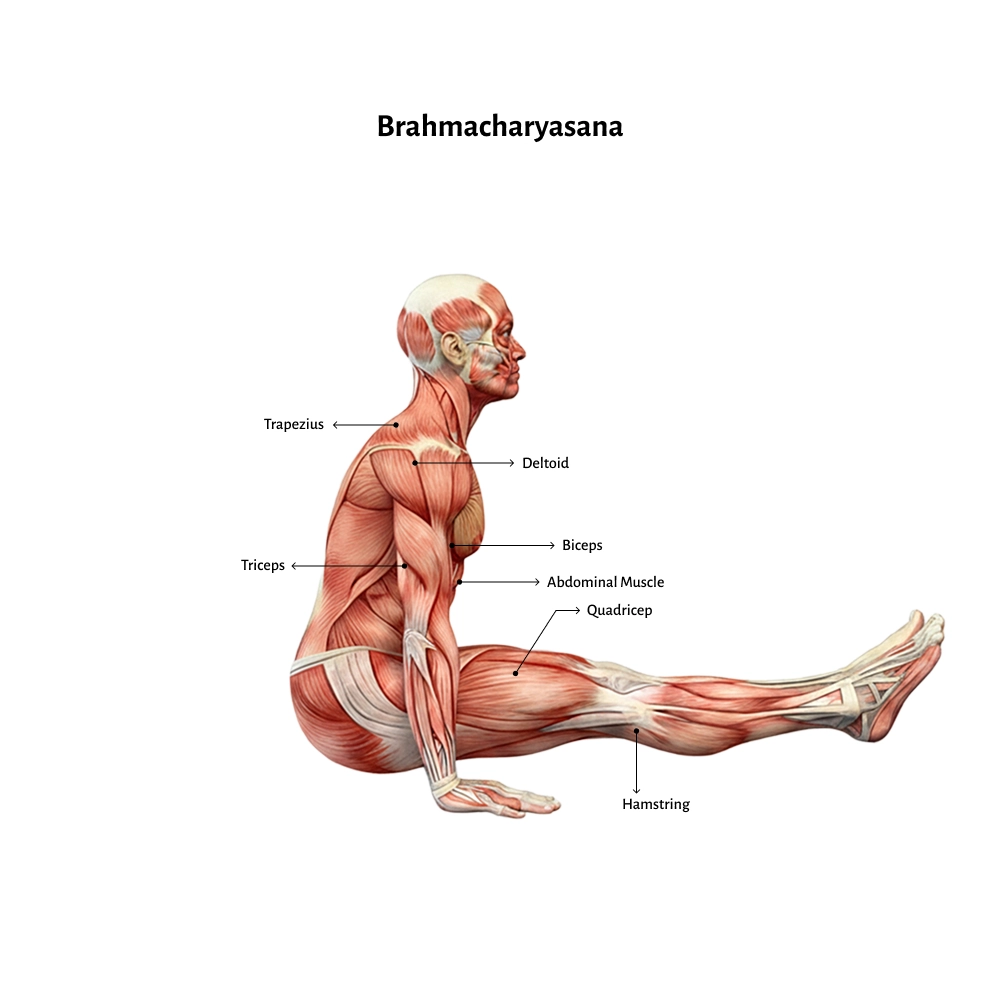
Anatomy (Muscles involved)
This pose engages a complex network of muscles and joints:
Upper Body:
The triceps, deltoids, and forearm muscles are the primary muscles for bearing the body’s weight and stabilizing the pose.
Core:
The rectus abdominis (abs) and transverse abdominis are essential for keeping the body stable and the legs lifted.
Legs:
The quadriceps, hamstrings, and hip flexors are engaged to keep the legs straight and suspended.
Shoulders and Back:
The latissimus dorsi and erector spinae muscles help to stabilize the spine and maintain proper posture.