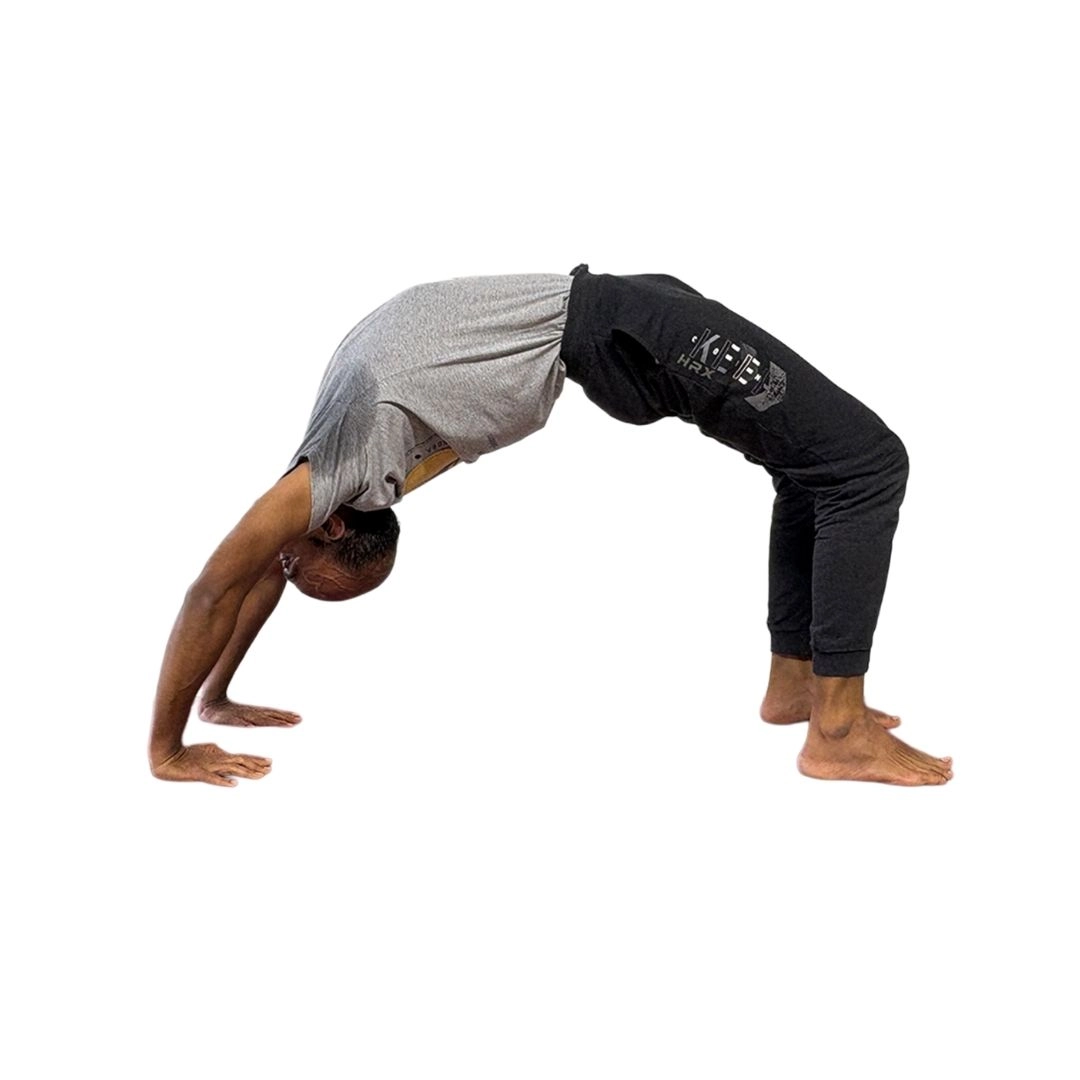
Chakrasana (चक्रासन)
Chakrasana (चक्रासन), also known as Urdhva Dhanurasana (ऊर्ध्व धनुरासन) or Wheel Pose, is a powerful and iconic backbending yoga posture. The name “Chakrasana” comes from the Sanskrit words “chakra” (wheel) and “asana” (posture), as the body forms a wheel-like shape. The alternate name, “Urdhva Dhanurasana,” translates to “Upward-Facing Bow Pose,” describing the shape of the body as an upward-facing bow.
How to do Chakrasana
Benefits of Chakrasana
Physical Benefits:
- Strengthens Muscles:
It builds significant strength in the arms, shoulders, wrists, legs, glutes, and core. - Increases Flexibility:
This deep backbend increases the elasticity and flexibility of the spine, as well as stretching the chest, shoulders, and hip flexors. - Improves Posture:
By strengthening the back and opening the chest, it helps counteract the effects of a sedentary lifestyle and poor posture. - Stimulates Organs:
The pose massages and stimulates the abdominal organs, which can aid in digestion and metabolism. - Boosts Circulation:
It increases blood flow throughout the body, including to the brain, which can improve cognitive function and energy levels.
Mental and Emotional Benefits:
- Reduces Stress and Anxiety:
The deep backbend and heart-opening nature of the pose can help release emotional tension and calm the nervous system. - Enhances Mood:
It stimulates the release of endorphins, which can help alleviate symptoms of depression and anxiety. - Increases Energy:
Chakrasana is an invigorating pose that can combat fatigue and lethargy.
Contraindications of Chakrasana
Avoid or modify this pose if you have:
- Spinal Injuries:
This includes conditions such as a slipped disc, sciatica, or any recent back or neck injury. - High Blood Pressure or Heart Conditions:
The inversion and intense physical exertion can put pressure on the heart. - Carpal Tunnel Syndrome or Wrist/Shoulder Injuries:
The pose puts significant weight on the wrists and shoulders.
- Hernia or Other Abdominal Issues:
The deep stretch of the abdomen can be harmful. - Headaches or Vertigo:
The pose can increase blood flow to the head and may worsen these conditions. - Pregnancy:
The pose is not recommended for pregnant women.
Anatomy (Muscles involved)
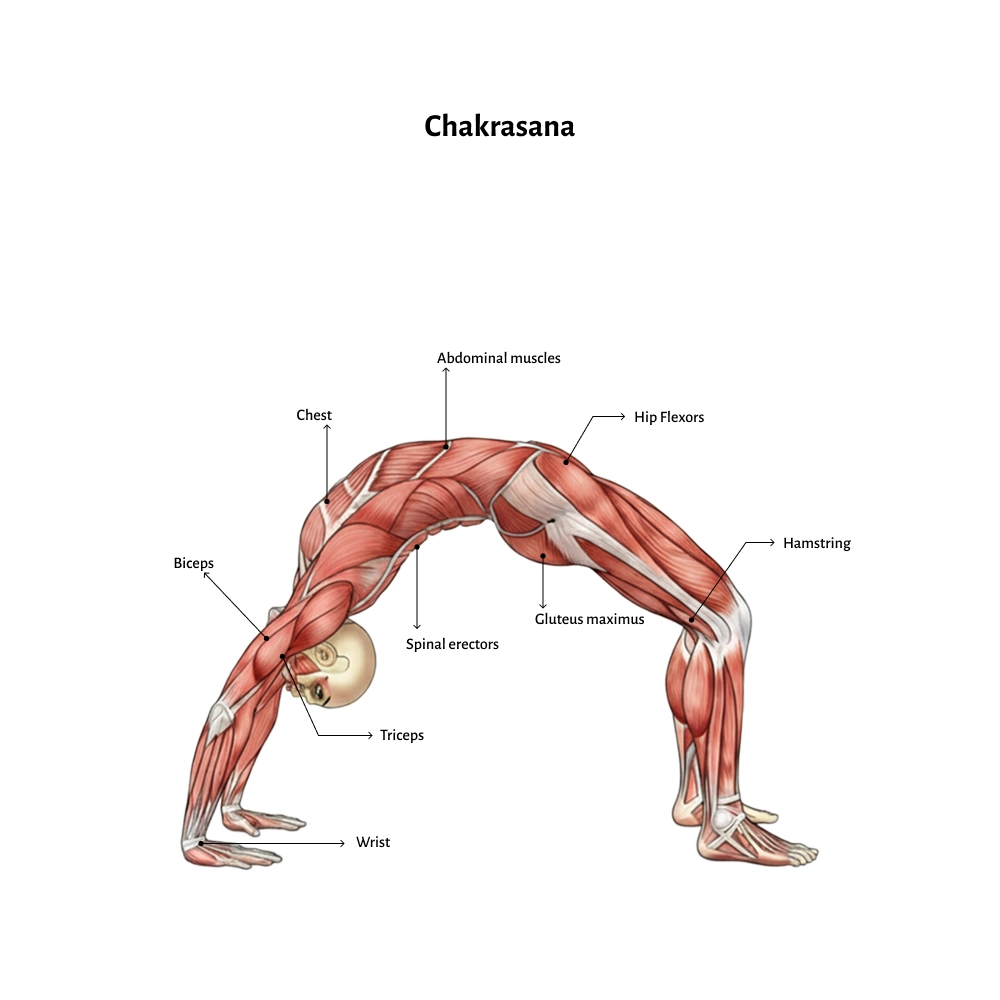
This pose engages a complex network of muscles and joints:
Spinal Extensors:
The muscles along the spine (erector spinae) are powerfully engaged to create the backbend.
Shoulder Girdle:
The deltoids, pectorals, and latissimus dorsi are stretched and strengthened.
Arms:
The triceps, biceps, and muscles of the forearms and hands are crucial for supporting the body weight.
Legs:
The quadriceps, hamstrings, and calves are engaged to lift and stabilize the lower body.
Core and Glutes:
The abdominal muscles and gluteus maximus are essential for protecting the lower back and providing stability.
Hip Flexors:
The iliopsoas muscles are stretched to open the hips.