Eka Pada Chakrasana (एक पाद चक्रासन)
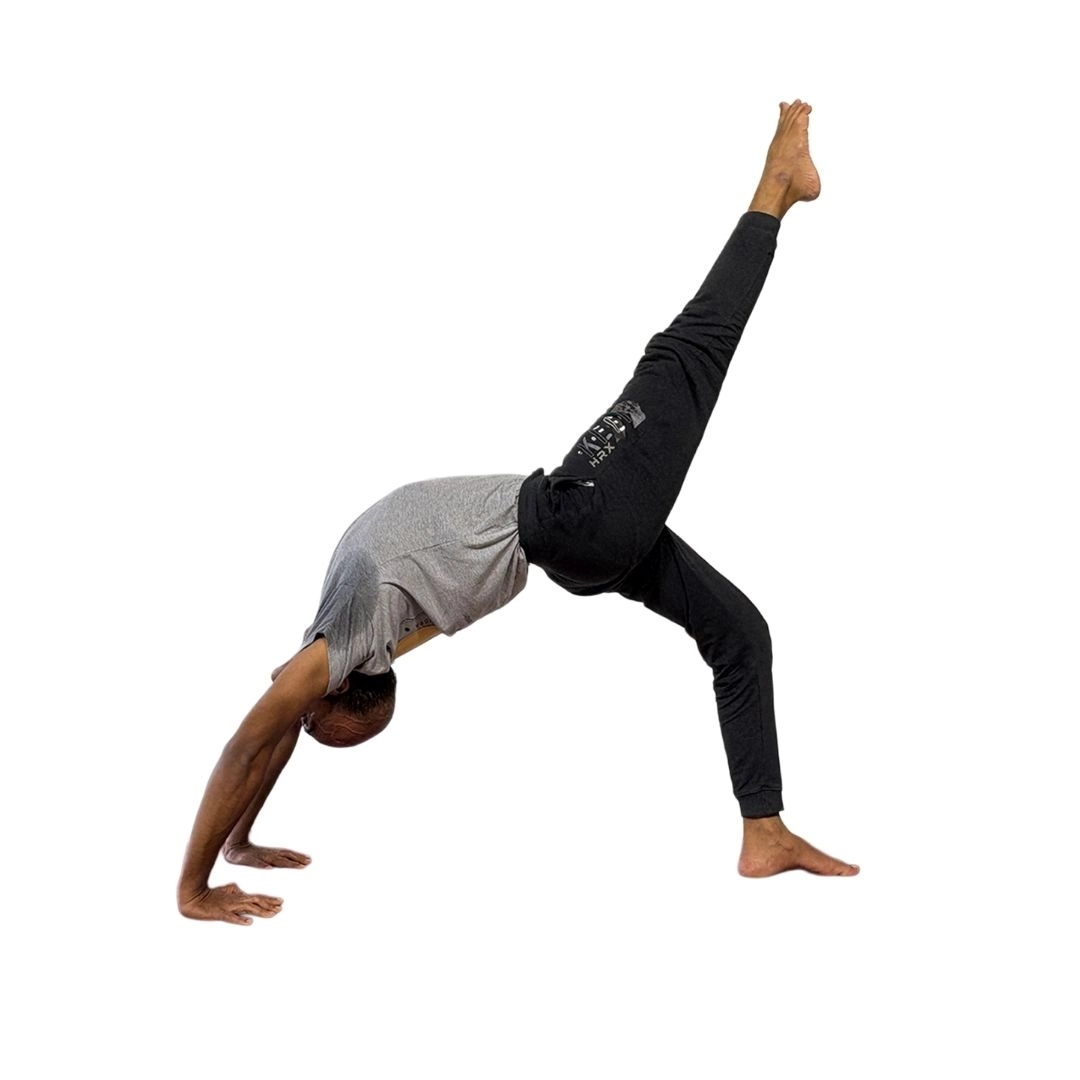
Eka Pada Chakrasana (एक पाद चक्रासन), also known as Eka Pada Urdhva Dhanurasana, or One-Legged Wheel Pose, is a challenging and advanced backbending posture in yoga. The name comes from the Sanskrit words “eka” (one), “pada” (foot or leg), “chakra” (wheel), and “asana” (posture). This pose takes the foundational strength and flexibility of Chakrasana (Wheel Pose) and adds the element of balance by lifting one leg off the floor.
How to do Eka Pada Chakrasana
Benefits of Eka Pada Chakrasana
- Strengthens the entire body:
Eka Pada Chakrasana builds strength in the arms, legs, shoulders, and core. - Increases spinal flexibility:
It is a deep backbend that significantly improves the flexibility of the spine. - Opens the chest and shoulders:
The pose provides an intense stretch to the chest, lungs, and shoulders, which can improve respiration and posture.
- Tones abdominal organs:
The deep arch in the back stimulates and tones the abdominal organs, aiding in digestion. - Improves balance and focus:
Balancing on three limbs requires great concentration and stability, enhancing both physical and mental equilibrium. - Energizes the body:
This invigorating pose can boost energy levels and reduce stress and fatigue.
Contraindications of Eka Pada Chakrasana
Avoid or modify this pose if you have:
- Back, shoulder, or wrist injuries:
The pose places significant pressure on these joints. - Carpal Tunnel Syndrome or Tendonitis:
The weight-bearing on the wrists can exacerbate these conditions. - High or low blood pressure:
The inverted nature of the pose can affect blood flow and is not recommended. - Heart conditions:
The pose puts pressure on the heart.
- Hernia or other abdominal surgeries:
The deep abdominal stretch can be harmful. - Glaucoma:
The increased blood flow to the head can be dangerous. - Pregnancy:
The pose puts stress on the abdomen. - Headaches or vertigo:
The change in blood flow and gravity can worsen these symptoms.
Anatomy (Muscles involved)
This pose engages a complex network of muscles and joints:
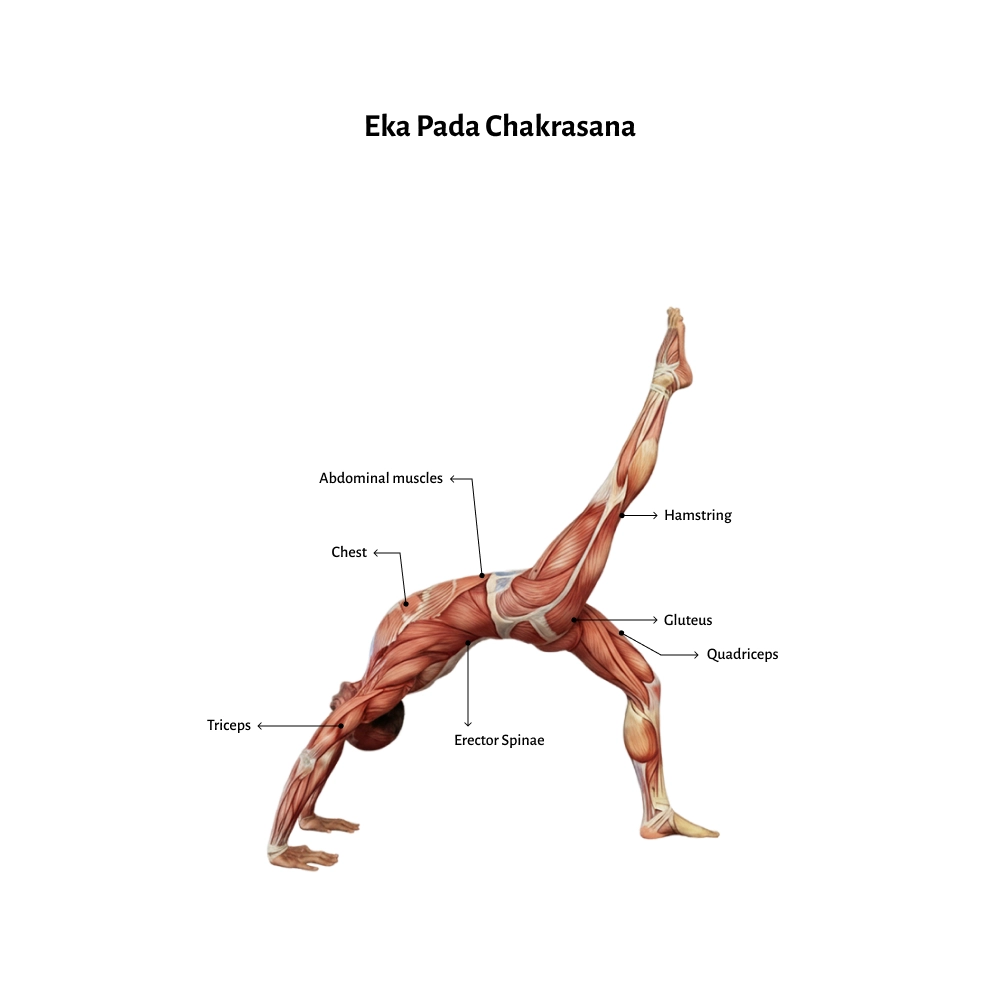
Muscles Strengthened:
- Arms and Shoulders: Triceps, deltoids.
- Core: Abdominals, psoas.
- Back: Erector spinae, glutes.
- Legs: Quadriceps, hamstrings, gluteus maximus.
Muscles Stretched:
- Front of the body: Chest, abdomen, hip flexors.
- Shoulders: Deltoids.
- Back: Intercostal muscles.
- Legs: Quadriceps.