Eka Pada Galavasana (एक पाद गालवसन)
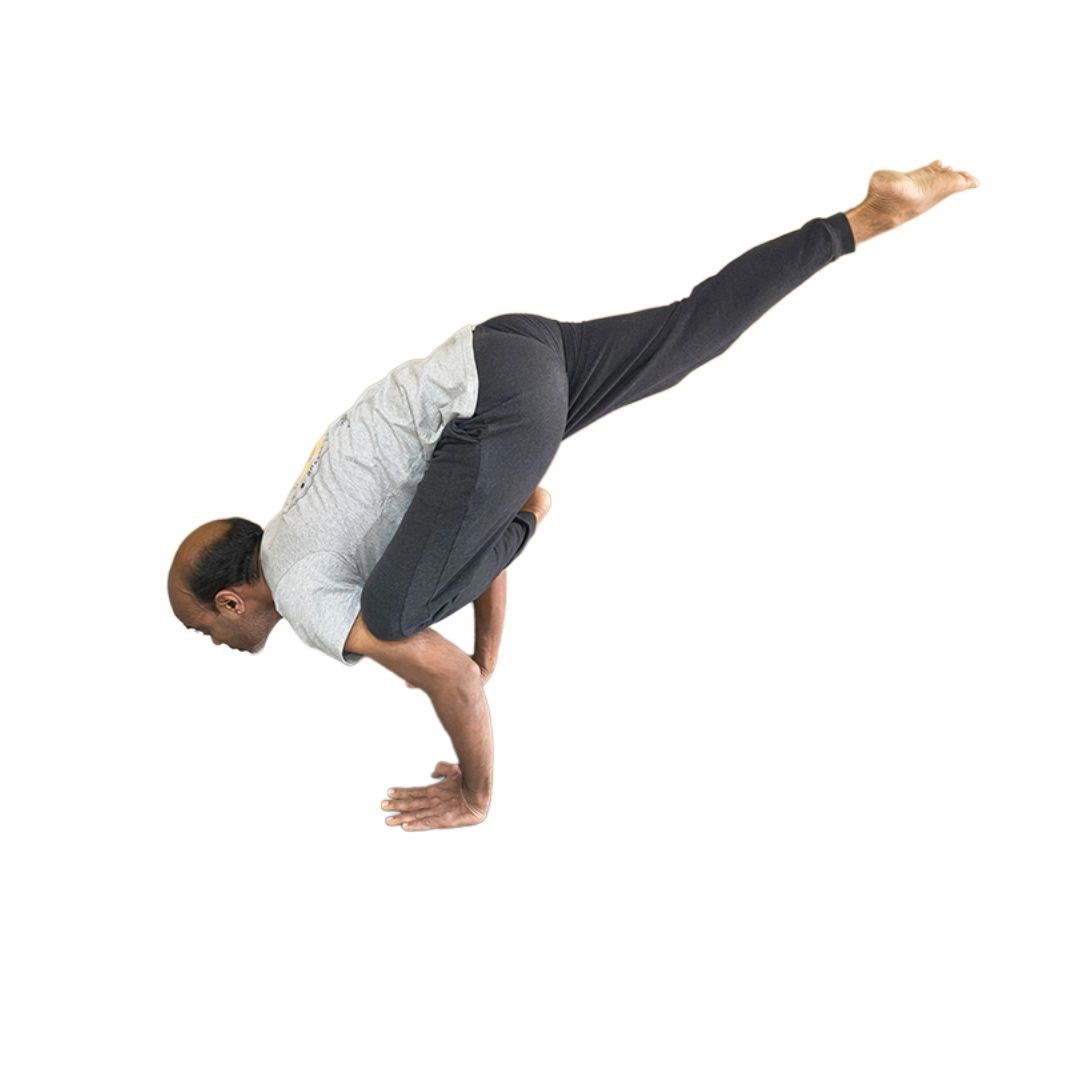
Eka Pada Galavasana (एक पाद गालवसन), or Flying Pigeon Pose, is an advanced arm-balancing yoga posture that combines a deep hip opener with upper body strength. The name comes from the Sanskrit words “eka” (one), “pada” (foot), “galava” (a sage), and “asana” (posture). It is believed to be named after the sage Galava, who was known for his dedication and perseverance, qualities that are essential for mastering this pose.
How to do Eka Pada Galavasana
Benefits of Eka Pada Galavasana
- Strengthens the Upper Body:
Eka Pada Galavasana builds significant strength in the arms, shoulders, wrists, and core, as they support the entire body’s weight. - Improves Balance and Stability:
This pose challenges both physical and mental balance, requiring focus and a steady gaze (drishti). - Deep Hip Opener:
The pose provides an intense stretch for the outer hips, glutes, and groin, increasing flexibility and range of motion in the hip joint.
- Tones Abdominal Muscles:
It engages the core deeply to maintain stability, which helps to strengthen and tone the abdominal muscles. - Boosts Confidence:
Successfully performing this advanced pose can build a sense of accomplishment and mental fortitude.
Contraindications of Eka Pada Galavasana
Avoid or modify this pose if you have:
- Injuries:
Any wrist, elbow, shoulder, neck, hip, knee, or back injury. - Carpal Tunnel Syndrome:
The pose puts significant pressure on the wrists. - Pregnancy:
The pose involves deep core engagement and can be risky during pregnancy.
- High Blood Pressure or Heart Conditions:
Arm balances can increase blood pressure and heart rate. - Sciatica:
The hip-opening nature of the pose can aggravate sciatica symptoms. - Recent Surgery:
Especially recent surgery in the abdomen or any related joints.
Anatomy (Muscles involved)
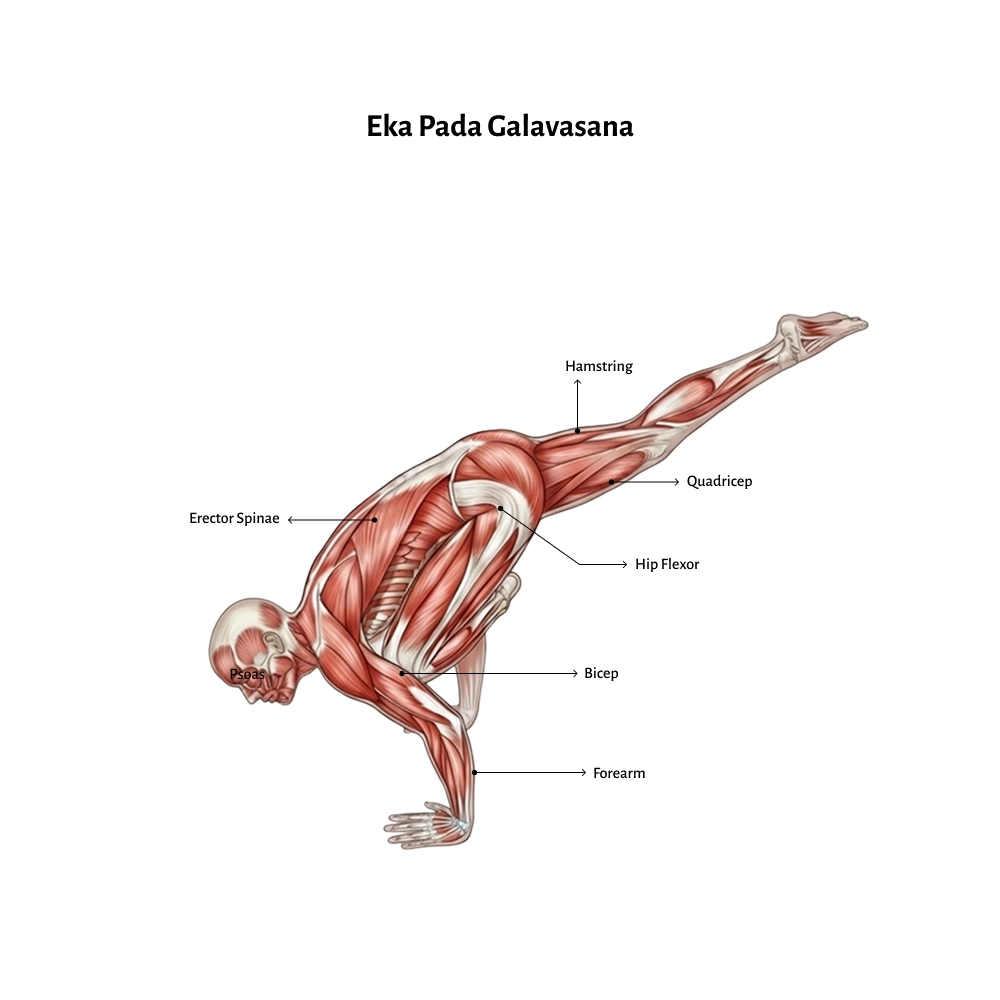
This pose engages a complex network of muscles and joints:
Upper Body:
- Biceps and Triceps:
Engaged to support the body’s weight on the arms. - Deltoids (Shoulders):
Provide stability and strength. - Core Muscles (Abdominals):
Essential for maintaining balance and lifting the legs.
Lower Body:
- Gluteus Maximus and Hamstrings:
Work to lift and extend the back leg. - Hip Flexors:
Stretched in the extended leg and engaged in the front leg. - Outer Hips (Gluteus Medius and Piriformis):
Stretched and opened in the crossed leg.
Spinal Muscles (Erector Spinae):
Help to elevate and straighten the back leg and maintain a long spine.