Eka Pada Koundinyasana (एक पाद कौण्डिन्यासन)
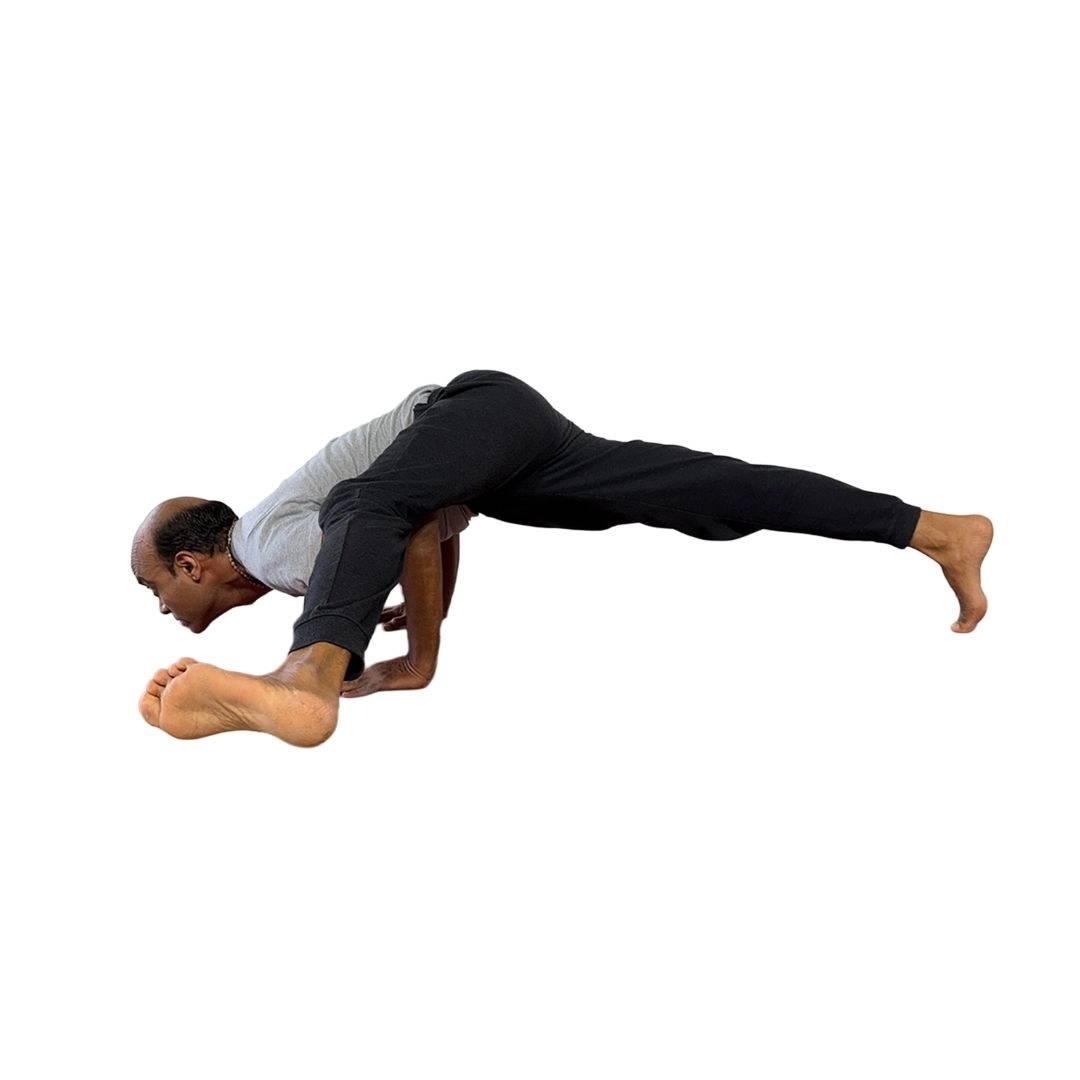
Eka Pada Koundinyasana (एक पाद कौण्डिन्यासन), or One-Legged Koundinya’s Pose, is an advanced arm-balancing yoga posture that combines a twist, a forward bend, and a leg extension. The name comes from the Sanskrit words “eka” (one), “pada” (foot), “koundinya” (a sage), and “asana” (posture). It is believed to be named after the sage Koundinya, symbolizing the strength, balance, and focus required to hold the pose.
How to do Eka Pada Koundinyasana
Benefits of Eka Pada Koundinyasana
- Strengthens the Upper Body and Core:
This pose builds significant strength in the arms, wrists, shoulders, chest, and abdominal muscles. - Improves Balance and Coordination:
It requires a high degree of focus, balance, and coordination, which helps to improve proprioception (the body’s awareness of its position in space). - Increases Flexibility:
The pose stretches the hamstrings, hips, and spine.
- Boosts Confidence:
Mastering this challenging pose can be a great source of self-confidence and a testament to your hard work on the mat. - Tones Abdominal Organs:
The deep twist and compression of the abdominal region can help stimulate the digestive organs.
Contraindications of Eka Pada Koundinyasana
Avoid or modify this pose if you have:
- Injury:
This pose puts a lot of pressure on the wrists, elbows, and shoulders. Avoid it if you have any injury to these joints or to the hips, neck, or back. - Carpal Tunnel Syndrome:
The weight-bearing on the hands can aggravate this condition. - High or Low Blood Pressure:
The inversion and pressure on the chest can affect blood flow and should be avoided by individuals with blood pressure issues.
- Pregnancy or Menstruation:
The deep compression of the abdomen makes this pose unsuitable during pregnancy or menstruation. - Vertigo or Headaches:
The pose can be disorienting and may trigger or worsen these conditions. - Weak Core Strength:
If you don’t have the foundational core strength, this pose can put excessive strain on your joints. It’s best to work on preparatory poses first.
Anatomy (Muscles involved)
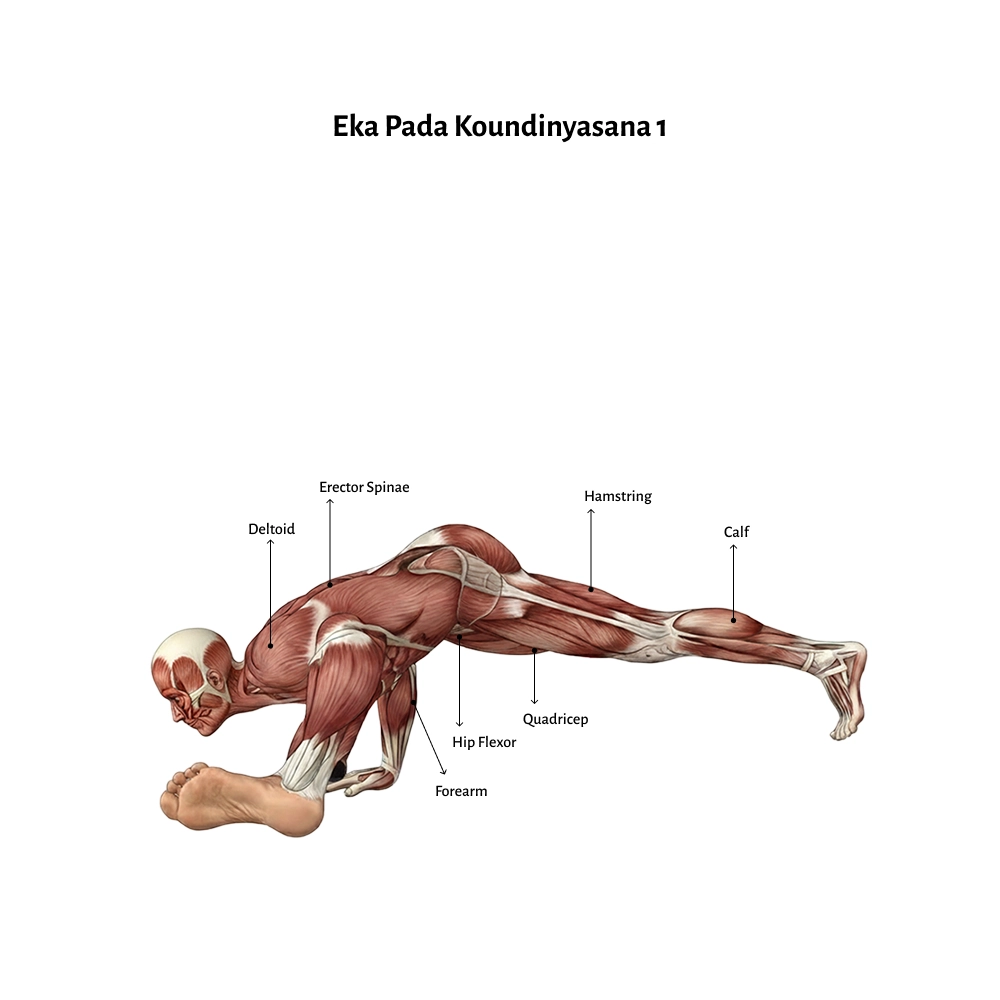
This pose engages a complex network of muscles and joints:
Arms and Shoulders:
The biceps, triceps, deltoids, and pectoralis muscles are all actively engaged to support the body’s weight. The serratus anterior, a muscle that protracts and stabilizes the shoulder blade, is also crucial.
Core:
The deep core muscles, including the transverse abdominis, are essential for stabilizing the pelvis and maintaining the lift. The oblique muscles are engaged in the twisting action.
Legs:
The quadriceps, hamstrings, and gluteus maximus are all working to extend and stabilize the legs.
Hips:
The hip flexors and hip abductors are stretched and engaged, respectively.